Are you about to book a place to stay for your trip to Japan?
Places to stay go by lots of different names, but choosing gets easier if you think of them as four broad types.
Ryokan (旅館) / business hotel (ビジネスホテル) / capsule hotel (カプセルホテル) / vacation rental (minpaku, 民泊).
In fact, under Japanese law, ryokan and hotels fall into one and the same category.
So look less at the name and more at what comes with it: whether dinner is included, whether it’s close to the station, whether it’s just a place to sleep, and whether there’s a kitchen.
You don’t need to stay in the same type every night of your trip. Night by night, you can choose from the four.
Here’s the answer up front.
- A night to enjoy the place itself, with nothing else planned: ryokan
- A night before an early start from the station: business hotel
- A night on your own, just to sleep: capsule hotel
- A night with family or a group, staying as if you lived there: vacation rental
1 Ryokan — a night where the ryokan itself is the point
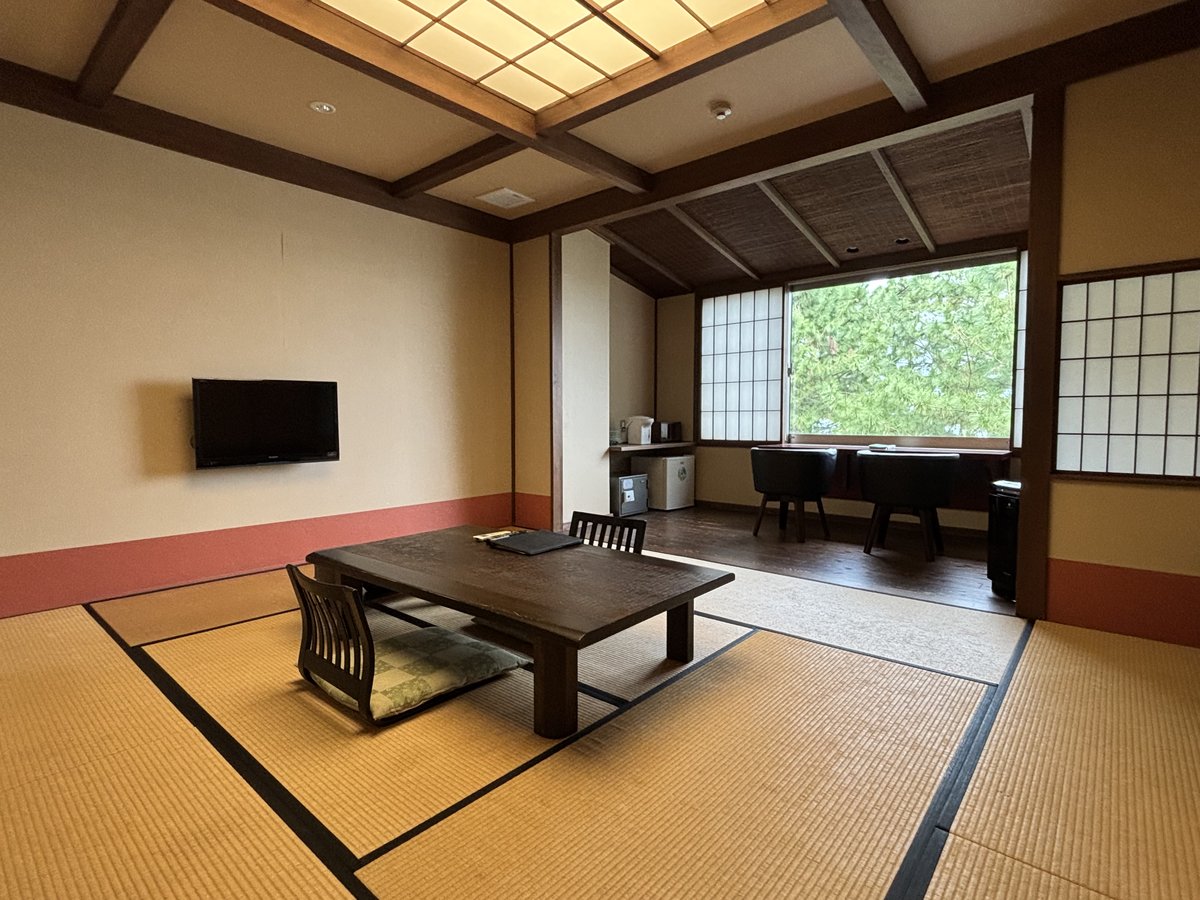
A night at a ryokan usually comes with dinner and breakfast the next morning.
Dinner is a multi-course meal made with local, seasonal ingredients. Breakfast is Japanese-style. Depending on the ryokan, you eat in a dining room or in your own room.
Some ryokan let you stay without meals, but eating at the ryokan is considered an important part of the ryokan experience.
Some travelers even say staying at a ryokan was the best part of their trip to Japan.
Ryokan vs. hotel: prices work differently
Ryokan rates are often shown per person, per night, and they usually include dinner and breakfast. On the booking screen, check whether the price is per person or per room.
If a ryokan looks expensive next to a business hotel’s “per room” price, compare again: if the rate is per person, multiply it by the number of people, and remember that two meals are included.
Ryokan range from simple to luxurious. Per person, prices start at ¥10,000 for a room with no meals, and at around ¥20,000 with dinner and breakfast. My impression is that if you pay ¥30,000–¥50,000 with two meals, many places will leave you satisfied
A ryokan you book ahead
Because ryokan prepare dinner and wait for you, they don’t take many same-day bookings.
If there’s anything you can’t eat, let them know when you book. How to tell them will be covered in the articles on eating out.
At especially busy times, some ryokan won’t take a booking for one person. If you’re traveling solo, one option is to save the ryokan for a night when you’re with someone, and stay somewhere simpler on the other nights.
Make just one night of your trip a ryokan night, and don’t plan anything else that day. The ryokan itself becomes that day’s destination.
How things go from arrival to the next morning will be covered in “A Night at a Ryokan, Step by Step.”
2 Business hotels — near the station, priced per room
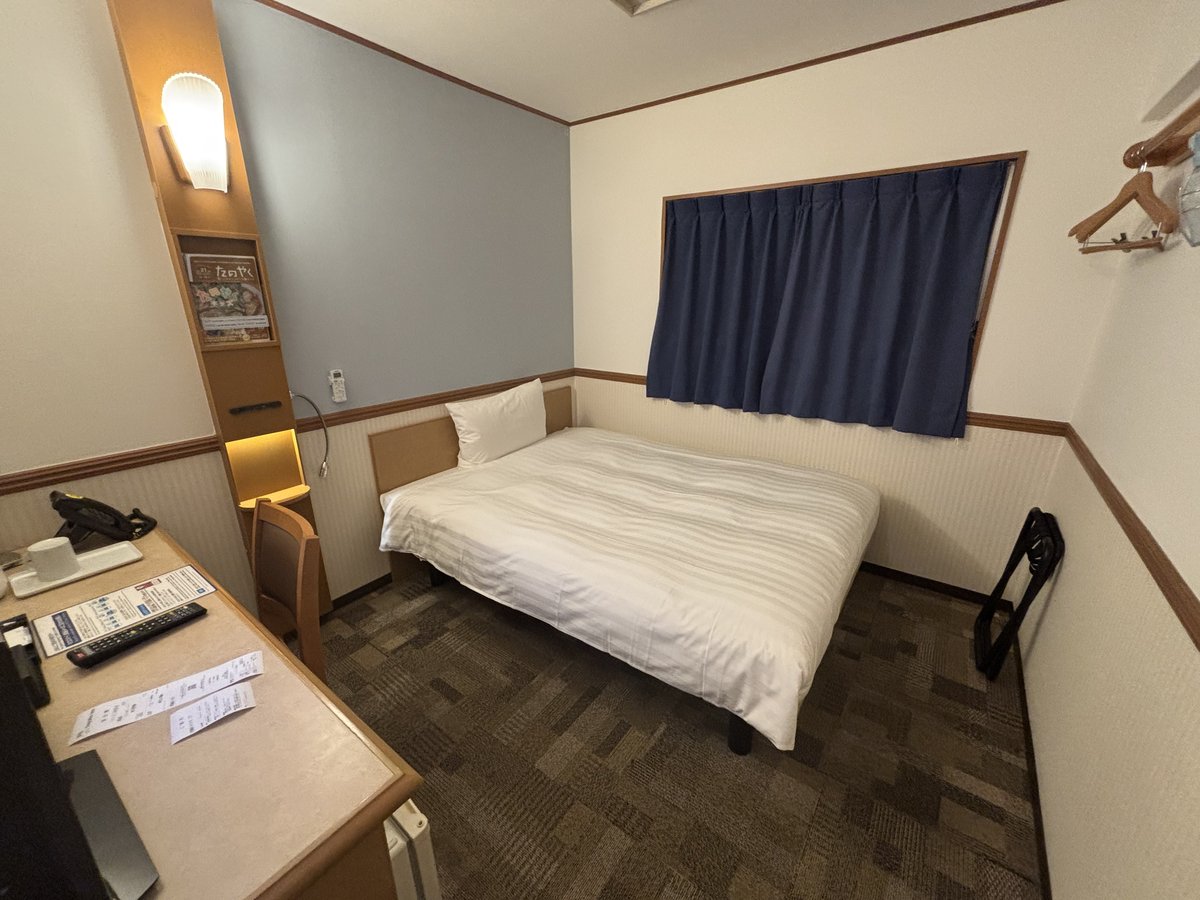
Most of the rooms at these hotels are for one person.
The rooms are compact but usually clean, with a toilet, a sink and a small bathtub in the room.
On top of that, big chain hotels are often in convenient spots, such as near a station or a highway exit. They suit days when you’re moving on to the next town early in the morning.
Rates are often shown per room.
Some chains offer free breakfast, some hotels have a large shared bath or a sauna, and some chains let you use the washing machines for free.
Check the hotel’s information before you book to see which of these it has. That can help you decide.
How to choose one will be covered in the “Business Hotels” article.
3 Capsule hotels — just a place to sleep, for traveling light
These are places to stay with rows of sleeping pods for one person each.
Each pod is roughly 1.2 meters wide, 2 meters long and 1 meter high. That’s big enough for one mattress.
The baths are shared, and a TV and a coin locker usually come with your stay. Many places take women too, with men and women on separate floors or in separate buildings.
Capsules usually don’t lock. Put your valuables in your locker.
Suitcases often don’t fit in the lockers, so many places have a luggage area or coin lockers.
Even if you stay several nights, many places ask you to take your things and go out during the day.
In other words, they’re perfect for days when you walk around town and only come back at night to sleep. Rates are per person.
How to leave your luggage and more will be covered in the “Capsule Hotels” article.
4 Vacation rentals (minpaku) — rent a home or a room
A vacation rental (minpaku) is an ordinary house or apartment that you rent to stay in. Vacation rentals range from a single room to an entire house.
Rates are per property. They’re a good fit for groups and families.
They often have a kitchen and a washing machine, so you can buy food nearby and cook it yourself.
Follow the instructions from your rental and sort your trash the Japanese way before you put it out. Think of it as trying out life in a Japanese town, just for a day.
Staying as 3 or 4 people
Each hotel room has a set number of guests it can take. Room names are only a guide; for example, twin and double rooms often have plans intended for 2 adults.
A large Japanese-style room may take more people than that.
Many ryokan rooms are for 2 to 4 people, and the more people share a room, the lower the price per person tends to be.
Some hotels don’t charge for a child of elementary school age or younger who shares a bed with an adult. However, the number of guests allowed in the room, the age limit, how many children may share each bed, and whether a fee applies vary by property, room and plan. On the booking screen, enter the number and ages of the adults and children, then check the room capacity and bed-sharing conditions for that room and plan.
For families and groups, a whole-house vacation rental is also an option.
What about laundry?
On a long trip, fitting in a night somewhere you can do laundry means you can pack fewer clothes.
Many business hotels have coin-operated washers every two or three floors. Vacation rentals tend to have washing machines.
Some capsule hotels have no washing machines, so check when you book.
For now, just these four
- A night to enjoy the place itself, with nothing else planned: ryokan
- A night before an early start from the station: business hotel
- A night on your own, just to sleep: capsule hotel
- A night with family or a group, staying as if you lived there: vacation rental
Know these four, and you can pick where to stay, night by night.
※ Facilities, rates, meals, rules on the number of guests, luggage storage and so on differ from one place to another. When you book, check the information the place provides.


