Before you go
Japanese coin parking lots have a big sign with the charges on it.
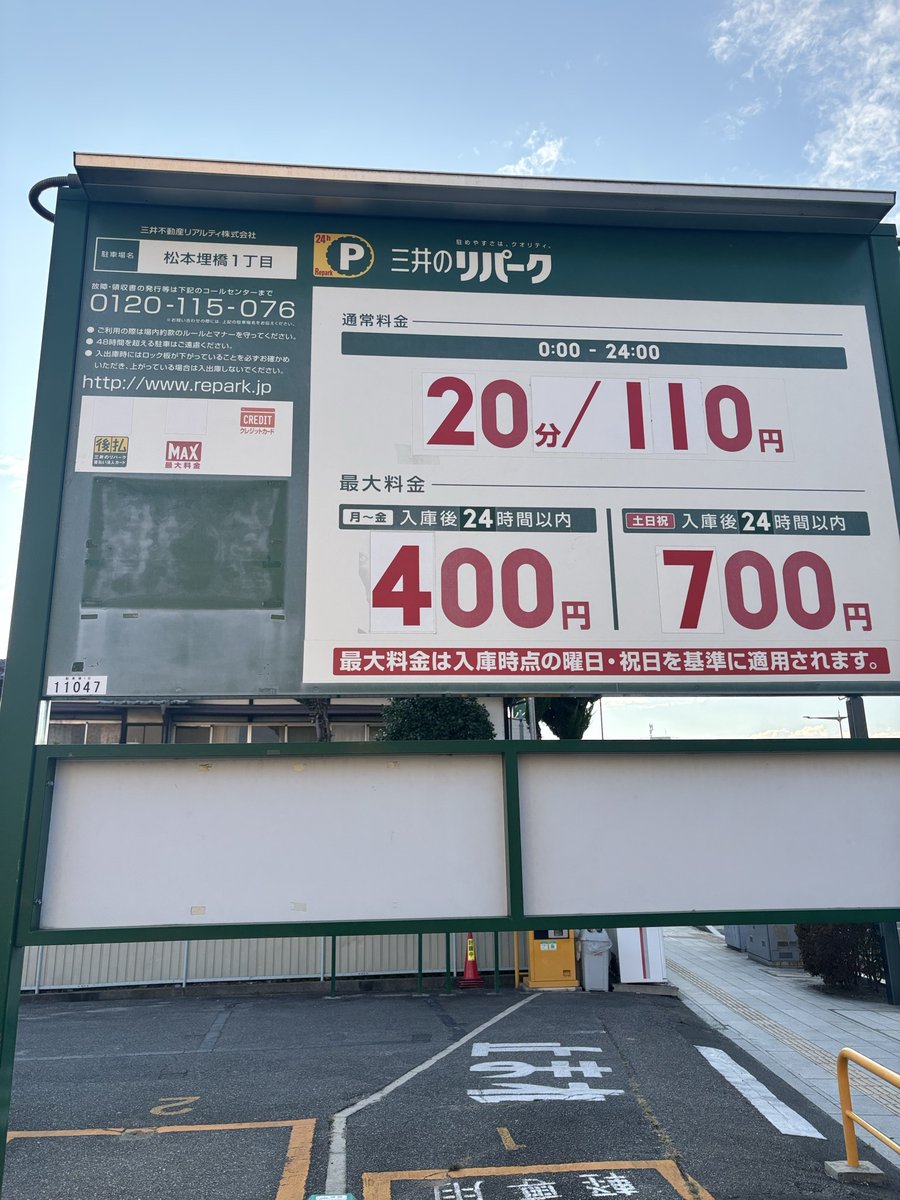
There are a lot of numbers and a lot of Japanese on it, so you may find yourself thinking,
“So what does it actually cost?”
and not knowing where to start.
But you don’t have to read all of it.
To begin with, just three things.
Two characters worth knowing
円 is yen, and 分 is minutes.
When those two sit side by side, that’s the price.
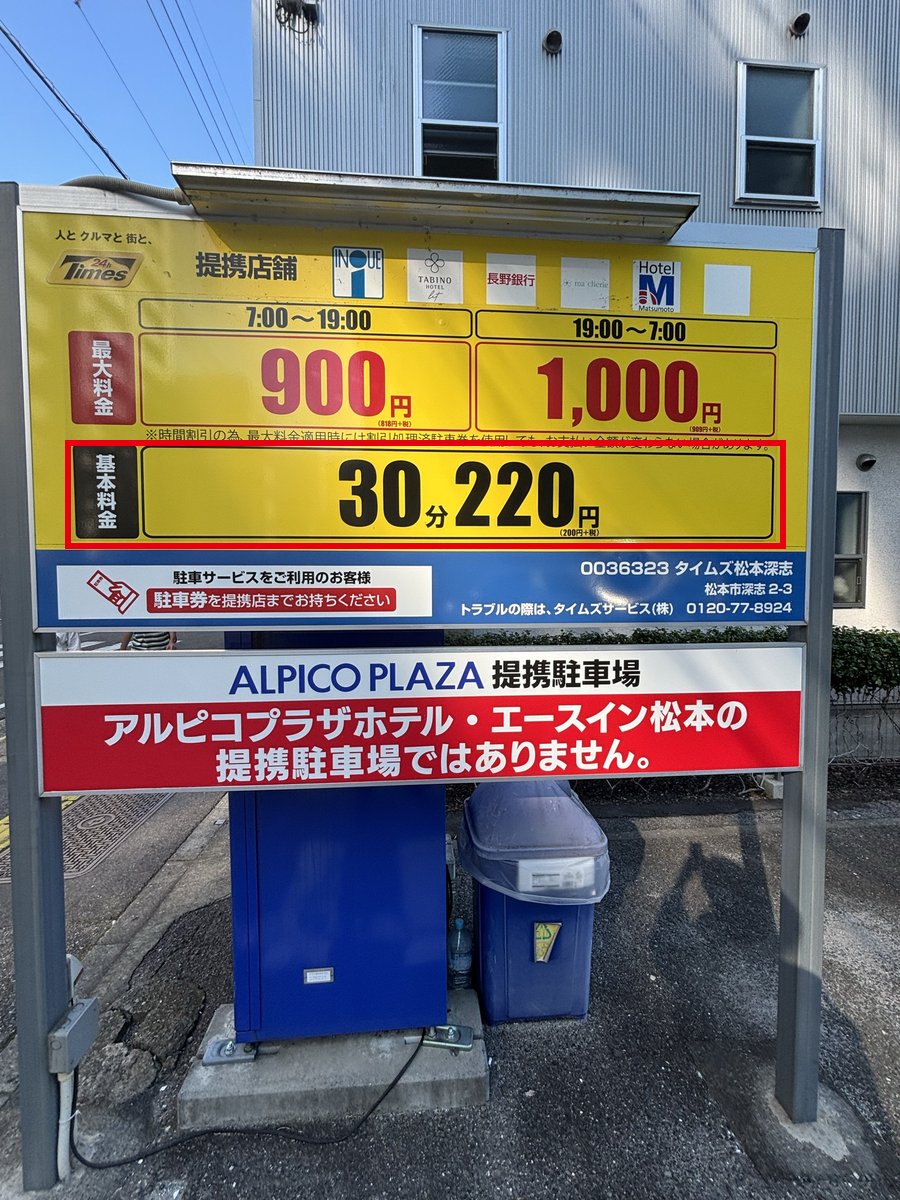
1 The basic rate
What you look at first is
how many minutes or hours you get, and for how much.
That’s it.
For example,
○分 ○○円 (“○ minutes, ○○ yen”)
means you’re charged that amount for each block of time.
2 “最大料金”
Next, look for the characters
最大料金 — “maximum charge”
and see whether they’re on the sign.
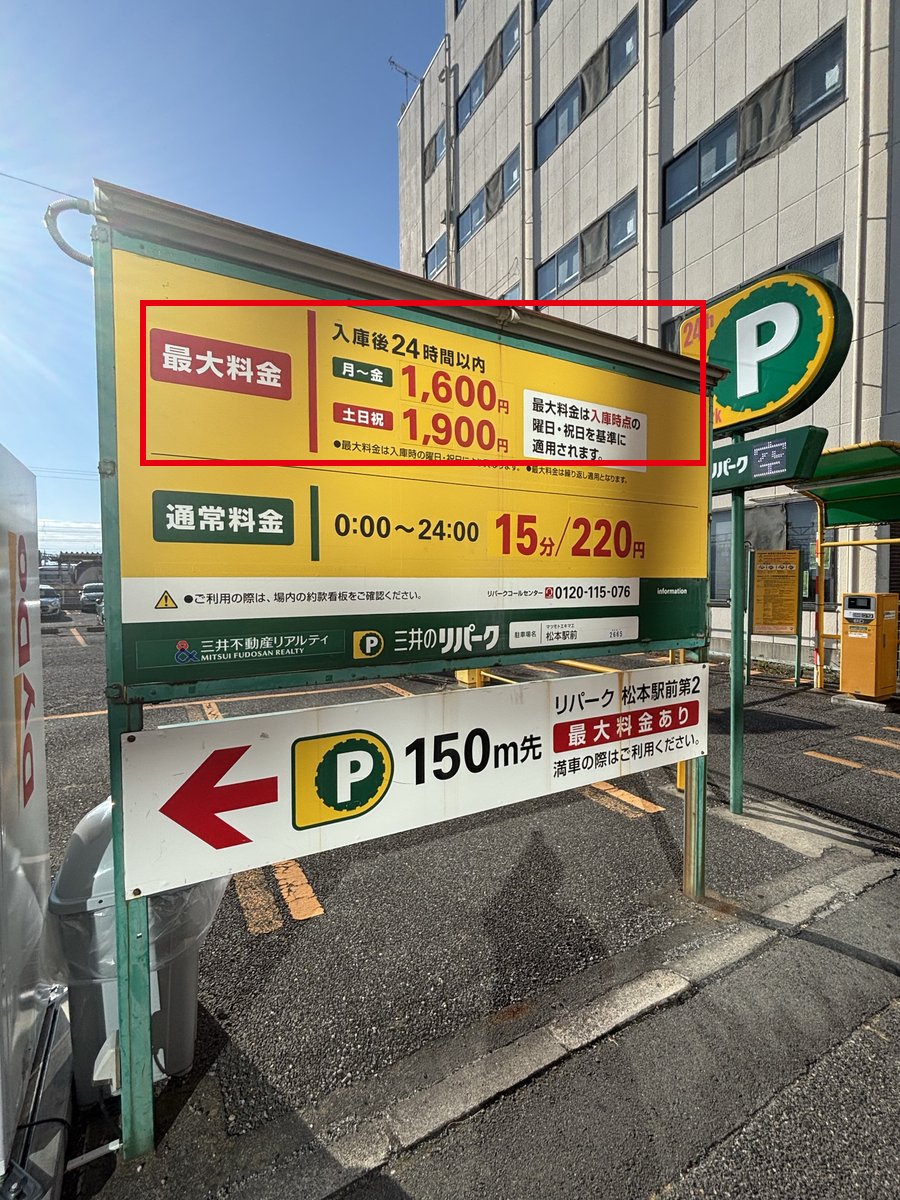
If they are, there’s a ceiling on what you pay.
But even when it says
最大料金 ○○円 (“maximum charge, ○○ yen”)
that isn’t always what you end up paying.
There can be conditions on the hours, the days, or the spaces it covers.
3 The day of the week and the time
Even at the same parking lot,
平日 — “weekdays”
土・日・祝日 — “Saturday, Sunday and public holidays”
昼 — “daytime”
夜 — “night”
can each have a different price.
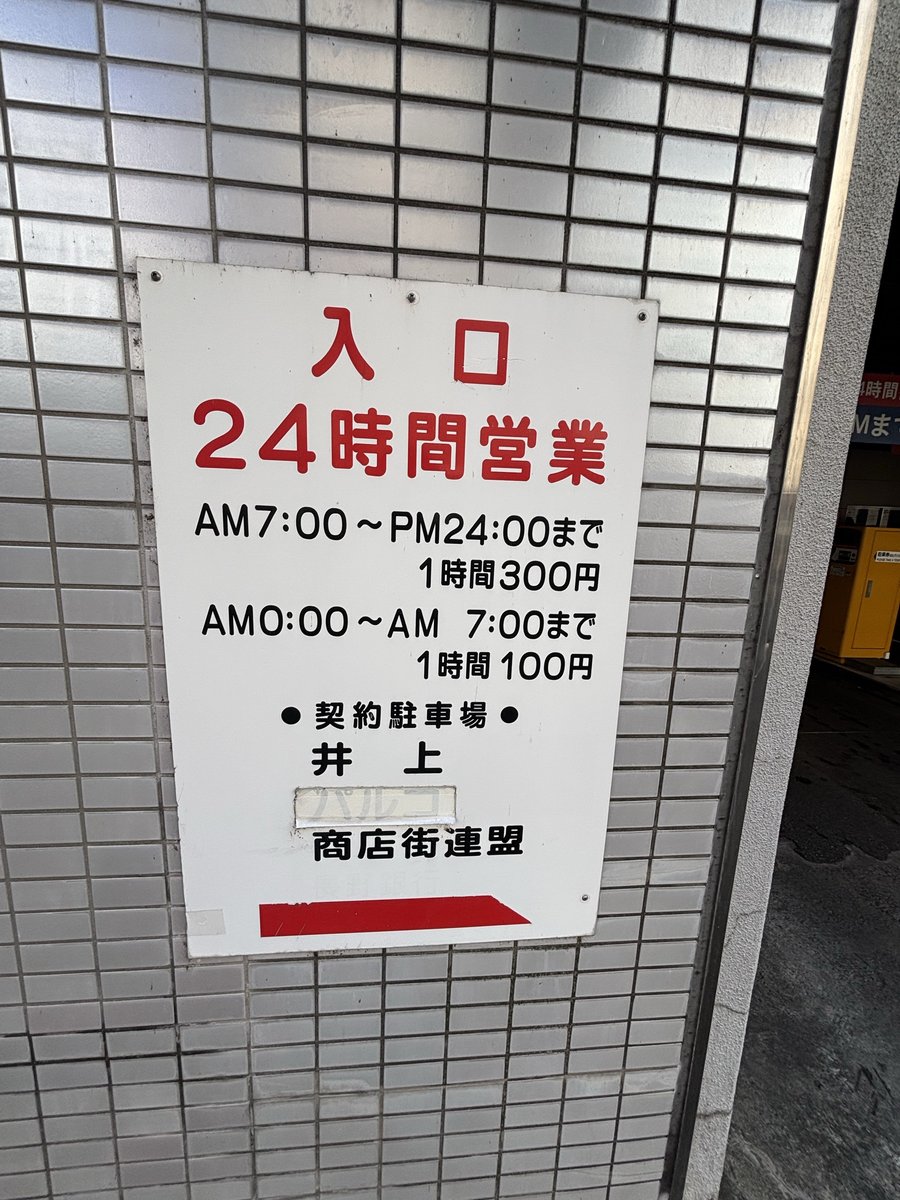
Look for the price for the day and the time you’re parking.
Look twice at 24時間
The words 24時間 (“24 hours”) turn up on charge signs.
What you want to know is what those 24 hours refer to.
24時間最大 ○○円 — “maximum for 24 hours”
is a condition attached to the maximum charge.
Whether the parking lot itself is open 24 hours is on the sign at the entrance.
How much? About 500 yen an hour in Tokyo
A 2025–2026 survey across Tokyo found an average of 495 yen per 60 minutes in the daytime on a weekday.
Within Tokyo alone, though, it ran from 200 yen to 1,290 yen — a sixfold spread.
That average leaves out maximum charges, so a long stay costs less than it suggests.
At sightseeing spots the price is sometimes per visit. Shirakawa-go charges 1,000 yen for an ordinary car.
Keep 495 in mind, and the number on a sign tells you whether it’s cheap or expensive.
For a short stay, the basic rate is enough
For an hour or two of sightseeing or a meal,
how many minutes for how much?
is all you need.
For a whole day or a whole night, look at the maximum-charge conditions as well.
How to read those is in “最大料金 (Maximum Fee) and How to Read the Sign in Detail”.
※ Charges, the conditions for the maximum charge, and the days, times and spaces it covers differ from one parking lot to another. This article describes the basics of reading a charge sign. For the actual charges, check the sign on site and the guidance from the operating company.


