Category: Parking

  • Parking in Japanese: A Mini Dictionary for Parking Lots in Japan (日本の駐車場 日本語ミニ辞典)

    This is the Japanese you see most often in parking lots, for checking on the spot.

    It gives the meaning, and what to do about it when you’re standing there.

    Wording varies, so if there’s information on site, go by that first.

    The words in this dictionary

    Words you see first at the entrance

    Words that tell you where you can park

    Words about parking and paying

    Words about charges

    Words to say when you’re stuck

    Words you see first at the entrance

    空車 / 満車

    空車 means there’s space and 満車 means there isn’t. If it says 満車, look for another parking lot.
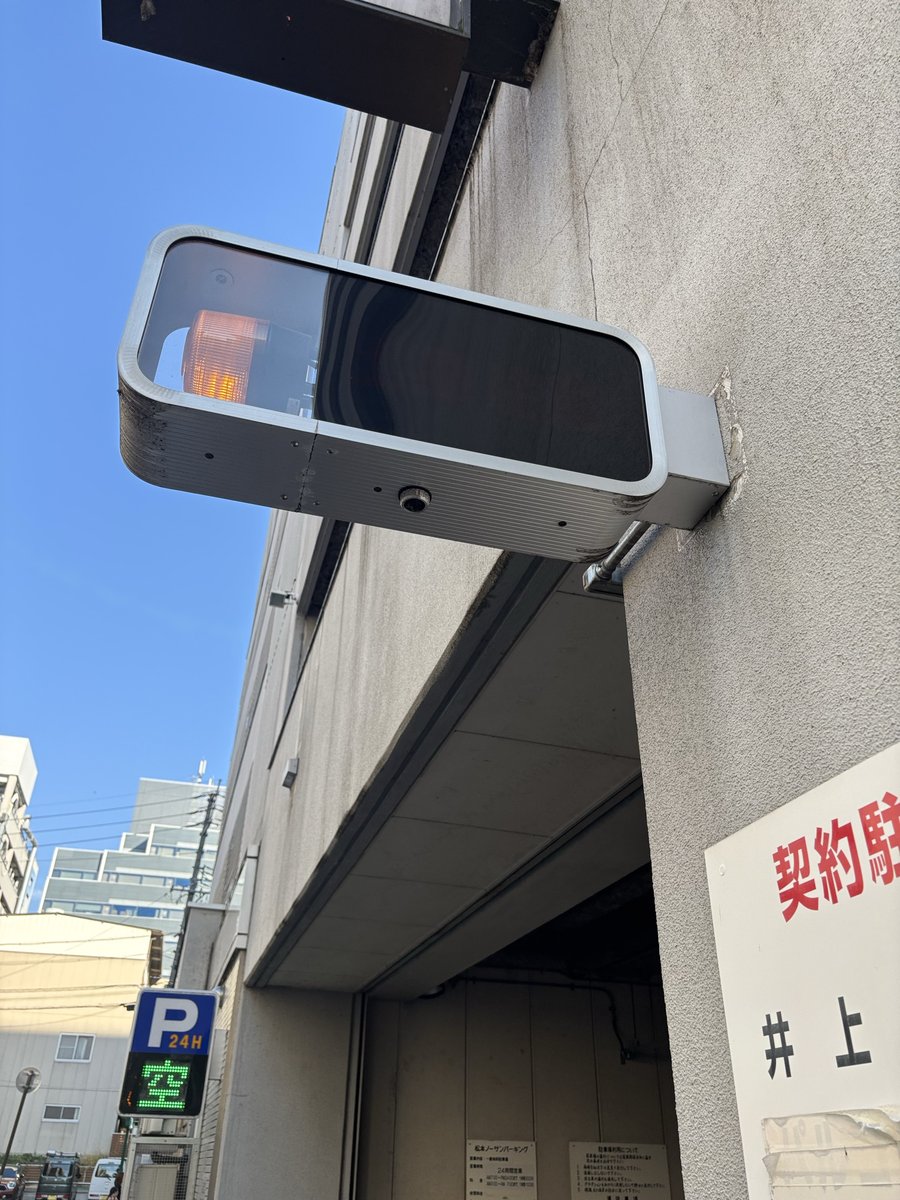
    Entrance sign "P 24H" with 空 in green: spaces are available
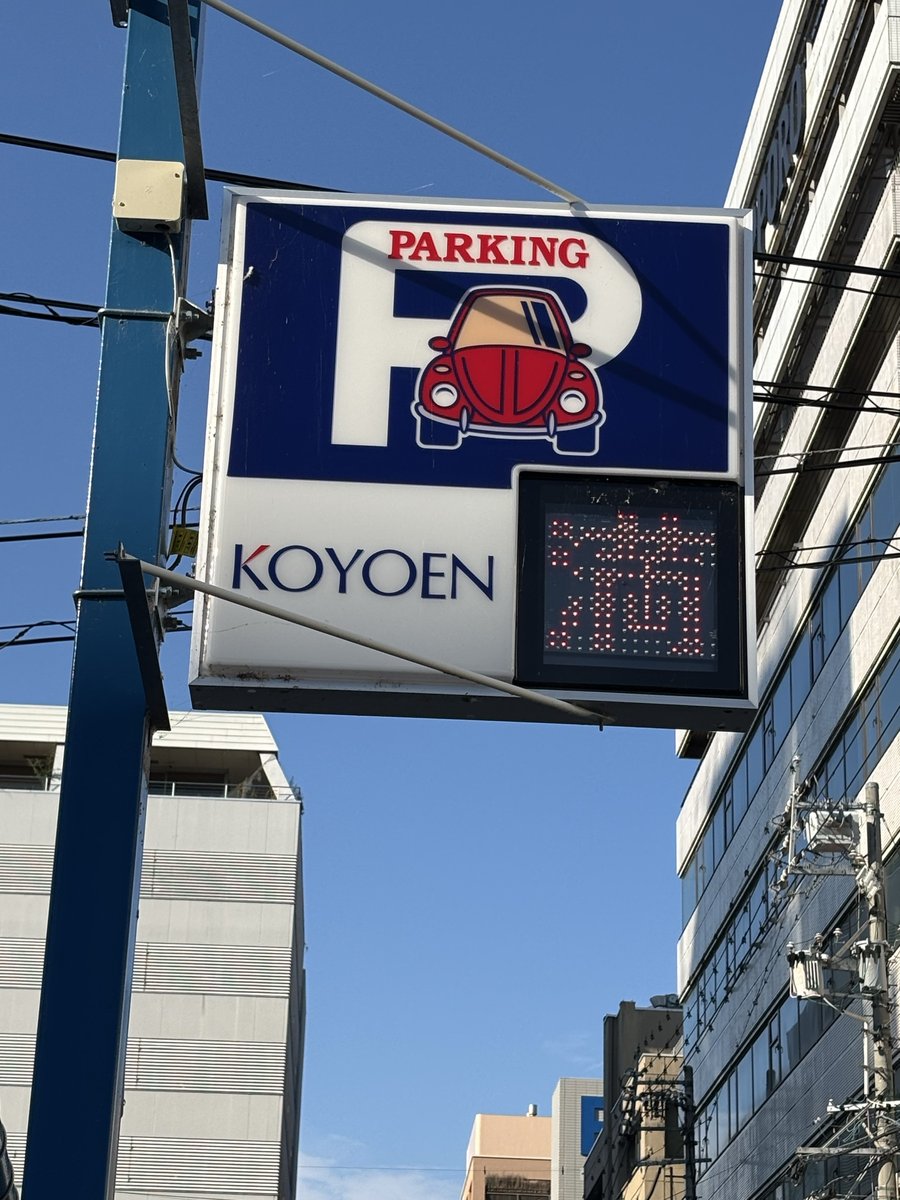
    Parking sign with 満 in red: the lot is full

    空

    Inside a building you see just the one character 空. It means the same as 空車: space that way.

    入口 / 出口

    入口 is the way in, 出口 the way out. Follow the arrows, the gates and the attendant.

    Words that tell you where you can park

    月極

    Parking rented by the month. Even when it’s empty, it belongs to the person renting it.
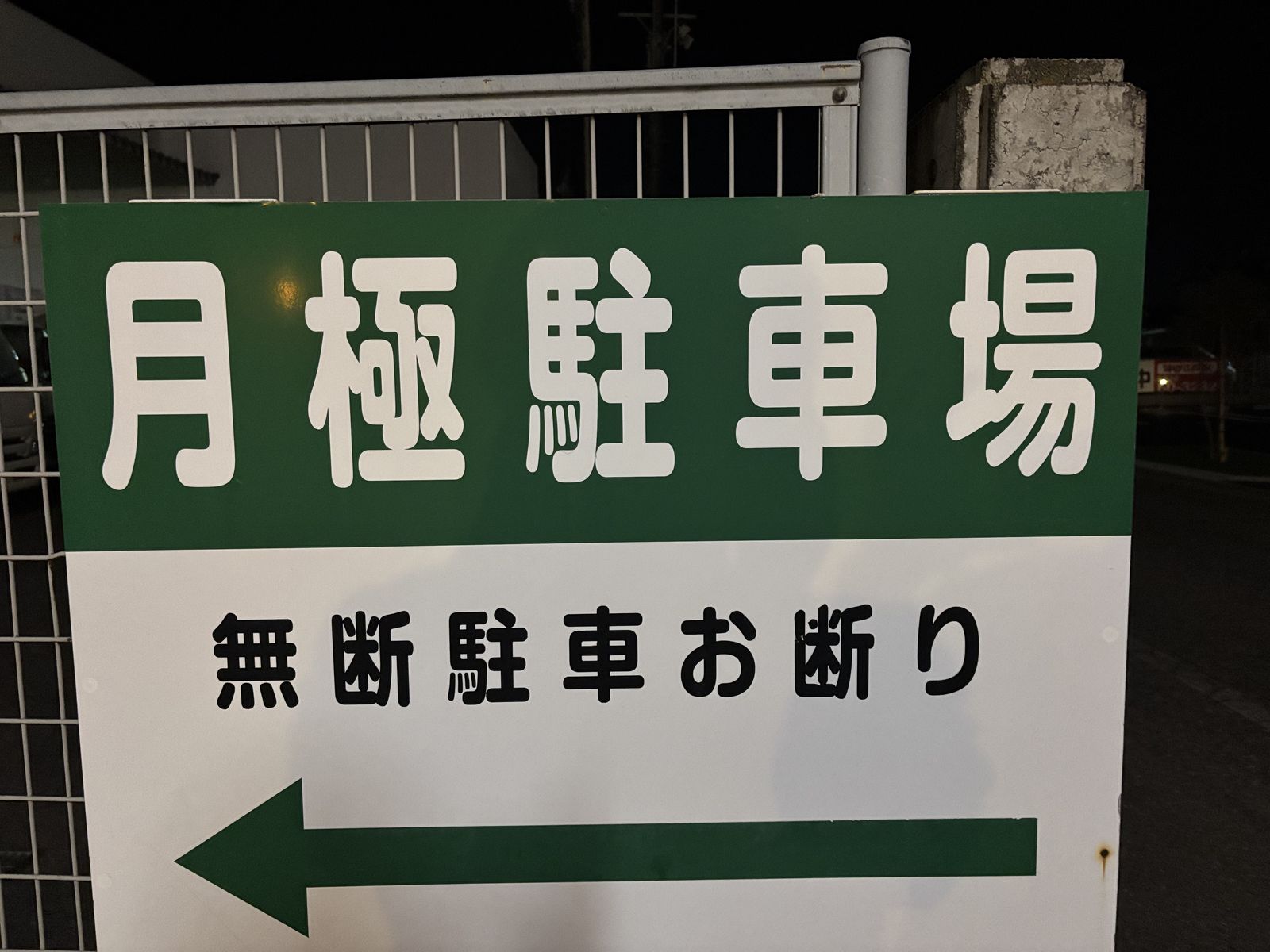
    Green and white sign reading 月極駐車場 and 無断駐車お断り with a green arrow, on a fence at night
    A green-and-white sign reading 月極駐車場 (monthly parking lot) and 無断駐車お断り (no parking without permission), with an arrow pointing to the lot.

    専用

    It means “set aside” — for particular people or particular cars. Longer signs that contain these two characters mean the same.

    契約者専用

    A space only people with a contract can use.

    軽 / 軽専用

    A space for the small class of Japanese car (軽自動車). If you can’t tell whether your rental counts, take a general space.

    一般

    A sign marking spaces for general users, as opposed to contract holders.

    高さ制限

    The height limit for cars going in. Your rental car’s height is on the 車検証 kept in the car. If you’re not sure, ask an attendant; if there isn’t one, try another parking lot.

    長さ / 幅 / 高さ

    The three words listed together on the 車検証. The number to compare with the 高さ制限 is the one beside 高さ.

    営業時間

    The hours the parking lot is open. Before a long stay, check when you can get the car out.

    駐車禁止

    The road sign for no parking: blue, with a red border and a red diagonal band. A yellow line on the road means the same.

    Words about parking and paying

    入庫 / 出庫

    入庫 is driving in, 出庫 is driving out. You see them where fee and time conditions are set out.

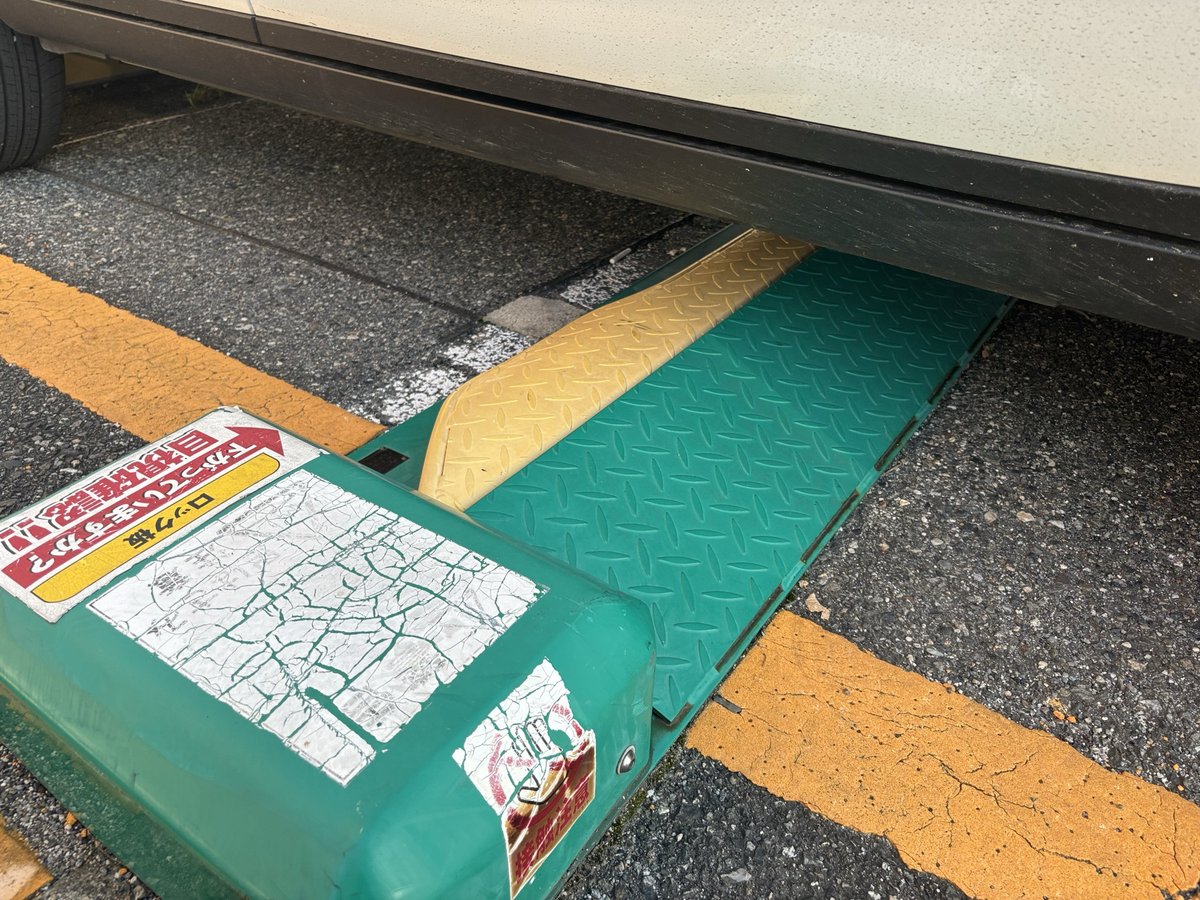
    ロック板

    A plate in the floor of the space that rises once you park. After you pay, watch it go down before you move the car.
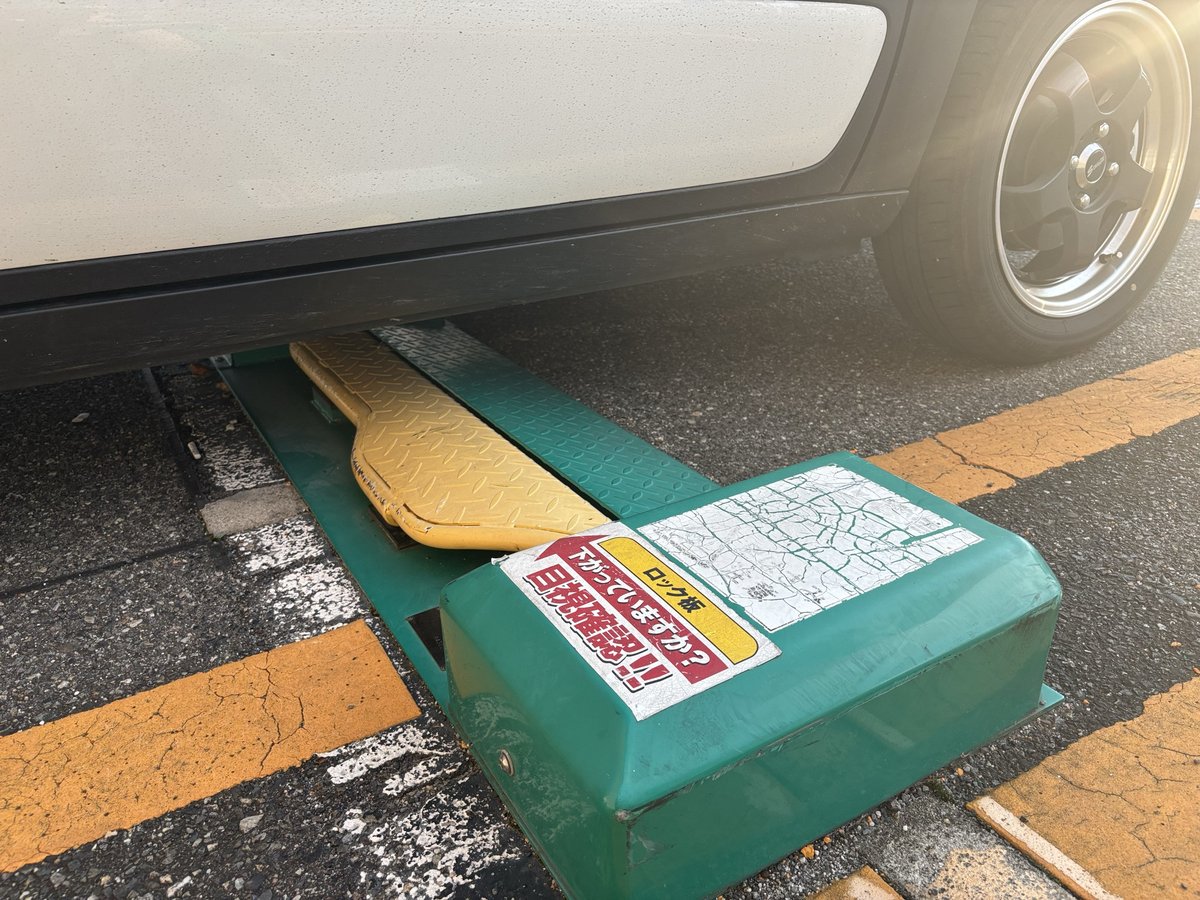
    Lock plate raised (after parking)
    Lock plate lowered (after paying)

    カメラ式

    The system that reads your license plate with a camera. It’s the name of a system, not a word on a sign.

    車両センサー

    A word you may see on the how-to-use sign at lots with no lock plate in the floor. At those lots, you may pay using the number of the space you parked in (駐車位置番号).

    駐車位置番号

    The number of the space you parked in. At some lots, you pay by entering this number on the pay machine. Once you’ve parked, take a photo of the number.

    前払い式

    The system where you park and then pay up front. Also a system name, not something written on a sign.
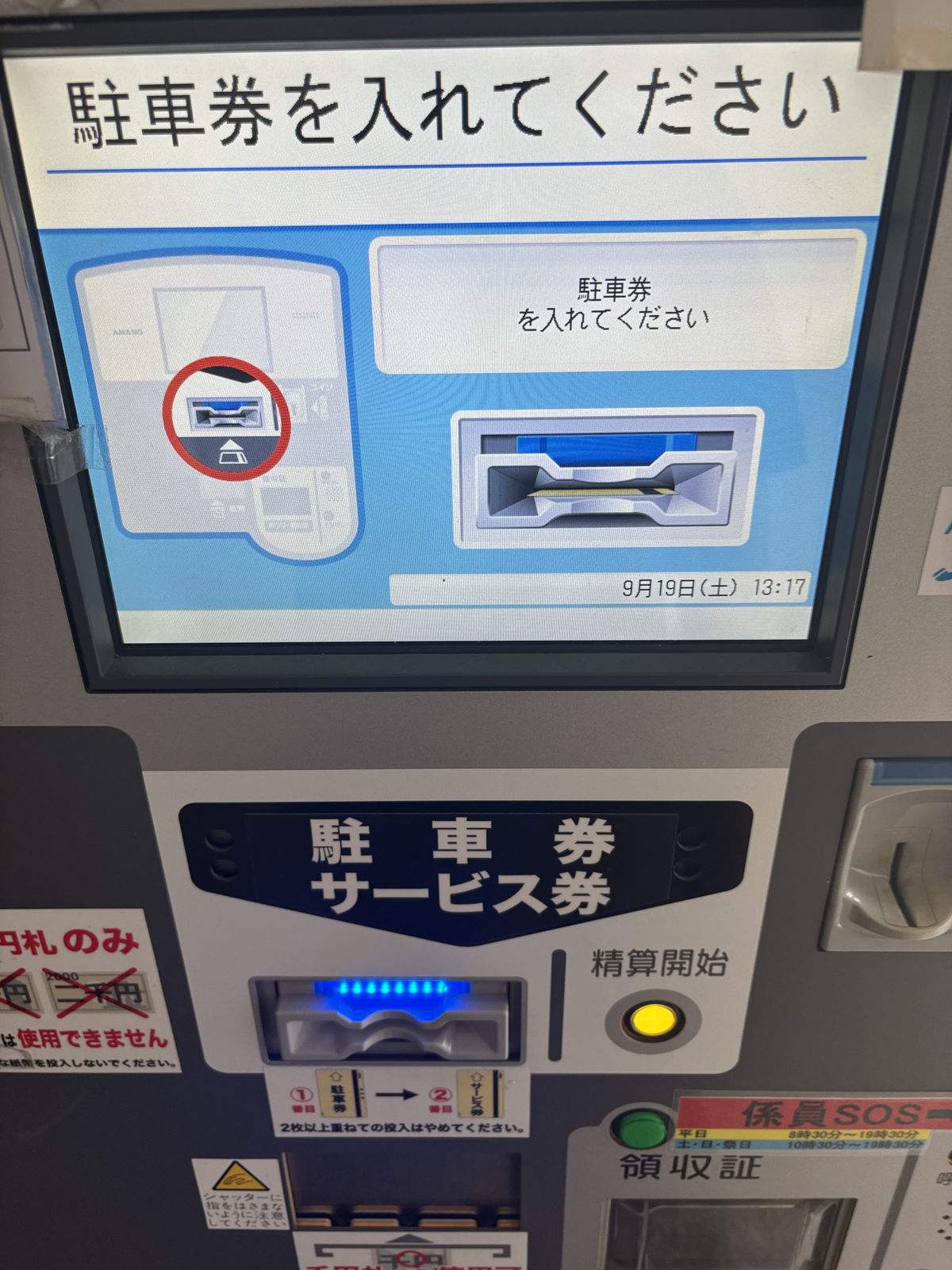
    Parking pay machine whose screen reads 駐車券を入れてください, with a blue-lit ticket slot and a yellow 精算開始 button
    A parking pay machine (精算機). The screen says "駐車券を入れてください" (please insert your parking ticket). The ticket slot glows blue, with a 精算開始 (start payment) button beside it.

    精算

    Checking your fee and paying it. You use your ticket, your space number or your license plate.
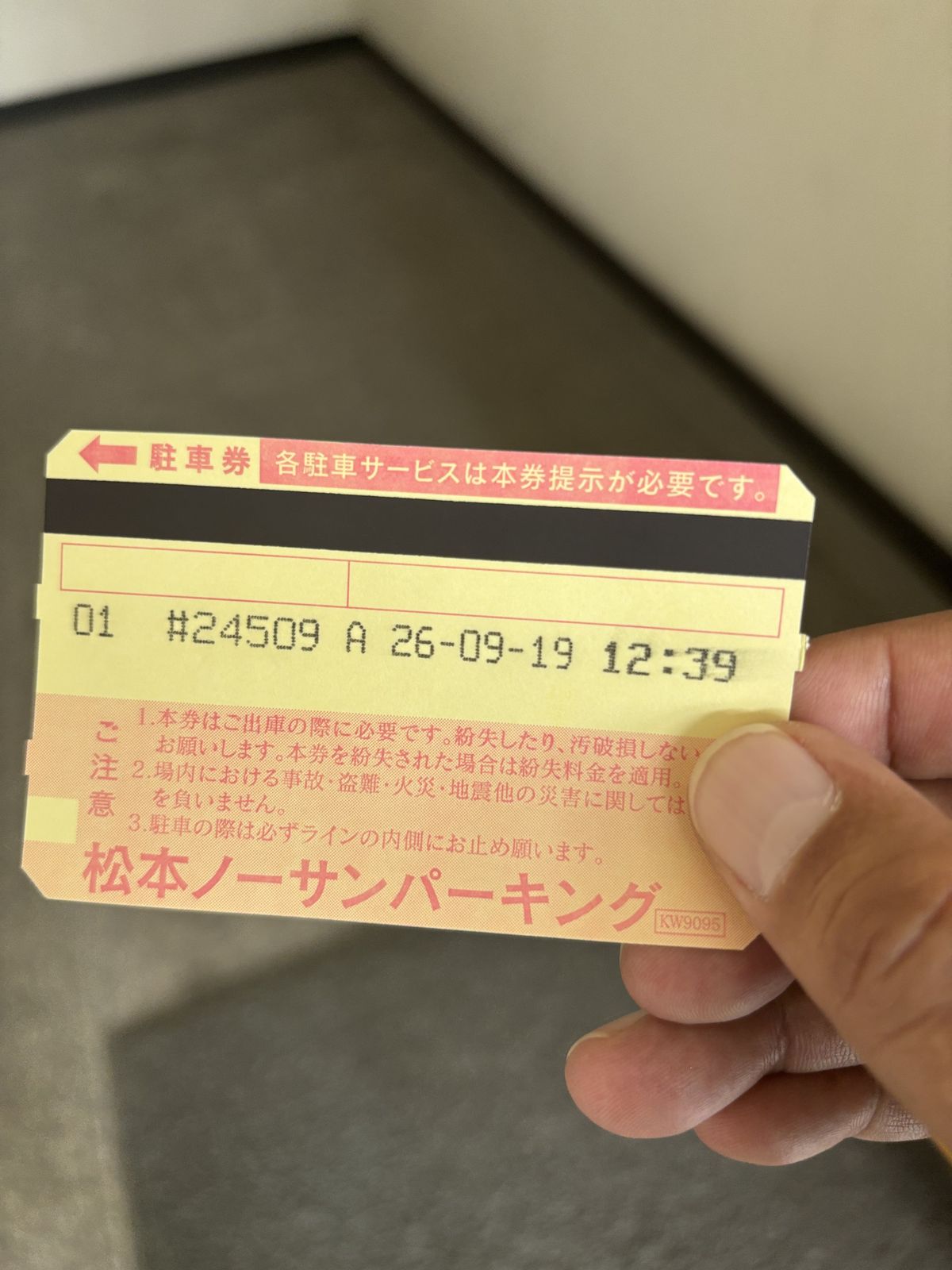
    Hand holding a yellow and orange Japanese parking ticket printed with 駐車券 and an entry date and time
    A real parking ticket (駐車券). It says "駐車券" and "each parking service requires this ticket", with the entry date and time printed on it.

    精算機

    The machine you pay at. What to enter and which payments it takes are shown on it.

    駐車券

    The ticket that comes out at the entrance. You may need it for a discount, so take it with you.

    事前精算

    Paying inside the building before you walk back to your car. There’s a separate machine for it.

    駐車証明書

    A slip showing you parked in that lot. Take it into the shop if that’s what the discount asks for.

    利用規約

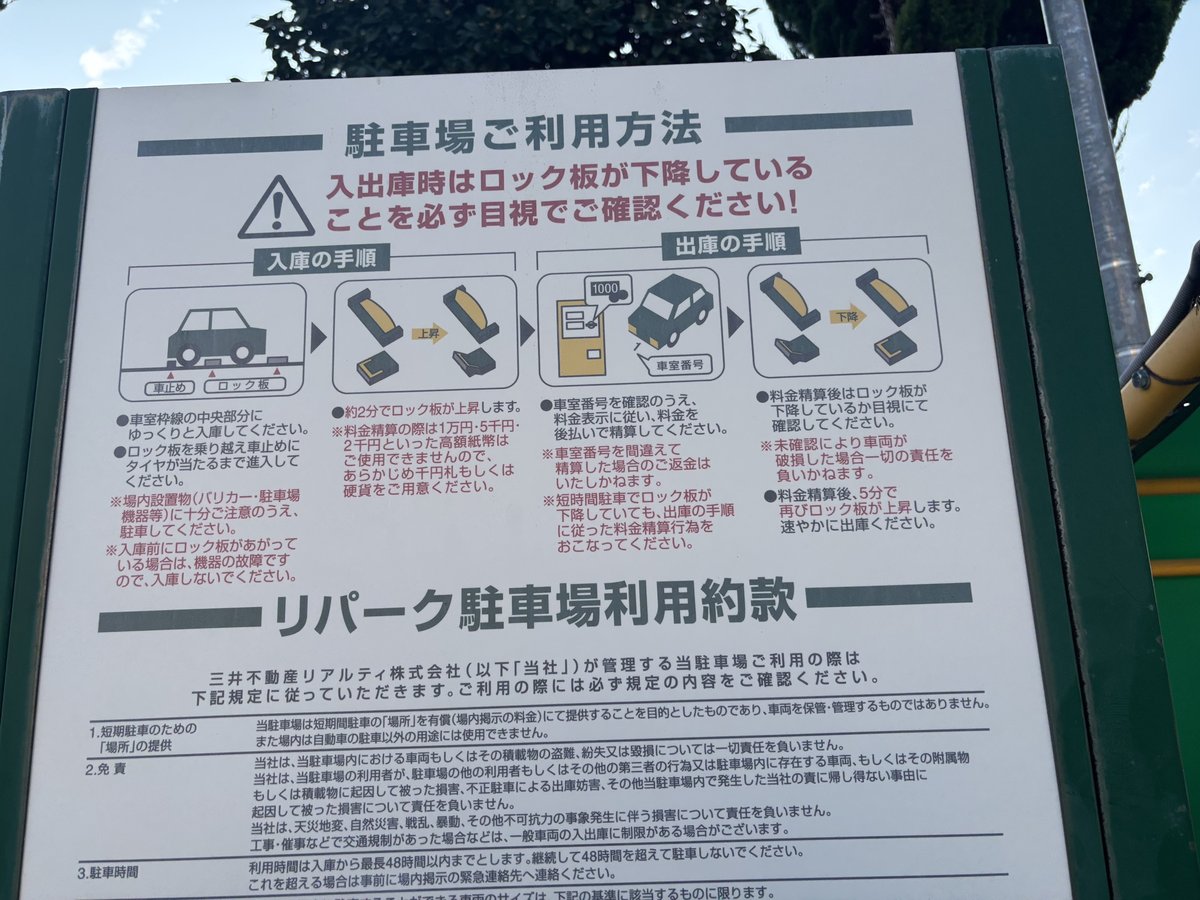
    The posted terms: fee conditions and what happens when something goes wrong. Near the entrance or the pay machine.

    預り書

    A slip the machine gives you in place of money it couldn’t return — when it’s short of change, or when you stop paying halfway and don’t get all your money back. It may say 預り証 instead. Keep it, and ask on the intercom.

    Words about charges

    円 / 分

    円 is the unit of money and 分 the unit of time. They line up as ○分 ○○円.

    平日 / 土・日・祝日

    平日 is any day that isn’t a weekend or a public holiday; 土・日・祝日 is weekends and holidays. Prices often differ between the two.

    昼 / 夜

    昼 and 夜 can carry different prices. The hours they cover are in numbers beside them.

    最大料金

    A ceiling on your fee, but only under certain conditions. Don’t go by the number alone — read the conditions.

    上限 / 打止 / 打切

    All three are used to mean the same thing as 最大料金. Which one appears depends on the sign.

    24時間営業

    It means the parking lot is open 24 hours. Not the same thing as 24時間最大.

    24時間最大

    A maximum-fee condition. It doesn’t mean the parking lot is open 24 hours.

    当日24時まで

    It means until midnight that same day. If you’re staying until morning, check the fee after the date changes.

    繰り返しあり/なし

    Whether the maximum fee applies again in the next time band, or on the next day.

    Words to say when you’re stuck

    助けてください

    “Tasukete kudasai” — please help me. It works on the intercom and with a person nearby.

    日本語がわかりません

    “Nihongo ga wakarimasen” — I can’t read Japanese. Say that next, then point.

    If you’re not sure

    When you can’t work out what a sign means, leave the car where it is and press the intercom on the pay machine.

    ※ Names, wording, payment methods and fee conditions differ from one parking lot to another. When you actually use one, check the signs on site, the terms of use, and the information from the operating company.
  • Kanazawa (金沢) Parking — Park Where There’s Space, Then Get Around Town on a Pass

    Are you planning to go to Kanazawa by car?

    There’s one thing to decide ahead of time about parking.

    Park at a parking lot with space, and get around the town with a one-day unlimited-ride pass.

    Kanazawa City’s website that shows how full its parking lots are, 金沢市駐車場案内 (KANAZAWA PARKING NAVI) (https://www.parkingguide-kanazawa.com/), recommends this approach.

    When is it crowded? — Tourist season and the year-end and New Year holidays

    Kanazawa City’s guidance says this.

    “The city center gets very crowded during the tourist season and over the year-end and New Year holidays.”

    Get around town on a pass

    The pass is called 金沢市内1日フリー乗車券 (Kanazawa City ONE-DAY PASS). It’s 800 yen for adults (as of 2026).

    It covers route buses within a set area, sightseeing loop buses and more.

    You can buy the paper pass at the counters at the Kanazawa Station bus terminal, or at hotels and tourist information centers in the city. It isn’t sold on the bus.

    On a smartphone, you can buy a digital pass through Norimasshi Kanazawa (のりまっし金沢), Kanazawa City’s digital transportation service.

    You park just once. After that, you can get around town on the pass.

    ※ The parking availability guide and the pass details change from year to year. Before you go, check Kanazawa City’s guide for parking and Hokuriku Railroad’s (北陸鉄道) guide for the pass.

  • Nikko (日光) and Nasu (那須) Parking — The Line of Cars Waiting Is What Makes the Traffic Jam

    The Irohazaka (いろは坂) road in Nikko. The highlands of Nasu.

    In the fall, cars come from all over Japan.

    These two places have something you don’t often see elsewhere.

    The traffic jams are known to be caused by the parking lots.

    You look at slightly different things in each, so this article is split in two as well.

    Nikko

    The busy time is 9 a.m. to 3 p.m. on Saturdays, Sundays and holidays

    In Nikko, the busy time is 9 a.m. to 3 p.m. on Saturdays, Sundays and public holidays.

    Nikko City recommends avoiding these hours.

    It even has a name: off-peak sightseeing (オフピーク観光).

    Turn that around, and outside those hours, the same road is easier to drive.

    If you get up the hill before 9 a.m., you miss the busiest time altogether.

    The line of cars waiting is what makes the traffic jam

    This is the most interesting thing about Nikko.

    Around the Futarabashi-mae intersection (二荒橋前交差点) in Chugushi (中宮祠), the reason for the traffic jams is known.

    The line of cars waiting to get into the parking lot blocks the road beyond it.

    The view is that it’s not a shortage of parking but the way people wait that’s making the jam.

    So not going at the times the line forms is what works best.

    Where you get out of the car is decided on the day

    In Nikko, where you park changes with the season.

    In the fall, temporary parking lots open for just a few days.

    They’re on riverbanks and on the grounds of national and prefectural government offices.

    Normally, they aren’t parking lots at all.

    If you’re looking for neatly marked spaces, you’ll drive right past.

    The characters to look for are 臨時駐車場 (temporary parking lot). Nikko City’s guidance uses these characters.

    Follow the guidance on site.

    One more thing. In spring 2026, the temporary parking lots were open from 9 a.m. to 6 p.m.

    Fall may not be the same, so once you’ve parked, check the closing time on the signs or with an attendant.

    Decide when you’ll be back first, and then you can walk around without worrying.

    Instead of booking, you check how full the parking lots are on the day

    In Nikko, what you can rely on isn’t booking.

    In the fall, the prefecture and the city put traffic information and how full the parking lots are on their websites.

    What you can see in advance is the crowd forecast. The Nikko City Tourist Association (日光市観光協会) puts out a crowd forecast calendar.

    As for how full the parking lots are, take a look once that morning, before you set off.

    Nikko City shows how full they are in three levels: すいている(空きあり) (quiet, space available) / やや混雑 (somewhat crowded) / 混雑 (crowded). It doesn’t say 満車 (full) or 空車 (space available), so remember these three.

    Just knowing which parking lot has space can let you skip one whole line.

    Nasu

    When it’s full, you can’t wait on the shoulder

    In Nasu, something even easier to see is happening.

    Cars overflowing from parking lots that are full (満車) stop on the shoulder, so traffic cones have been lined up there.

    That’s the stretch from the Toge-no-Chaya parking lot (峠の茶屋駐車場) to the Omaru parking lot (大丸駐車場), and it’s a measure for the fall period only (in 2026, from September 19 to October 25).

    In other words, on that stretch, when it’s 満車 there’s nowhere to pull over onto the shoulder.

    Turn that around, and if you don’t go at the busy times, you can drive this road normally.

    So shifting your timing pays off most

    In both places, what causes the jams is cars that can’t get into a parking lot.

    So the way to avoid them is clear, too.

    In Nikko, stay clear of 9 a.m. to 3 p.m. on Saturdays, Sundays and holidays. Check the crowd forecast the day before, and how full the parking lots are that morning.

    In Nasu, during the fall when the traffic cones are out, stay clear of the busy times. That alone means you won’t end up waiting on the shoulder.

    That way, you can get around these famous fall-color spots far more easily.

    ※ The days and places temporary parking lots open, the way how full the parking lots are is shown, the crowd forecast, the period of the traffic cones in Nasu and so on change from year to year. Before you go, check the official pages of Tochigi Prefecture and Nikko City.

  • Owakudani Parking & Hakone Parking: Weekday vs Weekend

    Hakone is a hot-spring area that’s easy to drive to from Tokyo.

    The roads are in good shape, too.

    But going on a weekend or holiday and going on a weekday are very different stories.

    There’s just one thing to decide first.

    Whether you’ll go on a weekend or holiday, or on a weekday.

    On a weekday, it’s easy enough to get around by car.

    On a weekend or holiday, don’t drive to Owakudani; switch to the ropeway before you get there.

    If you can shift to a weekday, do. If you can’t, the ropeway. That’s all this article wants to say.

    You can’t book the Owakudani parking lot

    If you’re going to see Owakudani, it’s the Owakudani parking lot (大涌谷駐車場).

    This parking lot doesn’t take bookings.

    You have two options.

    Get there early, or go on another day.

    The day to shift to is a weekday.

    On a weekday, it’s easy to get around by car

    The company that runs the Owakudani (大涌谷) parking lot puts it like this.

    “We recommend weekdays, when there’s less traffic and parking for a regular car costs less.”

    The people who want you to park there are recommending weekdays.

    And it isn’t just words.

    On weekends and holidays, the maximum charge (最大料金) is set at double the weekday one.

    They build “busy days cost more” right into the price.

    Turn that around, and go on a weekday, and it’s quieter and cheaper.

    If you have one free day to spend in Hakone, it’s worth making it a weekday.

    If you’re parking at Miyanoshita, check your car’s height first

    Around the hot-spring town, there’s the Miyanoshita parking lot (宮ノ下駐車場).

    It has a clear limit.

    Height up to 2.0 meters.

    There are rules on length, width and weight too.

    If you’re renting a tall van or a minivan, check that height first.

    Your own car’s measurements are on the 車検証, the inspection certificate kept in the car.

    Look for the three words 長さ・幅・高さ — length, width, height.

    If your car looks like it’s over, and there’s an attendant at the entrance, asking is the quickest way to find out.

    If it won’t fit, going to another parking lot is a perfectly good option.

    On a weekend or holiday, take the ropeway to Owakudani

    On a weekend or holiday, there’s a way to get to Owakudani without driving there yourself.

    Hakone has a system called Owakudani Park & Ride.

    The area around Owakudani is especially prone to traffic jams.

    So you park your car at a ropeway station before you get there.

    That’s Ubako Station (姥子駅) or Togendai Station (桃源台駅).

    From there, you ride the ropeway to Owakudani.

    On Saturdays, Sundays, holidays and at busy times, there are perks too.

    You get them by showing a leaflet handed out at the stations and elsewhere, together with an eligible ticket.

    Besides, Owakudani seen from above is quite something.

    You take it to avoid the traffic, and it turns out to be the better choice.

    ※ At Owakudani, volcanic activity is still going on, and volcanic gas is coming out. People with asthma or other breathing conditions or heart conditions, people with a pacemaker, and anyone who feels unwell can’t sightsee outside the car, because it can be life-threatening. For the full conditions, check the operator’s official page. If the smell is strong, or your eyes, nose or throat feel irritated, leave the area.

    ※ In winter the roads freeze, so drive on winter tires.

    ※ Parking charges, what counts as a weekday or a holiday, vehicle size limits, Park & Ride perks and restrictions due to volcanic activity can change. Before you go, check the official pages of Hakone Town and the parking lot operators.

  • Kyoto (京都) and Nara (奈良) Parking — Before You Park, There’s Another Way

    Are you planning to visit Kyoto and Nara on one trip?

    If you’re going by car, just one thing first.

    Both cities have ways for you to get out of the car before you get close to the center.

    In Kyoto, you can park outside Kyoto City and go in by train.

    In Nara, you can park a little way out and go in by bus.

    This article is about that “other way”.

    It isn’t an article about finding a place to park.

    If the timing’s right, parking is free in both (in Kyoto, in the fall, with conditions that depend on the parking lot; in Nara, only on set days).

    Kyoto

    When is it crowded? — Fall

    The period Kyoto City sets aside for its traffic measures is November.

    It’s the season for fall colors.

    At this time of year, the city works a little differently.

    Temporary parking lots open, and direction signs and banners go up.

    There’s a map that forecasts crowds on a five-level scale

    Kyoto has a tool other sightseeing spots don’t.

    It’s called the Kyoto Travel Congestion Forecast (京都観光快適度マップ).

    For popular sightseeing spots, it shows a forecast of how crowded they’ll be, on a five-level scale.

    It’s shown by time of day.

    The five levels aren’t shown in words but in colors and little figures of people.

    Quieter means bluer with fewer people, and busier means redder with more people.

    There’s an English version too.

    And you can pick the day’s weather from Sunny, Rainy and Heavy Rain.

    That’s because the weather changes how crowded it gets.

    Some places have live cameras too.

    It also points out places that are relatively quiet even in the daytime.

    Look at this before you decide the order of your stops, and the whole plan for your trip changes.

    “Avoiding the crowded places” turns into “picking the quiet ones”.

    The city also puts out whether its sightseeing parking lots are 満車 (full) or 空車 (space available).

    That’s for three places: Kiyomizuzaka (清水坂), Ginkakuji (銀閣寺) and Arashiyama (嵐山).

    In other words, in Kyoto, the city itself prepares its information on the assumption that it’ll be crowded.

    Where to get out of the car — before you get into Kyoto

    Kyoto’s Park & Ride has one clear feature.

    Some of the parking lots where parking becomes free of charge are outside Kyoto City.

    They’re the Hamaotsu Public Parking (浜大津公共駐車場) and Asuto Hamaotsu Public Parking (明日都浜大津公共駐車場) in neighboring Otsu City (大津市), and the Nagaokakyo Station West Parking (長岡京駅西駐車場) in Nagaokakyo City (長岡京市).

    In other words, there’s a way ready for you to park before you get close to Kyoto, and go in by train.

    There are parking lots in the program inside the city too.

    During the fall period, these parking lots become free of charge.

    The three parking lots outside the city also have discounts that aren’t limited to the fall (as of 2026).

    At the two Hamaotsu lots, get a ticket ready at Keihan’s Biwako-Hamaotsu Station (びわ湖浜大津駅), such as a ticket to any Kyoto Municipal Subway (京都市営地下鉄) station (an IC card works too), and show it with your parking ticket. Then you can buy a one-day parking voucher for 500 yen (except on the day of the Lake Biwa Grand Fireworks Festival (びわ湖大花火大会)).

    At the Nagaokakyo Station West Parking, show an entry ticket, admission ticket or the like from that day’s sightseeing in Kyoto at the window on the parking lot’s second floor. Then that day’s maximum fee becomes 800 yen.

    Even if you park all day, that’s all you pay for parking.

    Sometimes a shopping mall’s parking lot can be used as a Park & Ride.

    There are also temporary parking lots that open only on fall weekends.

    These have a rule about times.

    In 2025, the temporary parking lots allowed 入庫 (driving in) until 2 p.m.

    Arrive after 2 p.m. and you can’t get in, so check that year’s times first.

    Can you book? — Instead of booking, look at the conditions

    Kyoto’s Park & Ride isn’t something you book to hold a space.

    What you look at is the conditions for parking to be free of charge.

    Those differ from one parking lot to another.

    The place to look is Kyoto City’s official page.

    In 2025, that year’s details were announced in mid-October.

    If you’re going in the fall, look again around then.

    Nara

    Park a little way out and go in by bus

    Nara Prefecture puts it like this.

    “The roads and parking lots around Nara Park (奈良公園) get very crowded.”

    It then recommends parking a little way out and getting around by bus.

    There are four free Park & Ride parking lots.

    They’re under the elevated section of Route 24 (国道24号), at Nara City Hall (奈良市役所), in front of the Heijo Palace Site (平城宮跡前) and at the Nara Prefectural Convention Center (奈良県コンベンションセンター).

    Free Park & Ride is only open on set days

    One important thing here.

    These four aren’t always open.

    They’re only open on set days.

    In 2026, it was the Saturdays, Sundays and public holidays of Golden Week in spring, from April 25 to May 6: 8 days.

    On top of that, of the four, the Nara Prefectural Convention Center is limited to 97 cars a day, first come, first served (as of 2026).

    The dates change every year. Check first on Nara Prefecture’s page whether it’s open on the day you’re going.

    If you hit a day when it’s open, parking is free and you can take the bus to Nara Park.

    The real trip starts once you’re out of the car

    This article doesn’t list places to park, and that’s on purpose.

    The biggest problem in Kyoto isn’t that there’s nowhere to park.

    It’s getting stuck around the sightseeing spots and watching your time melt away.

    Get out before you get close, and switch to trains and buses.

    Then the slopes and the narrow lanes are all places you can walk into.

    Kyoto is a city where the farther out you leave the car, the more you get to see.

    In Nara, too, what the prefecture recommends points the same way.

    ※ Everything in this article about free parking in Kyoto in the fall is from fall 2025. Which parking lots are part of Park & Ride, the periods and conditions for free parking, and the days temporary parking lots open and their entry times are decided each year. Before you go, check Kyoto City’s official page.

    ※ The days Nara’s Park & Ride is open and how many cars it takes also change from year to year. Before you go, check Nara Prefecture’s official page.

  • Kamakura (鎌倉) Parking — There Are Just Two Park & Rides Now

    Kamakura is a town most people reach by train.

    You can drive there too, of course.

    But there’s one thing we’d like you to know first.

    Kamakura’s “Park & Ride” changed recently.

    What to watch for is traffic, not restrictions

    What you need to watch for is different from other sightseeing spots.

    It isn’t rules about driving in, it’s traffic jams.

    When is it crowded? — Weekends and holidays, from 10 a.m. until evening

    Kamakura City has put together data on its traffic jams.

    According to it, during long holiday weekends especially, traffic backs up on and off from 10 a.m. into the evening.

    The “on and off” is the tricky part.

    Just when you think you’re through, it backs up again.

    If you can go on a weekday, go on a weekday.

    Where to get out of the car — Park & Ride has shrunk

    This is the most important part of this article.

    Kamakura has a system called “Park & Ride”.

    You park at a parking lot in the surrounding area and switch to the Enoden (江ノ電) line or a bus.

    Over the past few years, this system has been cut back twice.

    The first time was in March 2024. Inamuragasaki (稲村ガ崎) was suspended.

    The second time was at the end of September 2025. The Park & Rail Ride at Enoshima (江の島) ended on September 30, and Shichirigahama (七里ガ浜) has been suspended since the following day.

    The city has explained why the second cut happened.

    Tourist numbers grew, the Enoden trains became constantly packed, and that affected the people who live along the line.

    A system meant to move people from cars to trains ended up clogging the trains instead.

    The only two you can use now are Yuigahama and Ofuna.

    Park at Yuigahama and switch to the Enoden

    Park at the prefecture-run Yuigahama Underground Parking (由比ガ浜地下駐車場).

    The entrance is split into an “Enoshima side” and a “Kamakura side”, but you can go in from either.

    Once you’ve parked, buy a Park & Ride ticket from the automatic ticket machine.

    From there, walk to Wadazuka Station (和田塚駅) or Yuigahama Station (由比ヶ浜駅) on the Enoden.

    The Park & Ride ticket comes with one all-day pass.

    It covers the Enoden from Kamakura Station (鎌倉駅) to Hase Station (長谷駅), plus five designated bus routes.

    It doesn’t cover the whole Enoden line.

    Before you leave, go to the office next to the ticket machine and have the discount put on your parking ticket (駐車券).

    That’s where you get the discount.

    The other one, at Ofuna (大船), works by giving you a discount on the parking charge.

    It works differently from Yuigahama.

    Check the conditions on the city’s page.

    Once you’ve parked, check the closing time at the entrance.

    Can you book? — You buy the pass on the day, on site

    There’s no booking for this system.

    You arrive, park and buy the Park & Ride ticket there and then.

    So what you need to check is the dates and times.

    First, it doesn’t run in July and August, or from January 1 to 3. The summer beach season is left out entirely.

    Even on days it runs, Park & Ride tickets are on sale until 3 p.m. (as of 2026). Arrive after 3 p.m., and you can still park, but you can’t buy the pass.

    And during the Park & Ride period, Yuigahama Underground Parking is open from 9 a.m. to 6 p.m. (as of 2026). After 6 p.m., you can’t get your car out until the next day. Be back by 6 p.m., and you can return your rental car on schedule too.

    It comes with one pass, so if there are two or more of you, buy extra passes.

    Get the dates and times right, and on the day all you do is park and buy.

    Switch to the Enoden, and you never join the line

    Kamakura’s traffic jams run from 10 a.m. into the evening on weekends and holidays.

    If you’re in a car at that time, you’re in that line.

    Once you’ve parked at Yuigahama, from there on it’s trains and buses.

    You never join the line of traffic.

    At the same moment, there are people sitting in the line of cars, and people sitting on the Enoden.

    The second group has a much easier time.

    ※ Where Park & Ride runs, the periods when it doesn’t, charges, the hours tickets are sold, the parking lot’s opening hours and what the pass covers can all change. Before you go, check Kamakura City’s official page. It shows the date it was updated, so you can tell whether the information is new.

  • Mount Fuji (富士山) Parking for the 5th Station — It All Depends on Which Trailhead

    Going to Mount Fuji by car.

    When you plan that, there’s one thing to decide first.

    Which trailhead you’ll go up from.

    This is where the whole parking question changes.

    There are four trailheads, and they’re split across two prefectures

    Mount Fuji has four roads you can drive up as far as the 5th Station (五合目).

    One is on the Yamanashi side, and three are on the Shizuoka side.

    On the Yamanashi side, it’s the Fuji Subaru Line (富士スバルライン).

    On the Shizuoka side, there are three: the Fujinomiya trail (富士宮口), the Subashiri trail (須走口) and the Gotemba trail (御殿場口).

    Each of the four has different rules.

    Even though it’s the same mountain.

    Search for “Mount Fuji parking” as if it were one place, and this is where it gets confusing.

    Put the other way, once you pick one trailhead, there’s only one set of rules to check.

    In summer, you can’t drive up in your own car

    During the summer climbing season, the roads up to the 5th Station come under マイカー規制 (private-car restrictions).

    It means you can’t use them in your own car.

    You leave the car at a parking lot at the foot of the mountain and switch to a shuttle bus or a taxi.

    But the Gotemba trail alone has no restriction.

    While the mountain is open, you can drive up to the 5th Station at any time.

    The day the restriction starts differs from trailhead to trailhead.

    And it changes every year.

    Check the dates for the year you’re going on the prefecture’s official page.

    When is it crowded? — Weekend mornings when the weather is clear

    Shizuoka Prefecture’s guidance puts it like this.

    “On weekends and around the Obon holiday, and especially on clear days, it gets crowded from early morning until noon.”

    In Shizuoka Prefecture’s 2026 materials, the Obon period is August 13 to 16.

    Check that year’s prefecture guidance as well.

    Everyone wants to go on a clear day.

    On the Fujinomiya trail, even when the Mizugatsuka parking lot (水ヶ塚駐車場) is full (満車), attendants will direct you to a backup parking lot.

    You won’t be left with nowhere to go.

    Where to get out of the car — each trailhead has its own place

    On the Yamanashi side (the Subaru Line), it’s Fujisan Parking (富士山パーキング).

    It’s just east of Fujiyoshida Interchange (富士吉田インターチェンジ) on the Higashi-Fujigoko Road (東富士五湖道路).

    For the Fujinomiya trail, it’s the Mizugatsuka parking lot.

    It’s about 2 kilometers toward Gotemba from the old tollgate where the restriction starts.

    For the Subashiri trail, it’s the Subashiri Multipurpose Plaza (すばしり多用途広場).

    It’s across from the Michi-no-Eki Subashiri roadside station (道の駅すばしり) on Route 138 (国道138号).

    For the Gotemba trail, you can park right at the 5th Station parking lot.

    One thing to watch.

    Fujisan Parking is closed during the winter.

    If you’re touring around the foot of Mount Fuji in fall or winter, keep this in mind.

    Can you book? — Not on the Shizuoka side

    On the Shizuoka side (the Fujinomiya and Subashiri trails), neither the shuttle buses nor the taxis take advance bookings.

    It’s first come, first served.

    Shizuoka Prefecture also gives a warning about the shuttle taxis.

    Depending on the day and the time, it can take 1 to 2 hours for one to arrive.

    When you plan your climb and your descent, allow for that time.

    On the Shizuoka side, there’s one more rule that’s easy to miss.

    The restriction also applies to cars that won’t park at the 5th Station.

    “Just passing through” doesn’t get you through either.

    There are a lot of rules, but once you reach the transfer parking lot, you just follow the guidance on site.

    Once you’ve switched, all you do is take in the view

    Finally, one good thing.

    From the foot of the mountain to the 5th Station is a long climb.

    When you’re not the one driving, you can keep looking out the window.

    Once you’re on the shuttle bus, the ride up is part of Mount Fuji too.

    ※ The periods of the private-car restrictions, the charges, opening seasons and number of spaces at the transfer parking lots, and the shuttle bus service change from year to year. Before you go, check that year’s details on the official pages of Yamanashi Prefecture and Shizuoka Prefecture.

  • Shirakawa-go Parking & Takayama Parking: Where to Park

    Shirakawa-go, a village of steep thatched-roof houses. A World Heritage Site.

    And then Takayama.

    This article is for people visiting both places on one trip.

    It’s probably a trip you’re looking forward to.

    If you’re going by car, there’s one thing to remember about parking at each.

    At Shirakawa-go, during the day, you don’t drive into the village.

    In Takayama, you choose where to park by checking how full the city-run parking lots are.

    At Shirakawa-go, it’s “where do I get out of the car?” In Takayama, it’s “where is there space?”

    You’re looking at different things, so this article is split in two as well.

    Shirakawa-go

    From 9 a.m. to 4 p.m., you’re asked not to drive in

    Shirakawa Village (白川村) asks visitors’ cars not to enter the World Heritage area between 9 a.m. and 4 p.m.

    This request includes taxis and rental cars (the village’s English guidance says so).

    There are two reasons for it.

    Protecting the look of the village, and everyone’s safety on the road.

    People still live in this village today.

    It’s worded less as a ban and more as a request.

    And the village is simply more fun on foot.

    When is it crowded? — Golden Week in spring and the September holiday weekends

    Shirakawa Village announces in advance the periods when it expects crowds.

    The Japanese and English versions sit side by side on the same page.

    It also asks people to avoid those periods if they possibly can.

    In 2026, spring ran from April 25 to May 10, and September from the 19th to the 23rd.

    There’s one more thing worth knowing.

    When the parking lot is 満車 (full), the village sometimes stops letting cars in for a while.

    The village says this is for safety reasons.

    In other words, sometimes you can’t even join the line.

    “If I wait, I’ll get in eventually” doesn’t always hold.

    So check the crowd announcements from earlier, and just go on a different day.

    If you can avoid those holiday periods, that worry disappears entirely.

    Where to get out of the car — the village-run Seseragi Park parking lot (村営せせらぎ公園駐車場)

    Head here first.

    Come off the Tokai-Hokuriku Expressway (東海北陸自動車道) at Shirakawa-go Interchange (白川郷インターチェンジ) and follow the signs.

    On the village’s map, it’s written as せせらぎ公園 駐車場 (Seseragi Park parking lot). Keep those characters in mind as you look at the signs on site.

    The village’s official page also tells you to use this one.

    There’s a tourist information center and restrooms.

    The village is within walking distance of the parking lot.

    Parking isn’t free.

    Part of the fee goes toward preserving the World Heritage Site.

    Here’s just one time of day to remember.

    The last 入庫 (driving in) is at 4:30 p.m. (as of 2026).

    So aim to arrive by 4 p.m.

    If you’re planning to go around 4 p.m., check that year’s times on the official page.

    When it’s crowded, attendants send you to another parking lot

    When Seseragi is busy, attendants will direct you.

    They’ll send you to the Midashima Park parking lot (みだしま公園駐車場) or the Terao temporary parking lot (寺尾臨時駐車場).

    Both open only when it’s crowded.

    Terao is on higher ground, about 1 kilometer from Seseragi.

    It may sound far, but there’s no need to worry.

    A free shuttle runs from Terao to Seseragi.

    From there, you can go into the village.

    Can you book? — Not with an ordinary car on normal days

    On normal days, the parking lots for ordinary cars can’t be booked.

    From December 2026, advance booking begins.

    But it’s for tour buses only.

    Rental cars aren’t included.

    Whether you can park depends on how crowded it is that day.

    So only two things help.

    Get there early, or avoid those holiday periods.

    On light-up days, the rules change

    On event days, such as the winter light-up, where you park changes.

    How you park on light-up days is set by that year’s announcement.

    In the 2027 announcement, ordinary cars coming to see the light-up need a booking too. Without one, you can’t take part.

    The Shirakawa-go Tourist Association (白川郷観光協会) also puts the announcement out in English.

    Check it ahead of time, and you won’t be scrambling in front of the parking lot that day.

    ※ Under Shirakawa Village’s guidance as of 2026, on light-up days, ordinary cars parked at the Seseragi Park parking lot are to be moved to the Terao temporary parking lot by 3 p.m. That’s because from 5 p.m. it’s for booked buses only. Check that year’s announcement.

    Takayama

    Takayama City has a website that shows how full its city-run parking lots are.

    It’s called 高山市街地駐車場満車・空車情報 (roughly, “Takayama city-center parking: full / space available”) (http://parking.takayama.gifu.jp/). The page is in Japanese.

    Here’s what the site displays.

    満車 (full) / 混雑 (busy) / 空車 (space available) / 休業 (closed) / 不明 (unknown)

    Five levels.

    If you only learn 満車 and 空車 before you go, you won’t be able to read the other three.

    The city-run parking lots don’t take bookings.

    It’s first come, first served.

    Even when the parking lots in the center say 満車, the ones a little farther out sometimes still have space.

    On the site, look beyond the center to the lots farther out too.

    There’s also a system where riding the “Takumi Bus (匠バス)” around the city gets you a set amount of free parking time.

    Once you’ve settled where to park

    At Shirakawa-go, park outside the village and walk.

    In Takayama, pick a parking lot with space and park there.

    Either way, that’s the end of the parking part.

    At Shirakawa-go, after that you just look around at a walking pace.

    Once you’ve left the car, the next half day is yours.

    ※ Parking charges, opening hours, the last entry time, the number of spaces and whether the temporary parking lots are open change from year to year. Before you go, check the official page of the Shirakawa Village Office (in Japanese). Some of the English guidance gives charges that don’t match the Japanese. The crowd announcements are on Shirakawa Village’s page, with Japanese and English side by side. The light-up announcements are also put out in English by the Shirakawa-go Tourist Association.

    ※ How Takayama shows how full its city-run parking lots are, and the conditions for free parking with the Takumi Bus, also change from year to year. Before you go, check Takayama City’s official page.

  • Parking at Japan’s Famous Sightseeing Spots — Three Things to Decide First

    Are you planning to drive around some of Japan’s famous sightseeing spots?

    It’ll be a good trip.

    Before you set off, here’s just one way of thinking about it.

    Before you look for “where to park”, decide “where to get out of the car”.

    That alone makes the whole day of your trip feel lighter.

    For each place you go, look at these three

    ① When does it get crowded?

    ② Where do you get out of the car?

    ③ Can you book?

    Just those three.

    Below, we’ll explain why it’s these three.

    The answers differ from place to place, so they’re in each place’s own article.

    ① When does it get crowded?

    Crowds at Japan’s sightseeing spots are more predictable than you might think.

    The season, the day of the week and the time of day mostly decide it.

    And the local authorities announce it in advance.

    They say things like “This period will be busy” and “Please avoid these hours.”

    In other words, you can know before you go.

    And you can shift your plans.

    Shifting by just half a day can make one whole line disappear.

    You shift not to cut back on sightseeing, but because it makes your trip more fun.

    ② Where do you get out of the car?

    This is the most important question.

    At Japan’s sightseeing spots, sometimes you can’t drive into the place itself.

    There’s a village that asks you not to drive in during certain hours.

    There’s a mountain you can’t drive up in your own car during the summer.

    Even where there’s no rule like that, getting out before you reach it is often quicker.

    That’s because there are systems for leaving the car and switching to a train or bus.

    In Japanese, this is called パーク&ライド (Park & Ride).

    It’s odd to say this in an article about driving, but it works well.

    You get to your destination without sitting in traffic or hunting for a parking lot.

    Sometimes it comes with a discount ticket, and sometimes the parking is free.

    It can even turn out that walking, or switching to a train or bus, was the fun part.

    So once you’ve picked where you’re going, this is the next thing to decide.

    Park inside the destination, or get out before you reach it?

    ③ Can you book?

    Once you know it’ll be crowded, you’ll want to book ahead.

    This is where Japan’s sightseeing spots get confusing.

    Many parking lots at sightseeing spots can’t be booked for an ordinary car.

    Some places take bookings from tour buses only.

    Some city-run parking lots have no booking system at all.

    Some parking lots let in a fixed number of cars a day, first come, first served.

    And if a lot is full, you can’t always wait for it on the road.

    So the answer goes back to ①.

    Get there early, or go on another day.

    Those two work best at Japan’s sightseeing spots.

    On to each place’s article

    Everything up to here applies anywhere.

    From here on, the answers differ from place to place.

    At Shirakawa-go and Takayama, you don’t drive into the Shirakawa-go village during the day. In Takayama, you park after checking where there’s space.

    On Mount Fuji, the rules differ from trailhead to trailhead.

    In Kamakura, the Park & Ride parking lots are down to two.

    In Kyoto and Nara, there’s a way to park before you get there and switch to a train or bus.

    Hakone is a different place on weekdays and on weekends and holidays.

    In Nikko and Nasu, the busy hours are clearly set.

    Kanazawa is covered briefly, just the key points.

    Check these three things in the article for where you’re going, and most of your worries for that day will be gone.

    After that, just look forward to going.

    ※ Parking charges and opening hours, the periods when restrictions apply, and the days Park & Ride runs differ from place to place and change from year to year. Check each place’s article and the official pages of the local authority or the operator.

  • Getting Japanese Parking Fees Right — 最大料金 (Maximum Fee) and How to Read the Sign in Detail

    For a short stop, three things on the sign are enough.

    What follows is for an overnight stay, or a whole day.

    Only then do you look past “there’s a maximum fee”.

    When there’s a ceiling, the longer you stay, the less each hour costs.

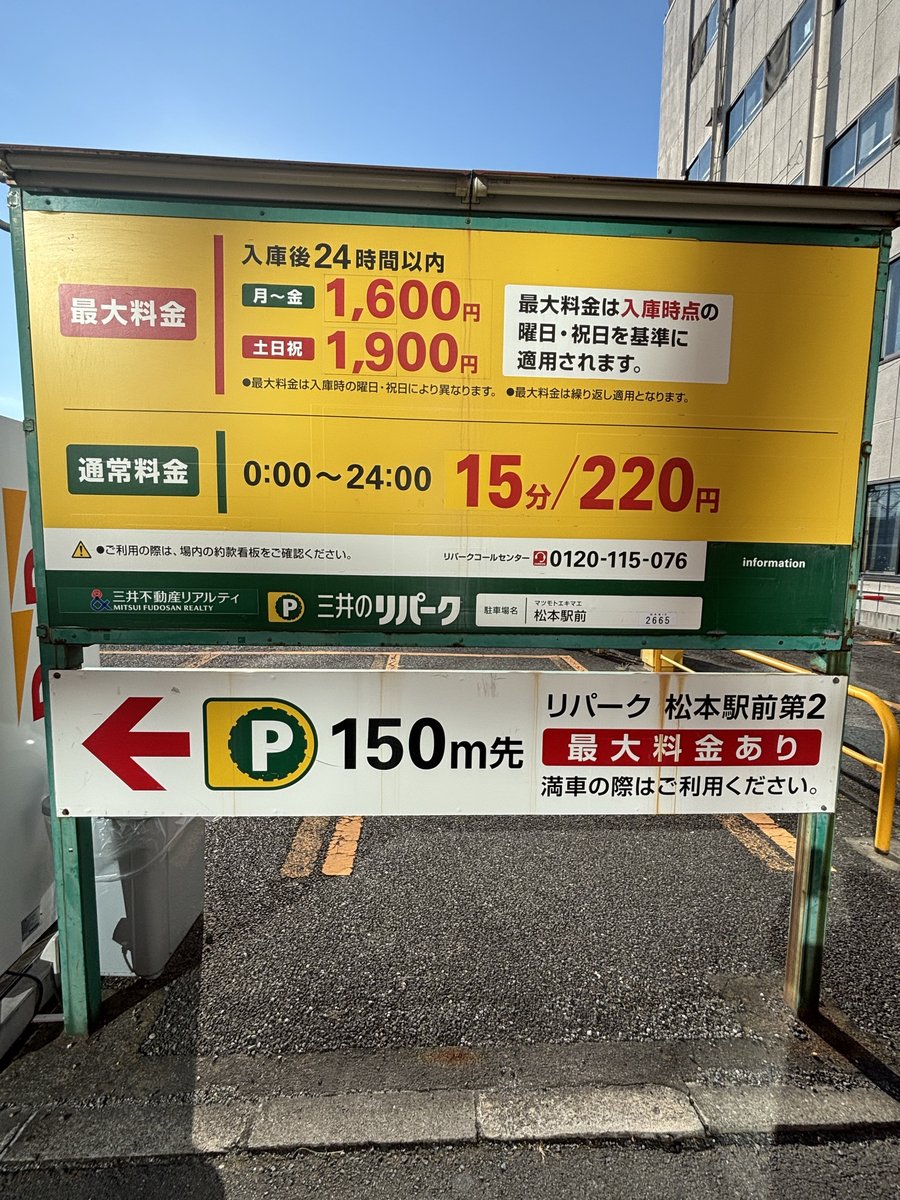
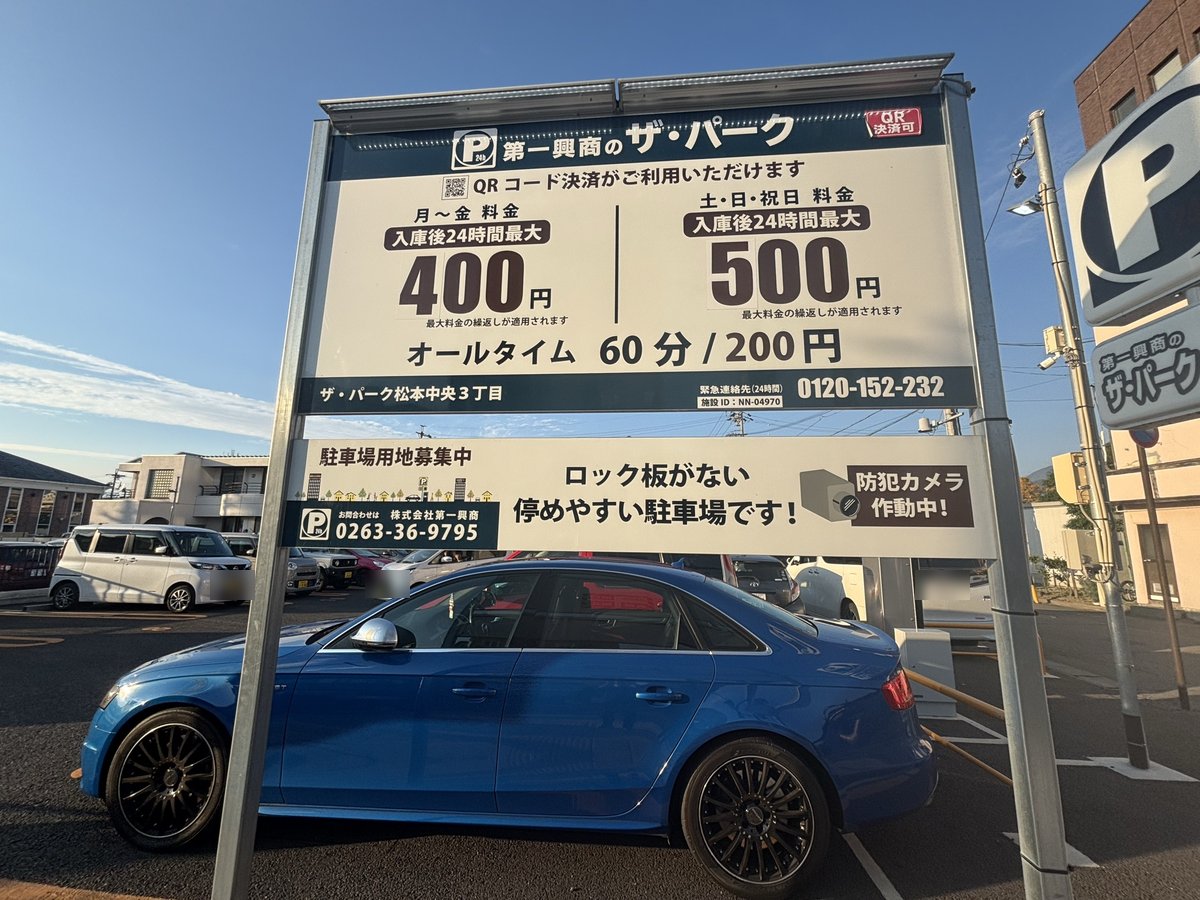
    A whole price sign showing the maximum charge and how it differs by day of the week

    First, look for 最大料金

    The first word to look for on a fee sign is

    最大料金

    the maximum fee.

    The same thing is sometimes written as

    上限

    打止

    打切

    instead.

    If you can’t find any of those words, there may be no ceiling at all.

    Then the fee just keeps climbing. Look at the basic rate.

    ○時間まで and ○時間ごと

    Near the maximum fee you may see

    ○時間まで — up to ○ hours

    ○時間ごと — every ○ hours

    printed on the sign.

    Sometimes those two change how the maximum fee works.

    They don’t settle whether the cap repeats, though.

    Look nearby for 繰り返しあり/なし (it repeats / it doesn’t) as well.

    Sign reading "maximum within 24 hours of entry" and "the maximum charge applies repeatedly"

    Whether the maximum fee repeats

    A maximum fee isn’t always applied again on the next day or in the next time band.

    繰り返しあり — it repeats

    繰り返しなし — it doesn’t repeat

    For a long stay, look for wording like this.

    The words 最大料金 alone don’t promise the same cap however many days you stay.

    When it’s too small to read

    All of this can be printed small, in a corner of the sign.

    あり and なし, まで and ごと — hard to tell apart.

    Point the camera in your translation app at the sign.

    And if that doesn’t settle it, the intercom on the pay machine will.

    The day of the week and the time band

    Weekdays and holidays, daytime and night, can have different rates and conditions.

    Special rates are sometimes set over New Year and on event days.

    Check the day you’re parking, and the time you drive in and drive out.

    25時 and 26時 are times on the next day

    On fee signs you sometimes see

    25時

    26時

    written like that.

    25時 is 1 a.m. the next day, and 26時 is 2 a.m. the next day.

    Past 24:00, the count keeps going up as if the day just kept going.

    当日24時まで ends at midnight

    当日24時まで最大料金

    When a sign says this, the condition runs until midnight that night.

    Drive in at 11 p.m., and 当日24時まで ends one hour later.

    If you’re staying from evening until morning, check the fee after the date changes.

    The condition may be at your feet, not on the sign

    Even within one parking lot, the conditions can differ from space to space.

    Some spaces are left out of the maximum fee altogether.

    That condition is sometimes written on the low wheel stop your tire touches.

    And your own car hides it once you’ve parked.

    So just after you park, look around the space as well as at the space number.

    When you still can’t read it

    Some operators put the detailed conditions on their app or website.

    The terms of use are sometimes posted by the entrance or beside the pay machine.

    Posted instructions on how to use the parking lot, with the terms of use

    And when you can’t read it, another parking lot is a perfectly good answer.

    ※ Fees, the conditions under which a maximum fee applies, whether it repeats, and the days, hours and spaces it covers differ from one parking lot to another. For the actual fee, check the signs on site, the terms of use, and the information from the operating company.