When you need it
This is a dictionary for quickly checking, on the spot, the Japanese you often see on road signs in Japan and on the white plates beneath them.
It gives not just the meaning but also what to do when you’re there.
The words in this dictionary
Words you see on signs
- 止まれ/STOP — stop
- 徐行/SLOW — slow
- 前方優先道路 — priority road ahead
- 一方通行 — one-way
- 通行止 — road closed
- 歩行者専用 — pedestrians only
- 自動車専用 — motor vehicles only
- バス専用 — buses only
- 駐停車禁止 — no stopping or parking
- 駐車禁止 — no parking
Words you see on the road surface
- 止まれ(路面) — stop (on the road)
Words you see on the white plate below
- 8-20(時間) — times
- 除く — except
- 日曜・休日 — Sundays and holidays
- 区間内 — within this section
- 終わり — end
- 通学路 — school route
- 踏切注意 — watch for a railroad crossing
- 大型/普通/二輪/原付/軽 — vehicle types
Signs and plates without words
- 進入禁止 (a white horizontal bar on a red background) — no entry
- 車両通行止め (a red ring on a white background) — no vehicles
- 踏切あり (a steam train or electric train on a yellow diamond) — railroad crossing ahead
- 左折可の板 (a blue left-pointing arrow on a white background) — left turn allowed
Words you see on signs
止まれ/STOP
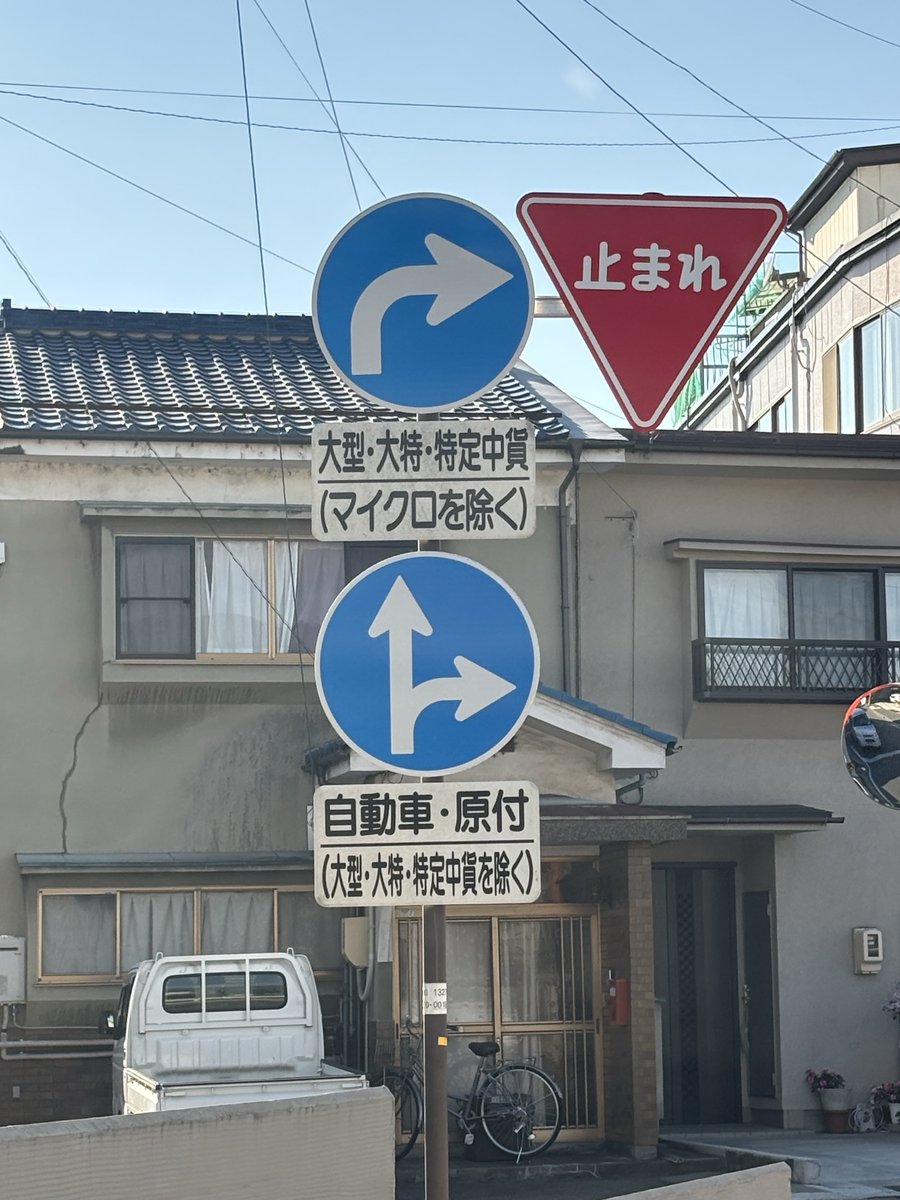
A solid red upside-down triangle sign. Come to a full stop before the white stop line, or before the intersection if there’s no stop line. Go on after you’ve checked left and right.
徐行/SLOW
An upside-down triangle sign with a red border on a white background. Go slowly enough to stop right away. The National Police Agency’s guideline is 10 km/h or less.
前方優先道路
Words on a plate that goes under the 徐行 sign. The road you’ll cross up ahead has priority. Go slowly.
一方通行
A sign with a white arrow on a blue background. You can only go in the direction of the arrow. At the exit end of the same road, you often see 進入禁止.
通行止
Beyond this point, neither pedestrians nor vehicles can get through. Find another road.
歩行者専用
A road for pedestrians, and vehicles can’t use it. If there are times on the plate below, the rule applies during those times.
自動車専用
A road for motor vehicles. Pedestrians, bicycles, mopeds and so on can’t use it.
バス専用
A lane only for the vehicles listed on the plate. If there are times on the plate below, stay out of it during those times. Just before you turn left at an intersection, you can enter it.
駐停車禁止
You can’t park, and you can’t stop even briefly.
駐車禁止
A sign that says you can’t park. What it means and how to spot it are covered under 駐車禁止 in “Parking in Japanese: A Mini Dictionary for Parking Lots in Japan.”
Words you see on the road surface
止まれ(路面)
止まれ written in white characters on the road surface. It’s written at places where you have to stop, and you stop before the stop line.
Words you see on the white plate below
8-20(時間)
From 8 a.m. to 8 p.m. The rule on the sign above applies during these hours. 7.30-8.30 means from 7:30 to 8:30.
除く
〜を除く means the rule doesn’t apply on the days or to the vehicles written there.
日曜・休日
Sundays, and holidays such as Japan’s national public holidays. 日曜・休日を除く means the rule applies on days other than Sundays and holidays.
区間内
Within the section where the rule on the sign above applies.
終わり
The rule on the sign above ends here.
通学路
A road children use to get to elementary school, kindergarten, daycare and so on.
踏切注意
There’s a railroad crossing ahead. Before the crossing, stop even if the barrier is up. More in “Railroad Crossings in Japan.”
大型/普通/二輪/原付/軽
Short words for vehicle types.
- 大型: large motor vehicles
- 普通: ordinary motor vehicles
- 二輪: motorcycles and mopeds
- 原付: mopeds (small motorbikes)
- 軽: ordinary motor vehicles built to a smaller standard (kei cars)
If a plate has one of these words, the rule is about that type of vehicle. If 除く is added, the rule doesn’t apply to that type of vehicle.
Signs and plates without words
進入禁止
A sign with a white horizontal bar on a red background. You can’t enter from the side this sign faces. You often see it at the exit end of one-way roads.
車両通行止め
A sign with a red ring on a white background. Vehicles can’t get through. Bicycles count as vehicles too.
踏切あり
A yellow diamond sign with a steam locomotive or an electric train on it. There’s a railroad crossing ahead.
左折可の板
A plate with a blue left-pointing arrow on a white background, found at the left edge of the road or on a traffic light. You can turn left even on a red or yellow light, while watching out for pedestrians and others around you.
If you’re not sure
If you come across a sign you don’t understand, don’t look it up while you’re driving; stop somewhere safe first. If someone’s riding with you, have them look it up.
※ How signs are written, where they’re placed and the hours restrictions apply differ from place to place. When you actually drive, follow the signs on site.


