Once you sit down, there’s a sushi (お寿司) lane (レーン) right in front of you. And there’s a tablet (タブレット) for ordering at your fingertips.
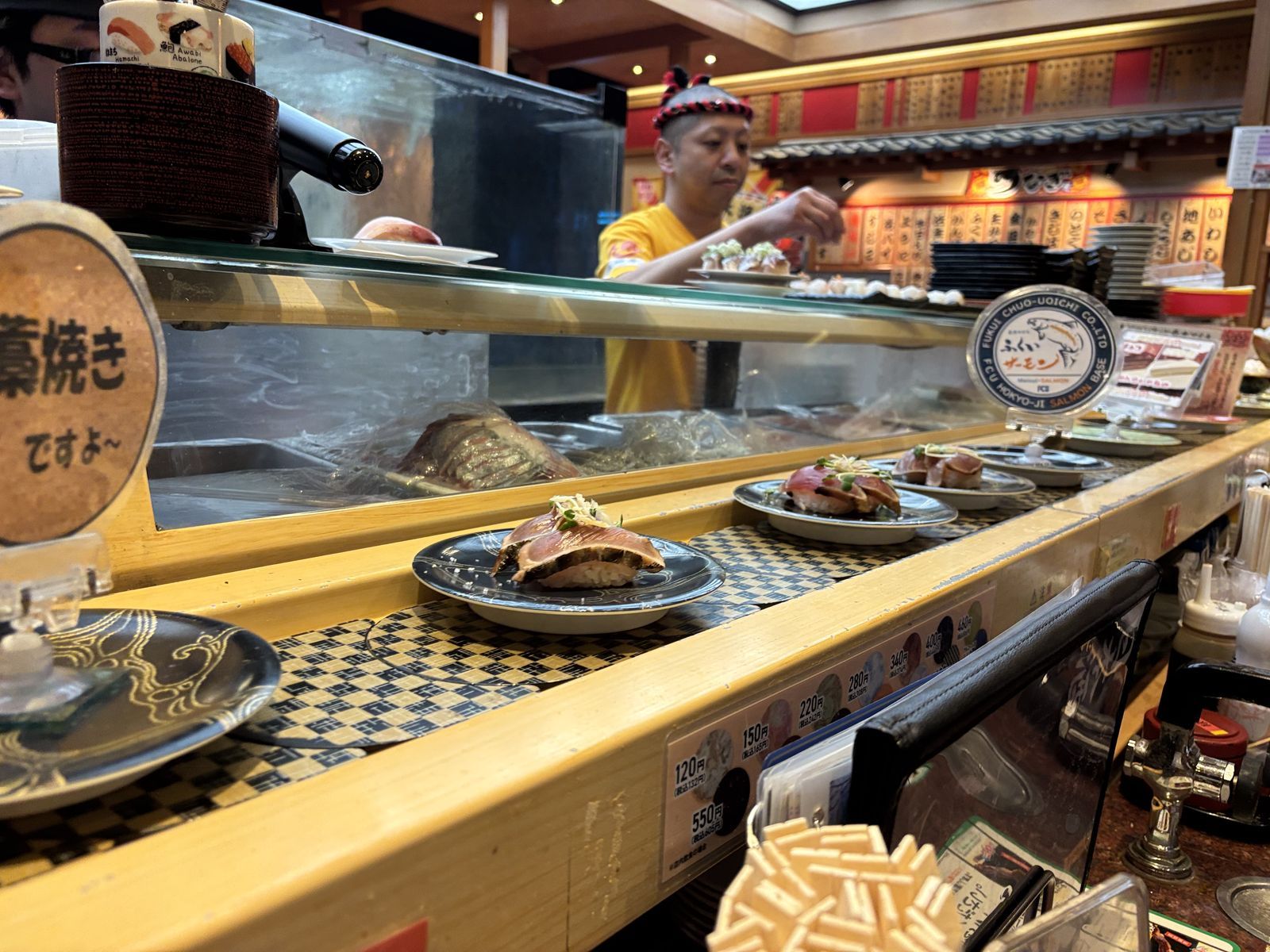
At Japan’s major conveyor-belt sushi chains, you order on the tablet (touch panel) at your seat.
You can eat what you want without talking to the staff. There are just three steps.
・Check the price on the menu, then choose on the tablet
・The plate you ordered rides the lane all the way to your seat
・When you’re done eating, it’s time to pay. At some restaurants, you start the payment on a screen or by pressing a button
1 At the entrance — check in (受付) at a machine or in an app
Some restaurants have a check-in machine at the entrance.
At Kura Sushi, when you check in at the machine by the entrance, out comes a slip of paper with your seat number on it. You don’t wait for a staff member to show you to your seat — you head to that seat yourself.
At busy times, some restaurants let you get in line ahead of time with the chain’s official app. Some chains don’t take seat reservations by phone, so if you’d rather not wait in line, check the app.
2 Order on the tablet — the prices are on the menu
Once you’re seated, pick up the tablet.
Some tablets can switch to English and other languages. First, look for a 言語 (language) button on the screen.
If you can’t find one, you can also read the screen with a translation app on your smartphone.
The menu shows the prices.
At some restaurants, the color of the plate tells you the price.
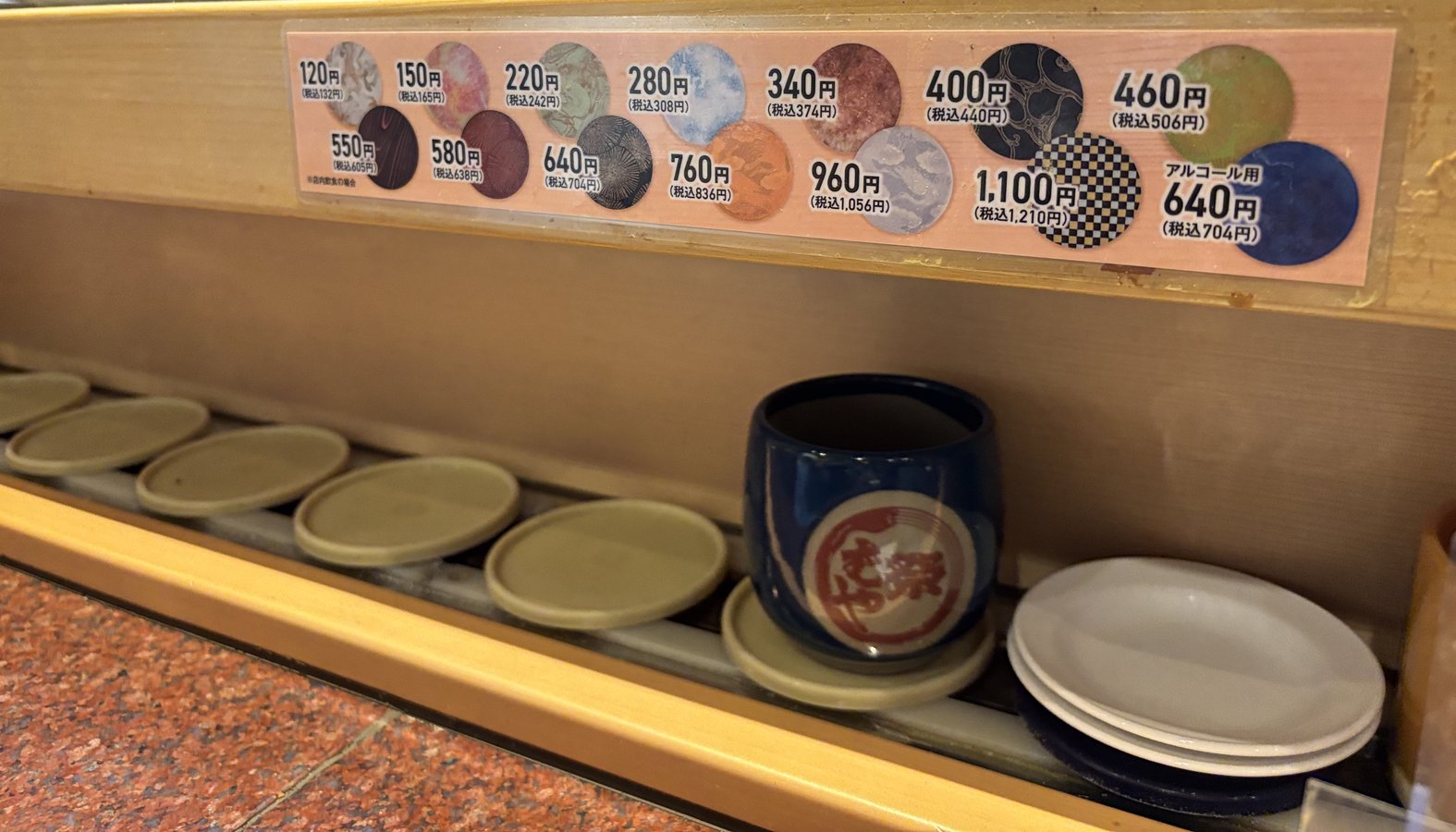
Prices can differ from one restaurant to another, even within the same chain.
You know the price before you order, so there are no surprises when you pay.
At Hama Sushi, you can also check allergy information on the ordering touch panel.
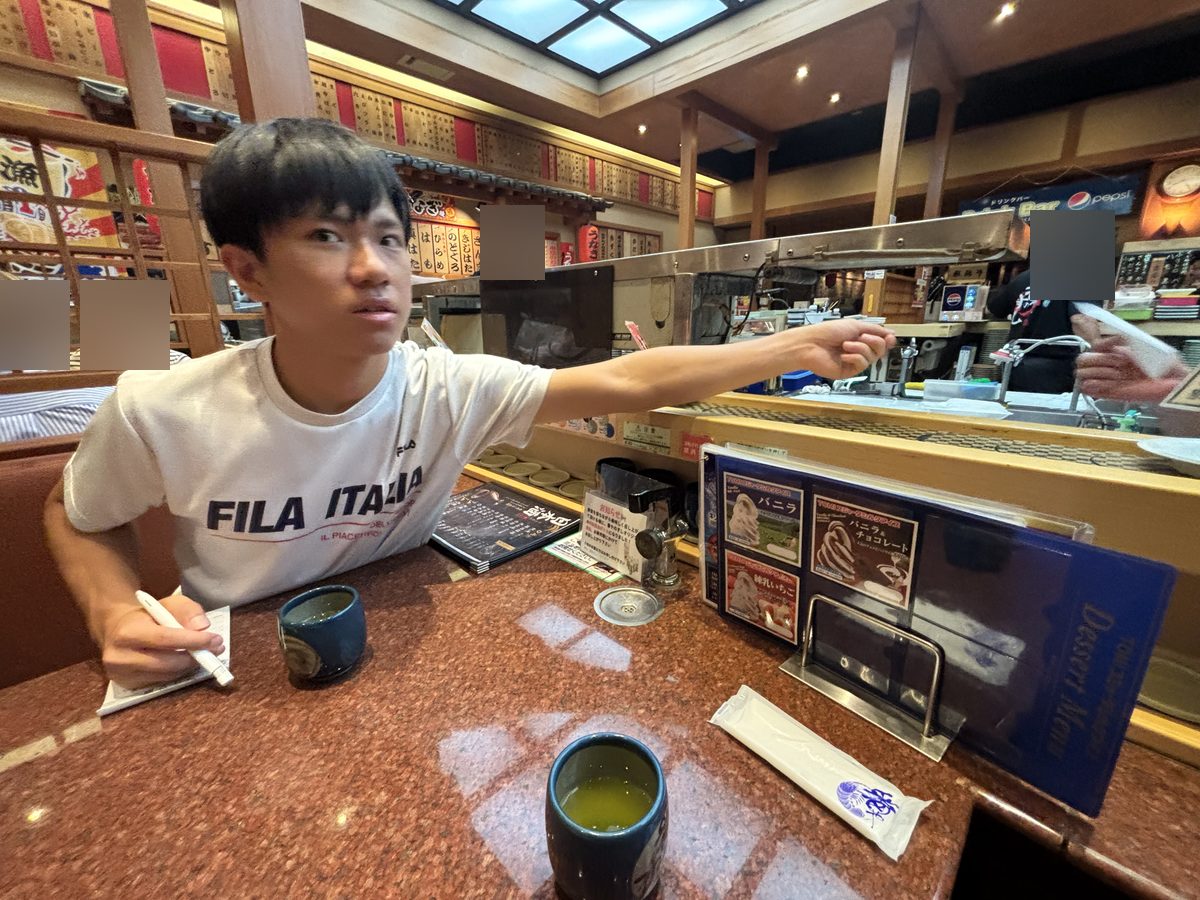
Some restaurants don’t have tablets. There, you look at the menu and either write your order on a slip of paper and hand it to the sushi chef (板前さん), or just tell the chef what you’d like.
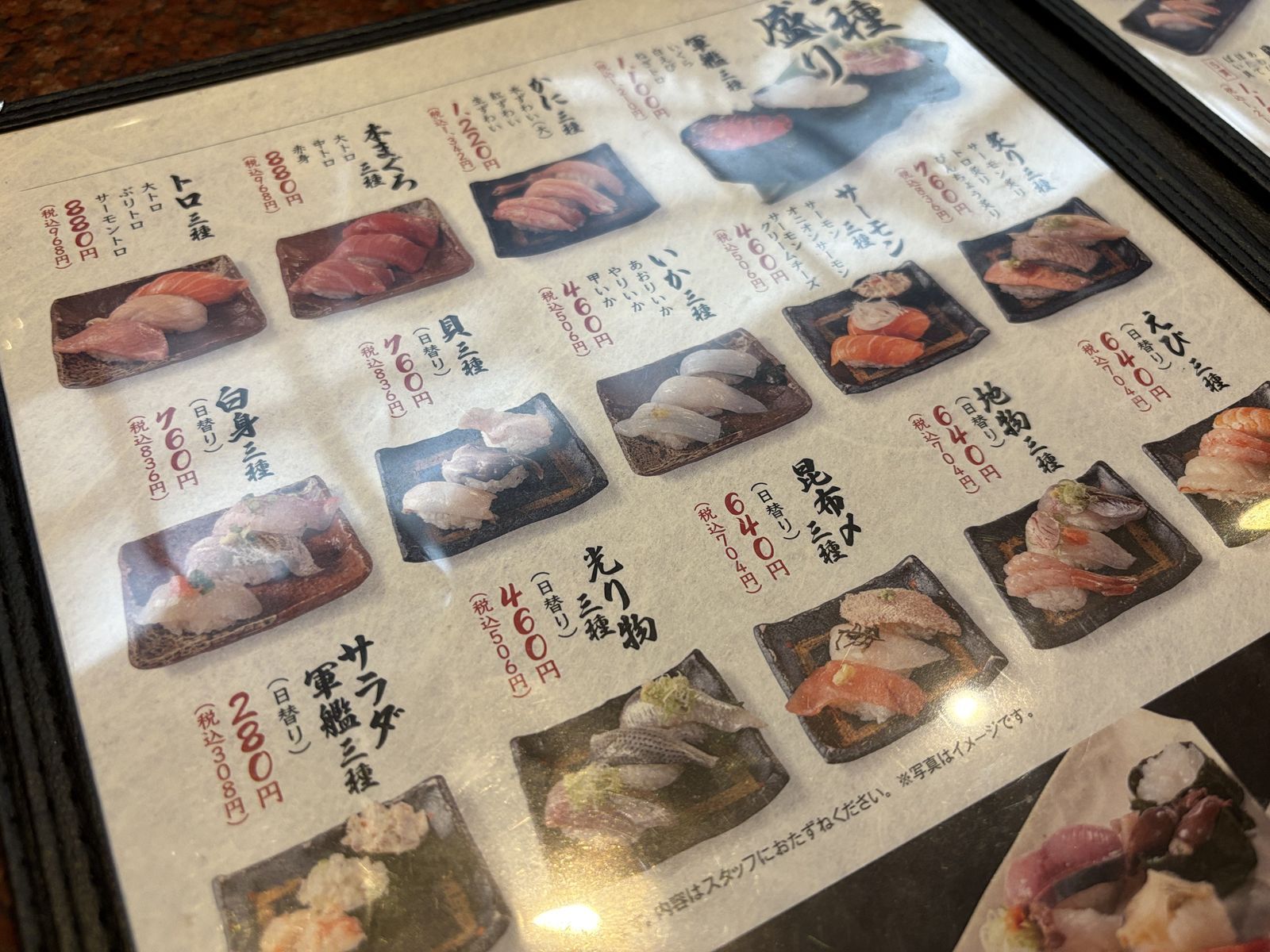
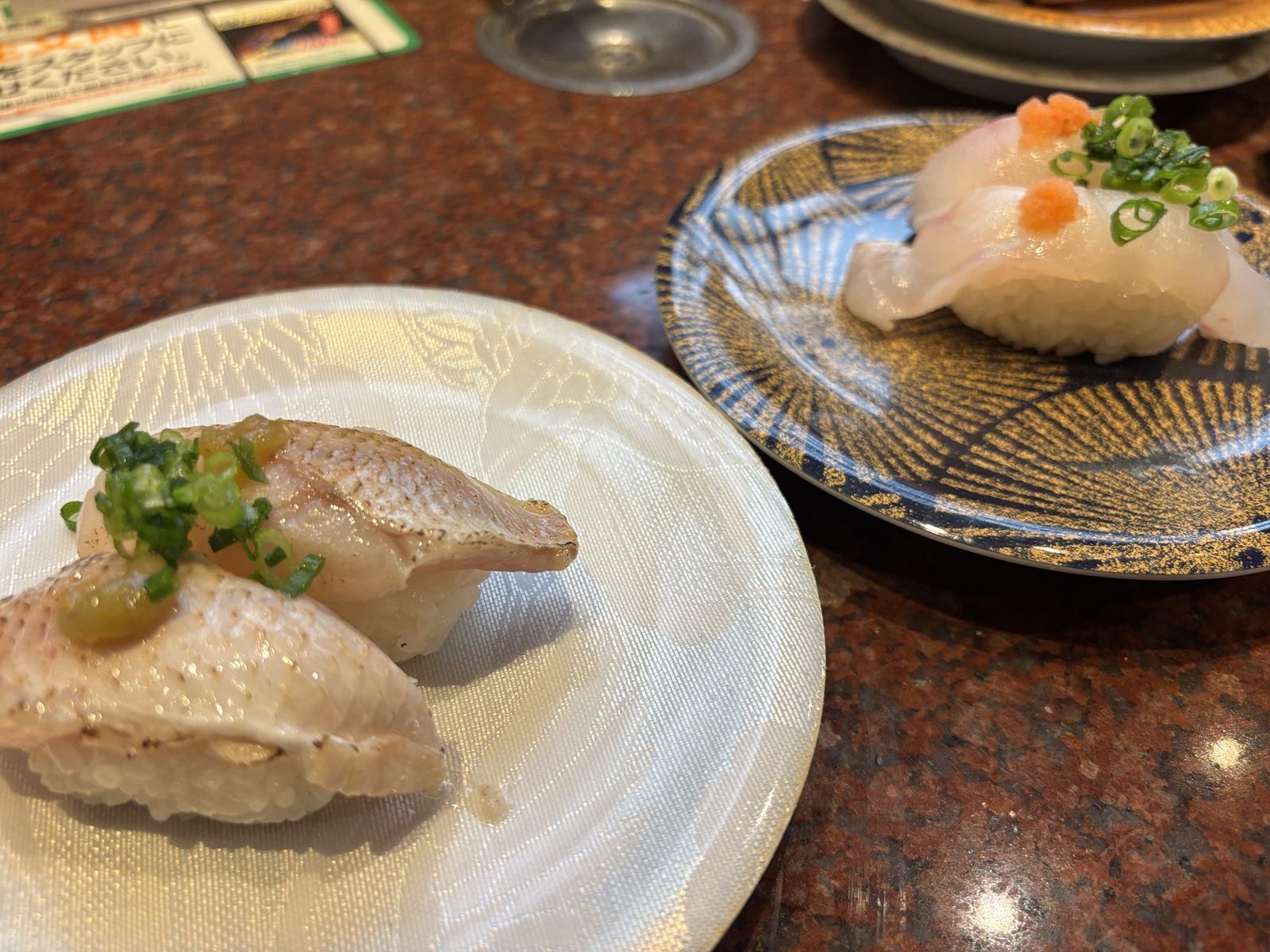
If the menu is only in Japanese and you can’t make sense of it, it’s fine to just order a recommended set (おすすめのセット) that looks tasty. At a good restaurant, a set made up of their recommended pieces is sure to be delicious. Even Japanese people do that when they can’t decide (this was at Banya no Sushi, 番やのすし, in Toyama)
3 Your plate races all the way to your seat
After you order, your plate soon arrives at your seat on the lane.
The sushi you ordered comes racing right up to you. It’s one of the small pleasures of conveyor-belt sushi.
How it arrives depends on the restaurant. Sometimes it comes on a dedicated lane beside your seat, and sometimes in a container riding on the main lane, the one that goes around.
Some Sushiro restaurants have a big screen called デジロー. Sushi scrolls across the screen, and you tap the one you want. What you order arrives on your table’s own dedicated lane.
The plates going around, and the lane itself
At some restaurants, you can take a plate straight off the lane as it goes around and eat it.
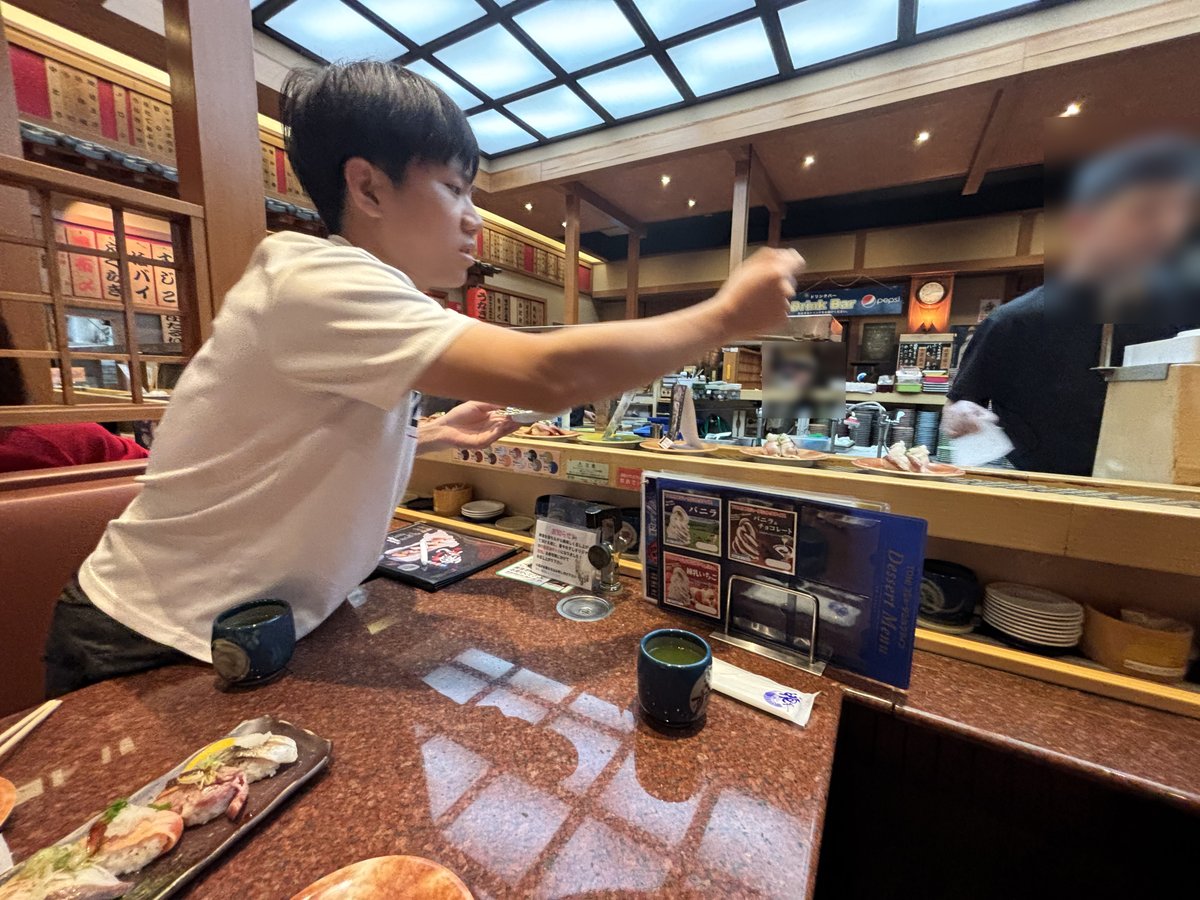
With plates that are going around, the trick is to look carefully and choose before you take one. Once you’ve taken a plate, don’t put it back on the lane. Also, don’t lean on the lane or put things like your smartphone on it.
If you take photos, choose an angle that keeps other customers and the staff out of the shot.
If you’re not sure, order from the tablet and it’ll come to your seat.
4 Wasabi, soy sauce, and tea — the way you like them
Wasabi
Some restaurants serve their sushi without wasabi (わさび). If you don’t like spicy food, you can eat it just as it comes.
When you want wasabi, you add it yourself. At Sushiro, you’re free to use the wasabi that comes around on the lane.
Soy sauce
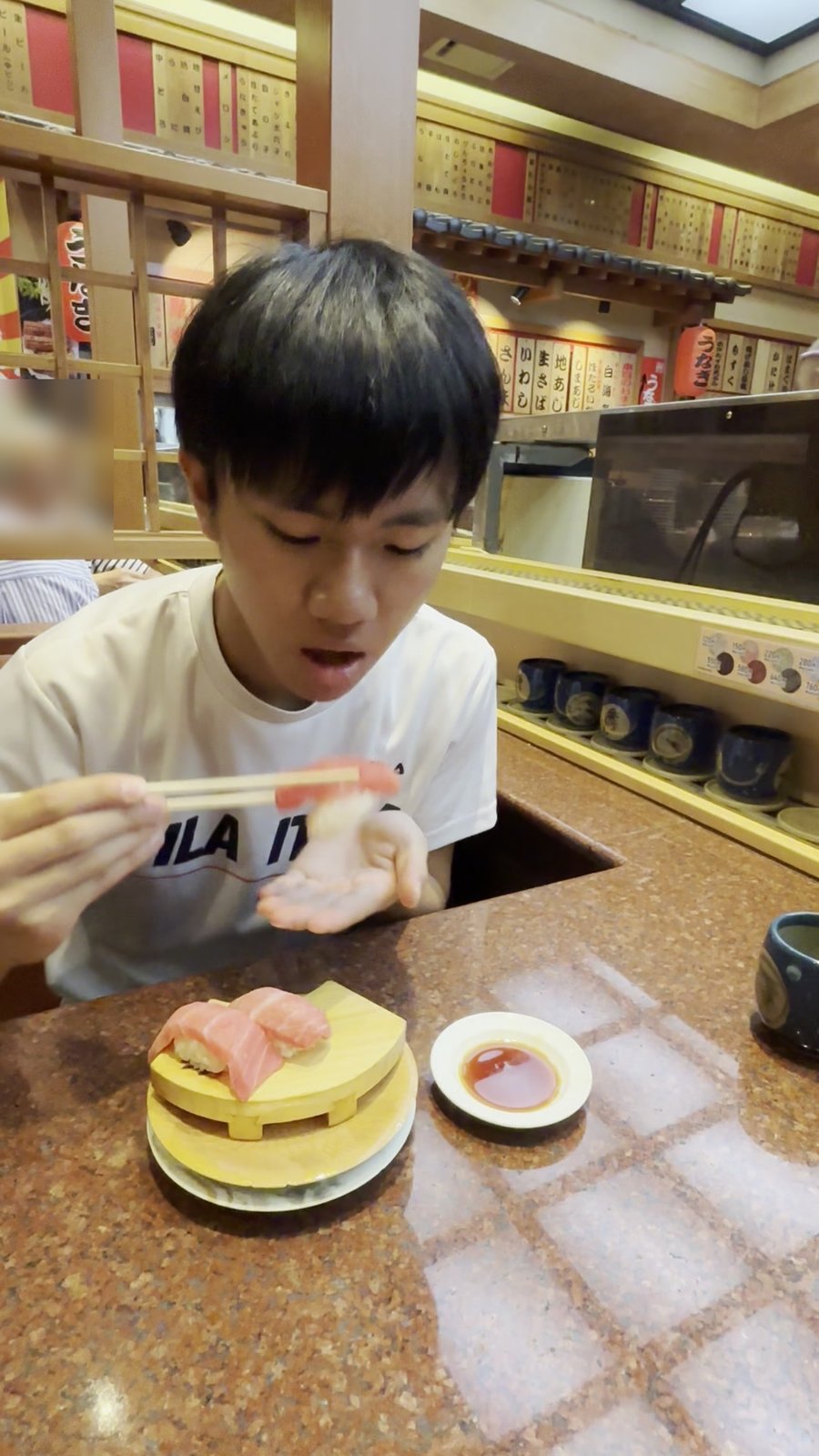
If you dip your sushi in soy sauce (しょうゆ) from a small dish, dip just a little of the topping side (the fish or whatever sits on top, called ネタ). If you dip the rice side, it soaks up the soy sauce and gets too salty, and the rice falls apart more easily, too.
If you’re pouring it straight onto your sushi, be careful not to use too much — a little at a time.
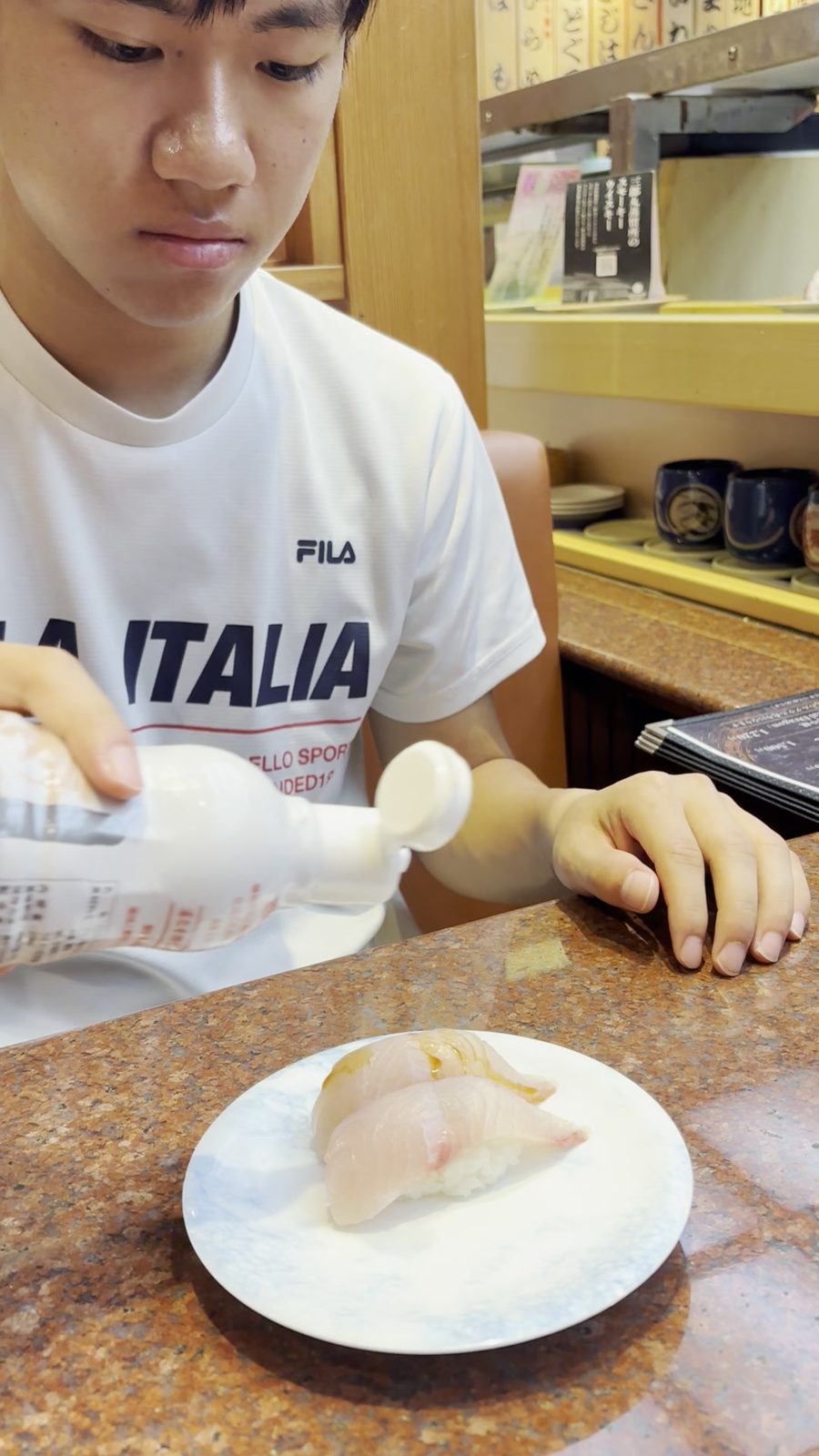
Dipping the topping side is a bit tricky, but it tastes better than the rice side. At Banya no Sushi (番やのすし) in Toyama, the soy sauce bottle let out just one drop at a time, which was reassuring
Tea
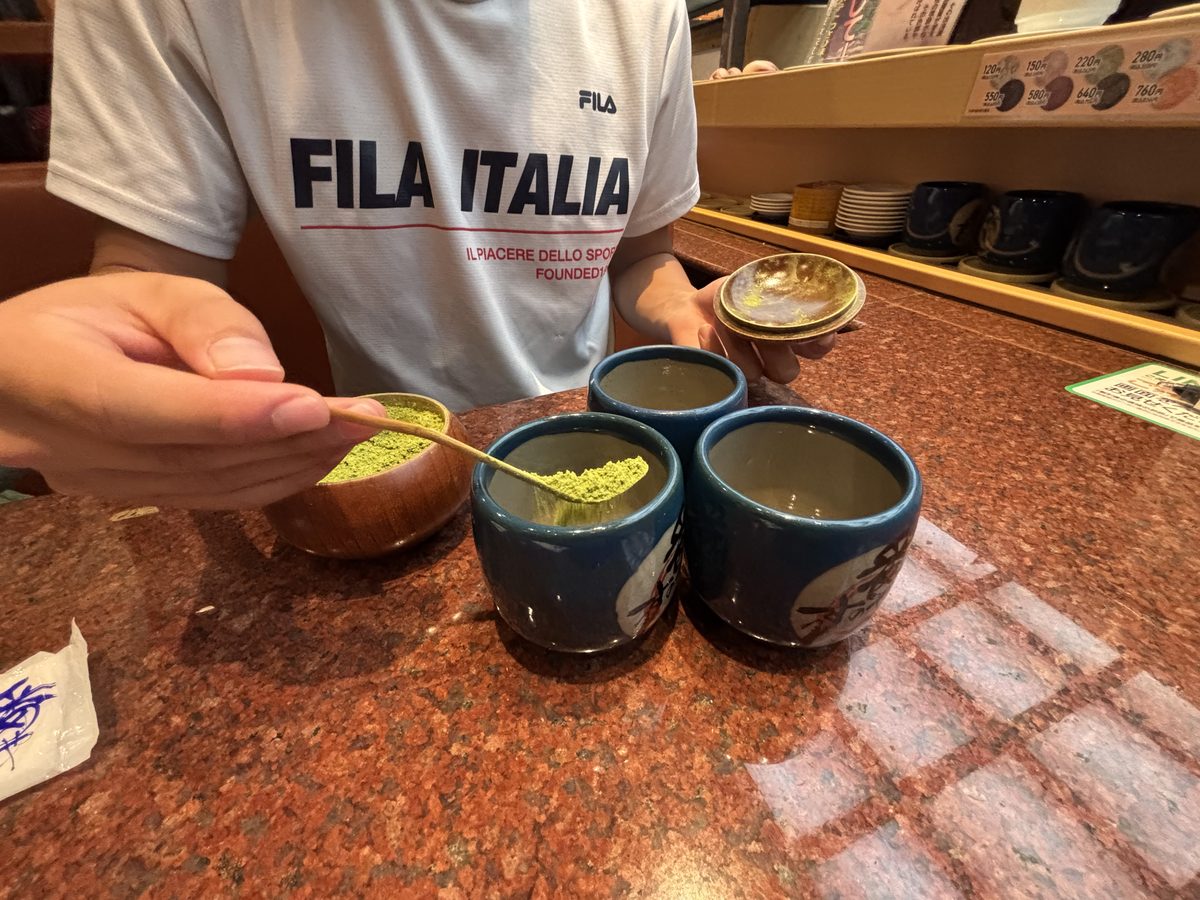
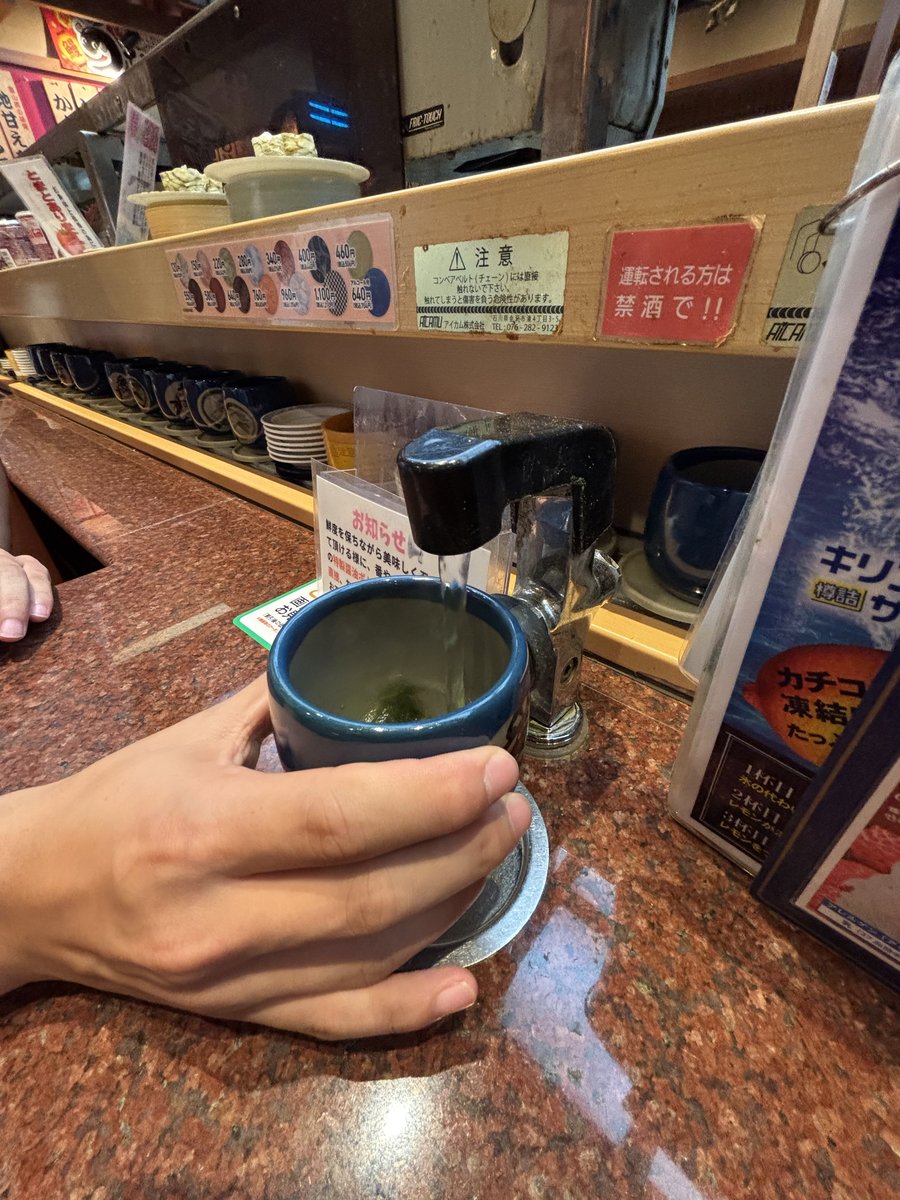
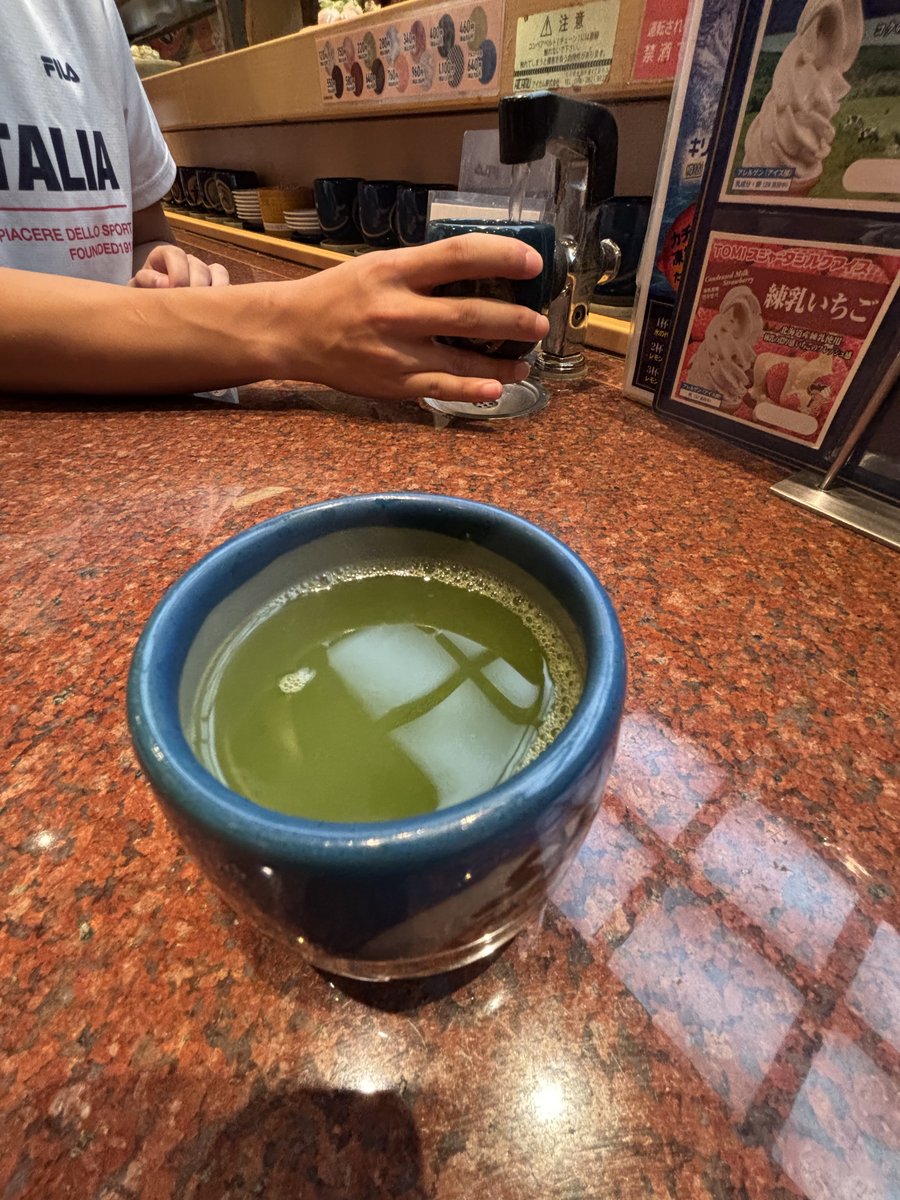
Some restaurants have powdered tea (お茶) and a hot-water tap right at your seat.
At those restaurants, you can make your own tea right at your seat.
5 When you’ve finished — a game with your plates, then paying
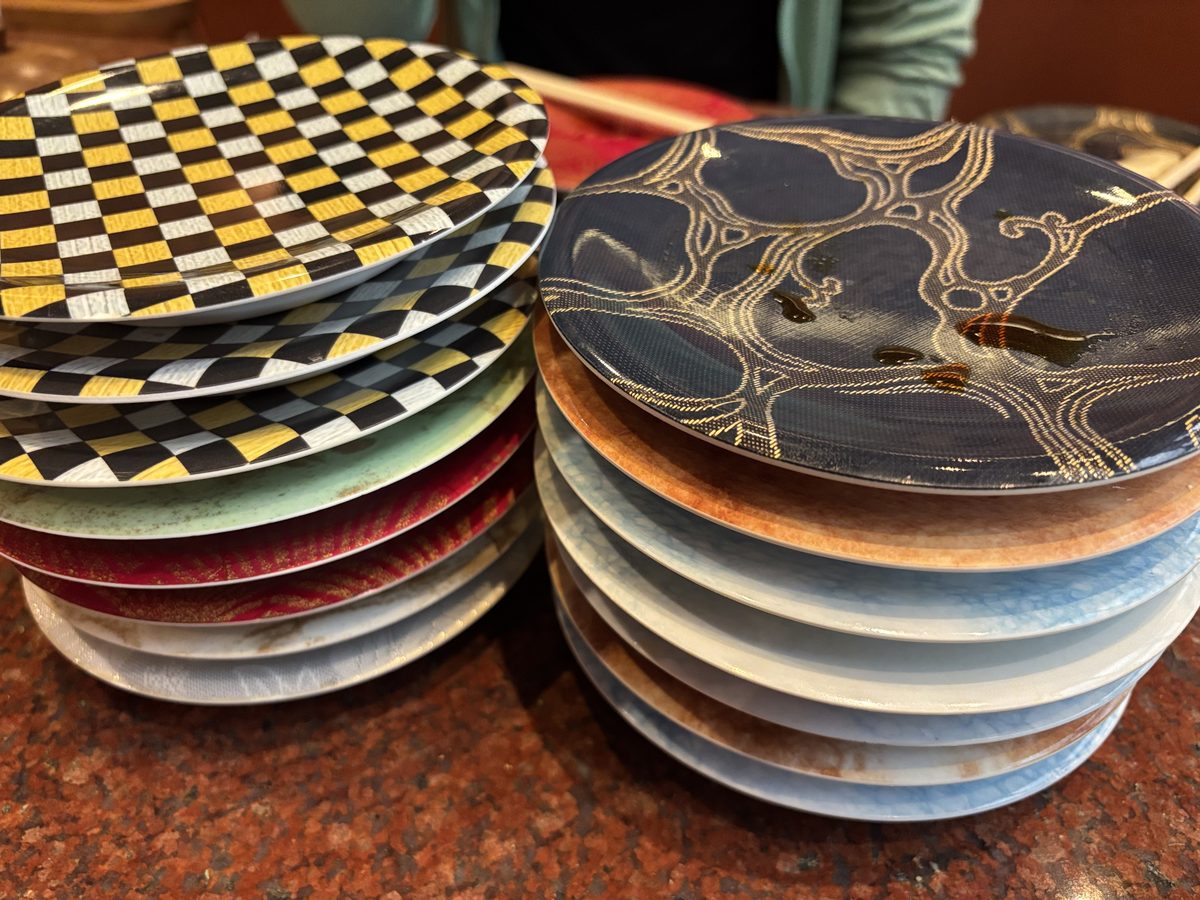
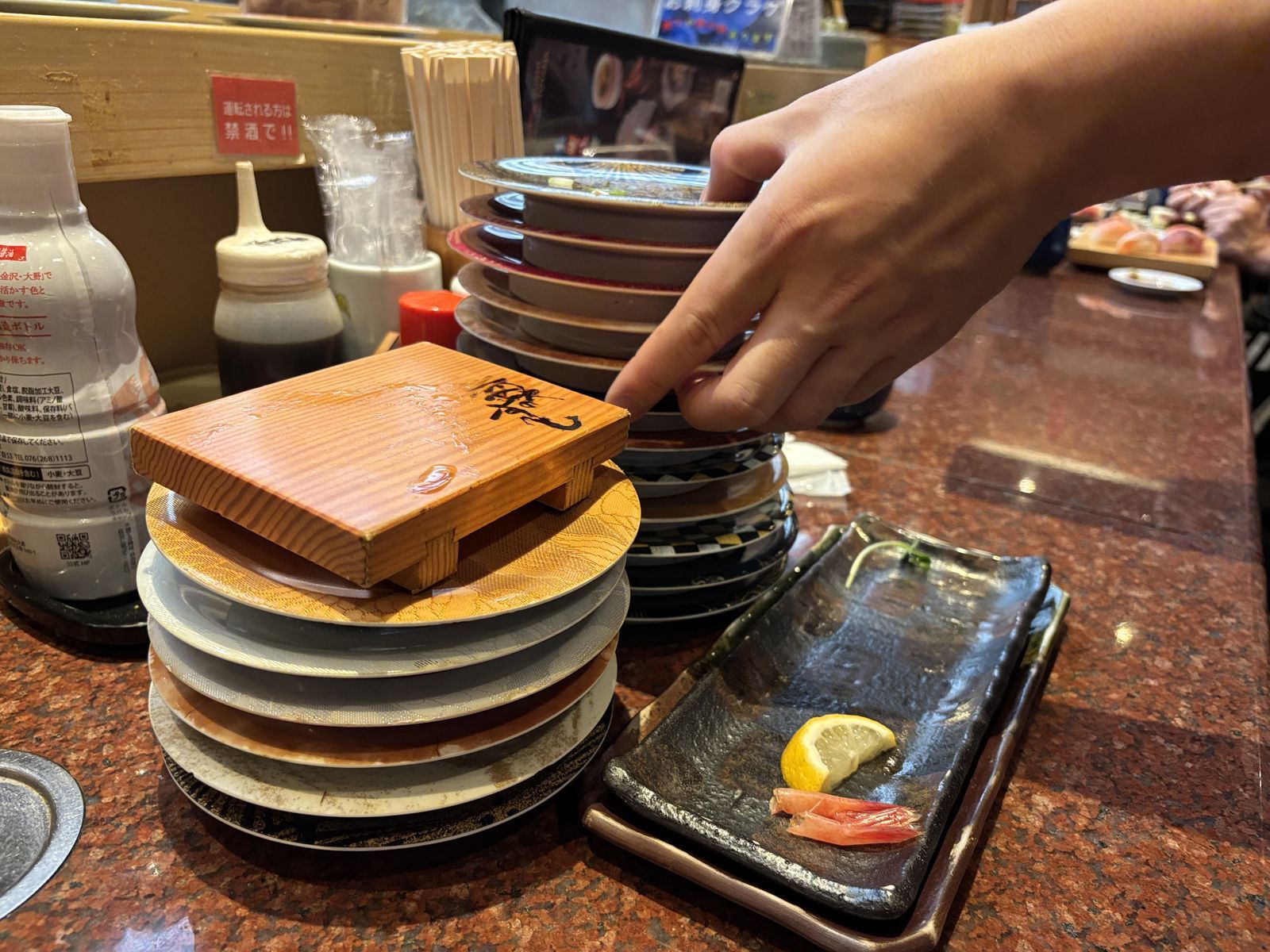
Some restaurants have a slot in the table where you put your empty plates.
At Kura Sushi, every 5 plates you put in gets you one try at a game called ビッくらポン, which you play with your plates. If you win, a capsule with a prize inside comes out. What’s inside is a surprise until you open it. Sometimes you don’t win.
At Sushiro restaurants that have デジロー, the more you spend, the more a game gauge fills up, and when it’s full you can play a game.
At some restaurants, you also start the payment on a screen or by pressing a button. At Sushiro, you pay through the tablet. At Kura Sushi, a machine automatically counts the plates you’ve eaten, and when you press the 会計 (pay) button, you can pay without needing a staff member.
What you can pay with differs by chain and by restaurant. Some restaurants don’t take cards, so carrying a little cash as well saves you trouble.
For now, just this
Order on the tablet. First, look for the 言語 (language) button.
Check the price on the menu before you order.
The plate you order comes to your seat on the lane.
Once you’ve taken a plate, don’t put it back on the lane.
Soy sauce: just a little, on the topping side.
Carry a little cash too.
If you’re not sure, show the staff a screen on your translation app and ask them.


