At some ryokan (旅館, a traditional Japanese inn), when you step through the entrance, the floor just ahead rises by one step.
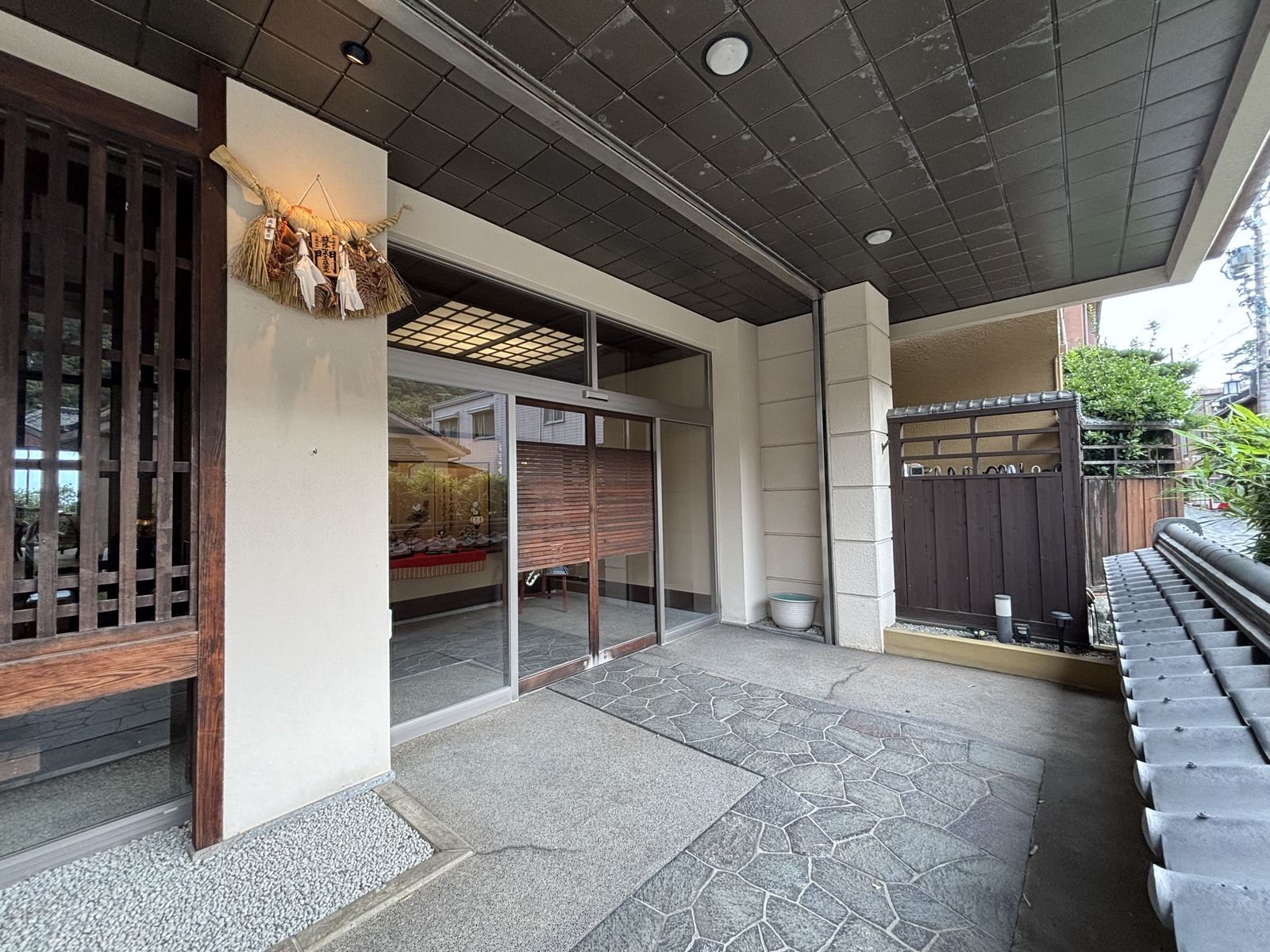
Past the ryokan’s entrance is your host’s “home.” Just as you would when entering a Japanese home, you take off your shoes and step up.
Shoes off, slippers on. In a tatami (畳, a floor of woven rush-grass mats) room, you take off those slippers too and go barefoot. Each thing you take off takes you deeper into the home. Once you reach your room, it’s time to change into a yukata (浴衣, a light cotton kimono for after the bath and for relaxing in your room) and unwind.
This article covers three things.
- Shoes and slippers — each thing you take off takes you deeper into the home
- Yukata — just remember “left on top”
- Something to look forward to — out into the onsen (温泉, hot spring) town in yukata and geta (下駄, wooden clogs)
1 Take off your shoes and step into the “home”
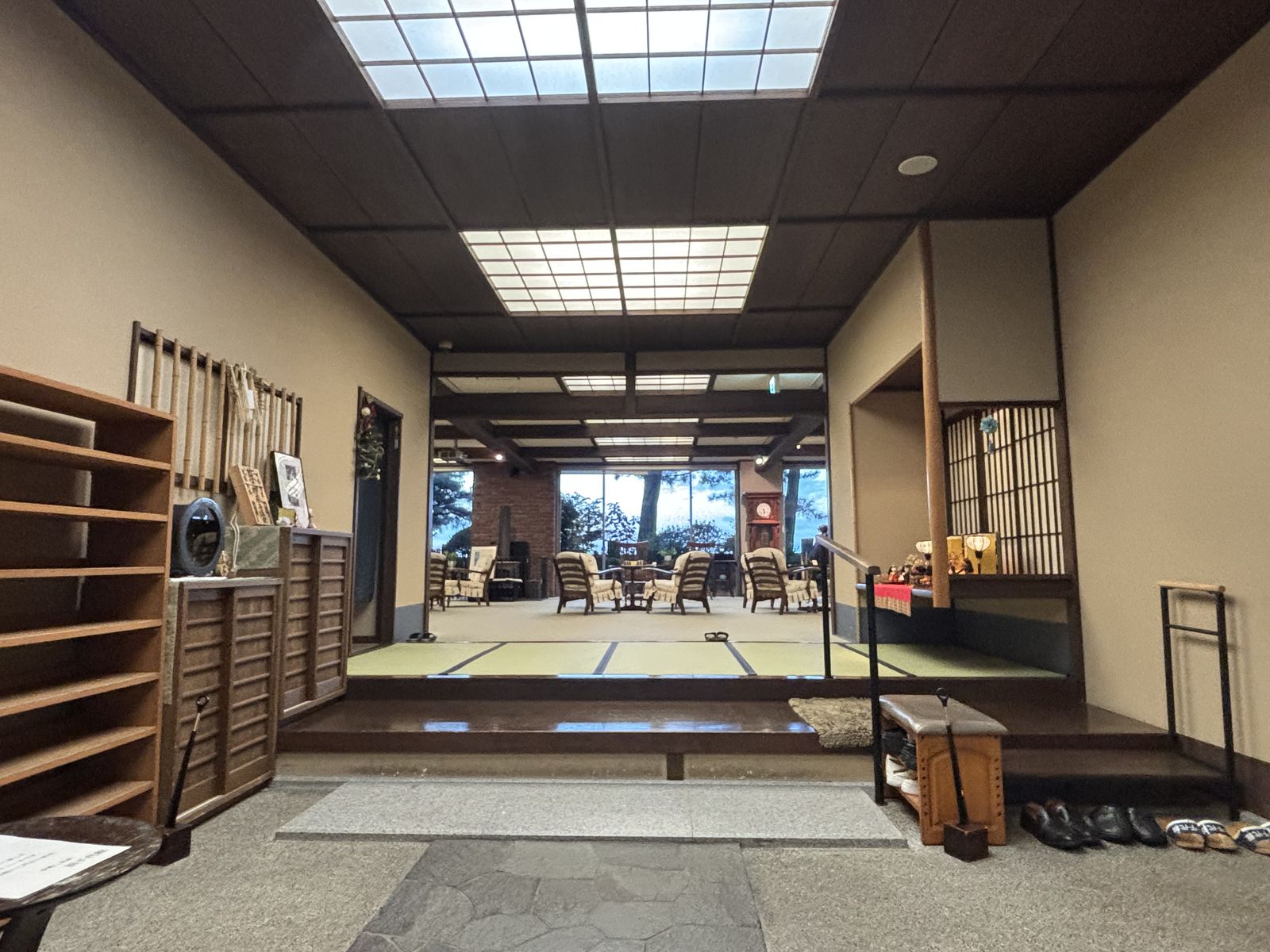
Where you take off your shoes depends on the place. At traditional ryokan, you take them off at the entrance. If there’s a raised floor just inside the entrance, take them off before you step up onto it. Some ryokan have you take them off at the door to your guest room, before you go in.
Put your shoes in the designated spot and change into the slippers the place provides. Even if it’s your first time, the staff will show you how to take off your shoes and explain the yukata.
The entrance etiquette in the Kinosaki Onsen (Hyogo Prefecture) guide: once your shoes are off, don’t step back down onto the lower floor where you took them off, and leave your shoes with the toes pointing toward the door. Line them up that way, and when you head out, you just slip your feet in. Past that one step up is your “home” for tonight.
If, because of your feet, it’s hard for you to take off your shoes or go barefoot, check with your accommodation before you book.
2 Slippers inside, bare feet on tatami
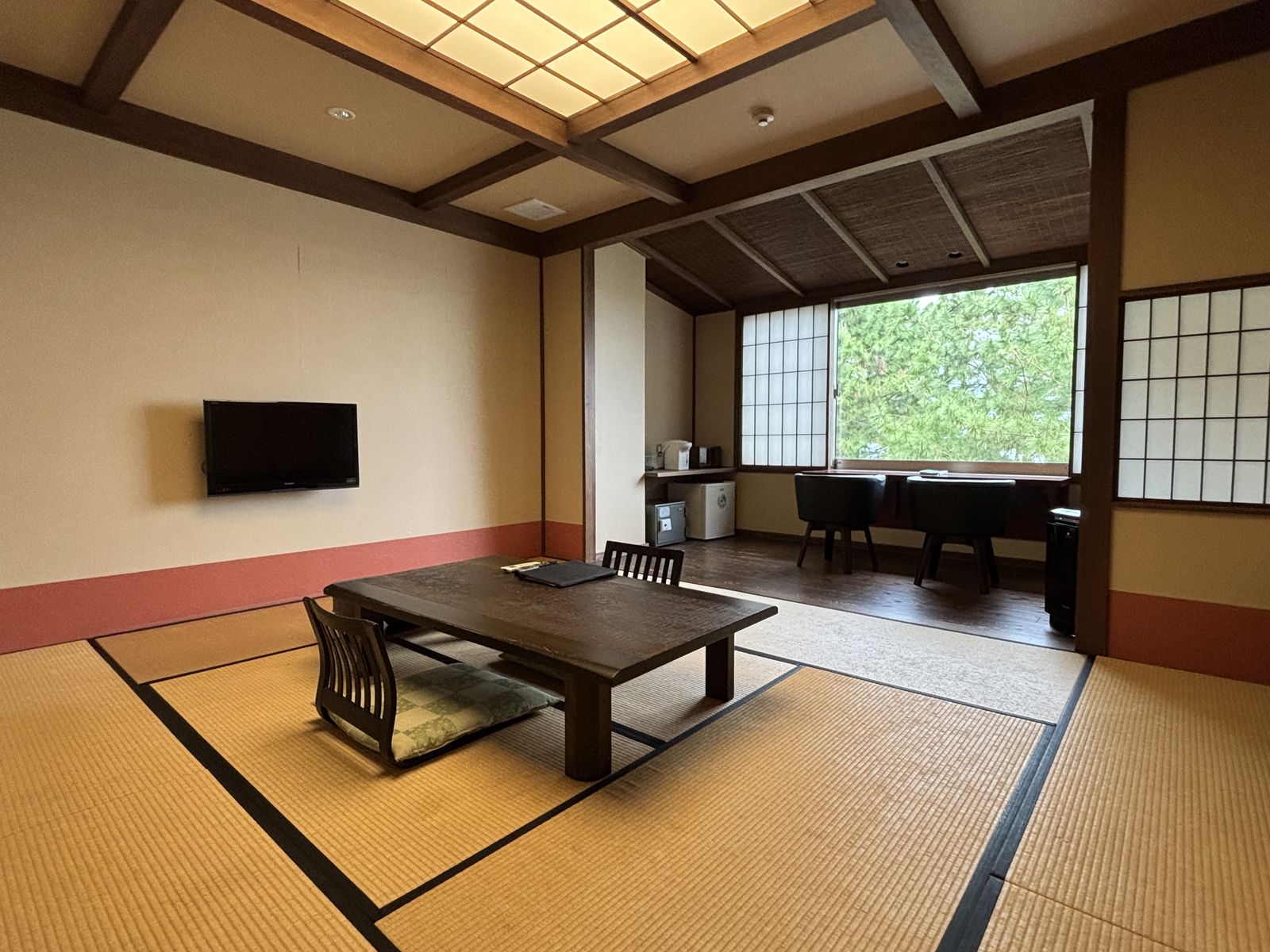
Inside your accommodation, you walk around in slippers.
When you go into a tatami room, you take off those slippers too. On tatami, go barefoot, or in socks or stockings.
Tatami is a floor made for bare feet. Dragging large luggage across it can damage it easily, so lift your suitcases and carry them. Once they’re in, all that’s left is to stretch out your legs on the tatami.
Shoes, slippers, bare feet. This order isn’t just for ryokan. A guide in Akita Prefecture to guesthouses where you stay in a private home lists the same order: take off your shoes at the home’s entrance, and usually take off your slippers to walk on tatami. Spend one night at a ryokan, and your feet learn exactly how to step into a Japanese home.
In the restroom, restroom slippers
According to the Kinosaki Onsen guide, there’s a separate pair of restroom slippers at the restroom entrance. They’re slippers you wear only inside the restroom.
3 Yukata — just remember “left on top”
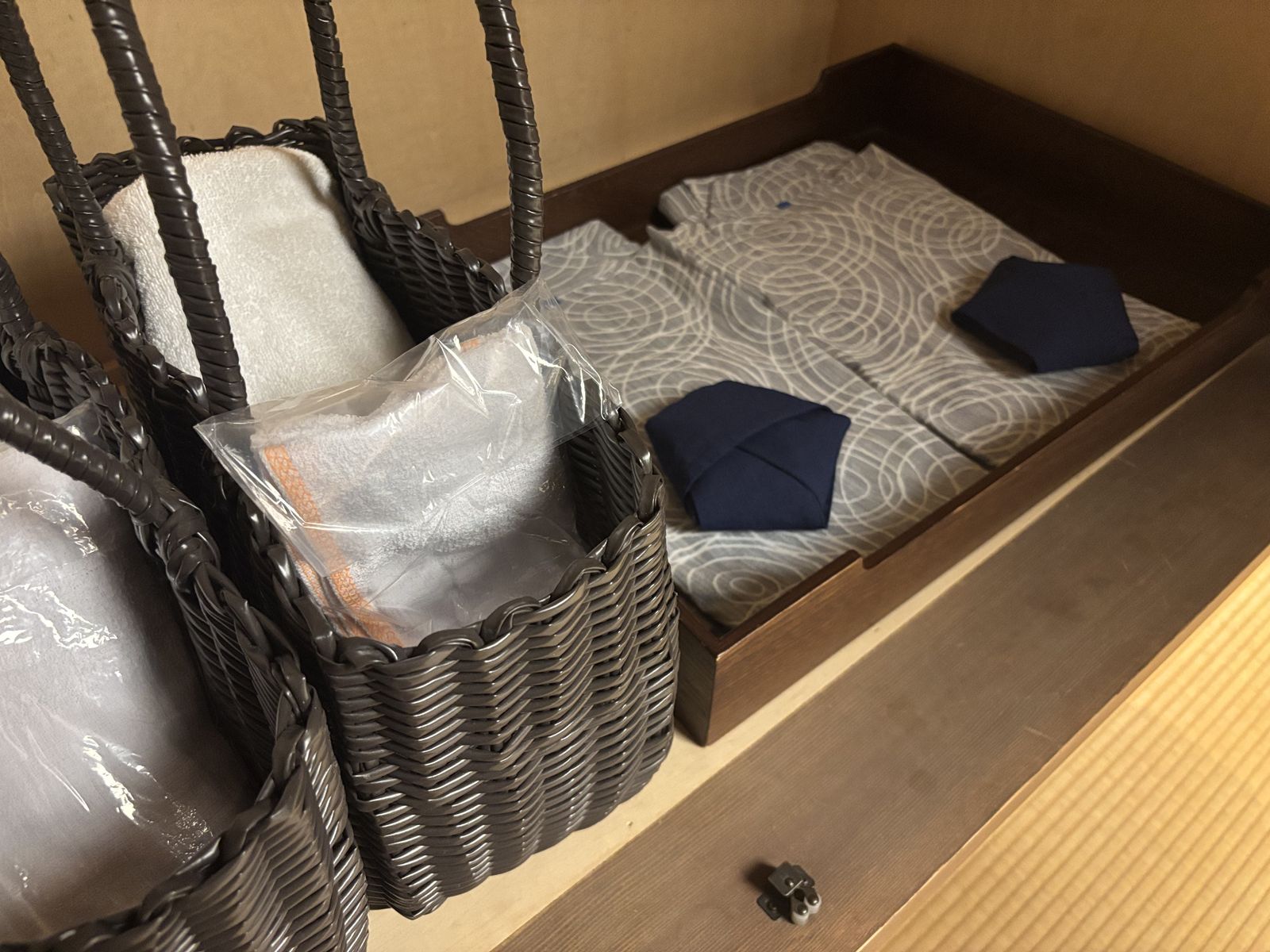
Ryokan usually provide a yukata. Some places leave it in your room; at others, you pick one out from a yukata corner.
It’s what you wear after a bath, or while you relax in your room.
How to wear a yukata
The guides from Kinosaki Onsen and Akiu Onsen (Miyagi Prefecture) start with putting the yukata on over your underwear.
- Put your arms through the sleeves and drape the yukata around you
- Bring the fabric on your right side across toward your left hip
- Layer the fabric on your left side on top of it. Check that the hem is even
- Wrap the obi (帯, a long fabric sash) around you two or three times and tie it in a bow
Women tie the obi at the waist; men tie it around the hips. You can leave the bow in front or turn it around to the back.
There’s only one thing to remember: the fabric on your left side, as you look down at yourself, goes on top. According to Kinosaki Onsen’s English guide, doing it the other way, with the right side on top, is traditionally how a yukata is put on someone who has died. That’s why it’s “left on top.”
Keep the chest and the hem neatly closed, and the yukata won’t fall open as you walk, and you’ll look neat. On windy days, hold the overlap at the hem with one hand.
Size and a jacket
At some places, if the size doesn’t fit, you can tell the front desk and they’ll swap it. Some even lend women’s yukata for free.
Some places also provide a haori (羽織, a jacket you wear over the yukata) to go with it.
4 Inside, in yukata and slippers
Inside a ryokan, you can walk around in your yukata and slippers.
Once you’ve changed into your yukata and slippers in your room, head to the large shared bath (大浴場) just as you are.
If there’s a shop or a dining room inside, some places let you use them in your yukata and slippers. The rules differ from place to place, so when you check in, ask how far you can go in your yukata too, and you’ll be able to walk around inside without second-guessing.
5 Something to look forward to — out into the onsen town in yukata and geta
Whether you can go outside in your yukata depends on the place. The same goes for slippers.
But in some onsen towns, walking around in yukata is part of the fun.
In Kinosaki Onsen, Hyogo Prefecture, the place you stay lends you a yukata and geta for walking around town. The town’s guide says everyday clothes are fine too, but strongly recommends walking around town in yukata. Shops, restaurants, bars and sights all reportedly welcome people in yukata.
Make the rounds of the seven sotoyu (外湯, shared public baths outside your accommodation) in yukata and geta. The “からん、ころん” (karan, koron — the clip-clop of geta) echoing down the street is also described as one of the town’s pleasures. In the cold season, you can layer a warm jacket over your yukata and walk around in it even on snowy days.
In Ginzan Onsen, Yamagata Prefecture, too, you reportedly often see guests strolling the street in yukata, browsing the shops, or soaking their feet in the footbath by the river. On winter nights, guests in yukata with coats over them walk beneath the gas lamps.
Among ryokan known for their gardens, some let you walk the garden in yukata, wearing geta or zori (草履, flat sandals).
If you want to go out in your yukata, ask at check-in whether it’s OK to head out dressed that way. Then off you go, fresh from the bath, your geta clip-clopping into town.
How it differs from hotel loungewear
Some hotels, like “business hotels,” also put loungewear in the room. Some hotels let you go to the large shared bath or the restaurant in that loungewear, while others state in their house rules that you shouldn’t leave your room in sleepwear or slippers. Being able to walk all around the building in your yukata without a second thought is one of the joys of staying at a ryokan.
For now, just this
- Take off your shoes at the entrance or at the door to your room, and switch to slippers
- Inside, wear slippers. On tatami, take off the slippers too and go barefoot or in socks
- Yukata go “left on top.” The fabric on your left side, as you look down at yourself, goes on top
- Change into your yukata and slippers in your room, and head to the large shared bath just as you are
- If you want to go outside in your yukata, ask at check-in. In some onsen towns, you can walk around in yukata
Then all that’s left is to change into your yukata and relax in tonight’s “home.”


