Before you go
This site offers information based on laws and on guidance from public bodies, rental car companies and others, as a starting point so you don’t get stuck on your trip (as of September 2026; it isn’t an explanation of the law). How things are handled differs by station and by company, and it can change. When you actually fill up, check the signs on the spot and the official information listed at the end of this article.
Gas stations (petrol stations) in Japan come in two kinds: フルサービス (full service), where an attendant fills your tank for you, and セルフ (self-service), where you do it yourself.
You can tell which kind it is before you pull in, from the sign at the entrance.
Look at the sign at the entrance
Self-service stations show that you fill up yourself, somewhere easy to see at the entrance.
A notice from the Fire and Disaster Management Agency gives the words 「セルフ」 and 「セルフサービス」 as examples of how to write this.
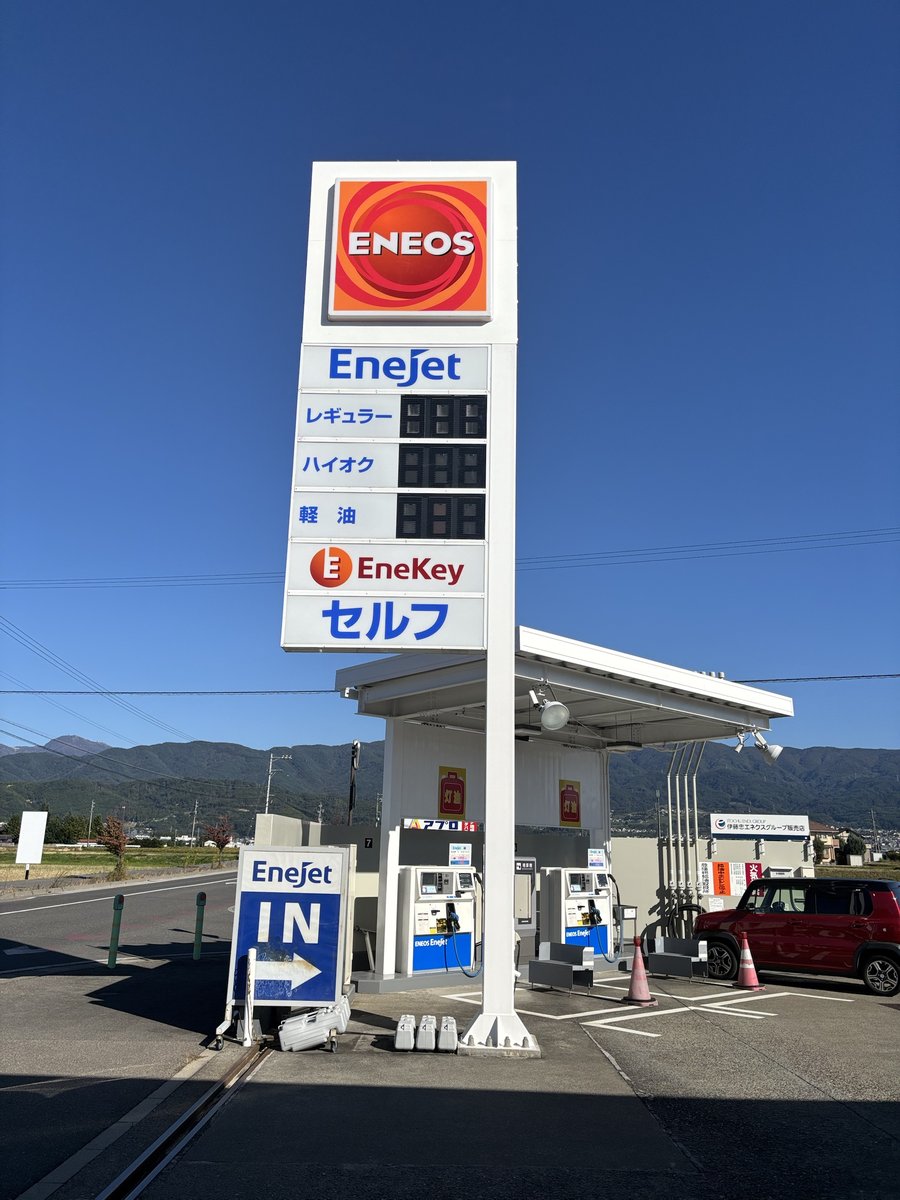
When a self-service station has pumps you can’t use yourself, it marks them as such. Examples are signs reading 「フルサービス」 (full service) or 「従業員専用」 (staff only). At those pumps, an attendant fills the tank.
Once you’ve seen the sign at the entrance, decide which way you’re going, and turn in.
Two ways to fill up
フルサービス (full service) … Open your window and say two words. An attendant does the rest.
セルフ (self-service) … Make your choices on the pump’s screen, and fill up yourself.
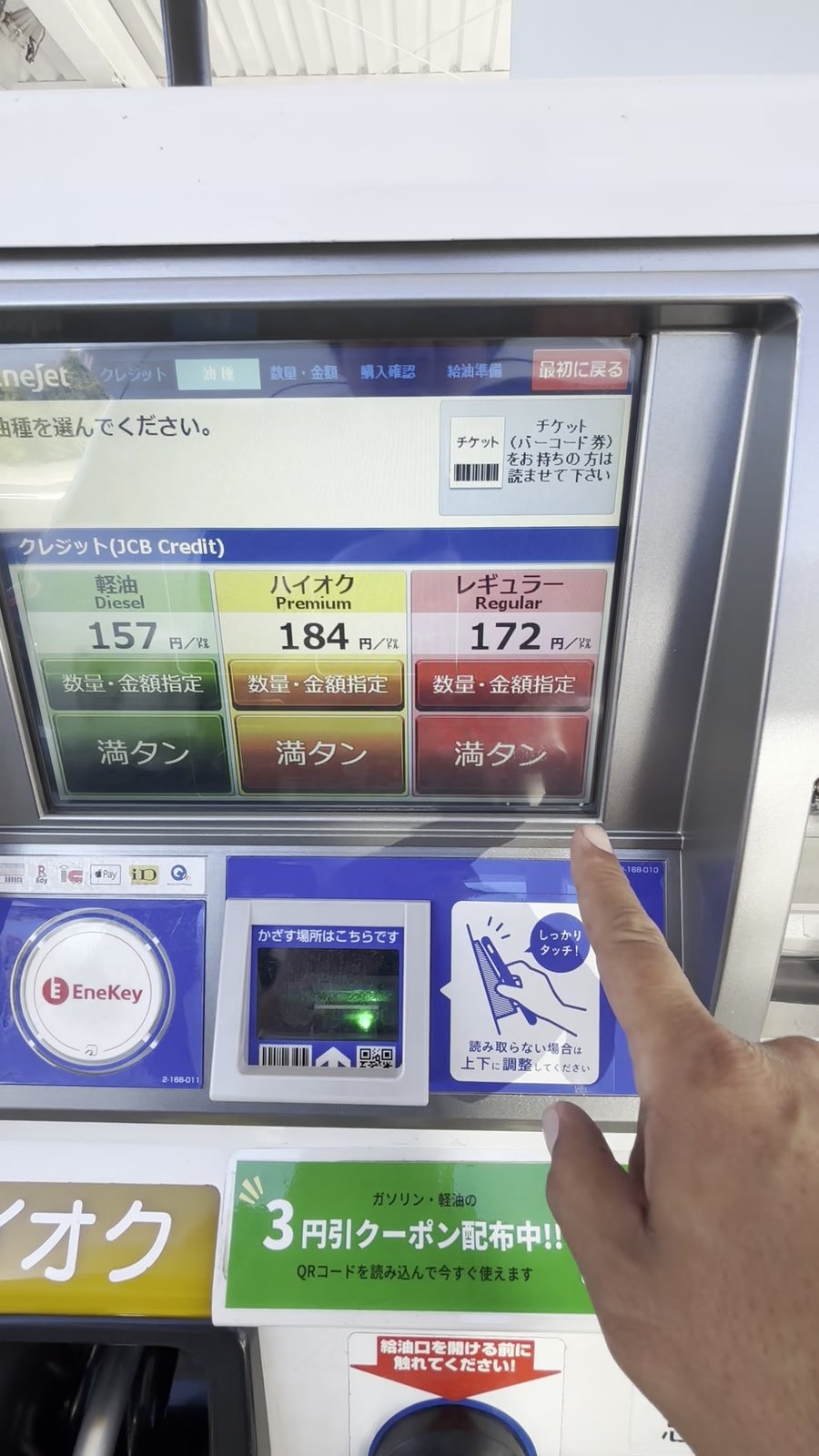
Some stations also show the fuel names on the pump screen in small English letters: Regular, Premium, Diesel. Premium means ハイオク (high-octane).
Both are covered step by step in the articles that follow: “Full-Service Gas Stations in Japan — How to Say 「レギュラー、満タン」 (Regular, Fill It Up) in Japanese” and “How to Use a Self-Service Gas Station in Japan — Fill Up in Four Steps.”
Choose from the three nozzles by the characters
At self-service pumps, the name of each fuel is always shown in characters.
レギュラー (regular)
ハイオク (high-octane)
軽油 (diesel)
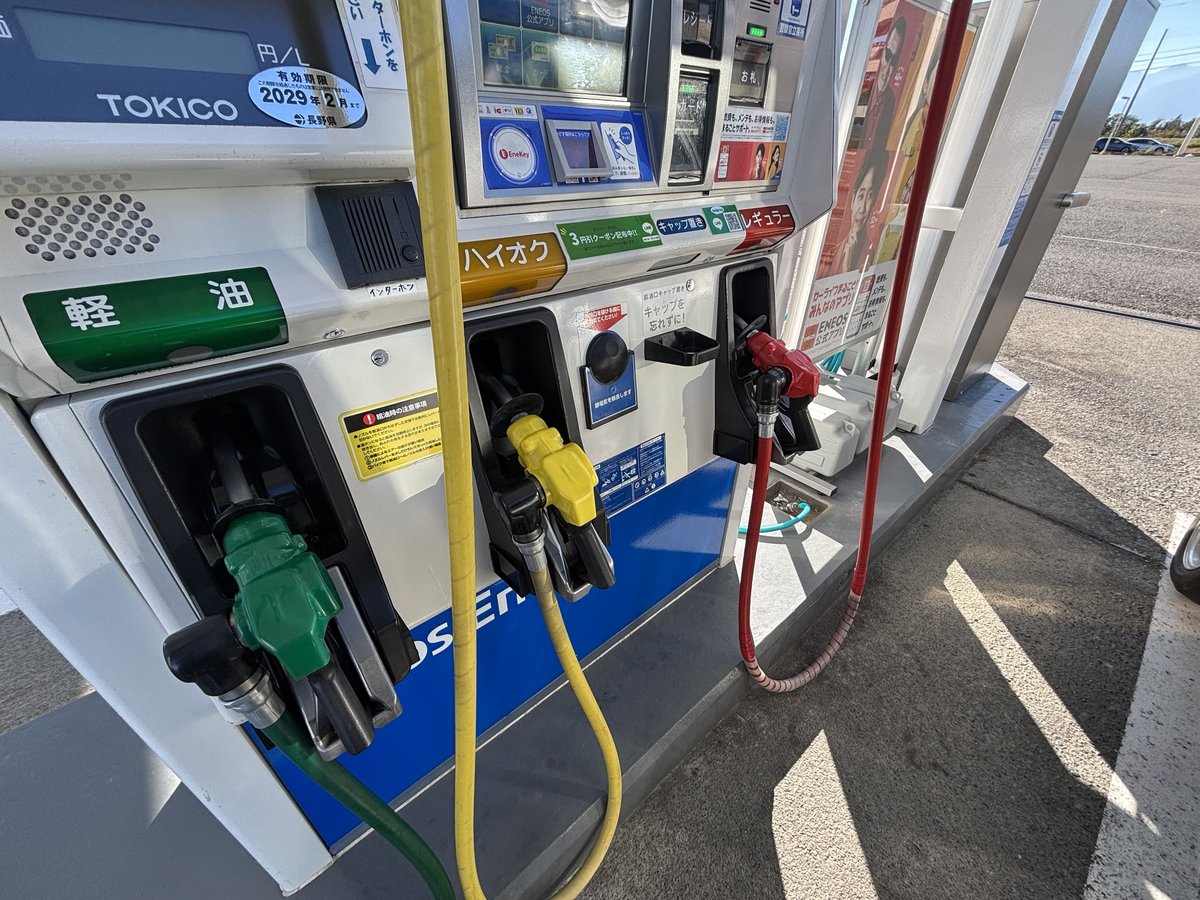
If they’re colored, regular is red, high-octane is yellow and diesel is green.
But they can also be left uncolored, in white, black or gray.
The color is a clue. The characters are what you go by.
This color rule applies only to self-service pumps. Pumps at full-service stations aren’t necessarily these colors.
At a self-service station, read the characters once before you pick up the nozzle.
「軽油」 isn’t “light oil”
The 軽 in 軽油 is the same character as the 軽 in 軽自動車 (kei car, a small car).
But it isn’t the fuel for kei cars. It’s diesel, the fuel for diesel engines.
Kei cars run on gasoline.
Ask which fuel your rental car takes when you pick it up
Ask which kind of fuel your car takes when you rent it. Some rental car companies say they tell you the right kind of fuel when you set off.
Remember the name of the fuel you’re told, exactly as it’s written in characters. At a self-service station, look for the nozzle with those characters. At a full-service station, say that name to the staff.
With a rental car, the fuel type is usually written somewhere inside the car or on the inside of the fuel door. If you’re not sure, just ask the rental car staff before you set off, or ask at the gas station. You’ll be fine.
Even if you can’t read it, there’s a way out
If you’re not confident with Japanese, you can choose a full-service station.
Some rental car companies recommend filling up at a station with staff if you’re not confident reading Japanese. An attendant puts in the right fuel for the car.
Check the sign at the entrance, and if you don’t think you can read it, pull into a station with staff.
※ Station signs, the type of pump, nozzle colors, payment methods and so on differ from station to station. When you actually fill up, follow the signs on the spot and the staff’s instructions.


