Category: Gas Stations

  • Gas Station Japanese — How to Read the Signs: “Regular,” “Full Tank” and More (給油の日本語ミニ辞典)

    This is a dictionary for quickly checking, on the spot, the Japanese you often see at gas stations in Japan.

    It gives not just the meaning but also what to do when you’re there.

    Signs differ from station to station, so if there’s information on the spot, look at that first.

    The words in this dictionary

    Words you see at the entrance

    Words on the pump and the screen

    Words around the station

    Words the staff say

    Words you see at the entrance

    セルフ/セルフサービス

    A station where you fill up yourself. You make your choices on the pump’s touch panel and fill up yourself.

    フルサービス

    A station, or a pump, where an attendant fills your tank for you. Open your window and tell them, for example, 「レギュラー、満タン」 (regular, fill it up).

    従業員専用

    A pump only station employees use. Even if it’s at a self-service station, you don’t use it yourself.

    24h営業

    Open 24 hours. If you see one at night in the countryside, filling up there will put your mind at ease.

    Words on the pump and the screen

    開始

    What’s written on the first button you press. On some pumps, pressing it takes you through payment, type of fuel and amount, in that order.

    支払方法

    The screen where you choose how to pay. Choose cash or card.

    現金

    Paying with bills or coins. At self-service stations where you pay first, you put in money for the amount you want to fill up.

    油種

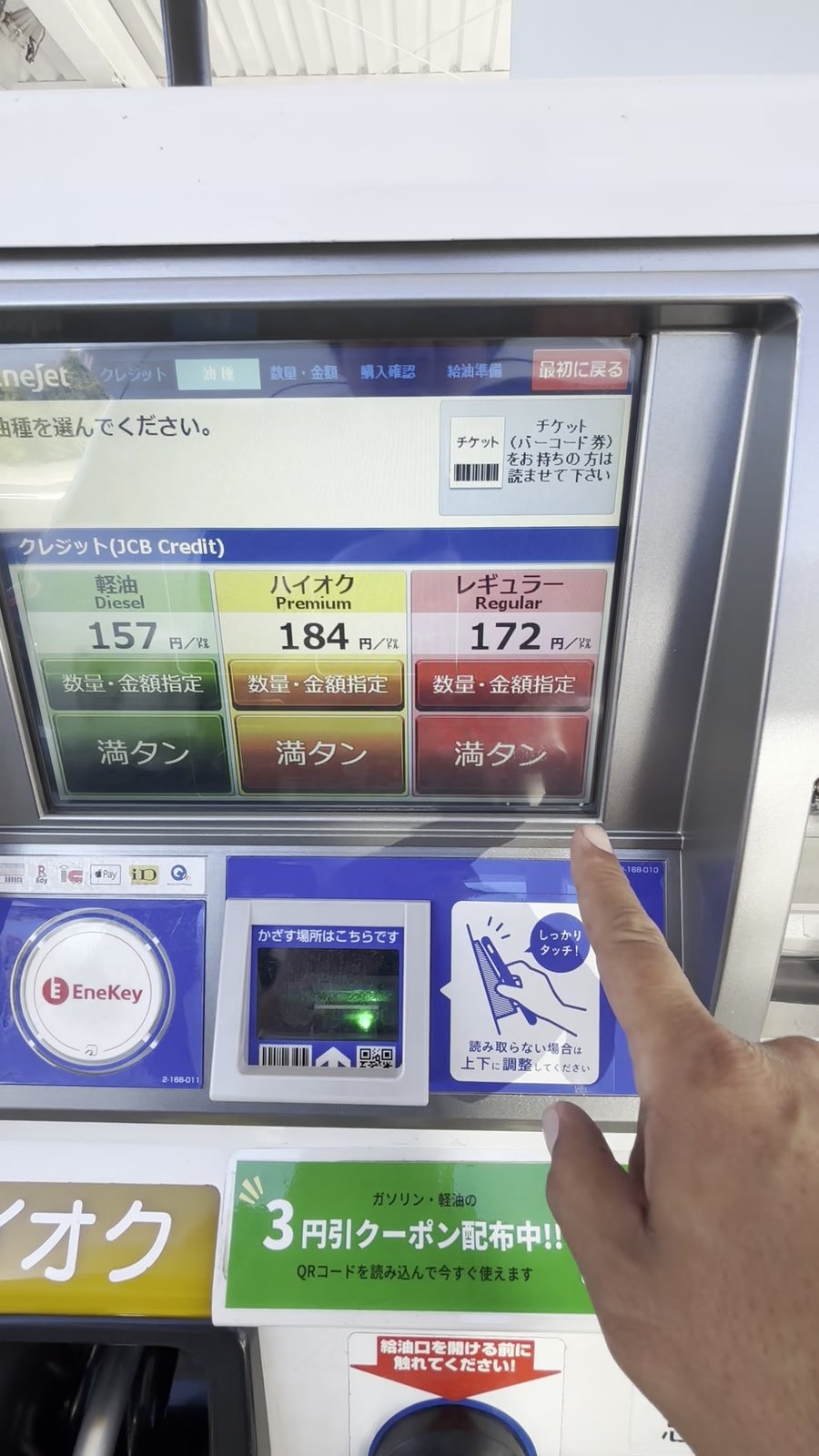
    The type of fuel. On the screen, you choose from レギュラー, ハイオク and 軽油.

    レギュラー

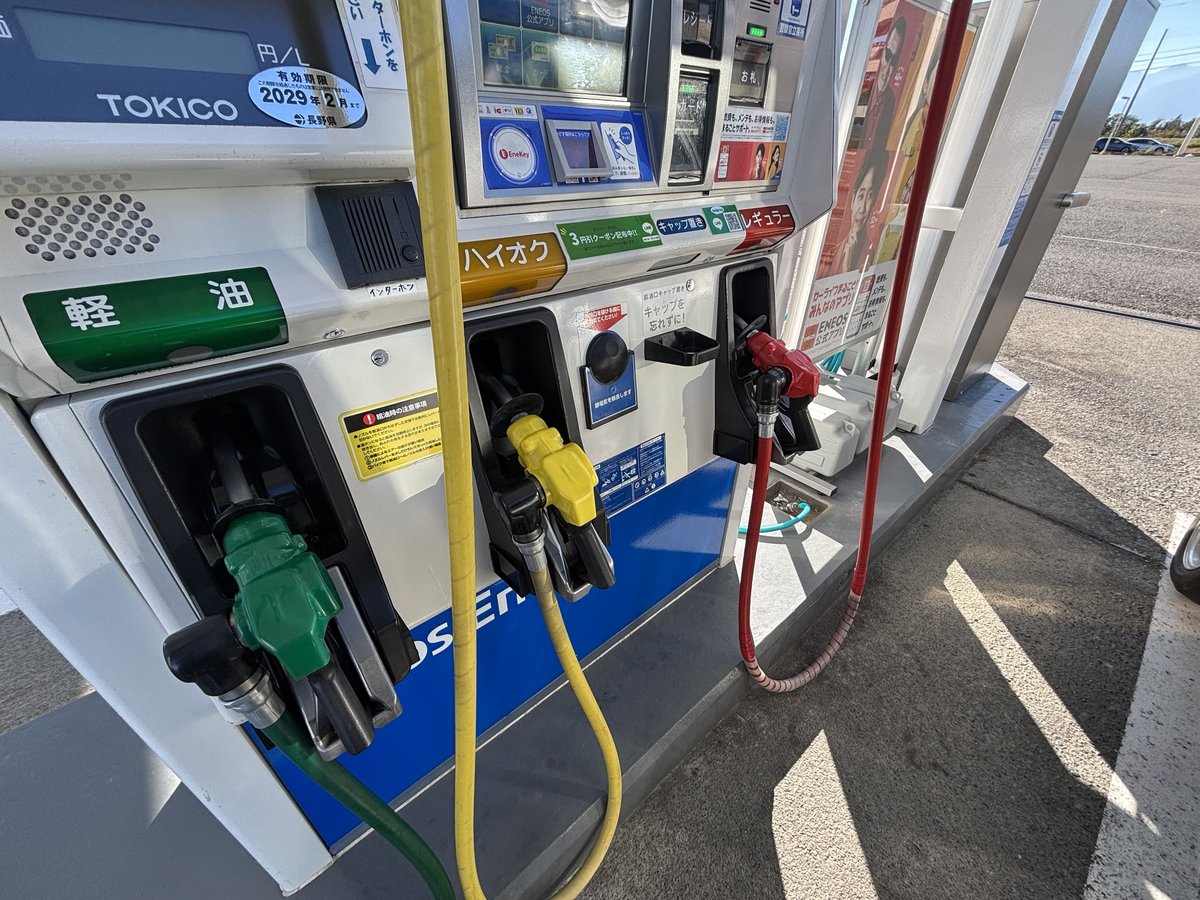
    Regular gasoline. At self-service pumps, if the nozzle and so on are colored, it’s red. Go by the characters rather than the color.

    ハイオク

    High-octane gasoline. At self-service pumps, if it’s colored, it’s yellow.

    軽油

    Fuel for diesel engines. It isn’t for kei cars. At self-service pumps, if it’s colored, it’s green.

    満タン

    Filling it all the way up. Once it stops automatically, don’t put in any more.

    金額

    Deciding how much to put in by the amount of money.

    数量/給油量

    Deciding how much to put in by volume (liters).

    静電気除去シート

    A pad attached to the pump. Before you fill up, touch it with your bare hand to let out the static electricity in your body.

    給油口/給油キャップ

    The opening where you put in fuel, and its cap. After filling up, check that you’ve closed the cap. Some cars don’t have a cap.

    Words around the station

    自動つり銭機

    A machine where you get your change. With some, you hold the barcode on your receipt up to the reader.

    レシート/領収証

    Both are slips showing that you’ve paid. You may be asked to show one when you return a rental car, so hold on to it rather than throwing it away.

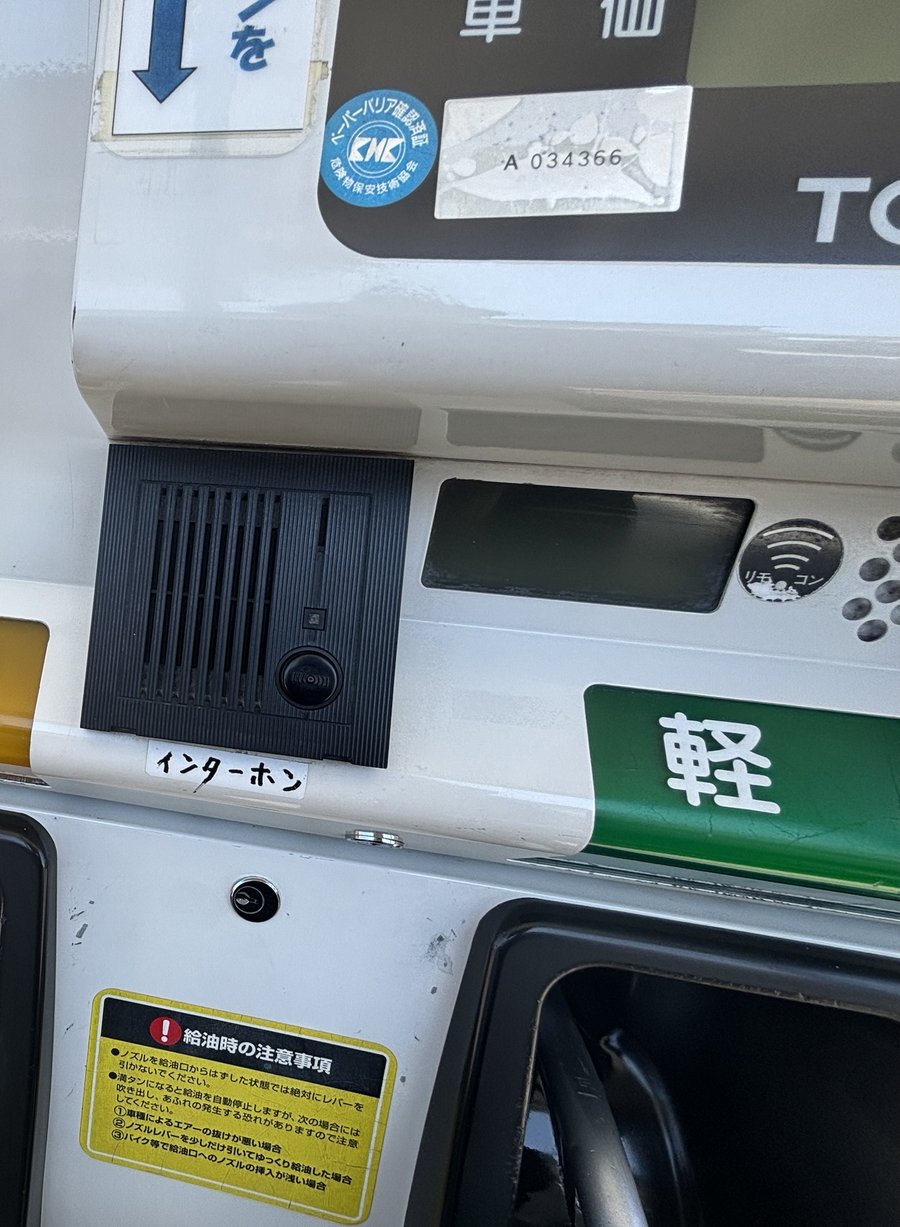
    インターホン/スタッフ呼び出し

    These are for calling the station staff. Press one when you can’t get past a screen.

    給油中エンジン停止

    Turn off the engine while refueling. It’s a sign with black characters on an orange (黄赤, a yellowish red) background.

    火気厳禁

    No open flames allowed.

    禁煙

    No smoking allowed.

    灯油

    Kerosene, used for things like home heating. It isn’t a fuel you put in a car.

    Words the staff say

    オーライ

    The signal attendants use at full-service stations to guide you to where you should stop. Move forward following the signal, and stop.

    If you’re not sure

    If you don’t know what a sign means, press the intercom or speak to a staff member.

    Show the staff member the word in this dictionary and the characters on the screen or sign in front of you, pointing to them side by side.

    ※ Names, how signs are displayed, the order of screens, payment methods and so on differ from station to station. When you actually fill up, follow the signs on the spot and the staff’s instructions.
  • Driving in Rural Japan and at Night — Gas Station Opening Hours and the Half-Tank Rule

    On days when you drive away from the cities, take just one rule with you.

    When the fuel gauge hits half, fill up at the next gas station.

    A rule recommended by a Hokkaido tourism association

    The Furano Tourism Association in Hokkaido calls this the “Half-Tank Rule” and recommends it.

    When the fuel gauge hits half, fill up at the next station you find. That’s all there is to it.

    The reasons it gives are that Hokkaido is big and has fewer stations than you’d expect, that many small stations close at 6 p.m., and that very few are open 24 hours.

    Opening hours — in the countryside, many stations close at night

    JNTO (Japan National Tourism Organization) says the same thing.

    Deep in the national parks, stations get scarce. Many close in the evening, so it advises filling up before you leave the main roads and before you drive at night.

    It also says that because many stations close at night, especially in the countryside, you should fill the tank if you’ll be driving through the night.

    Fill up once before you leave the main roads or before the sun goes down, whichever comes first.

    Once you’ve decided to fill up at half

    Few stations, early closing — once you’ve decided to fill up at half, you’ll hardly notice either.

    What to do if you run out of fuel and the car stops is in “Breakdown, Flat Tire, Dead Battery, Locked-In Key, Out of Gas — A Step Card for When Your Car Stops.”

    Instead of checking the fuel gauge again and again, you can watch the scenery out the window as you drive.

    ※ The number of gas stations and their business hours differ by region and by station. Check the stations in the area you’ll be driving before you set off or when you’re there.

  • Card Holds at Gas Stations in Japan — An Amount Is Held First, Then Corrected to the Real One

    This site explains only how the system works, based on descriptions from Japanese payment services, as a starting point so you don’t get stuck on your trip (as of September 2026; it isn’t advice about money or contracts). The amount held and the number of days before it goes back to normal differ by card and by station, and they can change.

    You paid by card at a self-service gas station, and got a notification for more than you put in.

    That can happen.

    The price isn’t set until you’ve finished filling up

    At a gas station, the total isn’t known until you’ve finished filling up.

    So there’s a system that holds a certain amount first, before you fill up. Once the real amount is set, the charge is corrected to it, and the rest of the hold is released.

    If you get a notification for a large amount

    According to one payment company, choosing a full tank reserves part of your card limit first, so you may get a notification.

    According to the same company, only the amount you actually used is charged.

    Check the final statement

    Even after you see the notification, carry on with your trip.

    When your statement comes later, check that it shows what you actually paid for the fuel you put in.

    ※ The amount held, the number of days before it goes back to normal, and how notifications appear differ by card, station and payment method.

  • Returning a Rental Car Full in Japan (満タン返し) — One Fill-Up Right Before You Return It, and the Receipt

    This site offers information based on guidance from rental car companies, public bodies and others, as a starting point so you don’t get stuck on your trip (as of September 2026). How fuel is handled and how the charge is calculated differ from company to company, and they can change. Always check with the company you rented from and in the official information listed at the end of this article.

    The basic rule is to return a rental car with a full tank.

    There are two things to do.

    Fill the tank right before you return the car.

    Take that receipt with you when you return it.

    Fill up once before you return it

    If you rented the car with a full tank, fill it up at a nearby gas station before you return it.

    Some companies say to ask the office staff if you don’t know where the nearest station is.

    Stop at a station near the office you’re returning to, fill the tank, and then head to the office.

    Take the receipt with you

    Some companies ask you to show the gas station receipt when you return the car.

    Budget Rent a Car says to fill up at a station within a 5 km radius of the return office and show that receipt. The reason given is to check that you put in the right fuel.

    If you couldn’t return the car full, some companies take what you paid for fuel along the way, as shown on the receipt, off the fuel charge.

    If you realize you forgot to close the fuel cap, call the station where you filled up, using the contact details on the receipt (領収証).

    If you have any other trouble in front of the pump, look it up in “Gas Station Problems in Japan — A Q&A to Check on the Spot.”

    When you’ve finished filling up, put the receipt in your wallet before you drive off.

    If you can’t fill the tank

    Some companies say it’s fine to return the car as it is, even if you couldn’t fill the tank.

    In that case, you pay for fuel using the company’s own calculation (based on things like the distance you drove). Some companies say this costs more than the actual price of the fuel.

    When you return the car, tell the staff you couldn’t fill the tank.

    ※ How fuel is settled, how receipts are handled and the conditions on which station you fill up at differ by rental car company. When you actually return the car, follow the instructions of the company you rented from.

    Official sources we checked (9)

    ・トヨタレンタカー:クルマの燃料は (Toyota Rent a Car: About the car’s fuel, in Japanese)

    ・タイムズカーレンタル:返却の案内 (Times Car Rental: Returning the car, in English)

    ・タイムズカーレンタル:FAQ (Times Car Rental, in English)

    ・オリックスレンタカー:よくある質問・返却 (ORIX Rent a Car: FAQ, returning the car, in English)

    ・バジェット・レンタカー (Budget Rent a Car, in English)

    ・ニッポンレンタカー:FAQ (Nippon Rent-A-Car, in English)

    ・日産レンタカー:FAQ (Nissan Rent a Car, in English)

    ・日本政府観光局(JNTO):Things to know when renting a car (Japan National Tourism Organization, in English)

    ・NEXCO中日本:ガスステーション (NEXCO CENTRAL: Gas stations, in Japanese)

  • How to Use a Self-Service Gas Station in Japan — Fill Up in Four Steps

    This site offers information based on guidance from public bodies, oil companies, rental car companies and others, as a starting point so you don’t get stuck on your trip (as of September 2026). Pump screens and steps differ from station to station, and they can change. When you actually fill up, check the screens and signs on the spot and the official information listed at the end of this article.

    At a self-service gas station, you get ready to fill up in four steps.

    On the screen, you choose three things — payment → type of fuel → amount — and then touch the 静電気除去シート (static discharge pad).

    Even if the screen is only in Japanese, knowing this order tells you what you’ll be asked next.

    Before you get out: open the fuel door

    Close your windows and turn off the engine.

    If the fuel pump symbol on your dashboard has an arrow, it points to the side with the fuel door.

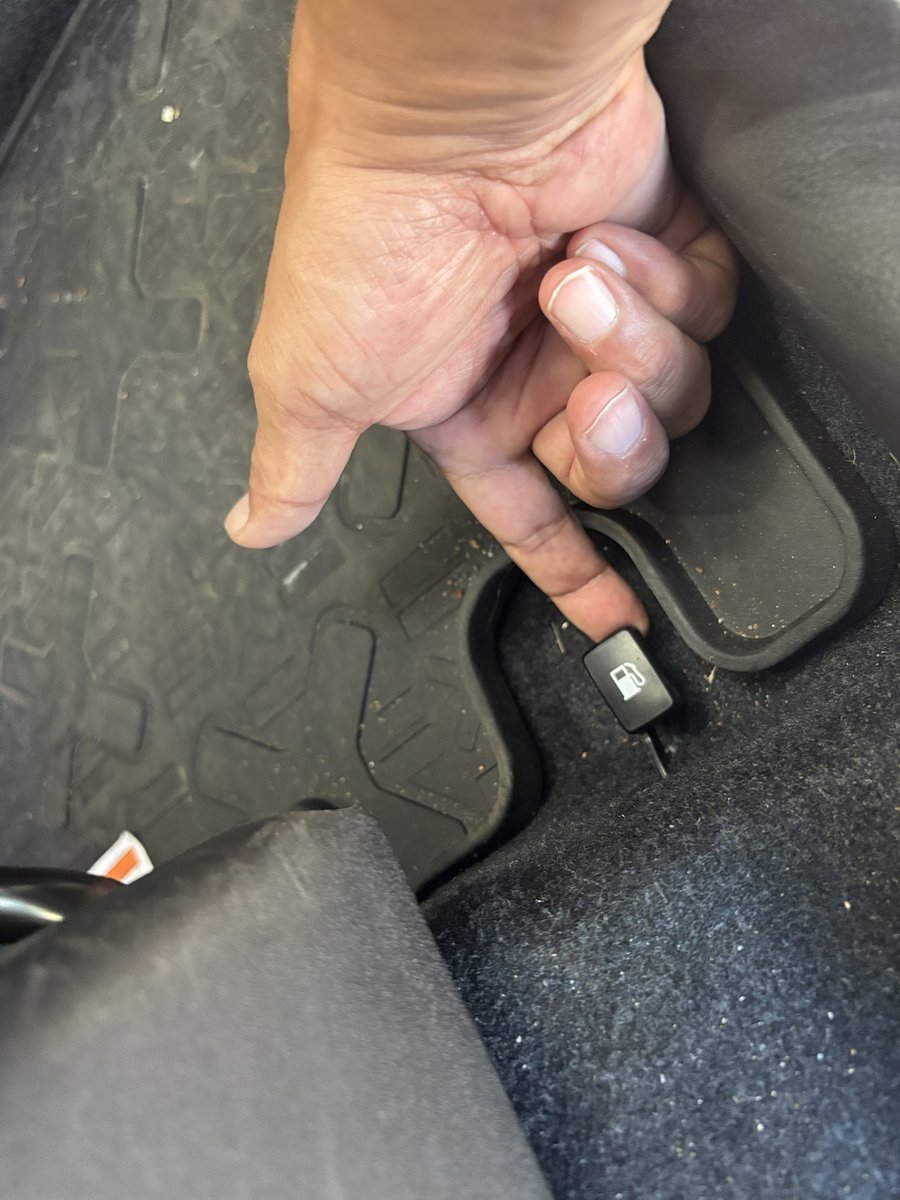
    In many cars, the lever that opens the fuel door is under the driver’s seat, on the floor on the right side, or near the steering wheel. If there’s a lever, open the fuel door before you get out of the car.

    In cars where you can’t find a lever, the fuel door may open if you get out and press lightly on its edge.

    Pulling the fuel door lever by the driver's seat with a finger

    Three choices on the screen

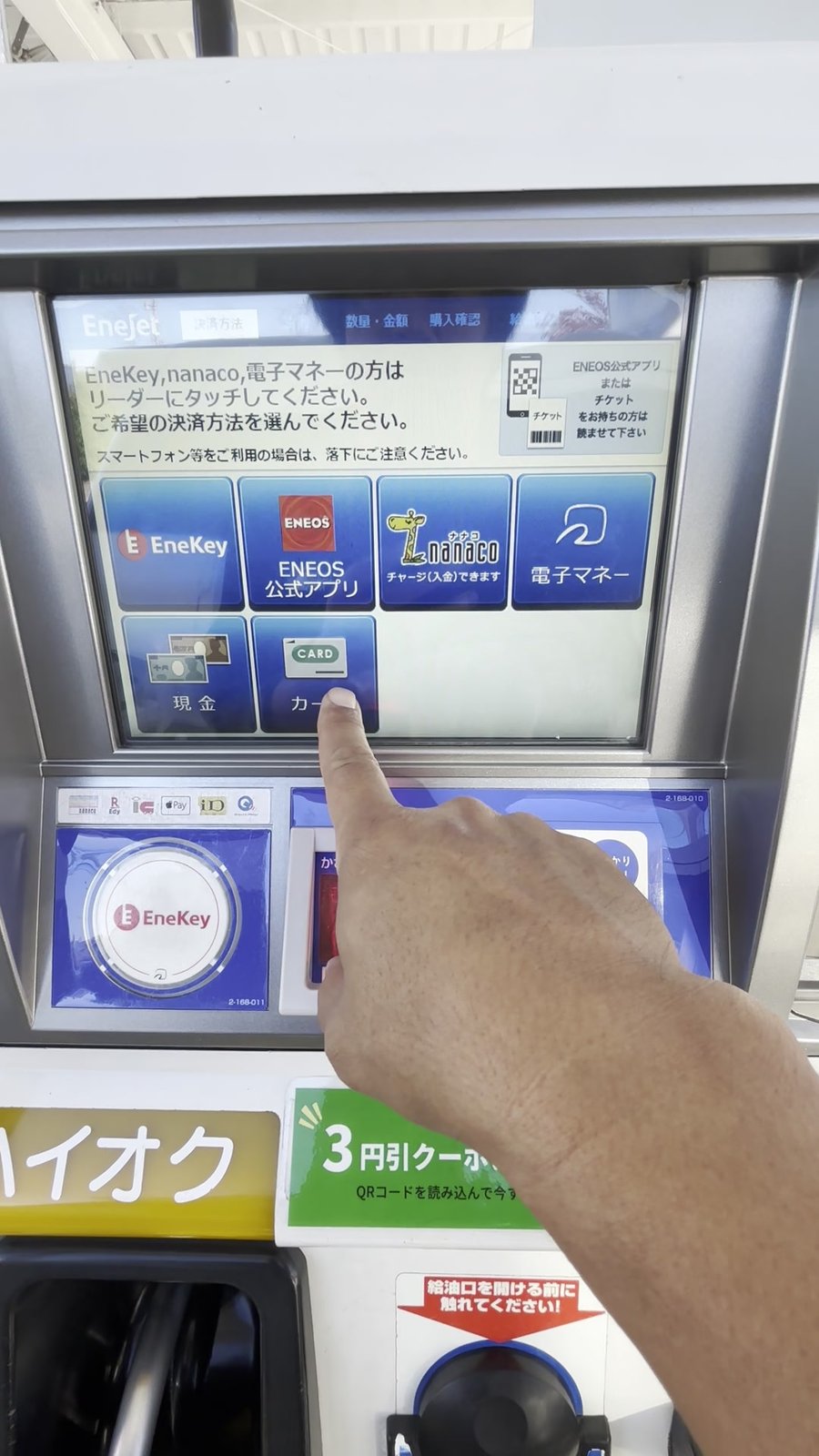
    Some pumps take you through the steps in order after you press the 開始 (Start) button.

    Choosing a payment method on the first screen of a self-service pump

    1 Payment

    Choose 現金 (cash) or card.

    At pumps where you pay first, put in money for the amount you want to fill up. Your change is worked out automatically afterward.

    If you’re paying by card, insert your card and confirm. When you pay by card, a larger amount than the real one may be held first. More on this in “Card Holds at Gas Stations in Japan.”

    2 Type of fuel

    Choose from the three: レギュラー (regular), ハイオク (high-octane) and 軽油 (diesel).

    Find the characters for your rental car’s fuel, and press that button.

    3 Amount

    Decide by 満タン (full tank), by 金額 (price), or by volume (liters).

    If you’re about to return a rental car, press 満タン.

    The fourth step is the 静電気除去シート

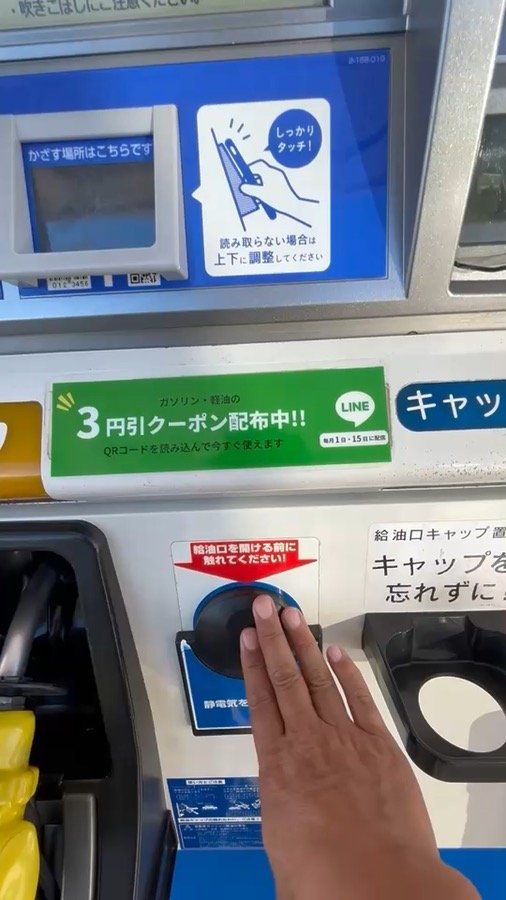
    When you’ve finished choosing on the screen, touch the pad attached to the pump with your bare hand. This is the 静電気除去シート (static discharge pad).

    It lets out the static electricity built up in your body, and it matters most in winter, when the air is dry.

    Some oil companies say about a second is enough. If you can’t find the pad, touching the car’s body also works.

    Touching the static discharge pad on the pump with an open hand

    Touch the pad with your bare hand, then pick up the nozzle.

    Fill up

    Pick up the nozzle marked with the characters for the fuel you chose, and put it into the fuel inlet.

    Check that the meter on the pump reads 「0.00」, then squeeze the nozzle’s trigger.

    When the tank is full, it stops automatically. Some pumps stop with a click.

    Once it stops, don’t put in any more.

    If the nozzle isn’t in far enough, the sensor may not work and fuel may overflow. Push it all the way in.

    If a few drops drip when you pull it out, wipe them with the towel provided, if there is one.

    Close the cap

    At self-service stations, people often forget to close the fuel cap, NEXCO CENTRAL says.

    Some cars don’t have a cap.

    If your car has one, close it, check it’s shut, and then go back to the car.

    Change and receipt

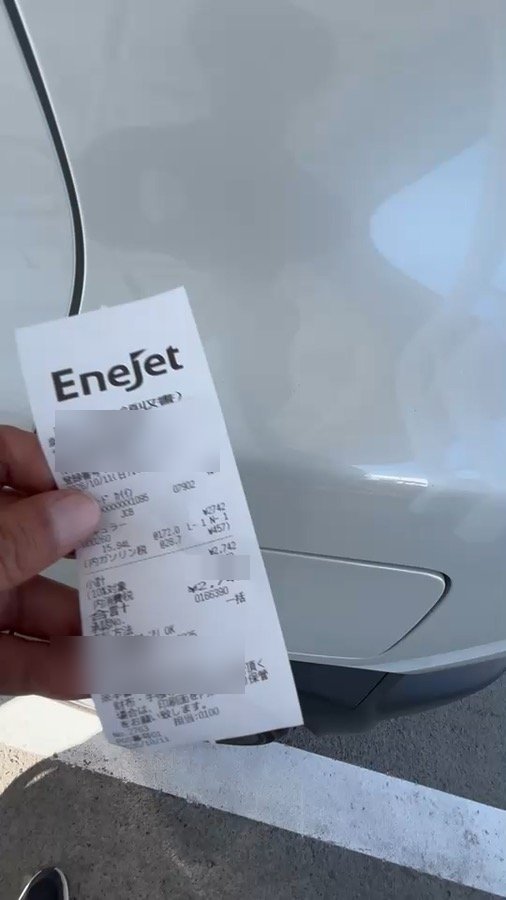
    At some stations, you get your change from a 自動つり銭機 (automatic change machine). Hold the barcode on your receipt up to the machine’s reader, and your change comes out.

    At some stations, you pay by entering the number of the pump you used at the payment machine, or by telling it to the cashier.

    Put the receipt in your wallet and keep it.

    The receipt you get after refueling

    If you get stuck

    There’s an intercom near the pump. It connects you to the station staff.

    Some pumps also have a button to call staff.

    The intercom on a self-service fuel pump

    When you talk to the staff, point to the characters on the screen that you don’t understand. The meanings of the words on the screen are in “Gas Station Japanese.”

    If you’re not confident in Japanese, next time you can also choose a full-service station, where an attendant fills up for you.

    Even if you can’t read the screen, there’s a person on the other side of that button.

    ※ Touch panel screens, the order of choices, payment methods and how you settle up differ from station to station. When you actually fill up, follow the screen and the station’s instructions on the spot.

    Official sources we checked (10)

    ・出光興産:セルフサービスステーションの使い方 (Idemitsu Kosan: How to use a self-service station, in Japanese)

    ・ENEOS:セルフサービスステーション給油方法 (ENEOS: How to fill up at a self-service station, in Japanese)

    ・コスモエネルギーホールディングス:セルフの使い方と禁止事項 (Cosmo Energy Holdings: How to use self-service, and what’s not allowed, in Japanese)

    ・コスモ石油販売:初心者向け給油完全ガイド (Cosmo Oil Sales: A complete refueling guide for beginners, in Japanese)

    ・消防庁:セルフスタンドにおける安全な給油について(PDF) (Fire and Disaster Management Agency: Filling up safely at self-service stations, PDF in Japanese)

    ・JAF:セルフスタンドでの給油の注意点について (JAF: Things to watch for when filling up at a self-service station, in Japanese)

    ・日本自動車工業会:セルフスタンドでは (Japan Automobile Manufacturers Association: At a self-service station, in Japanese)

    ・NEXCO中日本:ガスステーション (NEXCO CENTRAL: Gas stations, in Japanese)

    ・トヨタレンタカー:FILLING UP THE TANK (Toyota Rent a Car, in English)

    ・タイムズカーレンタル:返却の案内 (Times Car Rental: Returning the car, in English)

  • Full-Service Gas Stations in Japan — How to Say 「レギュラー、満タン」 (Regular, Fill It Up) in Japanese

    At a full-service gas station, an attendant fills your tank for you.

    There are just two words to remember.

    「レギュラー、満タン」

    (Regyurā, mantan.)

    Once you pull in, follow the signals to stop

    When you pull into the station, a staff member waves you to where you should stop, calling out 「オーライ」 (all right) (according to Cosmo Oil Sales).

    Stop with the side of the car that has the fuel door next to the pump.

    Once you’ve stopped, turn off the engine.

    Open your window and say the two words

    Open your window and tell them the kind of fuel and how much.

    「レギュラー」 (regular) is the kind of fuel, and 「満タン」 means filling it all the way up.

    If your rental car takes high-octane, it’s 「ハイオク、満タン」 (Haioku, mantan. — high-octane, fill it up), and if it takes diesel, it’s 「軽油、満タン」 (Keiyu, mantan. — diesel, fill it up). Say the name of the fuel you were told when you rented the car in place of 「レギュラー」.

    You don’t have to fill it all the way. You can also ask by amount or by price, like 「20リットル、レギュラー」 (Nijū rittoru, regyurā. — 20 liters, regular) or 「2,000円、レギュラー」 (Nisen-en, regyurā. — 2,000 yen, regular).

    You may be asked about cleaning your windows

    According to Cosmo Oil Sales, after you order, you’re asked whether you’d like your windows cleaned or your ashtray emptied.

    Answer yes or no.

    If you ask for it, stay in your seat and wait while the windows are cleaned.

    You pay from the car, too

    According to the same guide, when it’s done, you open your window and pay without getting out. You also tell the staff how you’ll pay when you order.

    Some stations take only cash and don’t accept credit cards.

    Pay from your seat, and you’re done filling up.

    Even if you can’t read Japanese

    At a full-service station, you don’t have to read the pump’s screen.

    Start by saying the two words you learned to the staff through your window.

    ※ How filling up works, services such as window cleaning, and payment methods differ from station to station. When you actually fill up, follow the signs on the spot and the staff’s instructions.
  • How to Get Gas in Japan — The Sign at the Entrance Decides What Comes Next

    This site offers information based on laws and on guidance from public bodies, rental car companies and others, as a starting point so you don’t get stuck on your trip (as of September 2026; it isn’t an explanation of the law). How things are handled differs by station and by company, and it can change. When you actually fill up, check the signs on the spot and the official information listed at the end of this article.

    Gas stations (petrol stations) in Japan come in two kinds: フルサービス (full service), where an attendant fills your tank for you, and セルフ (self-service), where you do it yourself.

    You can tell which kind it is before you pull in, from the sign at the entrance.

    Look at the sign at the entrance

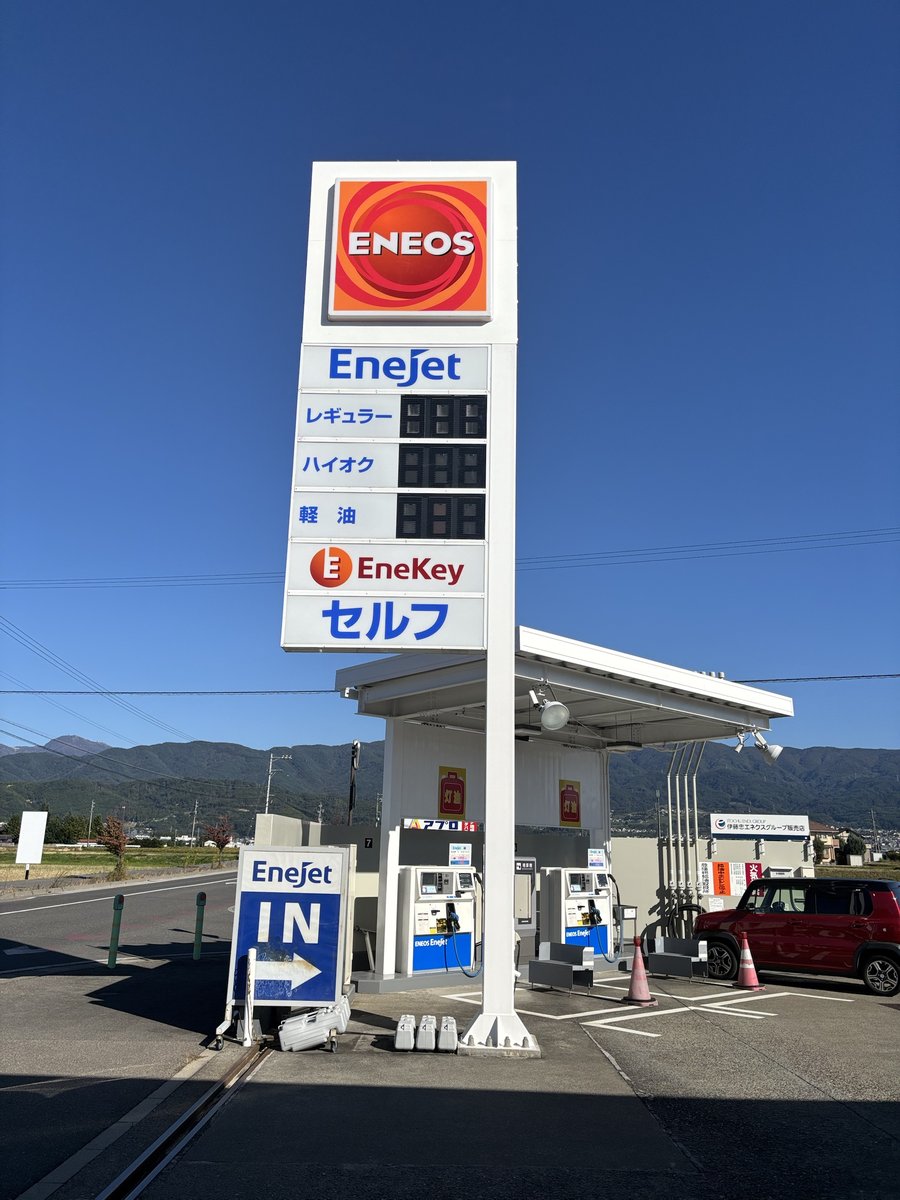
    Self-service stations show that you fill up yourself, somewhere easy to see at the entrance.

    A notice from the Fire and Disaster Management Agency gives the words 「セルフ」 and 「セルフサービス」 as examples of how to write this.

    Gas station sign showing "セルフ" (self-service) at the entrance

    When a self-service station has pumps you can’t use yourself, it marks them as such. Examples are signs reading 「フルサービス」 (full service) or 「従業員専用」 (staff only). At those pumps, an attendant fills the tank.

    Once you’ve seen the sign at the entrance, decide which way you’re going, and turn in.

    Two ways to fill up

    フルサービス (full service) … Open your window and say two words. An attendant does the rest.

    セルフ (self-service) … Make your choices on the pump’s screen, and fill up yourself.

    Choosing the fuel type on a self-service pump screen

    Some stations also show the fuel names on the pump screen in small English letters: Regular, Premium, Diesel. Premium means ハイオク (high-octane).

    Both are covered step by step in the articles that follow: “Full-Service Gas Stations in Japan — How to Say 「レギュラー、満タン」 (Regular, Fill It Up) in Japanese” and “How to Use a Self-Service Gas Station in Japan — Fill Up in Four Steps.”

    Choose from the three nozzles by the characters

    At self-service pumps, the name of each fuel is always shown in characters.

    レギュラー (regular)

    ハイオク (high-octane)

    軽油 (diesel)

    Three nozzles: diesel (green), high-octane (yellow), regular (red)

    If they’re colored, regular is red, high-octane is yellow and diesel is green.

    But they can also be left uncolored, in white, black or gray.

    The color is a clue. The characters are what you go by.

    This color rule applies only to self-service pumps. Pumps at full-service stations aren’t necessarily these colors.

    At a self-service station, read the characters once before you pick up the nozzle.

    「軽油」 isn’t “light oil”

    The 軽 in 軽油 is the same character as the 軽 in 軽自動車 (kei car, a small car).

    But it isn’t the fuel for kei cars. It’s diesel, the fuel for diesel engines.

    Kei cars run on gasoline.

    Ask which fuel your rental car takes when you pick it up

    Ask which kind of fuel your car takes when you rent it. Some rental car companies say they tell you the right kind of fuel when you set off.

    Remember the name of the fuel you’re told, exactly as it’s written in characters. At a self-service station, look for the nozzle with those characters. At a full-service station, say that name to the staff.

    With a rental car, the fuel type is usually written somewhere inside the car or on the inside of the fuel door. If you’re not sure, just ask the rental car staff before you set off, or ask at the gas station. You’ll be fine.

    Even if you can’t read it, there’s a way out

    If you’re not confident with Japanese, you can choose a full-service station.

    Some rental car companies recommend filling up at a station with staff if you’re not confident reading Japanese. An attendant puts in the right fuel for the car.

    Check the sign at the entrance, and if you don’t think you can read it, pull into a station with staff.

    ※ Station signs, the type of pump, nozzle colors, payment methods and so on differ from station to station. When you actually fill up, follow the signs on the spot and the staff’s instructions.
    Official sources we checked (7)

    ・e-Gov法令検索:危険物の規制に関する規則 (e-Gov law search: Regulation on the Control of Hazardous Materials, in Japanese)

    ・消防庁:顧客に自ら給油等をさせる給油取扱所に係る運用について(PDF) (Fire and Disaster Management Agency: On the operation of fueling stations where customers fill up themselves, PDF in Japanese)

    ・JAF:セルフスタンドでの給油の注意点について (JAF: Things to watch for when filling up at a self-service station, in Japanese)

    ・日本自動車工業会:セルフスタンドでは (Japan Automobile Manufacturers Association: At a self-service station, in Japanese)

    ・タイムズカーレンタル:返却の案内 (Times Car Rental: Returning the car, in English)

    ・日産レンタカー:FAQ (Nissan Rent a Car, in English)

    ・日本政府観光局(JNTO):Things to know when renting a car (Japan National Tourism Organization, in English)