Category: Troubleshooting

  • Yellow Parking Ticket on Your Rental Car in Japan: 3 Steps

    This site offers information based on guidance from the police, rental car companies and others, as a starting point when something goes wrong on your trip (as of September 2026; it isn’t an explanation of the law). How things are handled differs by company, and it can change. When you actually run into trouble, follow the instructions of the police and the guidance of the company you rented from.

    You got back to the car, and there was a yellow sticker on the window.

    It’s a parking violation sticker (放置車両確認標章, notice of an unattended vehicle).

    There are three steps, and you finish all of them while you still have the car.

    1. Go to the police station written on the sticker

    The police station to go to is written on the sticker.

    That means you don’t have to figure out which station to go to.

    2. Get the papers at the police station, and pay the penalty

    When you go through the procedure at the police station, you get papers.

    Take those papers to a bank, post office or other financial institution and pay the penalty.

    When you pay, you get a receipt.

    3. Show the papers and the receipt when you return the car

    When you return the car, show the staff the papers you got from the police and the receipt.

    All five — Toyota Rent a Car, Times Car Rental, Nippon Rent-A-Car, ORIX Rent a Car and Budget Rent a Car — have you take care of it before you return the car, then show the papers when you do.

    At Budget Rent a Car, the police contact the company, and the company asks you to move the car and go to the police station.

    The names of the papers (Japanese to show)

    Here are the Japanese names of the papers you get, next to their English names (from Times Car Rental’s guidance).

    交通反則告知書 (Notice of Traffic Violation)

    反則金の納付書 (Payment of Traffic Violation Fine)

    納付書・領収証書等 (Payment Slip & Receipt)

    When you return the car, the two to show the staff are the 交通反則告知書 and the 納付書・領収証書等.

    If something goes wrong at a parking lot

    What to do when something goes wrong at a parking lot is summed up in “When Something Goes Wrong in a Japanese Parking Lot — Press the Intercom First.”

    For now, just this

    The police station on the sticker → pay at a bank or post office → show the papers when you return the car.

    ※ How things are handled differs by region and company, and it can change.

    Official sources we checked (5)

    ・トヨタレンタカー:違法駐車について (Toyota Rent a Car: About illegal parking, in Japanese)

    ・タイムズカーレンタル:Parking Violations (Times Car Rental, in English)

    ・ニッポンレンタカー:Usage guide (Nippon Rent-A-Car, in English)

    ・オリックスレンタカー:FAQs – Potential Problems (ORIX Rent a Car, in English)

    ・バジェット・レンタカー:User Guide (Budget Rent a Car, in English)

  • If Your Car Stops on the Expressway — Don’t Wait Inside

    This site offers information based on guidance from expressway companies, the police, rental car companies and others, as a starting point when something goes wrong on your trip (as of September 2026; it isn’t an explanation of the law). How things are handled can change. When you actually run into trouble, follow the instructions of the police and the expressway company, and the guidance of the company you rented from.

    An accident or a breakdown has stopped your car on the expressway.

    This is the one place where the steps differ from ordinary roads.

    The inside of the car is not a safe place.

    NEXCO CENTRAL sums up what to do in four steps. We’ll go through them in this order.

    1. Don’t walk around

    Don’t walk around in the lanes or on the shoulder.

    If the car can move, pull it onto the shoulder right away (NEXCO East Japan).

    2. Signal to the cars behind you

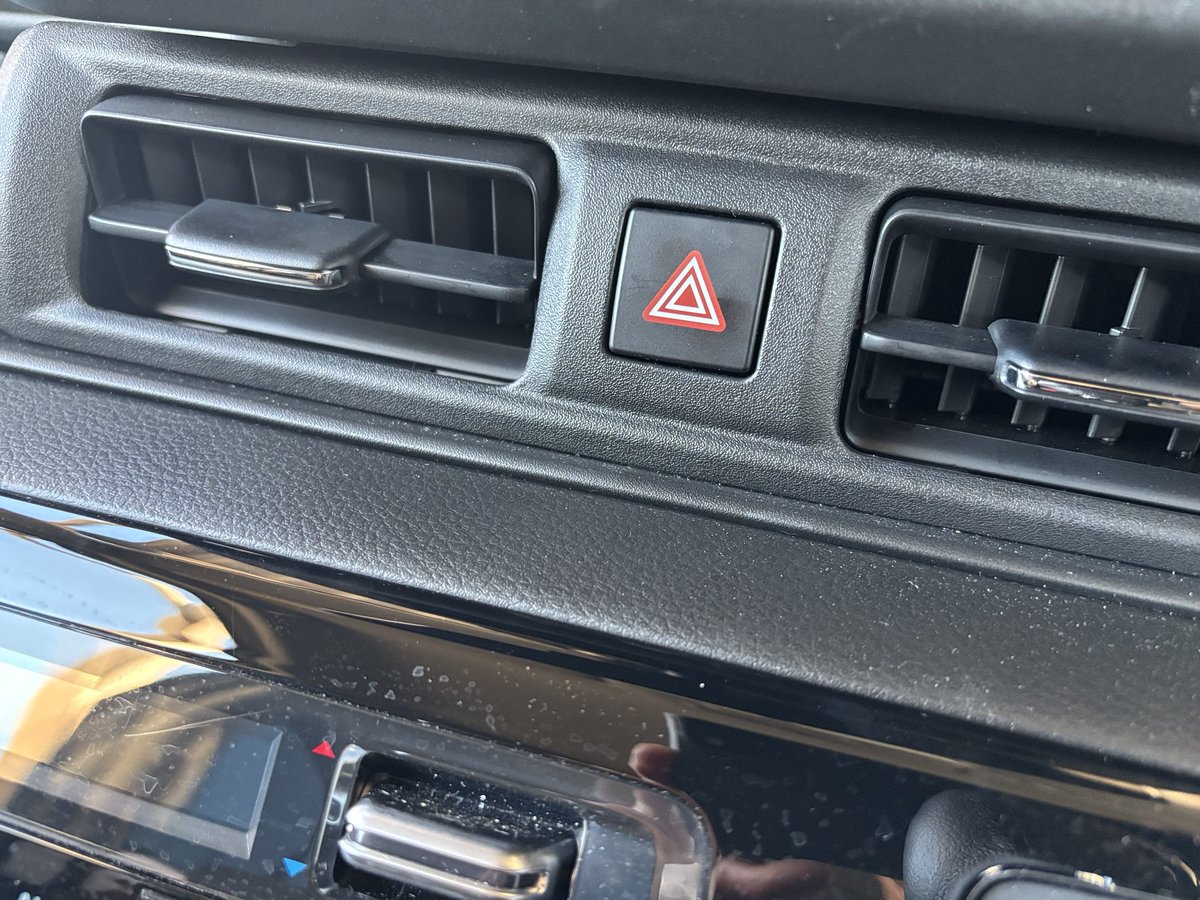
    There are three signals: turn on your hazard lights, light an emergency flare (発炎筒), and put out a warning triangle (停止表示器材, stop warning device).

    The hazard light switch, marked with a red triangle

    Place the flare and the warning triangle behind the car, somewhere you can safely reach.

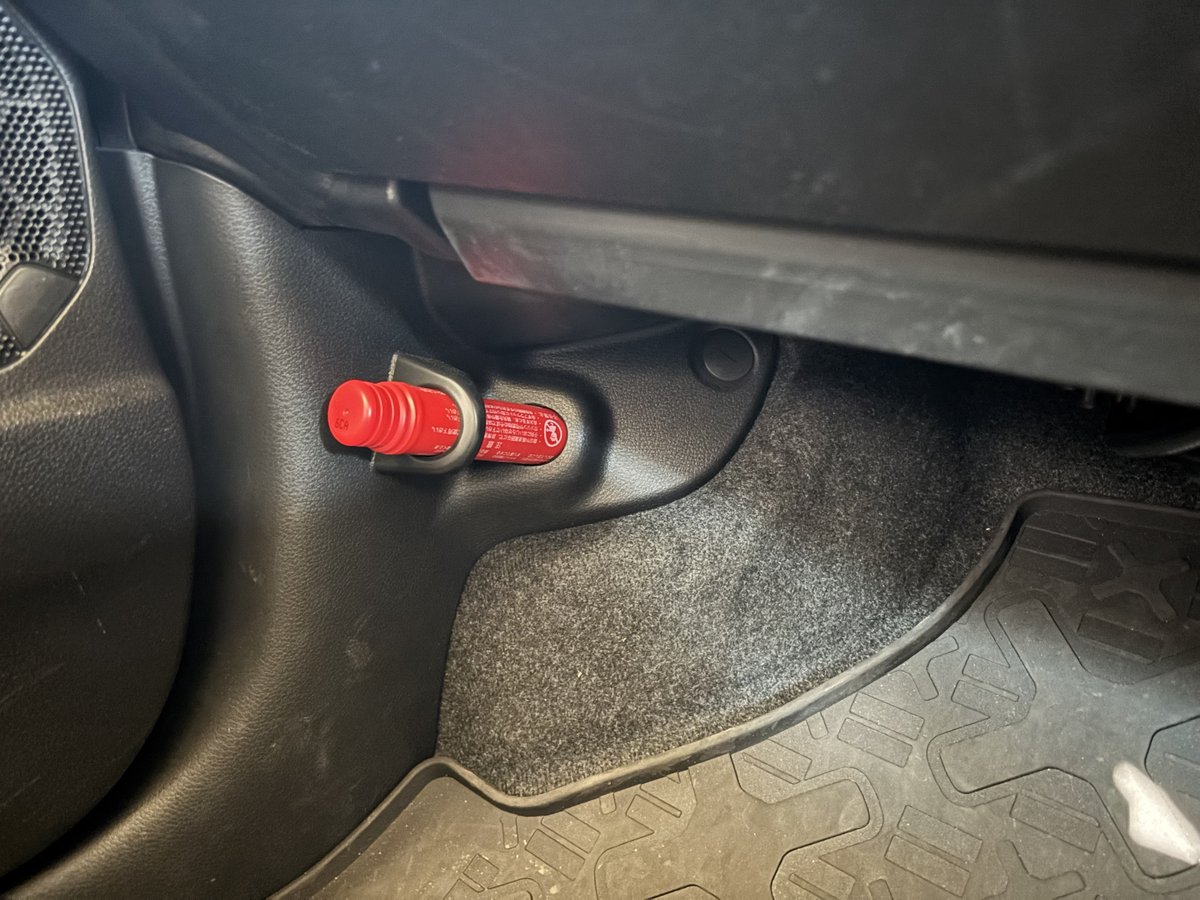
    The emergency flare (発炎筒) is usually in the footwell of the front passenger seat.

    An emergency flare (the red tube) mounted in the front passenger footwell

    If your car can’t move on the expressway, you’re required to show that it has stopped (Road Traffic Act).

    3. Get to safety on the other side of the guardrail

    Everyone — the driver and the passengers alike.

    Watch out for passing cars and your footing, and move right away to the other side of the guardrail, behind your own car.

    Don’t stay near the car. Don’t stay inside it. There have been accidents where people died after being hit from behind.

    4. Once you’re safe, call 110 or use an emergency telephone

    After you’ve moved somewhere safe, report it by calling 110 or using an emergency telephone.

    Tell them where you are, what happened (accident or breakdown), and whether anyone is hurt.

    If someone is hurt and needs an ambulance, call 119 for an ambulance.

    Report it even if you’ve called a tow truck yourself, or think you can fix the problem yourself.

    After that, contact the rental car company at the number on the paper you got when you rented.

    Even if you can’t say where you are, they’ll know

    An emergency telephone connects you to the road operator’s traffic control center. On the main lanes, there are emergency telephones every 1 km, and every 200 m in tunnels.

    Just lifting the receiver lets them know roughly where you are. You don’t need to look for a button. If speaking is hard, you can also tap on the receiver to signal them.

    When you walk to an emergency telephone, walk on the other side of the guardrail.

    If they ask where you are on the phone, the distance markers on both sides of the road (キロポスト, kilometer posts) will help. They stand every 100 m; tell them the number along with the road name and the direction you’re heading.

    The road itself tells you where you are.

    Just one thing when you set off

    We couldn’t confirm from the major rental car companies’ guidance whether rental cars carry a warning triangle.

    So when you set off, check whether there’s one in the trunk. Look for where the emergency flare is at the same time.

    For now, just this

    Signal, then get to the other side of the guardrail. After that, 110 or an emergency telephone.

    ※ Equipment and how things are handled may differ by road and section.

    Official sources we checked (5)

    ・NEXCO中日本:事故・故障が発生! (NEXCO CENTRAL: If an accident or breakdown happens, in Japanese)

    ・NEXCO中日本:Emergency call information (NEXCO CENTRAL, in English)

    ・NEXCO東日本 ドラぷら:If an Accident Occurs (NEXCO East Japan, in English)

    ・NEXCO西日本:Emergencies on the Expressway (NEXCO West Japan, in English)

    ・JAF:Checklist for Road Service (in English)

  • Breakdown, Flat Tire, Dead Battery, Locked-In Key, Out of Gas — A Step Card for When Your Car Stops

    This site offers information based on guidance from rental car companies, JAF and others, as a starting point when something goes wrong on your trip (as of September 2026). What road service covers differs by company and plan, and it can change. When you actually run into trouble, follow the guidance of the help line at the company you rented from.

    A flat tire, the battery, the key, running out of gas.

    The problems are different, but the first two steps are the same.

    Stop somewhere safe → call the number on the paper you got when you rented (the rental car company’s help line).

    At Toyota Rent a Car, if a breakdown or other problem happens, you stop using the car, contact the company and follow its instructions. At ORIX Rent a Car, even for a flat tire or a strange noise, you stop somewhere safe and contact the help line on the paper you got when you rented.

    Even if you can’t tell what the problem is, the first call is the same one.

    Then, here’s what to know for each problem.

    A flat tire

    Don’t keep driving on a flat tire.

    If the car has no spare tire, it will be taken to a nearby repair shop or similar (Toyota Rent a Car, Nippon Rent-A-Car, ORIX Rent a Car).

    At some companies, if you use the tire repair kit in the car, you pay the costs yourself (Toyota Rent a Car, ORIX Rent a Car). Ask the help line before you use it.

    The battery is dead

    Jump-starting the engine with cables is on the list of road services at Toyota Rent a Car, Times Car Rental and Nippon Rent-A-Car.

    Call the help line and wait for instructions.

    The key is locked inside the car

    When they unlock the car for you, they check the rental agreement to make sure you’re the renter (Toyota Rent a Car).

    For cars with an electronic key or an anti-theft device, it may not be possible to open the car on the spot, or you may have to pay for it yourself (Toyota Rent a Car, Nippon Rent-A-Car).

    First, call the help line and tell them what kind of car it is.

    You ran out of gas

    Bringing fuel to you on the spot is on the list of road services at Toyota Rent a Car, Times Car Rental and Nippon Rent-A-Car. At Times Car Rental, you pay for the fuel yourself.

    The best move is to fill up before it runs out. When to fill up is summed up in “Driving in Rural Japan and at Night — Gas Station Opening Hours and the Half-Tank Rule.”

    Stuck in snow or a ditch

    If snow buries the area around the muffler (tailpipe), exhaust fumes can flow into the car, creating a risk of carbon monoxide poisoning. While the engine is running, clear the snow from around the muffler from time to time.

    Here, it depends on the company.

    At ORIX Rent a Car, if your tires spin on a snowy or muddy road and you can’t move, that isn’t covered by road service.

    Times Car Rental’s service includes pulling a car out of a ditch, for people with its coverage package (Super Safety Package). Nippon Rent-A-Car’s includes lifting a wheel that has slipped off the edge of the road.

    On snowy days, it also helps not to stop at the side of the road. Times Car Rental says that snow can hide ditches and gutters, and a tire can drop into one. If you really have to stop, keep your hazard lights on.

    According to Times Car Rental, you also use fuel faster on snowy roads. On days you’re driving far, fill up often.

    If your car stops on the road at night

    Turn on your hazard lights to let the cars behind you know.

    You may be rear-ended by a car behind you, so don’t stay in the car; wait somewhere safe, such as on the other side of the guardrail (JAF).

    On the expressway, follow the steps in “If Your Car Stops on the Expressway — Don’t Wait Inside.”

    Ask whether road service is included when you rent

    At ORIX Rent a Car, insurance, coverage and road service are included in the price.

    Times Car Rental describes its road service as being for customers who’ve added its coverage package. Nippon Rent-A-Car includes road service in the plan it recommends.

    Ask what your plan lets you request when you rent the car.

    For now, just this

    Stop somewhere safe → the number on your rental paper. From there, the help line will tell you what to do.

    ※ How things are handled differs by company and plan, and it can change.

    Official sources we checked (8)

    ・トヨタレンタカー:Insurance (Toyota Rent a Car, in English)

    ・トヨタレンタカー:Explanation of Important Items (Toyota Rent a Car, in English)

    ・タイムズカーレンタル:補償とロードサービスの案内 (Times Car Rental: Coverage and road service, in English)

    ・タイムズカーレンタル:Winter Driving Tips (Times Car Rental, in English)

    ・ニッポンレンタカー:Usage guide (Nippon Rent-A-Car, in English)

    ・オリックスレンタカー:補償とロードサービスの案内 (ORIX Rent a Car: Coverage and road service, in English)

    ・オリックスレンタカー:FAQs – Potential Problems (ORIX Rent a Car, in English)

    ・JAF:Emergency measures (in English)

  • Rental Car Scratch in Japan? Call 110 Even for a Small One — The Police Report You May Need Later

    This site offers information based on guidance from the police, rental car companies and others, as a starting point when something goes wrong on your trip (as of September 2026; it isn’t an explanation of the law). How things are handled differs by company, and it can change. If you actually have an accident, follow the instructions of the police and the guidance of the company you rented from.

    You scraped the rental car’s bumper on a pillar in a parking lot.

    You scuffed a wheel on the curb.

    “Calling the police over a scratch this small seems like too much.”

    That’s exactly when to call 110. There’s one reason.

    The “accident certificate” for an accident reported to the police

    An accident certificate (交通事故証明書, traffic accident certificate) is a document you get from the Japan Safe Driving Center (自動車安全運転センター) for an accident that was reported to the police.

    At Nippon Rent-A-Car, you’ll need this document later, and the company can’t provide it for you. So you finish the police procedures on the spot.

    For an accident that wasn’t reported to the police, insurance or coverage may not pay out (Toyota Rent a Car, Times Car Rental, Nippon Rent-A-Car, ORIX Rent a Car). Toyota Rent a Car lists not having an accident certificate as one example.

    Calling 110 for a small scratch isn’t overreacting. It’s the call that keeps your coverage options open.

    Even if it’s small, even in an accident with no one else involved

    Rental car companies tell you to report an accident to the police even if the scratch is small. Nippon Rent-A-Car treats an accident with no other party the same way.

    Even if you scraped a pillar and no one else was involved, call 110.

    If someone hit your car while it was parked, report that to the police too.

    If you’re not sure, report it.

    From the scene, before you return the car

    As soon as you notice, call the police from where you are, before you return the car.

    On the phone, say that it’s an accident and what happened. They’ll ask you the rest, one question at a time (Osaka Prefectural Police).

    Don’t leave the scene; wait somewhere safe until the police arrive. After that, contact the rental car company at the number on the paper you got when you rented.

    Even if someone else is involved, don’t decide anything about money on the spot; talk to the rental car company. How coverage works is summed up in “Rental Car Insurance in Japan (CDW and NOC) — Three Tiers So the Booking Screen Doesn’t Stop You.”

    For now, just this

    Even if it’s small, even if no one else is involved: 110. From the scene, before you return the car.

    ※ How things are handled differs by company, and it can change.

    Official sources we checked (11)

    ・トヨタレンタカー:保険が給付されない例ほか(事故が発生した場合) (Toyota Rent a Car: Examples where insurance isn’t paid, and more (if an accident happens), in Japanese)

    ・トヨタレンタカー:Explanation of Important Items (Toyota Rent a Car, in English)

    ・ニッポンレンタカー:FAQ (Nippon Rent-A-Car, in English)

    ・オリックスレンタカー:FAQs – Potential Problems (ORIX Rent a Car, in English)

    ・国土交通省:交通事故にあったらまずどうする? (Ministry of Land, Infrastructure, Transport and Tourism: What to do first if you’re in a traffic accident, in Japanese)

    ・タイムズカーレンタル:補償とロードサービスの案内 (Times Car Rental: Coverage and road service, in English)

    ・トヨタレンタカー:DRIVING IN JAPAN (Toyota Rent a Car, in English)

    ・トヨタレンタカー:約款 (Toyota Rent a Car: Rental terms, in English)

    ・タイムズカーレンタル:FAQ (Times Car Rental, in English)

    ・バジェット・レンタカー:User Guide (Budget Rent a Car, in English)

    ・大阪府警察:”110″ EMERGENCY CALLS (Osaka Prefectural Police, in English)

  • Rental Car Accident or Breakdown in Japan — Three Steps, in This Order

    This site offers information based on guidance from the police, fire departments, rental car companies and others, as a starting point when something goes wrong on your trip (as of September 2026; it isn’t an explanation of the law). How things are handled differs by company and agency, and it can change. If you actually have an accident or a breakdown, follow the instructions of the police and fire department, and the guidance of the company you rented from.

    You hit something. You got a flat. The car won’t move, right there on the road.

    Whether it’s an accident or a breakdown, the first steps are almost always the same.

    Somewhere safe → 110 or 119 → the rental car company.

    This article goes through those three in order. After that, it covers two things to get ready before you set off.

    1. First, get somewhere safe

    On the expressway, the steps are different. First, warn the cars behind you with your hazard lights, an emergency flare and a warning triangle (place the flare and the warning triangle if you can do so safely). Next, everyone moves somewhere safe behind your own car, such as the other side of the guardrail. Don’t wait inside the car. Once you’ve moved, report it by calling 110 or using an emergency telephone. If anyone is hurt and needs an ambulance, call 119 for an ambulance. For details, see “If Your Car Stops on the Expressway — Don’t Wait Inside.”

    From here on, these are the steps for ordinary roads.

    If you have an accident or a breakdown on the road, move the car somewhere it won’t be in the way of other cars, and turn off the engine.

    On ordinary roads too, use a warning triangle to let people around you know there’s been an accident (Hokkaido Government). Check whether one is in the car when you set off (“If Your Car Stops on the Expressway — Don’t Wait Inside”).

    Don’t move anyone who’s been hurt unless you really have to.

    Move the car. Don’t move the people.

    2. If anyone is hurt, call 119; for the accident, call 110

    If anyone is hurt, first call 119 for an ambulance. While you wait for it, give whatever first aid you can.

    Report the accident to the police by calling 110. Call even for a small accident (Toyota Rent a Car, Budget Rent a Car). The reason is in “Rental Car Scratch in Japan? Call 110 Even for a Small One — The Police Report You May Need Later.”

    Make the call after you’ve stopped the car and gotten yourself somewhere safe. Don’t call while driving or walking (Hokkaido Police).

    If you don’t understand Japanese, or you can’t make the call yourself, ask someone nearby for help.

    The police in Tokyo, Osaka and Hokkaido explain in their English-language guidance that if you can’t communicate in Japanese, they’ll connect you to an interpreter. Stay on the line and wait.

    After the call, don’t leave the scene; wait somewhere safe until the police arrive.

    3. Last, the rental car company

    The rental car company’s number is on the paper you get when you rent the car, called the Rental Guide (Times Car Rental, Nippon Rent-A-Car, ORIX Rent a Car).

    At Nippon Rent-A-Car, have your rental agreement in hand when you call.

    For what to know about each problem when your car breaks down — a flat tire, a dead battery, the key, running out of gas and so on — see “Breakdown, Flat Tire, Dead Battery, Locked-In Key, Out of Gas — A Step Card for When Your Car Stops.”

    The only numbers to remember are 110 and 119. For the rest, your rental paper is all you need.

    Before you set off (1): Can your phone call 110?

    With a data-only SIM, you may not be able to call 110 or 119. 110 may not go through on a smartphone roaming from overseas, either (Osaka Prefectural Police).

    If the number on your rental paper starts with 0120 or 0570, it may not connect from an overseas mobile phone either. If another number is listed too, note that one down as well.

    So before you set off, get just two things ready.

    ・One way to make regular phone calls

    ・The number on your rental paper, somewhere you can pull it up right away

    Check with the company you bought your SIM from whether it can call 110.

    Before you set off (2): In Hokkaido, watch out for deer in the evening

    In Hokkaido, about 41% of deer-related accidents each year happen in October and November, and by time of day, more than 70% happen between 16:00 and 24:00.

    Deer move in herds. If one crosses the road, expect a second one to follow. Even when a car comes close, they may stand still instead of running away.

    An English flyer made by the Hokkaido Police, the Hokkaido rental car association (北海道レンタカー協会) and others includes a line like this.

    Drive slowly, and you get to enjoy Hokkaido’s beautiful scenery for longer.

    On evening roads, take your time.

    If you do hit a deer, follow the same order as in this article.

    For now, just this order

    Somewhere safe → 110 or 119 → the number on your rental paper.

    Just remember these three.

    In front of a parking lot payment machine, it’s a different story. If you’re stuck there, don’t move the car; press the intercom (“When Something Goes Wrong in a Japanese Parking Lot — Press the Intercom First“).

    ※ How things are handled differs by company and region, and it can change.

    Official sources we checked (11)

    ・北海道庁:Drive Hokkaido「Traffic accident」 (Hokkaido Government, in English)

    ・北海道庁:エゾシカとの交通事故防止について (Hokkaido Government: Preventing traffic accidents with Ezo deer, in Japanese)

    ・北海道警察:How to use 110 appropriately (Hokkaido Police, in English)

    ・大阪府警察:”110″ EMERGENCY CALLS (Osaka Prefectural Police, in English)

    ・JAF:Emergency measures (in English)

    ・JAF:Call JAF (in English)

    ・オリックスレンタカー:FAQs – Potential Problems (ORIX Rent a Car, in English)

    ・バジェット・レンタカー:User Guide (Budget Rent a Car, in English)

    ・タイムズカーレンタル:Responding to Accidents and Other Problems (Times Car Rental, in English)

    ・トヨタレンタカー:DRIVING IN JAPAN (Toyota Rent a Car, in English)

    ・ニッポンレンタカー:事故時の連絡先 (Nippon Rent-A-Car: Contacts in case of an accident, in English)

  • When Something Goes Wrong in a Japanese Parking Lot — Press the Intercom First

    You can’t read the machine, you don’t know your number, you’ve lost your ticket.

    When you get stuck in a Japanese parking lot, the answer is nearly always the same.

    First, press the intercom

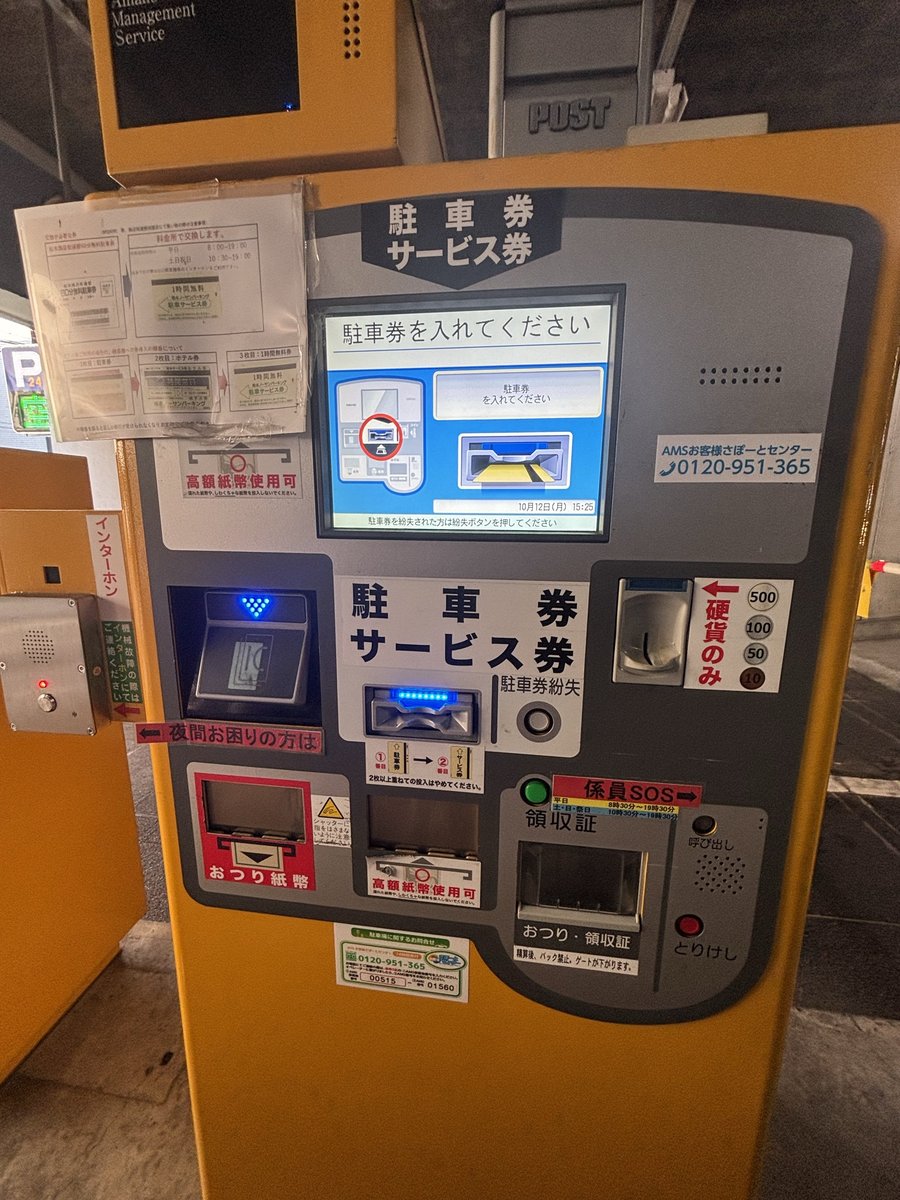
    There’s an intercom on the pay machine.

    Exit payment machine with the staff-call sign (係員SOS) and an intercom

    Press it.

    They already know which parking lot you’re calling from.

    You don’t have to explain where you are.

    There’s one thing to say.

    “Tasukete kudasai. Nihongo ga wakarimasen.”

    (助けてください。日本語がわかりません。 — “Please help me. I don’t read Japanese.”)

    They’ll usually sort it out, or someone will come.

    If there’s a person nearby, the same words and some pointing will do it.

    A translation app can read the sign for you

    Translation apps can read text through the camera.

    Point it at a sign or at the machine’s screen, and the translation comes up.

    Download Japanese before you come to Japan, not after you arrive.

    These four have the same answer

    The pay machine is only in Japanese

    You don’t know your parking space number

    You can’t find your car

    You’ve lost your parking ticket

    Every one of them gets unstuck once you press the intercom.

    Pressing it beats pressing buttons on the machine and hoping.

    You’ve paid, but you can’t get out

    The lock plate won’t go down. The exit barrier won’t open.

    First, check that the number you paid for is your own space.

    If you paid correctly and it still won’t move, leave the car and use the intercom.

    Forcing your way out is how cars get damaged.

    Worth doing before anything goes wrong

    Five things, done up front, make everything afterwards easier.

    Watch the lock plate go down before you move the car.

    Drive out soon after you pay. (After a while, the plate can rise again.)

    Once you’ve paid at the exit, don’t back up. (The barrier can come down again.)

    At a mechanical garage, get everyone out before the machine moves.

    Don’t park in a 月極 or a 専用 space.

    Get those right, and the intercom covers the rest.

    Three photos

    When you use a parking lot in Japan:

    your rental car’s license plate

    your parking space number

    the fee sign

    With those three on your phone, you can settle most things yourself.

    Things to ask when you rent

    When you pick up the car, ask whether there’s a phone number where someone speaks English.

    Some companies have one and some don’t.

    Ask for the car’s height and width here too, and you won’t be stuck at a mechanical garage.

    Things that come up around paying

    Machines differ in which banknotes they take, and some won’t take large notes.

    Coins and small notes are the ones to keep in your pocket.

    If the machine is short of change, or you stop paying halfway and don’t get all your money back, it may print, in place of the money it couldn’t return,

    預り書

    a slip of paper with this written on it.

    Keep it, don’t throw it away, and ask on the intercom.

    No barrier doesn’t mean no charge

    Some camera-type lots have no lock plate and no barrier at the exit.

    Nothing stops you from driving out, but you still owe the fee.

    Pay at the machine before you go.

    When you’re stuck, don’t force the car

    Leave the car where it is, and press the intercom.

    That one habit covers most of it.

    ※ What a pay machine can do, how a lock plate behaves, what happens when a ticket is lost, and how refunds work differ from one parking lot to another. If something does go wrong, follow the signs on site and the information from the operating company.

  • Gas Station Problems in Japan — A Q&A to Check on the Spot

    This site offers information based on guidance from public bodies, oil companies, rental car companies, JAF and others, as a starting point when something goes wrong on your trip (as of September 2026; it isn’t an explanation of the law). How things are handled differs by station and by company, and it can change. When you actually run into trouble, check with the staff on the spot, the information from the company you rented from, and the official information listed at the end of this article.

    Here are seven questions for when you get stuck partway through filling up, or before you return the car.

    1 I couldn’t fill the tank before returning the car

    Times Car Rental says it’s fine to return the car as it is.

    In that case, you pay for fuel using the company’s own calculation. Toyota Rent a Car, Times Car Rental, ORIX Rent a Car and Nissan Rent a Car calculate it from the distance you drove. Nippon Rent-A-Car calculates it from either the distance or what’s left on the fuel gauge.

    Nippon Rent-A-Car and Nissan Rent a Car say this costs more than the actual price of the fuel.

    There’s more in “Returning a Rental Car Full in Japan.”

    When you return the car, tell the staff you couldn’t fill the tank.

    2 I put in the wrong fuel

    Don’t start the engine. Don’t switch on the ignition either.

    Call the staff right away.

    Putting diesel in a gasoline car, or gasoline in a diesel car, makes the engine stall or break down. Toyota Rent a Car says putting in the wrong fuel will damage the car so it won’t run.

    If you put high-octane in a car that takes regular, the engine usually won’t be damaged, JAF says.

    At Nippon Rent-A-Car and Nissan Rent a Car, damage and repairs caused by putting in the wrong fuel aren’t covered.

    Don’t start the engine. Wait for the staff to come.

    When the staff member comes, point to show them the name of the fuel you put in, using the characters on the nozzle or the words in “Gas Station Japanese” (レギュラー, ハイオク, 軽油).

    3 I can’t get past a screen at a self-service pump

    Some pumps have a button to call staff.

    If you can’t find one, press the intercom near the pump. It connects you to the station staff.

    When the staff member comes, point to the characters on the screen that you don’t understand. You can look up what they mean in “Gas Station Japanese.”

    4 My change didn’t come out

    Some stations give you your change from a 自動つり銭機 (automatic change machine). Hold the barcode on your receipt up to the machine’s reader.

    At some stations, you enter the number of the pump you used at the payment machine, or tell it to the cashier.

    If you’re not sure, ask over the intercom.

    5 I forgot to close the fuel cap

    Call the contact number on the receipt (領収証) from the station where you filled up.

    That’s another reason to hold on to your receipt.

    6 My card shows a larger amount than I put in

    There’s a system that holds a larger amount first, until the amount for the fuel is set. According to descriptions from Japanese payment services, once the real amount is set, the charge is corrected to it.

    There’s more in “Card Holds at Gas Stations in Japan.” When your statement comes later, check what you actually paid for the fuel you put in.

    7 I’m low on fuel, at night or in the countryside

    If you find a station that’s open, fill up there. The Furano Tourism Association also says that when you’re driving at night and see a station open 24 hours, you should always fill up.

    What to do if you run out of fuel and the car stops is in “Breakdown, Flat Tire, Dead Battery, Locked-In Key, Out of Gas — A Step Card for When Your Car Stops.”

    There’s more in “Driving in Rural Japan and at Night — Gas Station Opening Hours and the Half-Tank Rule.” From now on, fill up when the fuel gauge hits half.

    ※ What the pumps can do, how you settle up, how wrong fuel is handled, how the fuel charge is calculated and so on differ by station and by rental car company. When you actually run into trouble, follow the staff on the spot and the instructions of the company you rented from.

    Official sources we checked (12)

    ・JAF:燃料を入れ間違えた場合の対処方法 (JAF: What to do if you put in the wrong fuel, in Japanese)

    ・出光興産:セルフサービスステーションの使い方 (Idemitsu Kosan: How to use a self-service station, in Japanese)

    ・コスモ石油販売:初心者向け給油完全ガイド (Cosmo Oil Sales: A complete refueling guide for beginners, in Japanese)

    ・消防庁:セルフスタンドにおける安全な給油について(PDF) (Fire and Disaster Management Agency: Filling up safely at self-service stations, PDF in Japanese)

    ・NEXCO中日本:ガスステーション (NEXCO CENTRAL: Gas stations, in Japanese)

    ・トヨタレンタカー:FILLING UP THE TANK (Toyota Rent a Car, in English)

    ・富良野観光協会:Renting a Car in Hokkaido (Furano Tourism Association, in English)

    ・トヨタレンタカー:よくあるご質問 ご利用中 (Toyota Rent a Car: FAQ, during your rental, in Japanese)

    ・タイムズカーレンタル:FAQ (Times Car Rental, in English)

    ・オリックスレンタカー:よくある質問・返却 (ORIX Rent a Car: FAQ, returning the car, in English)

    ・日産レンタカー:FAQ (Nissan Rent a Car, in English)

    ・ニッポンレンタカー:利用ガイド (Nippon Rent-A-Car: User guide, in English)

  • If You Get Stuck at a Toll Booth — Stop, Hazards, Button

    This site offers information based on guidance from road companies, public agencies, rental car companies and others, to help you get ready for your trip (as of September 2026), but tolls, discounts and the way toll booths work can change. Before you leave, always check the official guidance listed at the end of this article, and the company you’re booking with, for the latest details.

    The barrier won’t open. You drove into an ETC lane without a card. You lost your ticket.

    When you get stuck at a toll booth, the first thing to do is mostly the same.

    First, stop where you are

    Don’t back up; stop right there. You don’t need to get out of the car.

    Turn on your hazard lights to let the cars behind you know.

    Then press the intercom or call button in the lane. It connects you to an attendant.

    What do you say?

    Just this one phrase.

    【日本語がわかりません。】 (“I don’t understand Japanese.”)

    (Nihongo ga wakarimasen.)

    If you don’t have an ETC card, follow it with this.

    【ETCカードがありません。】 (“I don’t have an ETC card.”)

    (ETC kaado ga arimasen.)

    Even if you can’t make yourself understood, don’t move the car; wait for instructions over the intercom. Your hazard lights are already telling the cars behind you.

    At an exit, an attendant may come to your car. If so, show them this page on your phone and they’ll understand.

    The barrier won’t open

    The most common reason is forgetting to put in the ETC card.

    If it didn’t open at the entrance, take a 通行券 (“toll ticket”) as the attendant tells you. At the exit, go into 【一般】 (“general”) or 【ETC/一般】 (“ETC / general”) and hand the 通行券 and your ETC card to the attendant.

    If it didn’t open at the exit, an attendant will come to your car. Give them your ETC card, and they’ll work out the toll.

    They’ll ask which interchange (IC) you got on at, and roughly what time. Show them the IC screenshot or photo you saved (how to save one is in the “Getting Through the Toll Booth” article).

    You drove into an ETC lane without an ETC card

    Stop before the barrier, and use the intercom.

    If you’ve driven into a toll booth that only ETC can use, go to a lane marked 【サポート】 (“support”) or 【ETC/サポート】 (“ETC / support”), stop before the barrier, and wait for instructions over the intercom.

    How you pay depends on the toll booth. Do as the attendant tells you.

    You lost your ticket

    At the exit, tell the attendant which IC you got on at, and roughly what time.

    If you have something in writing that shows which IC you entered at, you may only be charged from that IC.

    You drove past your exit

    On the main expressway, you can’t back up or make a U-turn. Drive to the next exit and get off there.

    On some roads, you can be directed back to the IC you meant to use: at the next exit, take your ETC card out of the unit first, go into a 【一般】 or 【サポート】 lane, and tell the attendant before you pay. You pay only from the IC where you first got on to the IC you meant to use (at some places, the road layout doesn’t allow this).

    Tell the attendant this.

    【出口を通り過ぎました。】 (“I drove past my exit.”)

    (Deguchi o toorisugimashita.)

    At the exit after you go back, the barrier may not open in an ETC lane. Use a lane with an attendant, or a lane with a toll payment machine.

    Even if you go one exit too far, get off at the next one and your trip carries on as before.

    You got on the expressway by mistake

    On some roads, you may be able to go back if you tell the attendant over the intercom at the entrance ticket machine.

    If you’ve only just gotten on, that button comes first.

    When you return the car, mention it at the rental office

    If you called an attendant at a toll booth, tell the rental office when you return the car. You can bring it up while you settle the tolls.

    If you stop: hazards, then the button

    If they can’t understand you, wait. That’s all you need to remember at the toll booth.

    ※ Toll booth equipment, how to pay at ETC-only toll booths, and what happens when you drive past your exit or take the wrong entrance differ by road company and toll booth. When you actually drive, follow the signs on site and the attendant’s instructions.

    Official sources we checked (6)
  • Japan Rental Car Insurance Q&A — Contact Your Rental Company First

    This site offers information based on guidance from public bodies, rental car companies and others, as a starting point when something goes wrong on your trip (as of September 2026; it isn’t an explanation of insurance or the law). How coverage is handled differs from company to company, and it can change. Always check the latest details with the company you rented from and in the official information listed at the end of this article.

    You found a scratch. You got a flat. A bill arrived afterwards.

    When you’re stuck on anything to do with rental car insurance or coverage, first contact the rental company you rented from.

    Rental car companies tell you to report even small things to the police. In an accident, you report it to the police and contact the company too. If you don’t report it, you may not be able to use your coverage.

    This page only lists what happens with your coverage. What to do in an accident is covered in “Rental Car Accident or Breakdown in Japan.”

    Even a small scrape — do I call the police?

    Yes. Rental car companies tell you to report it to the police even if the damage is small (Nippon Rent-A-Car). The national rental car association, the industry body, also says to get in touch after any accident, big or small. Some companies treat any scratch or dent as an accident, whatever its size (Nissan Rent a Car).

    Even for a small scratch, contact the police and the rental company.

    I got a flat tire. A hubcap came off.

    Which plan covers it differs by company.

    At Toyota Rent a Car, with only the basic coverage and 免責補償, you pay for tire repairs and lost hubcaps yourself. If you have 安心Wプラン, they’re covered.

    Other companies have plans that cover flat tires too (ORIX Rent a Car’s レンタカー安心パック(RAP), Times Car Rental’s 安心補償コース).

    First contact the rental company and ask how it’ll be handled.

    Can I use the tire repair kit in the car?

    Contact the company before you use it.

    Some companies ask you not to use the tire repair kit in the car, and if you do, you pay for it yourself (Toyota Rent a Car, Nippon Rent-A-Car).

    I paid for a repair on the spot

    Don’t throw away the receipt. Keep it.

    At some companies, you get the money back if you show the receipt at the office when you return the car (Toyota Rent a Car, Nippon Rent-A-Car). With RAP, you may pay for a tire repair first and get the money back later (ORIX Rent a Car).

    When you return the car, hand the receipt in at the office.

    A flying stone cracked the glass

    Of the companies we looked at, the one that names “flying stones” in what it covers is Budget Rent a Car’s Safety Pack.

    For other companies, ask the one you rented from.

    While the car was parked, someone hit it or broke into it

    Some companies require a police report to use the coverage, even when you don’t know who did it (ORIX Rent a Car; Budget Rent a Car also says that even if you’re the victim of a hit-and-run, no coverage option can be used without a report).

    As soon as you notice, contact the police and the rental company from where you are.

    I’m told about a scratch I don’t remember making

    The national rental car association says that even a scratch you don’t remember making may have to be paid for by the renter, if it wasn’t found in the check before the rental.

    So before you drive off, walk around the car with the staff and check for scratches. Before you return it, look for scratches once more too.

    Walk around it at the start, and returning the car is easier too.

    I was charged NOC for a small scratch

    If you’re charged NOC for a small scratch that doesn’t seem to need repair, check with the rental company that the repair was actually done (as the national rental car association suggests).

    An extra bill came later

    At some companies, if the company pays first for damage the renter is responsible for, the renter has to pay that amount back to the company right away (Toyota Rent a Car’s rental terms, Nippon Rent-A-Car). Some companies set your share separately for other cars and property and for the rented car (ORIX Rent a Car).

    If anything in the bill is unclear, ask the rental company.

    I want to add 免責補償 partway through the rental

    Some companies don’t let you add or drop it partway through the rental (ORIX Rent a Car, Nippon Rent-A-Car).

    Next time you rent, decide on the booking screen. Then the coverage section at the counter won’t hold you up.

    An accident left the car unable to move

    At Toyota Rent a Car, once the car can’t be used, the contract ends there. To keep renting you need a new contract, and 安心Wプラン doesn’t pay for it.

    Some plans help with costs, including hotel bills, when you can’t continue your trip (Times Car Rental’s 安心補償コース).

    I want my card’s coverage to pay

    To claim, you may need documents from the rental company.

    The terms of one credit card issued outside Japan asked for things like the accident report, the first and final rental agreements, the repair estimate and itemized bill, and police documents (where available). There was also a deadline for reporting.

    Before you return the car, ask the office for the documents. Ask your card company what you need.

    I have coverage from a booking site

    With the coverage from the booking site ToCoo (T.A.S.), you don’t pay NOC at the office; instead, you sign the accident paperwork the office prepares.

    But it only covers accidents for which the office prepared that paperwork. If your booking doesn’t include 免責補償 or similar, you pay your share for the accident at the office.

    If you’ve already paid NOC at the office, apply to ToCoo within 60 days of returning the car.

    What’s a 交通事故証明書 (traffic accident certificate)?

    It’s a document in which the Japan Safe Driving Center certifies the facts of an accident, based on police records. It’s used for insurance claims.

    If you’re in an accident, always report it to the police and get this certificate later (according to the Japan Safe Driving Center).

    When you’re stuck, contact the rental company

    If you’re unsure about anything to do with coverage, contact the rental company before you decide on your own.

    If it’s an accident, contact the police too.

    ※ What’s covered, how paying first and getting reimbursed works, and how to make a claim differ by company and plan, and they can change. When something actually goes wrong, follow the rental company’s instructions.

    Official sources we checked (9)

    ・全国レンタカー協会:レンタカーについてのご相談 (National rental car association: Questions about rental cars, in Japanese)

    ・全国レンタカー協会:レンタカーのご利用にあたって (National rental car association: Before you use a rental car, in Japanese)

    ・自動車安全運転センター:交通事故証明書 (Japan Safe Driving Center: Traffic accident certificates, in Japanese)

    ・トヨタレンタカー:補償制度 (Toyota Rent a Car: Coverage, in Japanese)

    ・トヨタレンタカー:貸渡約款 (Toyota Rent a Car: Rental terms, in Japanese)

    ・オリックスレンタカー:保険・補償制度 (ORIX Rent a Car: Insurance and coverage, in Japanese)

    ・タイムズカーレンタル:補償コースについて (Times Car Rental: About coverage options, in Japanese)

    ・Nippon Rent-A-Car:Insurance & Accident (in English)

    ・Budget Rent a Car:Compensation Plan (in English, PDF)

  • Japan Rental Car Q&A — Booking, Pickup, Return, Accidents and More

    This is based on official information from rental car companies and booking sites, as of September 2026.

    When you run into trouble with a rental car in Japan, the answer is usually the same.

    First, contact the office you rented from, or wherever you booked.

    Check the contact details on the paperwork you get when you pick up the car and in your booking confirmation.

    When you book

    How far ahead can I book?

    It depends on the company. As of September 2026, you can book online from 3 months before pickup at Toyota Rent a Car, from 6 months before at Times Car Rental, and online from 12 months before at ORIX Rent a Car (except for some campaigns).

    I want to change my booking

    It depends on where you booked.

    At Toyota Rent a Car, you can change the date, office and class online up to 1 hour before pickup. On the booking site ToCoo!, you cancel and book again, and the cancellation fee applies as set out in the rules. On Tabirai, up to a week before the day your rental starts, you usually book again. At ORIX Rent a Car, once you’ve paid by card online, you can’t make changes.

    I booked on a booking site. The office won’t change it for me

    Contact the site you booked on.

    A booking made on another site may not be something the rental car company can change on its end (Nippon Rent-A-Car, Nissan Rent a Car). Some booking sites say questions after booking should go to the rental car company or the travel agency (Tabirai).

    The contact details in your booking confirmation tell you who to ask.

    Which cards can I pay with?

    It depends on the company and the type of card. Some companies don’t accept debit cards or prepaid cards (Toyota Rent a Car, Nissan Rent a Car), and Nippon Rent-A-Car accepts branded debit cards but not cards that don’t support 3D Secure. Depending on the type of card, it may not be accepted, so check which cards you can use before you book.

    → “Japan Rental Car Prices — Why the Same Car Has Several Prices, and How to Read the Booking Screen“

    When is peak season?

    Toyota Rent a Car lists late April to early May, mid-August, and the New Year holidays.

    I want to cancel because of a typhoon or disaster

    On the booking site ToCoo!, the cancellation fee isn’t waived even for canceled flights, bad weather or disasters.

    For other companies, check the cancellation rules on the page you booked on.

    When you pick up the car

    I might be late for my pickup time

    Contact the office right away, as soon as you know.

    If you’re about an hour past your booked time, your booking may be canceled. Some companies specify “if you haven’t contacted us” as the condition (Times Car Rental, Nissan Rent a Car, Nippon Rent-A-Car, Budget Rent a Car). The booking site ToCoo! says a cancellation fee also applies in that case.

    → “Picking Up a Rental Car in Japan: The First 30 Minutes — The Scratch Check Is What Protects You“

    I want to pick up the car on the night I arrive

    You can’t pick up a car outside business hours (Times Car Rental, Nippon Rent-A-Car).

    If you arrive outside business hours, book the car from the day after you arrive.

    → “How to Choose a Rental Car Company in Japan as a Foreign Visitor — Decide the Shape of Your Trip First“

    Can I rent without a booking?

    At Times Car Rental, you can if the office has a car available.

    I want to change my booking at the counter

    At Times Car Rental, if you want to change your rental period, tell the staff when you pick up the car. Depending on other bookings, it may not be possible. Nissan Rent a Car asks you to talk to the office as early as you can if you want to make a change.

    I forgot my license

    You can’t rent without a license (Times Car Rental, Nippon Rent-A-Car). Times Car Rental also asks for your passport.

    → “Forgot Your License, or Turned Away at the Counter — What You Can Do Once You’re in Japan“

    Can the people traveling with me drive too?

    At Toyota Rent a Car, the people traveling with you can drive too, at no extra charge. Every driver shows their license and passport. It works differently from company to company, so check the rules of the company you’re renting from.

    → “Picking Up a Rental Car in Japan: The First 30 Minutes — The Scratch Check Is What Protects You“

    When you return the car

    I might be late returning it, or I want to extend

    Get in touch before you return it.

    If you’re late without getting in touch, you’re charged a penalty (Toyota Rent a Car, ORIX Rent a Car). Depending on other bookings, you may not be able to extend (Toyota Rent a Car, Nissan Rent a Car).

    → “Returning a Rental Car in Japan: The Hour Before — Work Back from Closing Time and Traffic“

    I want to return it after closing or before opening

    You can’t return a car outside business hours (Times Car Rental, Nippon Rent-A-Car). If you want to return it before the office opens, return it the day before (Nippon Rent-A-Car).

    I can’t fill the tank, or there’s no gas station nearby

    You can ask the staff where the nearest station is (Times Car Rental). If you don’t fill the tank, you’re charged for fuel based on the distance you drove (Toyota Rent a Car).

    → “Returning a Rental Car Full in Japan (満タン返し) — One Fill-Up Right Before You Return It, and the Receipt“

    If I return it early, do I get money back?

    Expect not to get all of it back.

    At Times Car Rental, the charge for returning early is half the rate for the time you didn’t use. ORIX Rent a Car also has rules for how it’s calculated, and one-way fees aren’t included. On the booking site ToCoo!, there’s no refund if you return early.

    I left something in the car, and I’ve already gone home

    Contact the office you returned the car to.

    At Times Car Rental, if you describe the item’s shape and features on the inquiry form, it’s sent abroad by international courier. The shipping fee is handled by the delivery company (TUMOCA Express), not by Times Car Rental. At ORIX Rent a Car, you may need ID to collect it.

    → “Returning a Rental Car in Japan: The Hour Before — Work Back from Closing Time and Traffic“

    Accidents and violations

    I hit something, or scratched the car

    Toyota Rent a Car tells you to help anyone who’s injured, call the police (110) and get an accident certificate, and contact its reservation center or the office. Nippon Rent-A-Car treats every scratch or dent as an accident, however big or small, and whether or not another party is involved.

    → “Rental Car Scratch in Japan? Call 110 Even for a Small One — The Police Report You May Need Later” / “Japan Rental Car Insurance Q&A — Contact Your Rental Company First“

    I got a parking ticket stuck on the car

    Hold on to it rather than throwing it away. Times Car Rental asks you to show the ticket and the payment receipt when you return the car.

    → “Parking Ticket on Your Rental Car in Japan (Yellow Sticker) — Three Steps Before You Return It“

    The car and equipment

    Are there manual cars?

    Some companies have only automatic cars (Times Car Rental, Nissan Rent a Car).

    → “Choosing a Rental Car Size in Japan by Your Suitcases — How Big Is That ‘One Suitcase’?“

    I want the navigation in Korean or Chinese

    It depends on the company and the car. At Toyota Rent a Car, you can request English, Chinese or Korean voice guidance when you book online, but you may not always get what you asked for.

    → “Picking Up a Rental Car in Japan: The First 30 Minutes — The Scratch Check Is What Protects You“

    I just want to rent a child seat

    Some companies only rent them if you rent a car too (Nissan Rent a Car and Nippon Rent-A-Car for all options; ORIX Rent a Car for child seats).

    I want to bring a pet

    It depends on the company. Toyota Rent a Car allows pets under certain conditions (check which classes when you book). ORIX Rent a Car doesn’t allow them.

    I want to rent a car with a driver

    You can’t. According to Nippon Rent-A-Car, the law prohibits rental car companies from providing a driver or referring you to one.

    I want a one-way rental in winter

    At Nippon Rent-A-Car, from December 1 to March 31, one-way rentals from regions without snow to certain regions, such as Nagano, Niigata and Amanohashidate in Kyoto, require winter tires. Some companies don’t rent out tire chains (Times Car Rental).

    → “Choosing a Rental Car Size in Japan by Your Suitcases — How Big Is That ‘One Suitcase’?“

    I want to leave my luggage at the office

    At Budget Rent a Car, you can’t leave luggage at the office, for safety reasons.

    I want a one-way rental across Hokkaido, Okinawa or other islands

    Between Hokkaido or Okinawa and other prefectures, many companies don’t allow one-way rentals (Toyota Rent a Car, Times Car Rental, ORIX Rent a Car, Nissan Rent a Car). ORIX Rent a Car also doesn’t allow one-way rentals between the mainland and outlying islands, or between outlying islands.

    Nippon Rent-A-Car allows one-way rentals between Hokkaido and Honshu too, and adds ferry fares and other costs to the one-way fee. But Nippon Rent-A-Car doesn’t accept one-way returns to offices on outlying islands such as Okinawa Island, Sado Island and Tanegashima. One-way rentals within Okinawa Island are free.

    Check with the company you’re renting from whether you can take the car to an island.

    → “How to Choose a Rental Car Company in Japan as a Foreign Visitor — Decide the Shape of Your Trip First“

    ※ When bookings open, changes and cancellations, what happens if you’re late, refunds, left-behind items, reporting accidents, payment and how options are handled differ by company, booking site and office, and they can change. When you actually run into trouble, check the latest information from the company you rented from and wherever you booked.

    Official sources we checked (18)

    ・タイムズカーレンタル:FAQ (Times Car Rental, in English)

    ・トヨタレンタカー:FAQ (Toyota Rent a Car, in English)

    ・トヨタレンタカー:Guide (Toyota Rent a Car, in English)

    ・ニッポンレンタカー:FAQ (Nippon Rent-A-Car, in English)

    ・日産レンタカー:FAQ (Nissan Rent a Car, in English)

    ・オリックスレンタカー:ネット予約のFAQ (ORIX Rent a Car: Online booking FAQ, in English)

    ・オリックスレンタカー:Departure FAQ (ORIX Rent a Car, in English)

    ・オリックスレンタカー:One-way rental (ORIX Rent a Car, in English)

    ・バジェット・レンタカー:Car choice (Budget Rent a Car, in English)

    ・ToCoo!:予約の流れ (ToCoo!: How booking works, in English)

    ・ToCoo!:How to return (in English)

    ・Tabirai Car Rental:運営会社 (Tabirai Car Rental: About the operating company, in English)

    ・Tabirai Car Rental:営業時間の外の到着 (Tabirai Car Rental: Arriving outside business hours, in English)

    ・タイムズカーレンタル:Picking up and returning (Times Car Rental, in English)

    ・オリックスレンタカー:Driving (ORIX Rent a Car, in English)

    ・バジェット・レンタカー:Guide (Budget Rent a Car, in English)

    ・ニッポンレンタカー:One-way (Nippon Rent-A-Car, in English)

    ・ToCoo!:How to pick up (in English)