When you need it
This is the Japanese you see most often in parking lots, for checking on the spot.
It gives the meaning, and what to do about it when you’re standing there.
Wording varies, so if there’s information on site, go by that first.
The words in this dictionary
Words you see first at the entrance
Words that tell you where you can park
- 月極 — monthly renters
- 専用 — reserved
- 契約者専用 — contract holders
- 軽 / 軽専用 — kei cars
- 一般 — general use
- 高さ制限 — height limit
- 長さ / 幅 / 高さ — length / width / height
- 営業時間 — opening hours
- 駐車禁止 — no parking
Words about parking and paying
- 入庫 / 出庫 — driving in / out
- ロック板 — lock plate
- カメラ式 — camera type
- 車両センサー — vehicle sensor
- 駐車位置番号 — space number
- 前払い式 — pay first
- 精算 — paying
- 精算機 — pay machine
- 駐車券 — parking ticket
- 事前精算 — paying early
- 駐車証明書 — parking certificate
- 利用規約 — posted terms
- 預り書 — printed slip
Words about charges
- 円 / 分 — yen / minutes
- 平日 / 土・日・祝日 — weekdays / weekends
- 昼 / 夜 — day / night
- 最大料金 — maximum fee
- 上限 / 打止 / 打切 — maximum fee
- 24時間営業 — open 24 hours
- 24時間最大 — 24-hour cap
- 当日24時まで — until midnight
- 繰り返しあり/なし — repeats / doesn’t
Words to say when you’re stuck
- 助けてください — please help
- 日本語がわかりません — I can’t read Japanese
Words you see first at the entrance
空車 / 満車
空車 means there’s space and 満車 means there isn’t. If it says 満車, look for another parking lot.
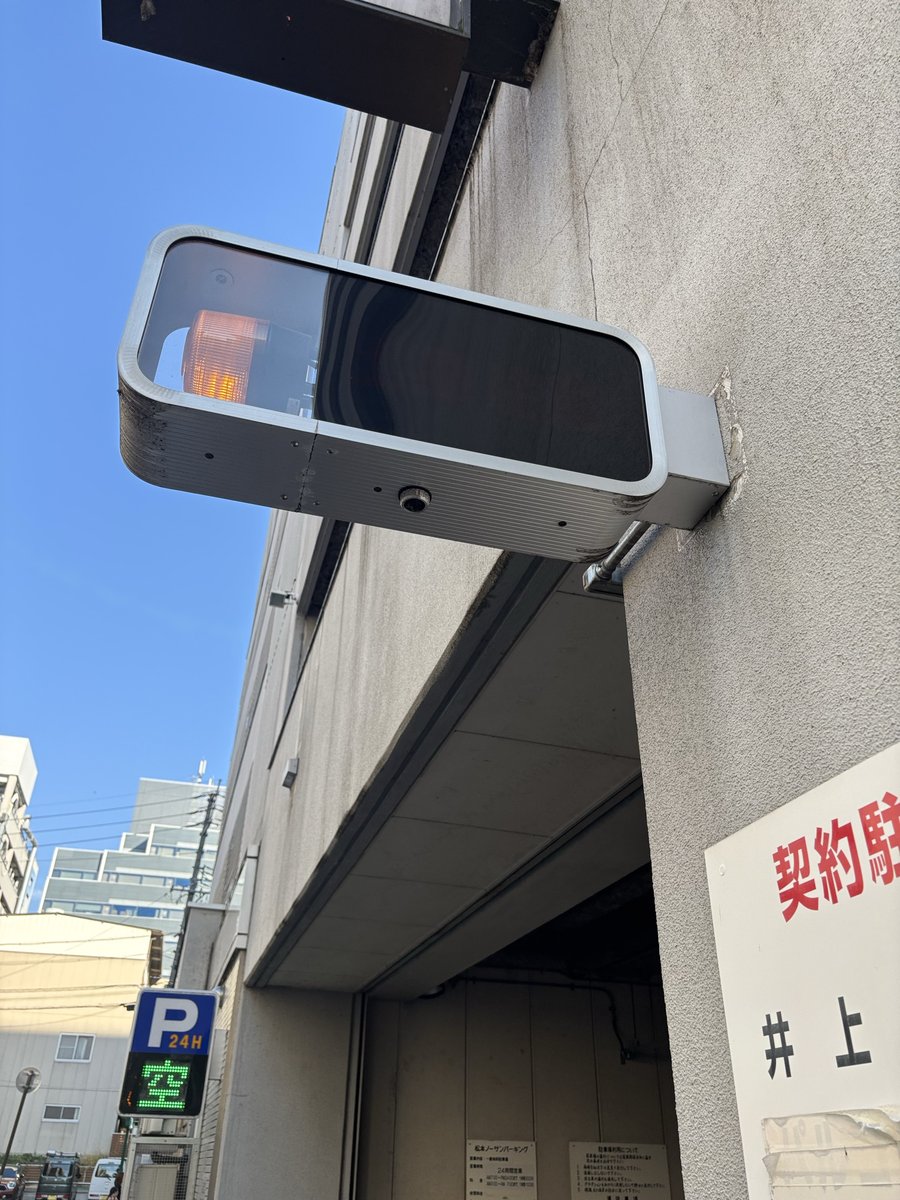
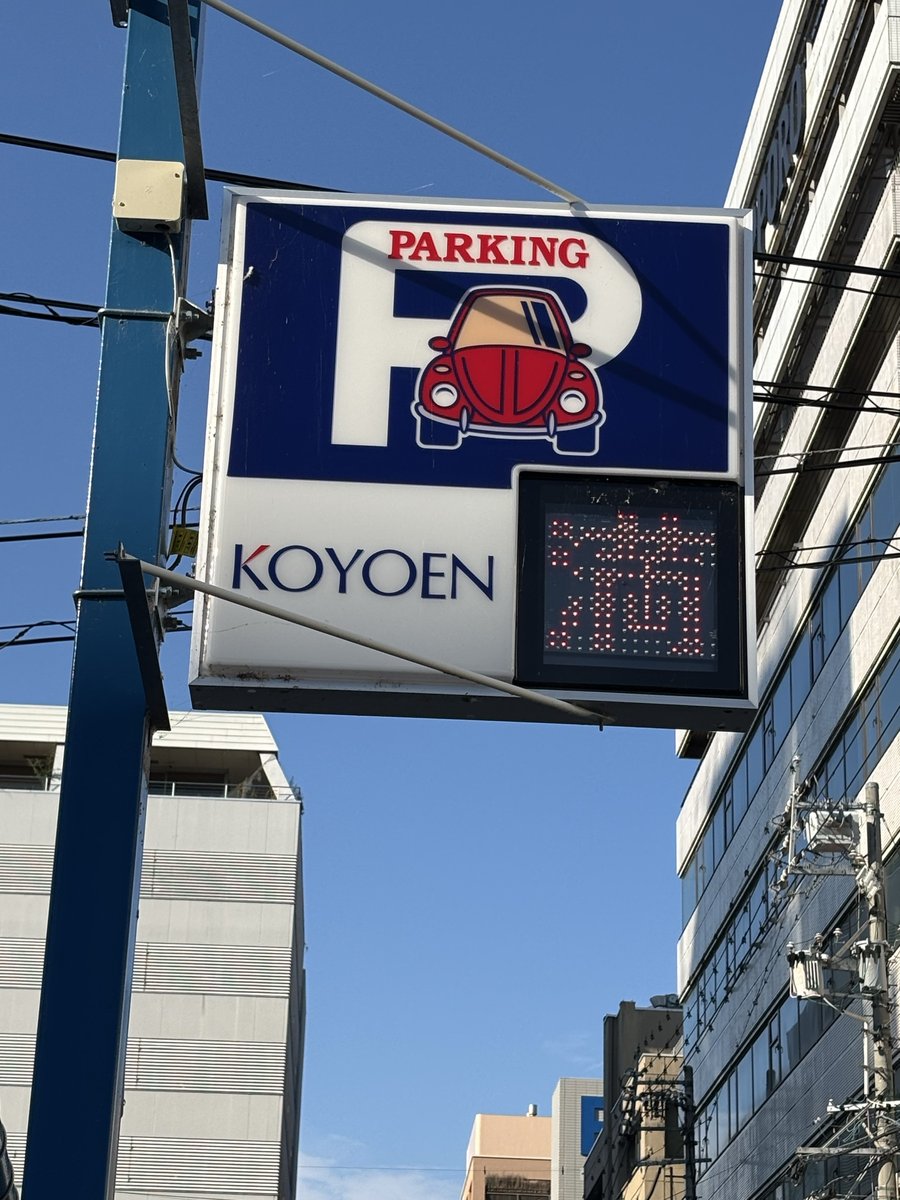
空
Inside a building you see just the one character 空. It means the same as 空車: space that way.
入口 / 出口
入口 is the way in, 出口 the way out. Follow the arrows, the gates and the attendant.
Words that tell you where you can park
月極
Parking rented by the month. Even when it’s empty, it belongs to the person renting it.
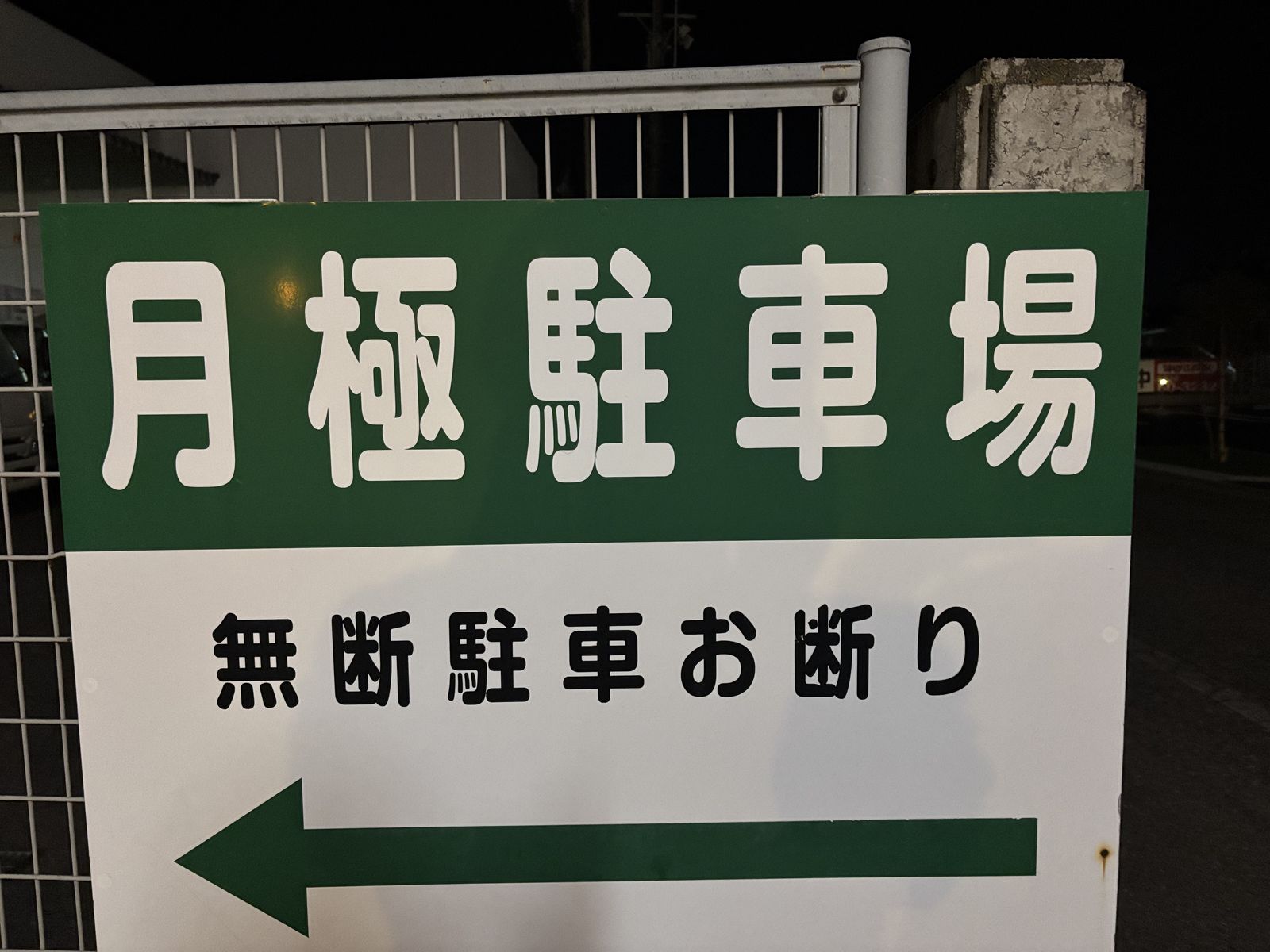
専用
It means “set aside” — for particular people or particular cars. Longer signs that contain these two characters mean the same.
契約者専用
A space only people with a contract can use.
軽 / 軽専用
A space for the small class of Japanese car (軽自動車). If you can’t tell whether your rental counts, take a general space.
一般
A sign marking spaces for general users, as opposed to contract holders.
高さ制限
The height limit for cars going in. Your rental car’s height is on the 車検証 kept in the car. If you’re not sure, ask an attendant; if there isn’t one, try another parking lot.
長さ / 幅 / 高さ
The three words listed together on the 車検証. The number to compare with the 高さ制限 is the one beside 高さ.
営業時間
The hours the parking lot is open. Before a long stay, check when you can get the car out.
駐車禁止
The road sign for no parking: blue, with a red border and a red diagonal band. A yellow line on the road means the same.
Words about parking and paying
入庫 / 出庫
入庫 is driving in, 出庫 is driving out. You see them where fee and time conditions are set out.
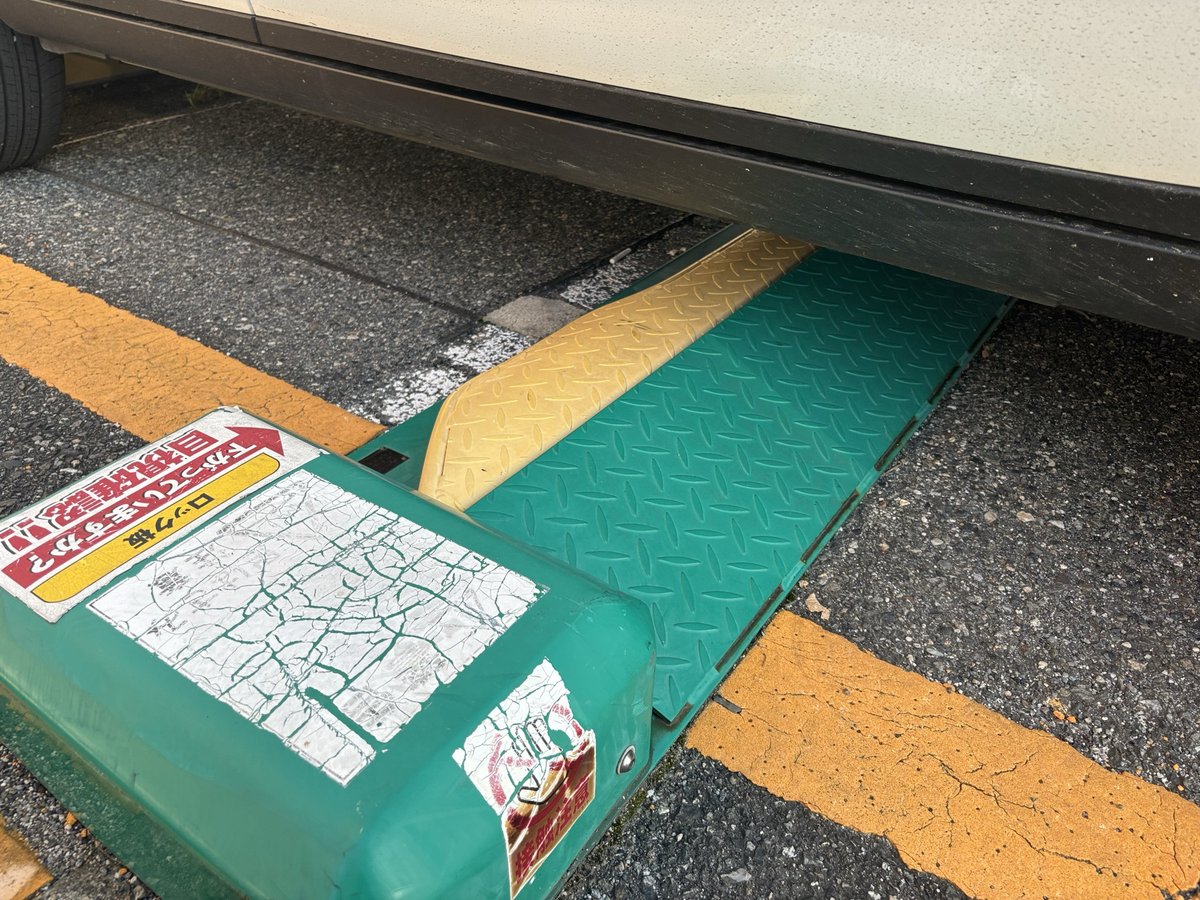
ロック板
A plate in the floor of the space that rises once you park. After you pay, watch it go down before you move the car.
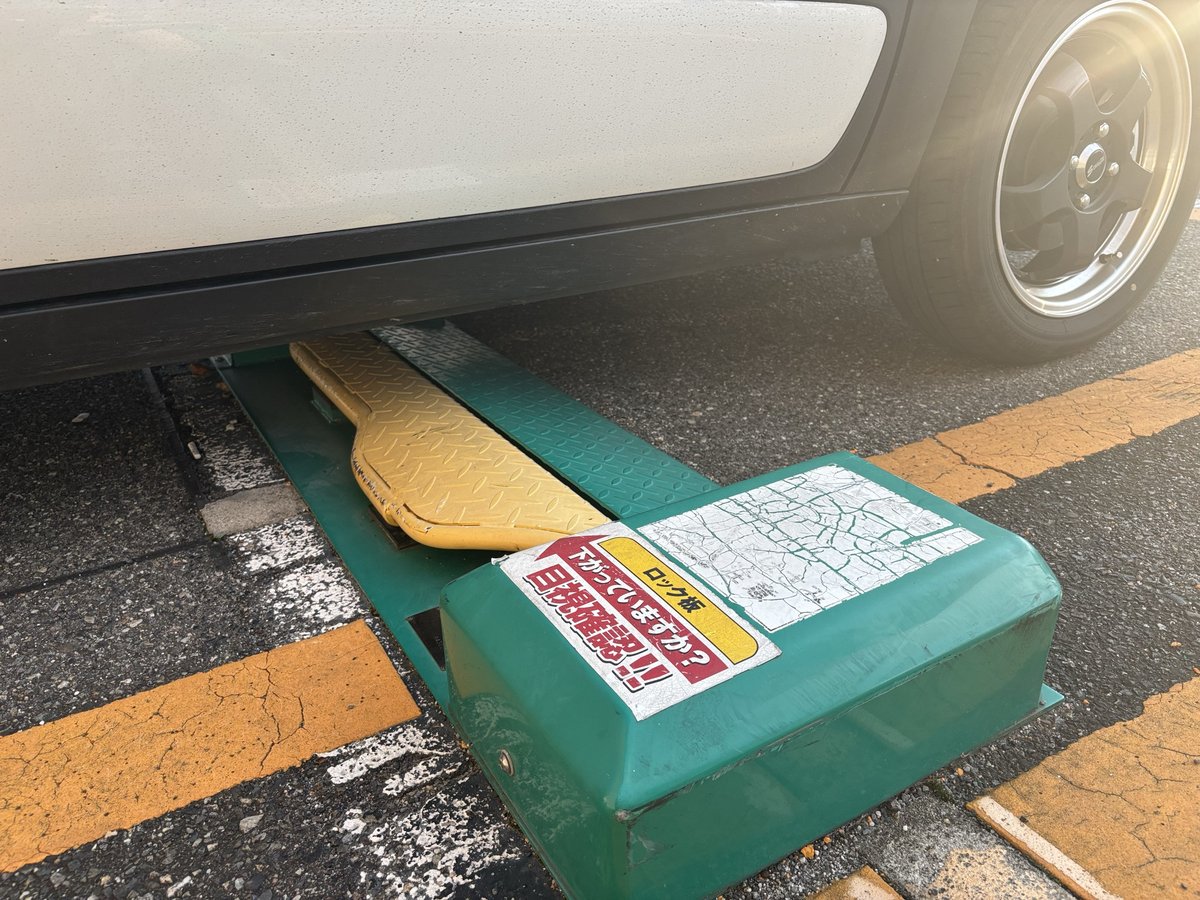
カメラ式
The system that reads your license plate with a camera. It’s the name of a system, not a word on a sign.
車両センサー
A word you may see on the how-to-use sign at lots with no lock plate in the floor. At those lots, you may pay using the number of the space you parked in (駐車位置番号).
駐車位置番号
The number of the space you parked in. At some lots, you pay by entering this number on the pay machine. Once you’ve parked, take a photo of the number.
前払い式
The system where you park and then pay up front. Also a system name, not something written on a sign.
精算
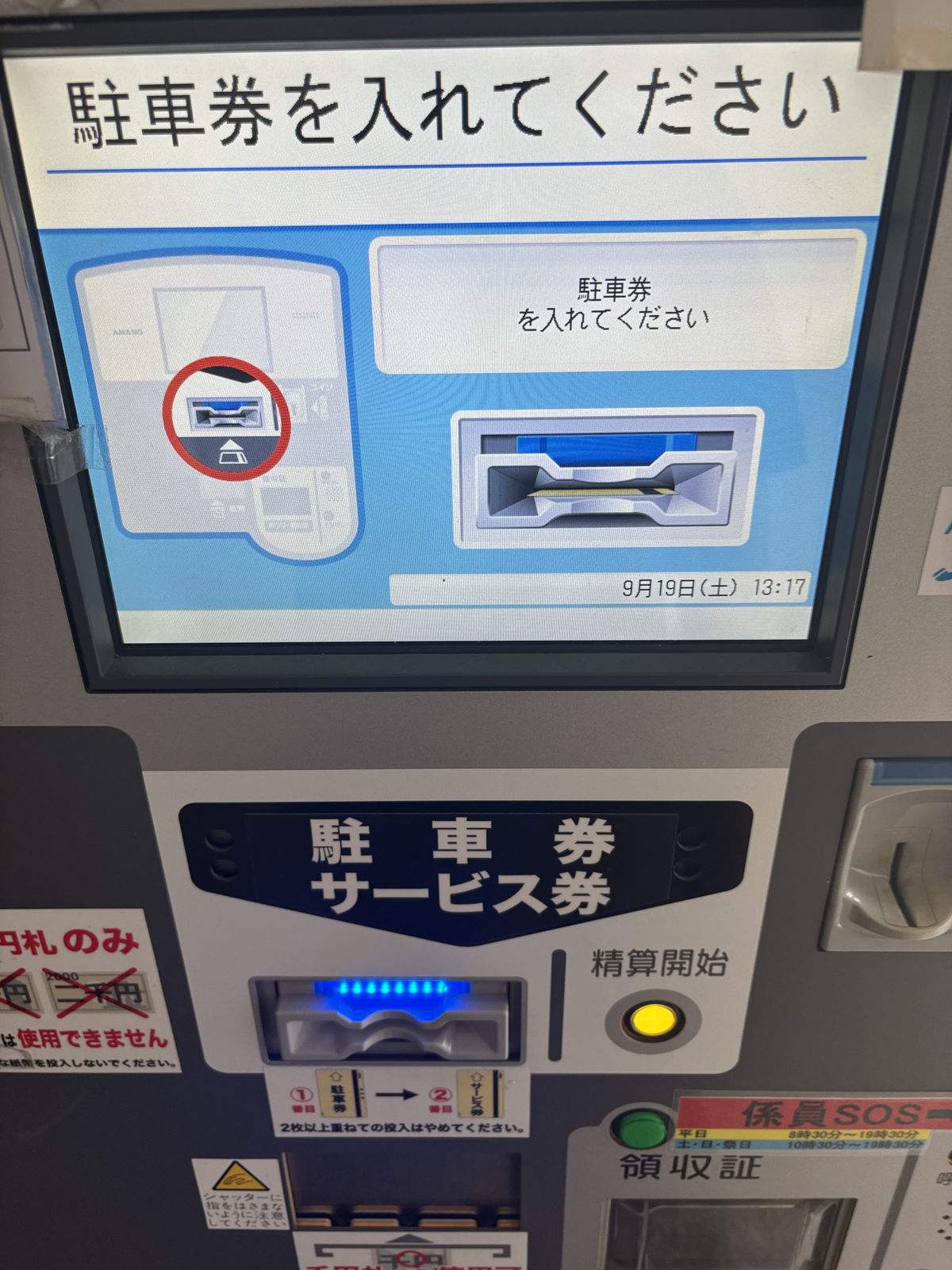
Checking your fee and paying it. You use your ticket, your space number or your license plate.
精算機
The machine you pay at. What to enter and which payments it takes are shown on it.
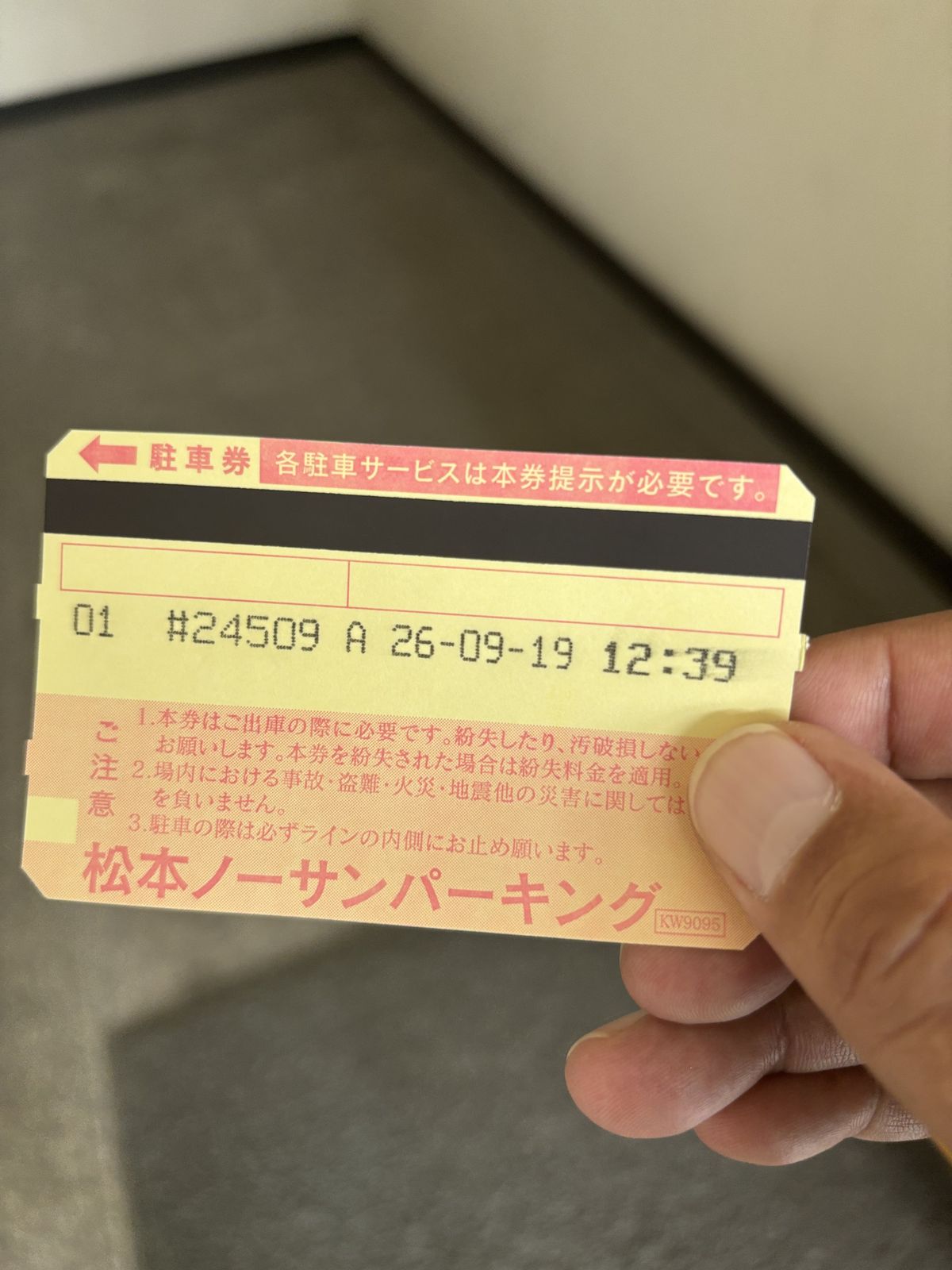
駐車券
The ticket that comes out at the entrance. You may need it for a discount, so take it with you.
事前精算
Paying inside the building before you walk back to your car. There’s a separate machine for it.
駐車証明書
A slip showing you parked in that lot. Take it into the shop if that’s what the discount asks for.
利用規約
The posted terms: fee conditions and what happens when something goes wrong. Near the entrance or the pay machine.
預り書
A slip the machine gives you in place of money it couldn’t return — when it’s short of change, or when you stop paying halfway and don’t get all your money back. It may say 預り証 instead. Keep it, and ask on the intercom.
Words about charges
円 / 分
円 is the unit of money and 分 the unit of time. They line up as ○分 ○○円.
平日 / 土・日・祝日
平日 is any day that isn’t a weekend or a public holiday; 土・日・祝日 is weekends and holidays. Prices often differ between the two.
昼 / 夜
昼 and 夜 can carry different prices. The hours they cover are in numbers beside them.
最大料金
A ceiling on your fee, but only under certain conditions. Don’t go by the number alone — read the conditions.
上限 / 打止 / 打切
All three are used to mean the same thing as 最大料金. Which one appears depends on the sign.
24時間営業
It means the parking lot is open 24 hours. Not the same thing as 24時間最大.
24時間最大
A maximum-fee condition. It doesn’t mean the parking lot is open 24 hours.
当日24時まで
It means until midnight that same day. If you’re staying until morning, check the fee after the date changes.
繰り返しあり/なし
Whether the maximum fee applies again in the next time band, or on the next day.
Words to say when you’re stuck
助けてください
“Tasukete kudasai” — please help me. It works on the intercom and with a person nearby.
日本語がわかりません
“Nihongo ga wakarimasen” — I can’t read Japanese. Say that next, then point.
If you’re not sure
When you can’t work out what a sign means, leave the car where it is and press the intercom on the pay machine.
※ Names, wording, payment methods and fee conditions differ from one parking lot to another. When you actually use one, check the signs on site, the terms of use, and the information from the operating company.


