Before you go
This site offers information based on guidance from the police, national government bodies, rental car companies and others, to help you prepare before you drive in Japan (as of September 2026; it isn’t an explanation of the law). Where signs are placed and the rules they set differ from place to place, and they can change. When you drive, follow the signs on site and the official information listed at the end of this article.
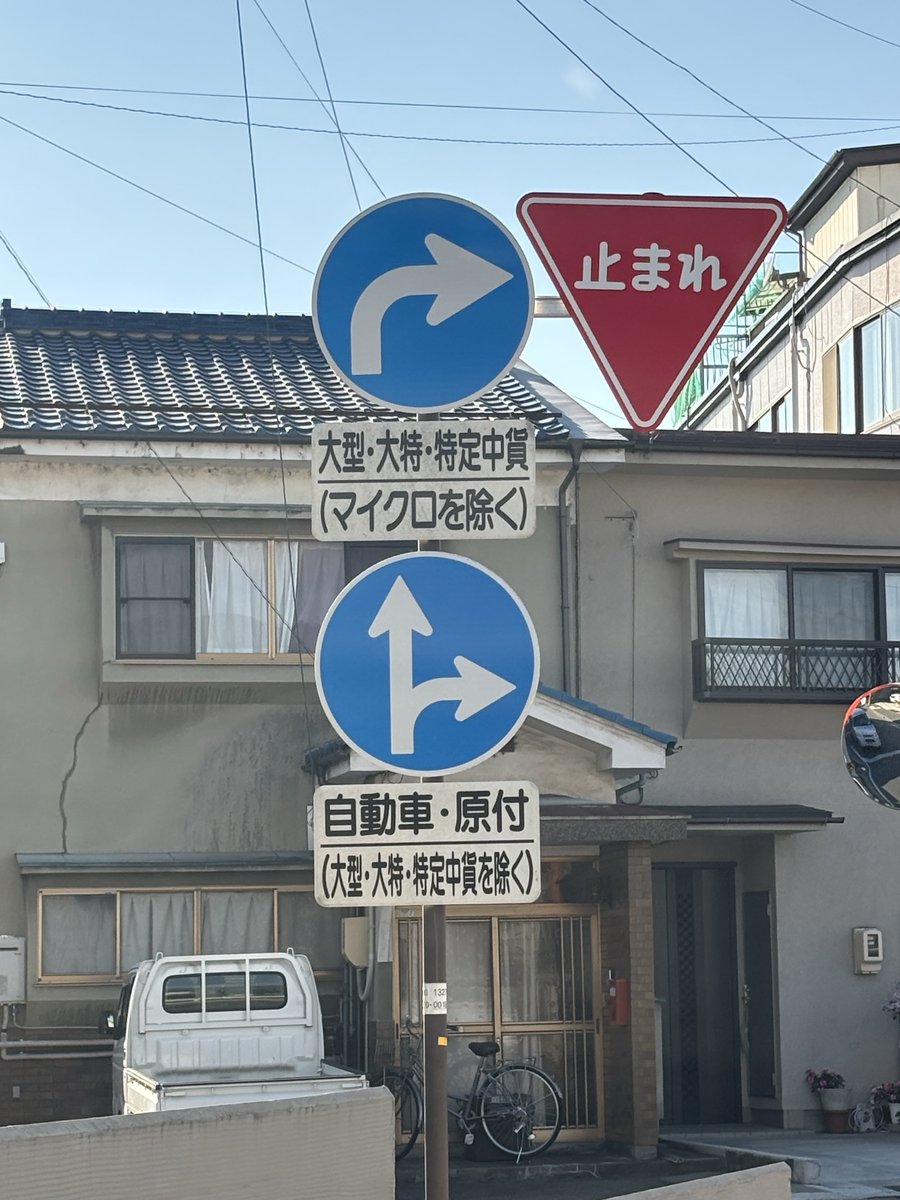
In Japan, the 止まれ (“stop”) sign is a red upside-down triangle.
This is the one sign to learn first.
White characters on a red upside-down triangle
A solid red upside-down triangle, with 止まれ in white characters.
The sign is called 一時停止 (literally “temporary stop”). It means you stop once.
Some have the English word “STOP” underneath, and some just say 止まれ.
Since July 1, 2017, the word STOP has been added under 止まれ. It was done partly because more people from abroad are visiting Japan, to make the sign easier to understand for people in Japan and visitors alike.
The Japanese-only 止まれ is still valid. Signs are switching to the STOP version as new ones go up or old ones are replaced.
Whichever you come across, the shape and color are the same. See a red upside-down triangle, stop — that’s all you need.
A white upside-down triangle is 徐行 (“slow”)
There’s one more upside-down triangle sign.
A white background with a red border, and 徐行 in blue characters. Some have “SLOW” underneath.
徐行 means going slowly enough to stop right away. As a guide, that’s 10 km/h or less.
Sometimes there’s a plate underneath that says 前方優先道路 (“priority road ahead”). It means the road you’ll cross up ahead has priority. The sign above it is the same 徐行, so go slowly.
Red means stop. White means slow. Same shape, but you can tell them apart by color.
Stop before the white stop line
Where you stop is before the white stop line.
If there’s no stop line, stop before the intersection.
止まれ is sometimes written on the road surface too, in white characters.
How to stop: come to a full stop
At 止まれ, bring the car to a complete stop.
“Stopping” lasts until you’ve looked left and right and made sure it’s safe.
Once you’ve made sure it’s safe, go ahead without getting in the way of cars on the road you’re crossing.
Stop, look left and right, go. Take it in that order.
Red means stop, white means slow
A red upside-down triangle means stop. A white upside-down triangle means slow.
The other place you stop in Japan is at railroad crossings. There’s more in “Railroad Crossings in Japan.”


