You order a tonkatsu set meal, settle into your seat, and sometimes a mountain of shredded cabbage and a little bowl of pickles (お新香, oshinko) show up first. The cutlet comes after that, once it’s done frying.
Tonkatsu (とんかつ) is a breaded, deep-fried pork cutlet: pork coated in panko breadcrumbs and fried in oil. It’s often ordered as a “とんかつ定食” (tonkatsu teishoku, a pork cutlet set meal), which comes with rice, soup, cabbage and pickles.
If you don’t eat pork, take a look at the “Allergy Card for Japan” article too.
There are four things to keep in mind.
・The cabbage may come first. Dig into your first plate while you wait for the cutlet
・When the cutlet arrives, add sesame to the sauce
・If there’s 練り辛子 (neri-karashi), try a little
・At places with refills, have one more round of rice and cabbage
Tonkatsu mainly comes in two cuts, depending on which part of the pig it’s from: “ロース” (rosu, loin) and “ヒレ” (hire, tenderloin). Rosu has some fat and is rich; hire is lean and tender. The set meal in this article’s photos is a rosu katsu set meal.
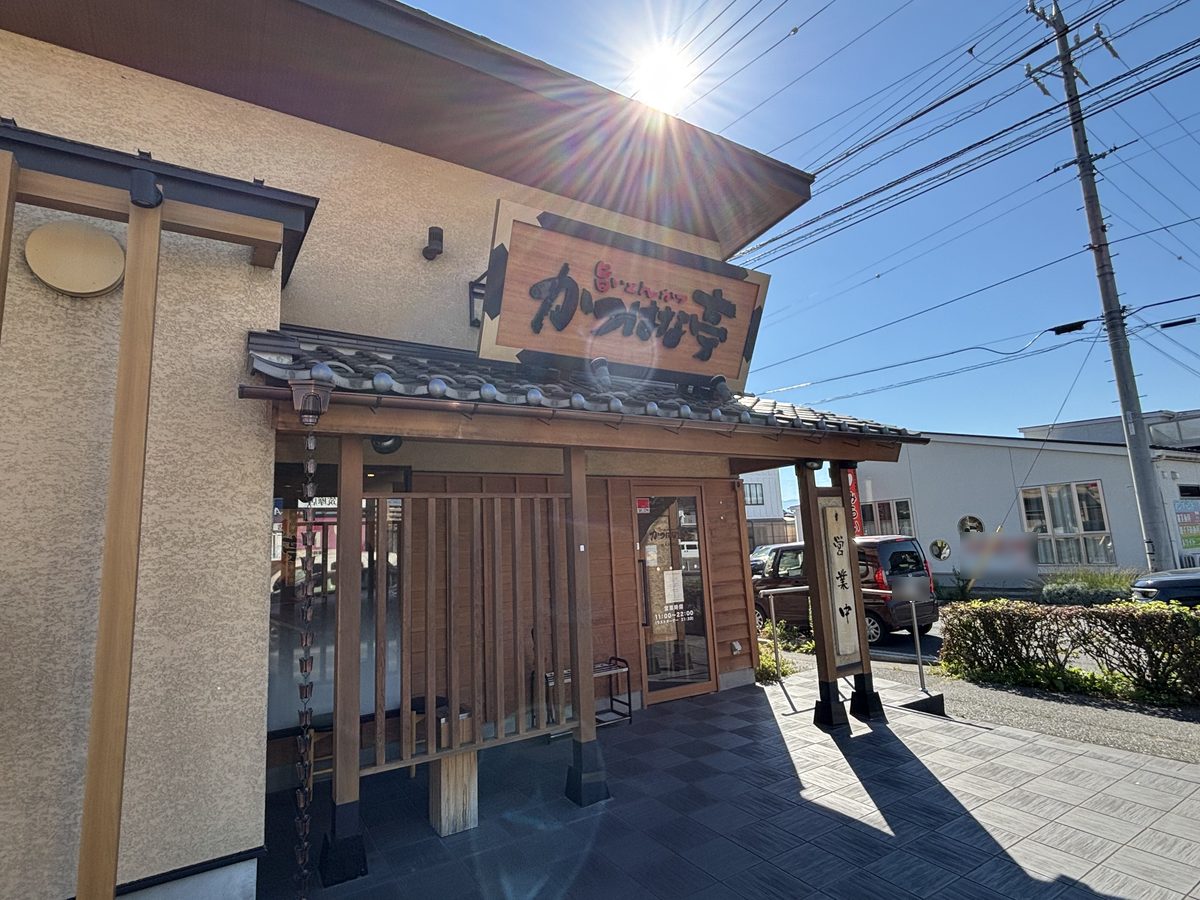
1 First Up, the Cabbage — Have a Plate While You Wait
While you wait, go ahead and polish off a plate of cabbage. The time it takes the cutlet to fry simply becomes cabbage time.
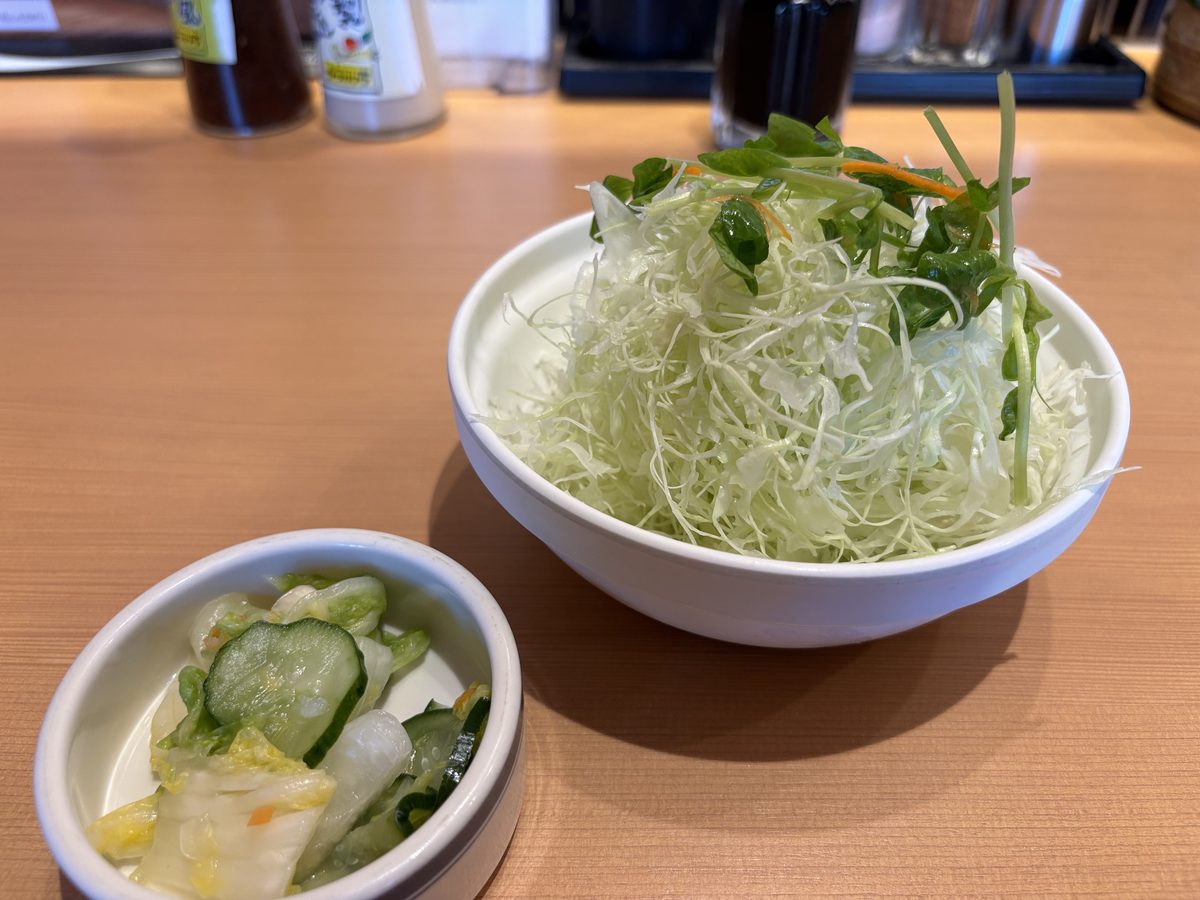
At Katsuhanatei (かつはな亭) in Matsumoto, the cabbage and oshinko came out first. Before my rosu katsu set meal even arrived, I’d already eaten a whole plate of cabbage
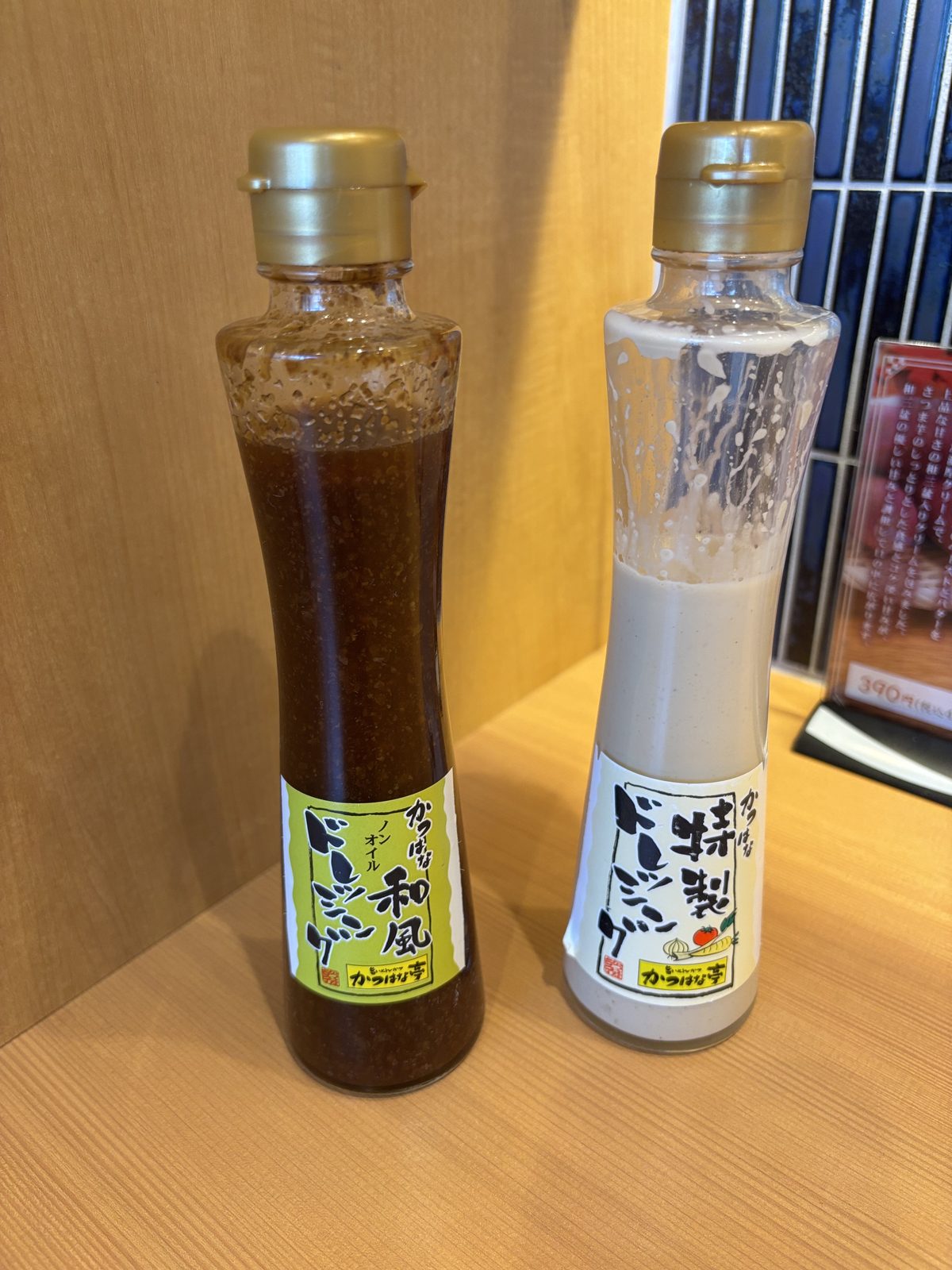
Pour the dressing from the table over the cabbage. If there are two kinds of dressing, use the other one on your second plate. Same cabbage, two flavors. Tonkatsu sauce on the cabbage is good too, so give it a try.
2 When the Cutlet Arrives — Add Sesame to the Sauce
Once the cutlet arrives, your set meal is complete. Sliced cutlet, rice, soup, cabbage and oshinko. At Katsuhanatei, the soup was 豚汁 (tonjiru, miso soup with pork and vegetables).
Bite into a freshly fried cutlet and the coating goes crunch, then the sweetness of the pork and the rich flavor of the fat spread through your mouth. That’s the real treat of tonkatsu.
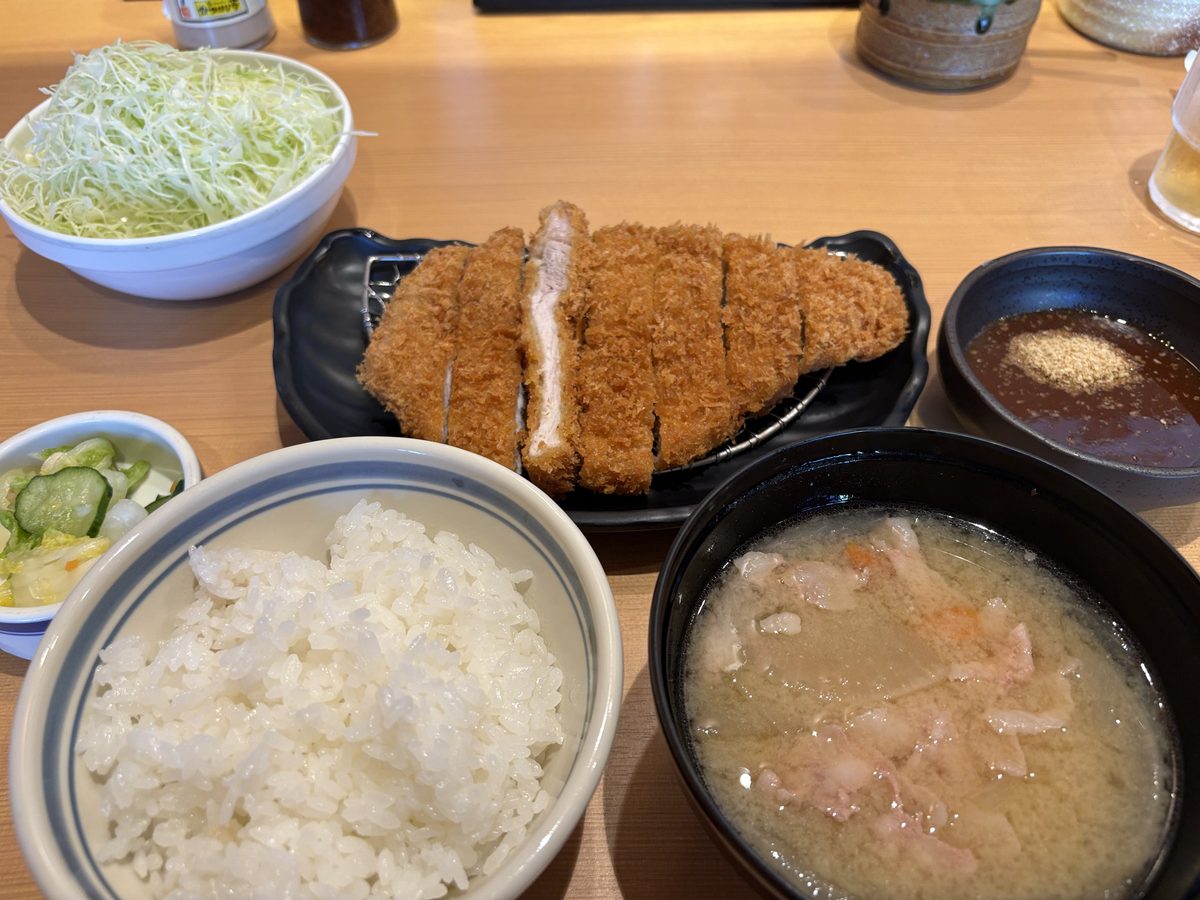
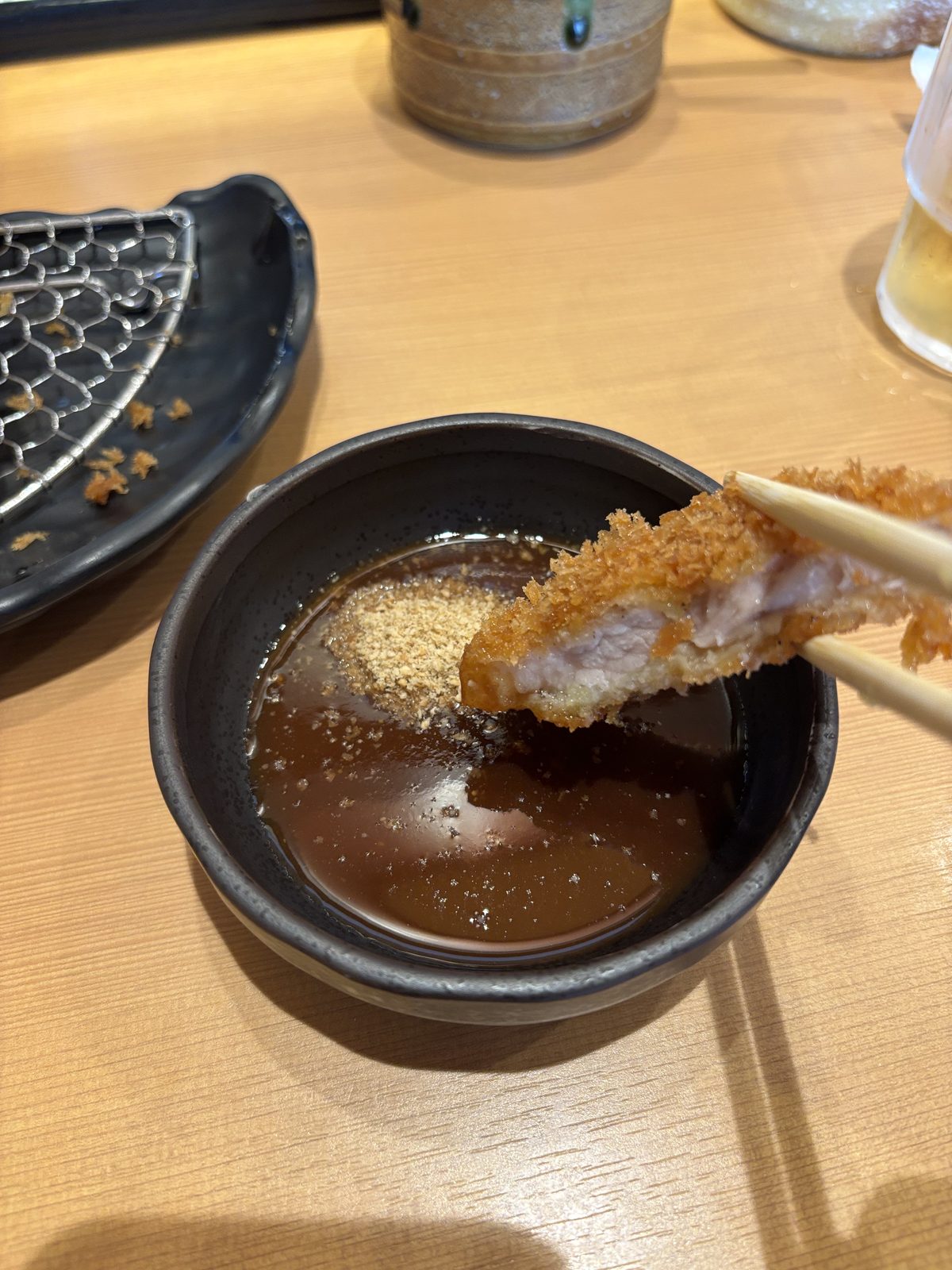
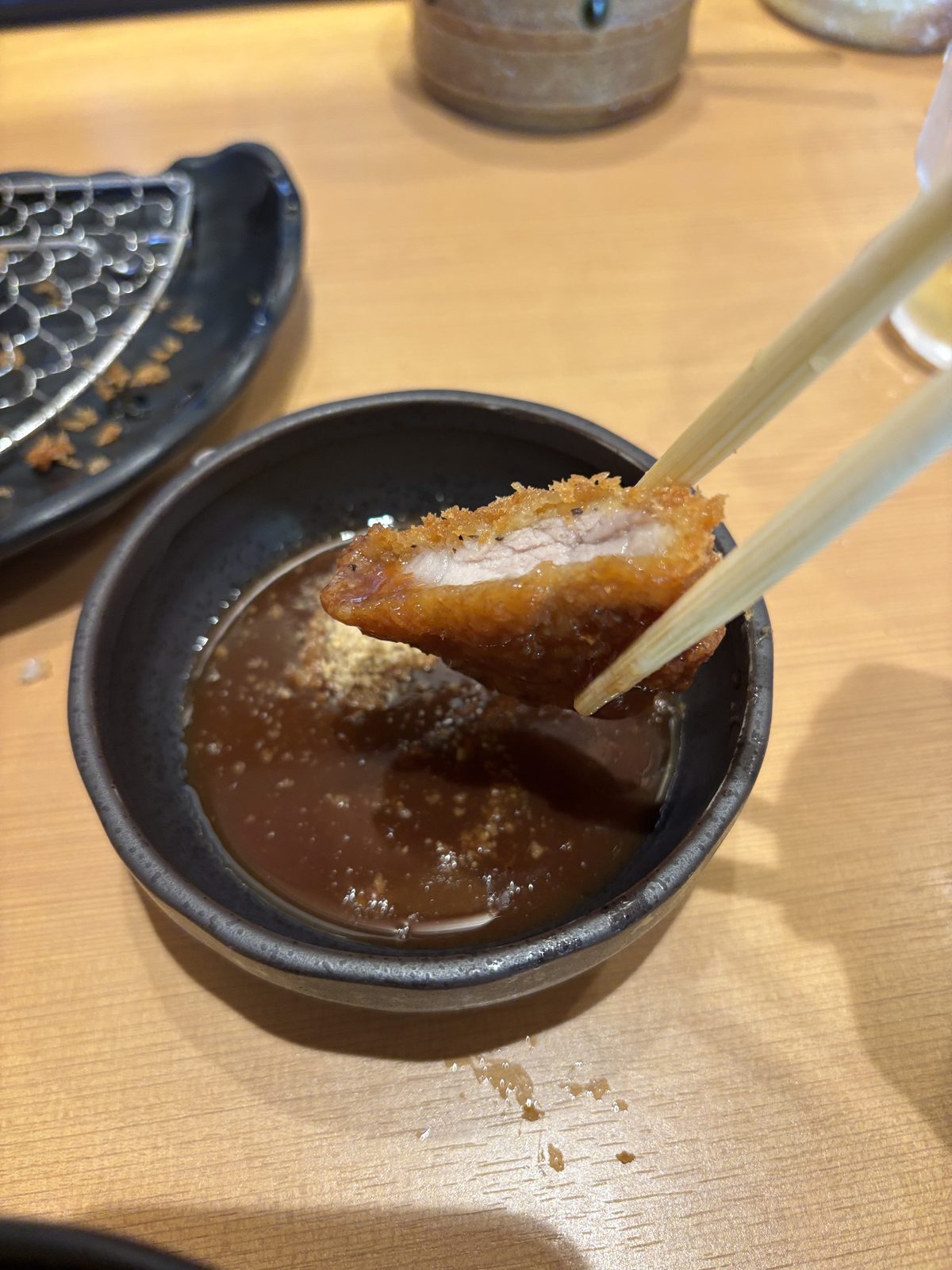
You eat the cutlet dipped in sauce. Add sesame to that sauce, and it brings out more flavor.
How the sesame is served depends on the place. Some places have you grind the sesame yourself in a すり鉢 (suribachi, a grinding bowl) and add it, while others set out sesame that’s already ground (すりごま, ground sesame). If you get to grind it yourself, that’s one more thing to enjoy.
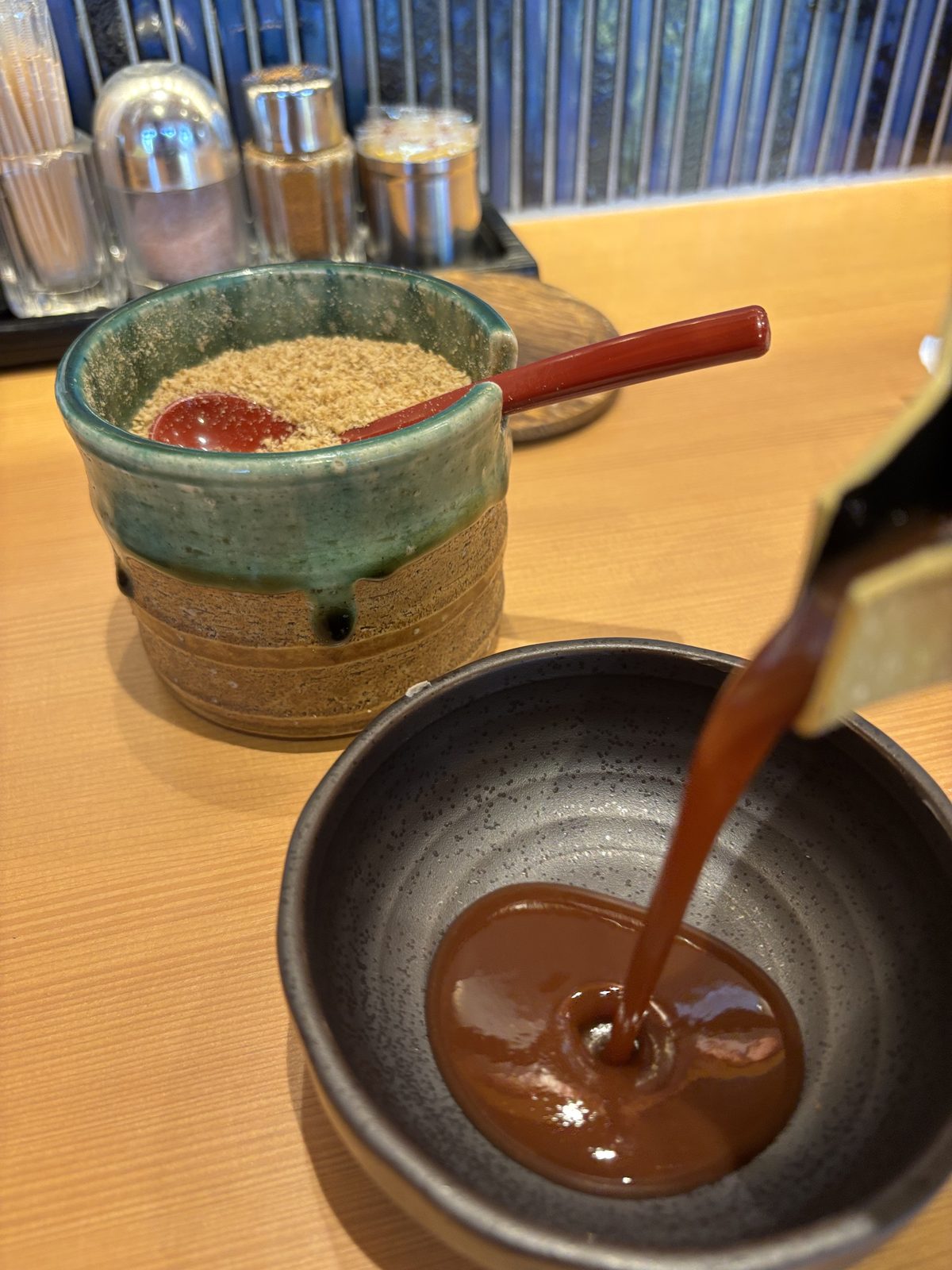
Dip as much as you like. Just a little, or plenty. Piece by piece, find the way you like it best.
3 A Little 練り辛子 — Japanese-Style Mustard
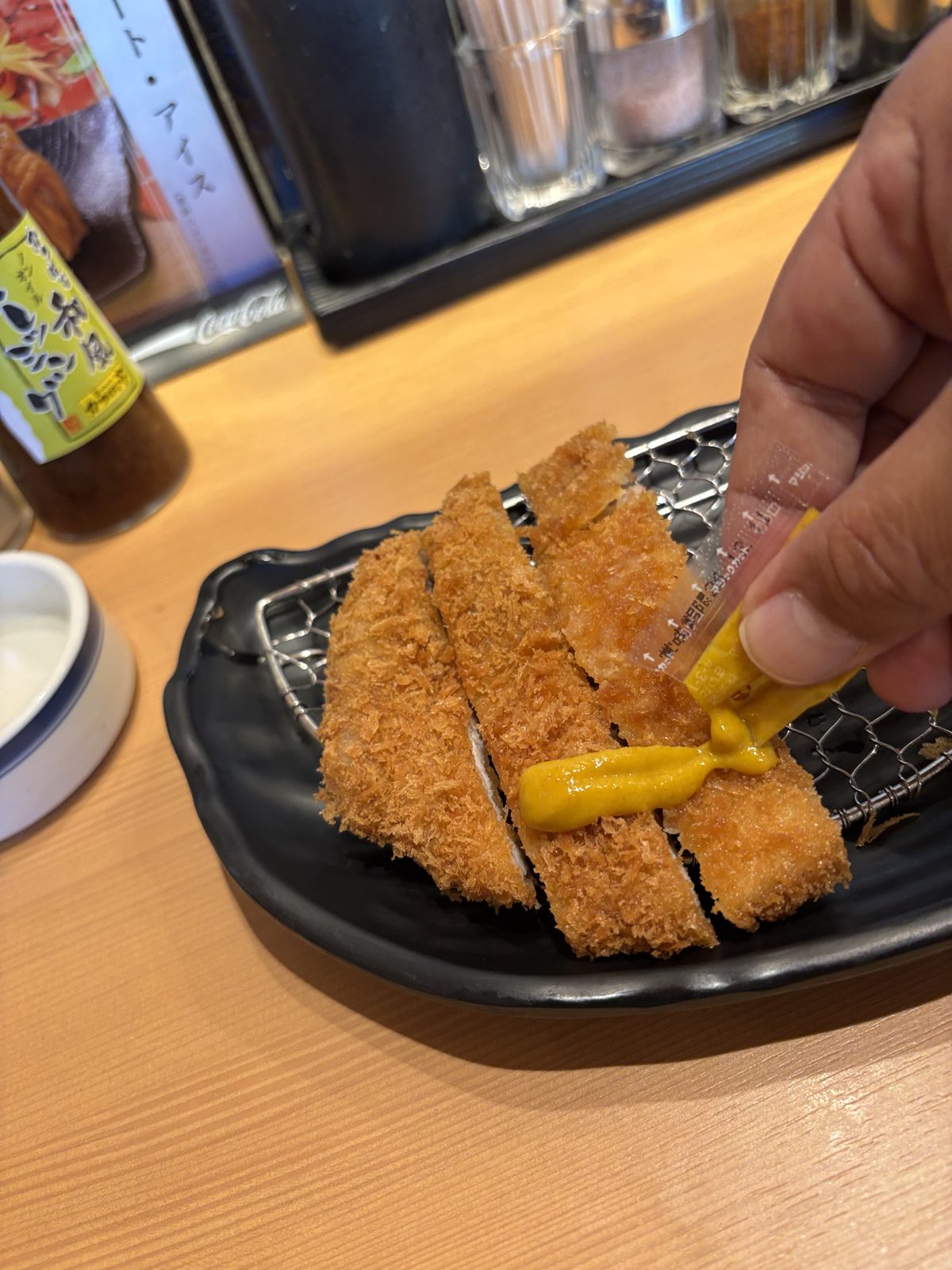
If there’s 練り辛子 on the table, go for it. 練り辛子 is Japanese-style mustard, and it’s perfect with tonkatsu. It has a distinctive kick that shoots right up your nose, so start with just a little.
Some places also have rock salt (岩塩) or tonkatsu soy sauce (とんかつ醤油) on the table. If they do, try a bite with each. Each one tastes different from the sauce. Trying 味変 (ajihen: changing the flavor partway through a meal) and finding your own favorite way to eat it is fun in itself.
4 At Places with Refills — One More Round
Some places let you have more rice and cabbage. At Katsuhanatei, for example, refills of rice, tonjiru, cabbage and oshinko are free.
Wako (和幸) and Saboten (さぼてん) are chains famous for delicious tonkatsu. If you spot one of their signs on your travels, why not pop in? Wako generally offers refills of rice and cabbage. That said, what’s offered differs from place to place, so check the menu or signs where you are and look for the characters “おかわり自由,” “お替わり自由” or “お替り自由” (refills allowed).
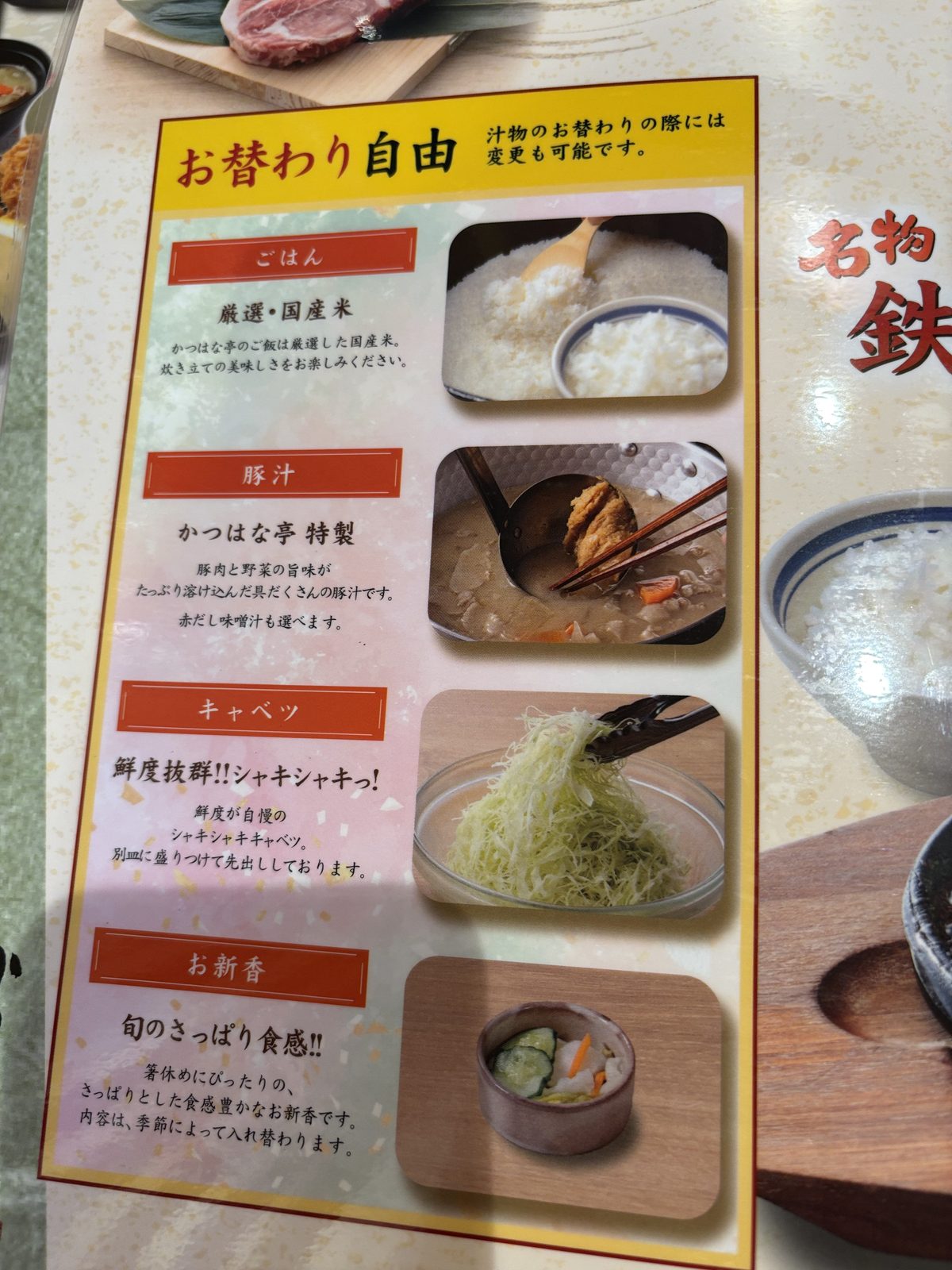
One more plate of cabbage, one more bowl of rice. At places with refills, you can keep going until you’re full.
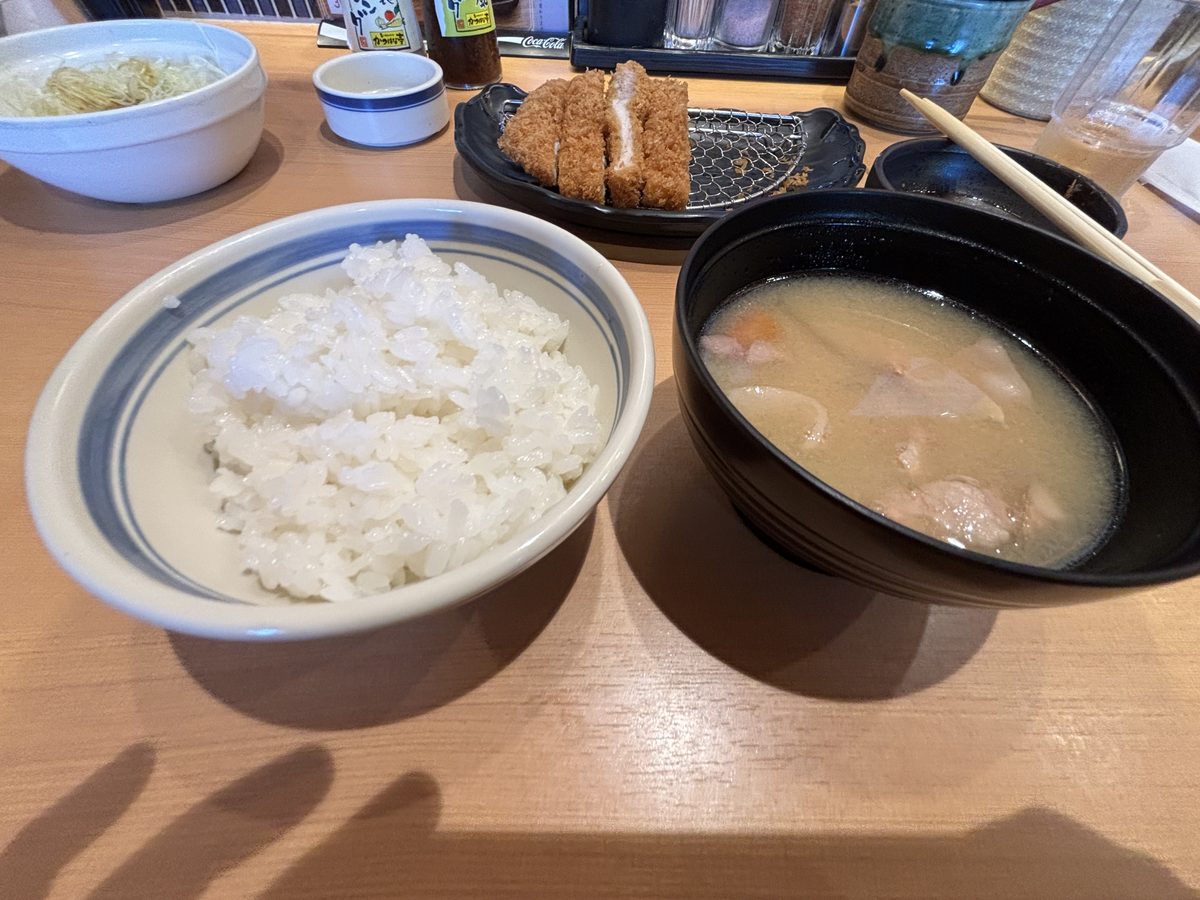
At this place, the miso soup was — get this — tonjiru! I had more rice, tonjiru and cabbage, and walked out completely full
How to order and pay is covered in the “Teishoku Restaurants and Donburi (Gyudon) Shops” article. If there’s a ticket machine at the entrance, take a look at the “Restaurants with a Ticket Machine” article too.
For now, just this
If the cabbage comes first, have your first plate while you wait for the cutlet.
If there are two kinds of dressing, give your second plate the other flavor.
Eat the cutlet with sesame added to the sauce. Dip as much as you like.
If there’s 練り辛子, try a little.
If there’s rock salt or tonkatsu soy sauce, try a bite of each and find your favorite way to eat it.
To see whether you can get refills, look for the characters “おかわり自由” on the menu.