Before you go
This site offers information based on guidance from public bodies, oil companies, rental car companies and others, as a starting point so you don’t get stuck on your trip (as of September 2026). Pump screens and steps differ from station to station, and they can change. When you actually fill up, check the screens and signs on the spot and the official information listed at the end of this article.
At a self-service gas station, you get ready to fill up in four steps.
On the screen, you choose three things — payment → type of fuel → amount — and then touch the 静電気除去シート (static discharge pad).
Even if the screen is only in Japanese, knowing this order tells you what you’ll be asked next.
Before you get out: open the fuel door
Close your windows and turn off the engine.
If the fuel pump symbol on your dashboard has an arrow, it points to the side with the fuel door.
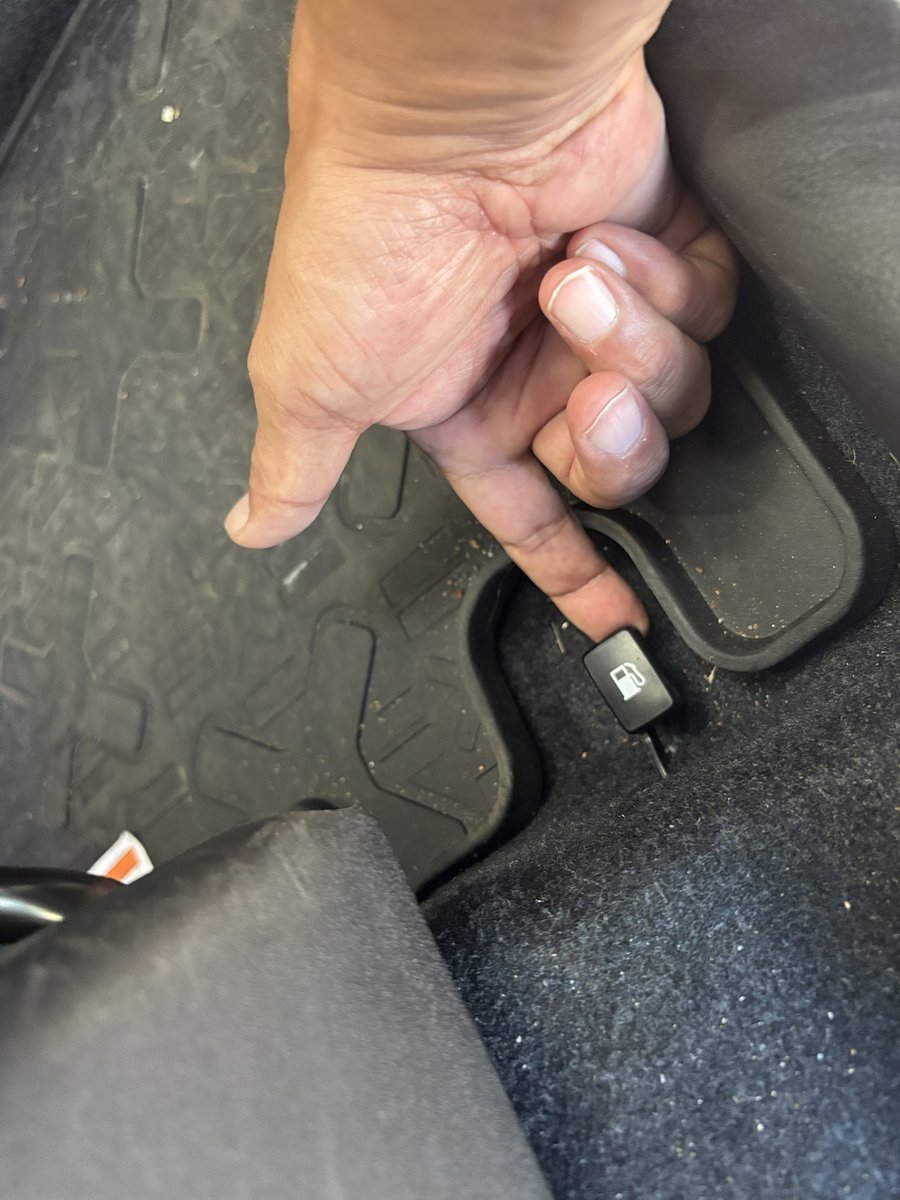
In many cars, the lever that opens the fuel door is under the driver’s seat, on the floor on the right side, or near the steering wheel. If there’s a lever, open the fuel door before you get out of the car.
In cars where you can’t find a lever, the fuel door may open if you get out and press lightly on its edge.
Three choices on the screen
Some pumps take you through the steps in order after you press the 開始 (Start) button.
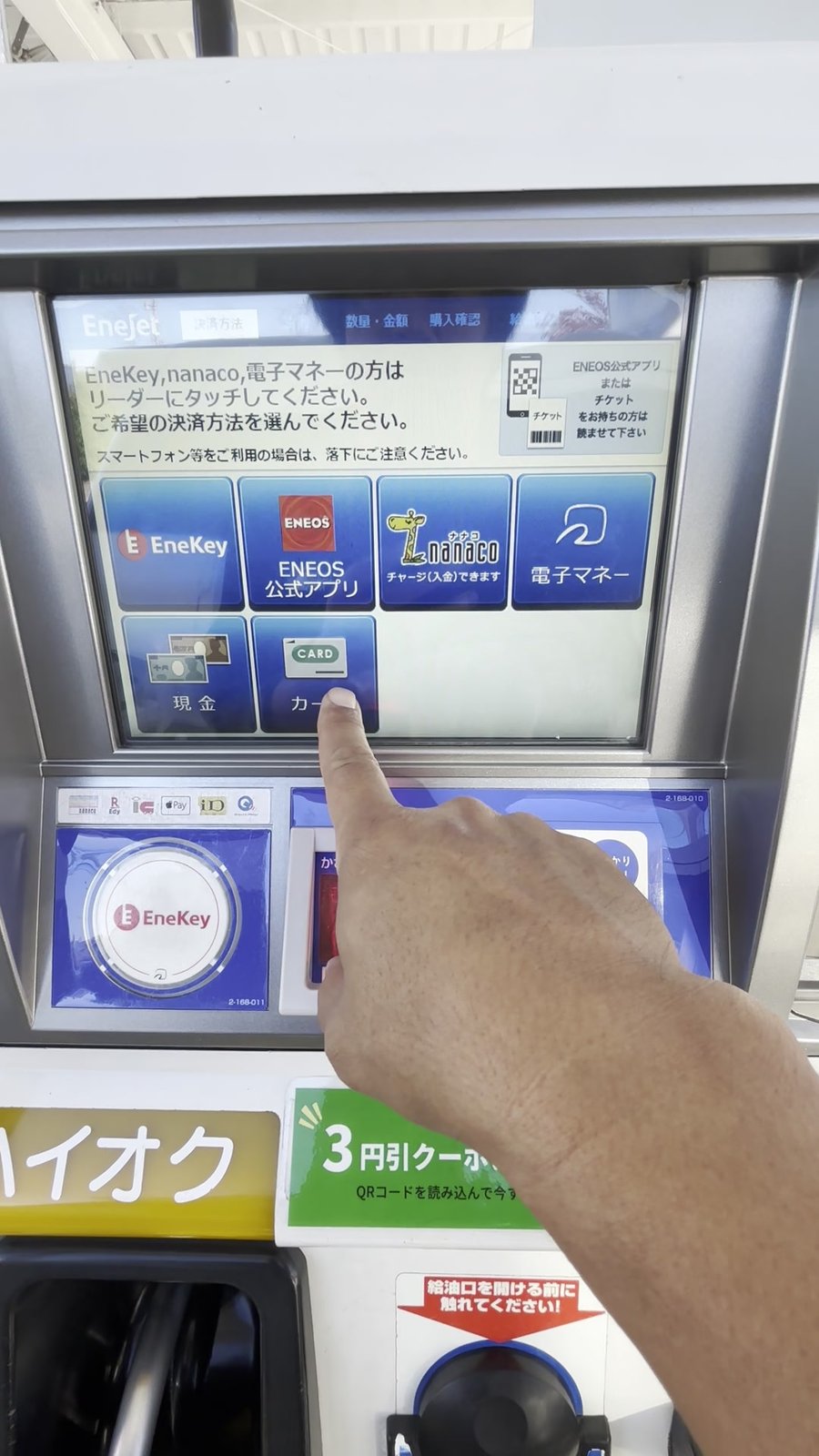
1 Payment
Choose 現金 (cash) or card.
At pumps where you pay first, put in money for the amount you want to fill up. Your change is worked out automatically afterward.
If you’re paying by card, insert your card and confirm. When you pay by card, a larger amount than the real one may be held first. More on this in “Card Holds at Gas Stations in Japan.”
2 Type of fuel
Choose from the three: レギュラー (regular), ハイオク (high-octane) and 軽油 (diesel).
Find the characters for your rental car’s fuel, and press that button.
3 Amount
Decide by 満タン (full tank), by 金額 (price), or by volume (liters).
If you’re about to return a rental car, press 満タン.
The fourth step is the 静電気除去シート
When you’ve finished choosing on the screen, touch the pad attached to the pump with your bare hand. This is the 静電気除去シート (static discharge pad).
It lets out the static electricity built up in your body, and it matters most in winter, when the air is dry.
Some oil companies say about a second is enough. If you can’t find the pad, touching the car’s body also works.
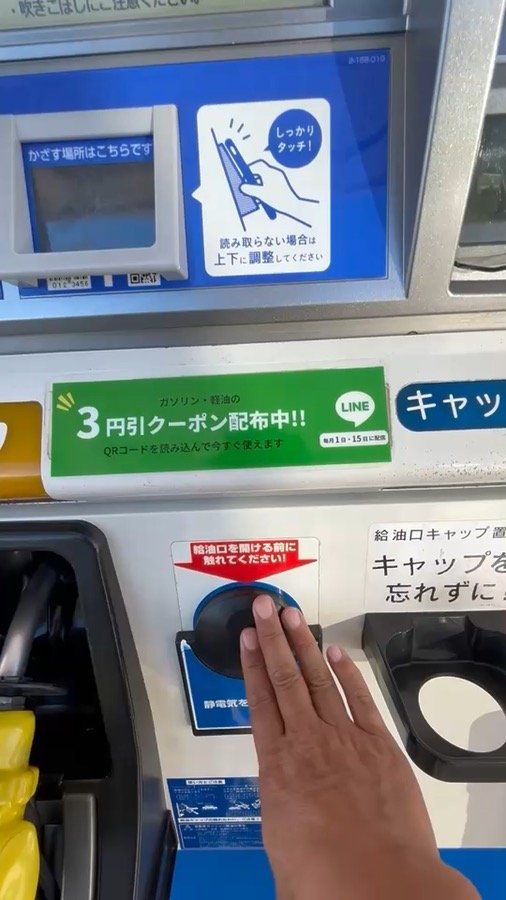
Touch the pad with your bare hand, then pick up the nozzle.
Fill up
Pick up the nozzle marked with the characters for the fuel you chose, and put it into the fuel inlet.
Check that the meter on the pump reads 「0.00」, then squeeze the nozzle’s trigger.
When the tank is full, it stops automatically. Some pumps stop with a click.
Once it stops, don’t put in any more.
If the nozzle isn’t in far enough, the sensor may not work and fuel may overflow. Push it all the way in.
If a few drops drip when you pull it out, wipe them with the towel provided, if there is one.
Close the cap
At self-service stations, people often forget to close the fuel cap, NEXCO CENTRAL says.
Some cars don’t have a cap.
If your car has one, close it, check it’s shut, and then go back to the car.
Change and receipt
At some stations, you get your change from a 自動つり銭機 (automatic change machine). Hold the barcode on your receipt up to the machine’s reader, and your change comes out.
At some stations, you pay by entering the number of the pump you used at the payment machine, or by telling it to the cashier.
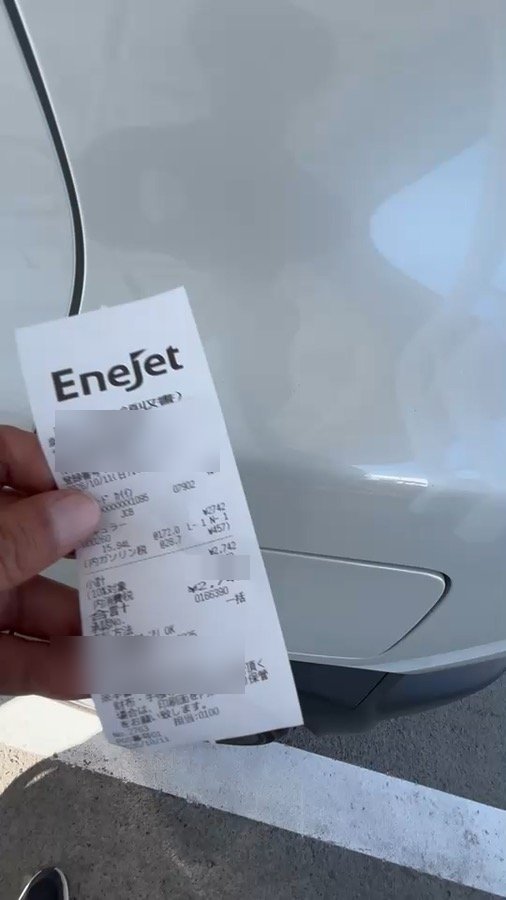
Put the receipt in your wallet and keep it.
If you get stuck
There’s an intercom near the pump. It connects you to the station staff.
Some pumps also have a button to call staff.
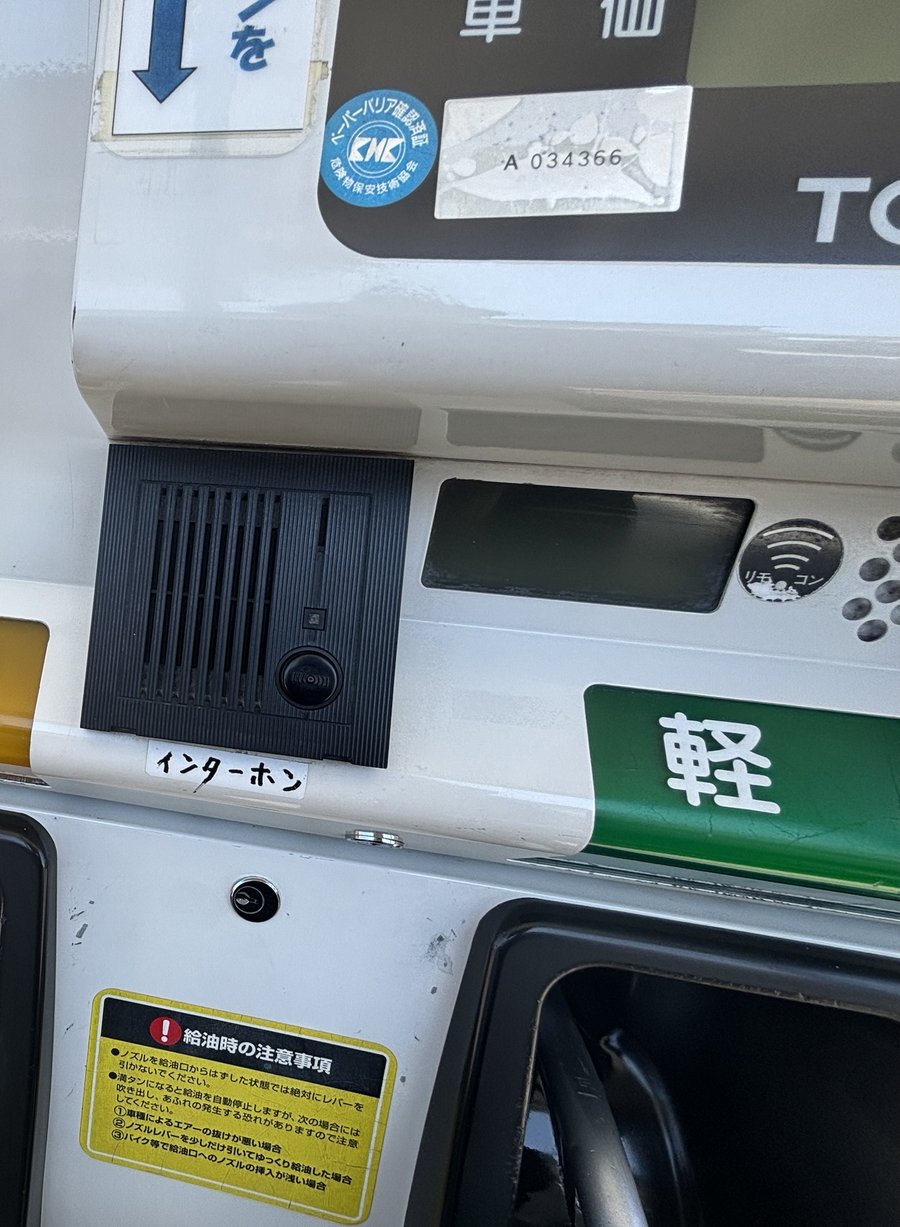
When you talk to the staff, point to the characters on the screen that you don’t understand. The meanings of the words on the screen are in “Gas Station Japanese.”
If you’re not confident in Japanese, next time you can also choose a full-service station, where an attendant fills up for you.
Even if you can’t read the screen, there’s a person on the other side of that button.
※ Touch panel screens, the order of choices, payment methods and how you settle up differ from station to station. When you actually fill up, follow the screen and the station’s instructions on the spot.


