Before you go
For a short stop, three things on the sign are enough.
What follows is for an overnight stay, or a whole day.
Only then do you look past “there’s a maximum fee”.
When there’s a ceiling, the longer you stay, the less each hour costs.
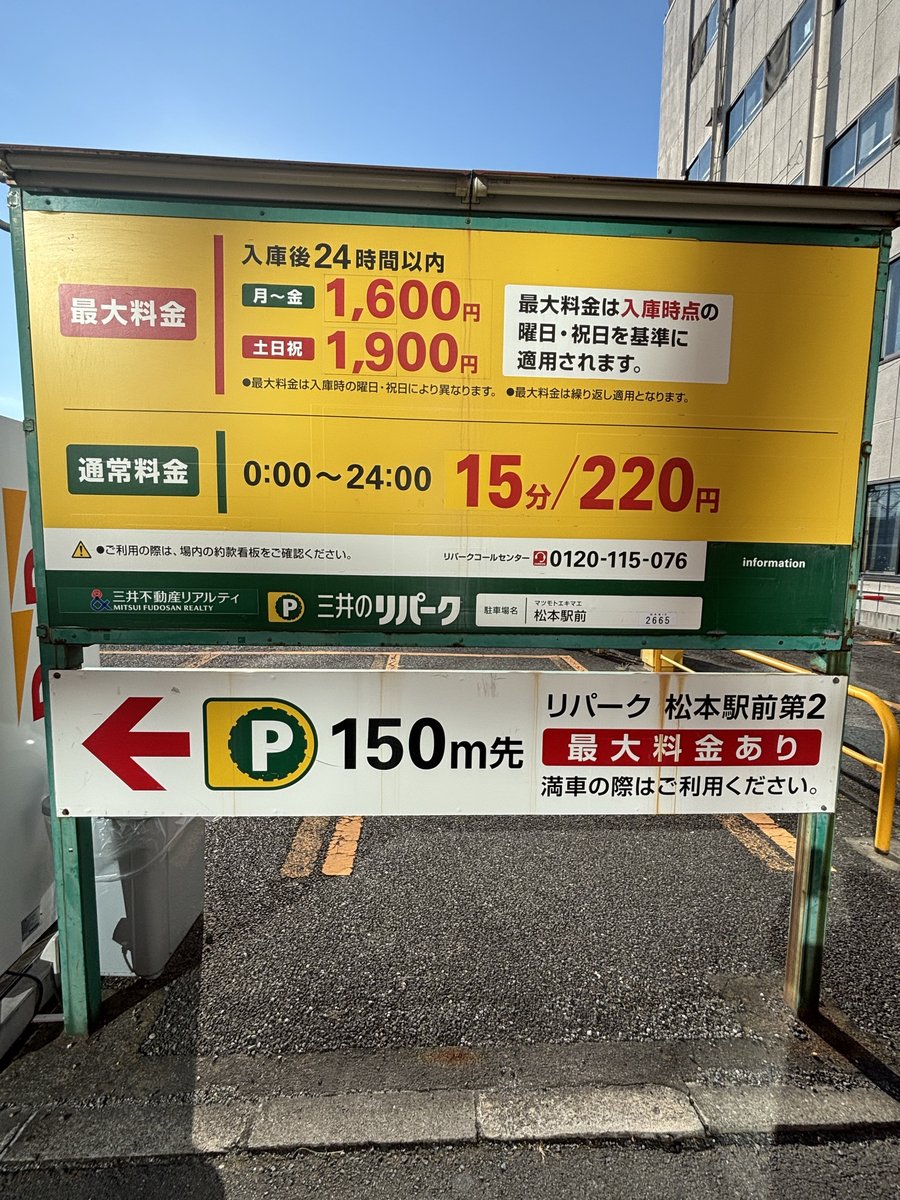
First, look for 最大料金
The first word to look for on a fee sign is
最大料金
the maximum fee.
The same thing is sometimes written as
上限
打止
打切
instead.
If you can’t find any of those words, there may be no ceiling at all.
Then the fee just keeps climbing. Look at the basic rate.
○時間まで and ○時間ごと
Near the maximum fee you may see
○時間まで — up to ○ hours
○時間ごと — every ○ hours
printed on the sign.
Sometimes those two change how the maximum fee works.
They don’t settle whether the cap repeats, though.
Look nearby for 繰り返しあり/なし (it repeats / it doesn’t) as well.
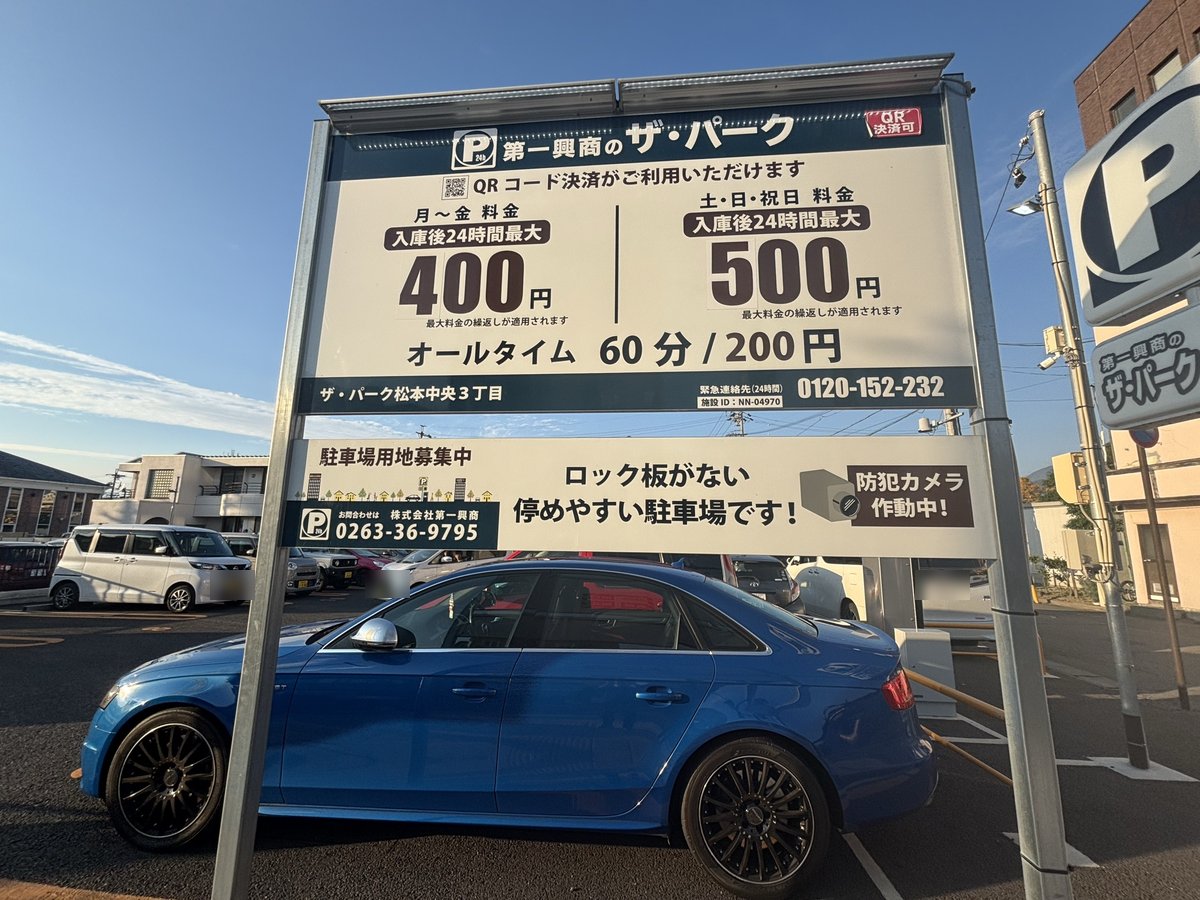
Whether the maximum fee repeats
A maximum fee isn’t always applied again on the next day or in the next time band.
繰り返しあり — it repeats
繰り返しなし — it doesn’t repeat
For a long stay, look for wording like this.
The words 最大料金 alone don’t promise the same cap however many days you stay.
When it’s too small to read
All of this can be printed small, in a corner of the sign.
あり and なし, まで and ごと — hard to tell apart.
Point the camera in your translation app at the sign.
And if that doesn’t settle it, the intercom on the pay machine will.
The day of the week and the time band
Weekdays and holidays, daytime and night, can have different rates and conditions.
Special rates are sometimes set over New Year and on event days.
Check the day you’re parking, and the time you drive in and drive out.
25時 and 26時 are times on the next day
On fee signs you sometimes see
25時
26時
written like that.
25時 is 1 a.m. the next day, and 26時 is 2 a.m. the next day.
Past 24:00, the count keeps going up as if the day just kept going.
当日24時まで ends at midnight
当日24時まで最大料金
When a sign says this, the condition runs until midnight that night.
Drive in at 11 p.m., and 当日24時まで ends one hour later.
If you’re staying from evening until morning, check the fee after the date changes.
The condition may be at your feet, not on the sign
Even within one parking lot, the conditions can differ from space to space.
Some spaces are left out of the maximum fee altogether.
That condition is sometimes written on the low wheel stop your tire touches.
And your own car hides it once you’ve parked.
So just after you park, look around the space as well as at the space number.
When you still can’t read it
Some operators put the detailed conditions on their app or website.
The terms of use are sometimes posted by the entrance or beside the pay machine.
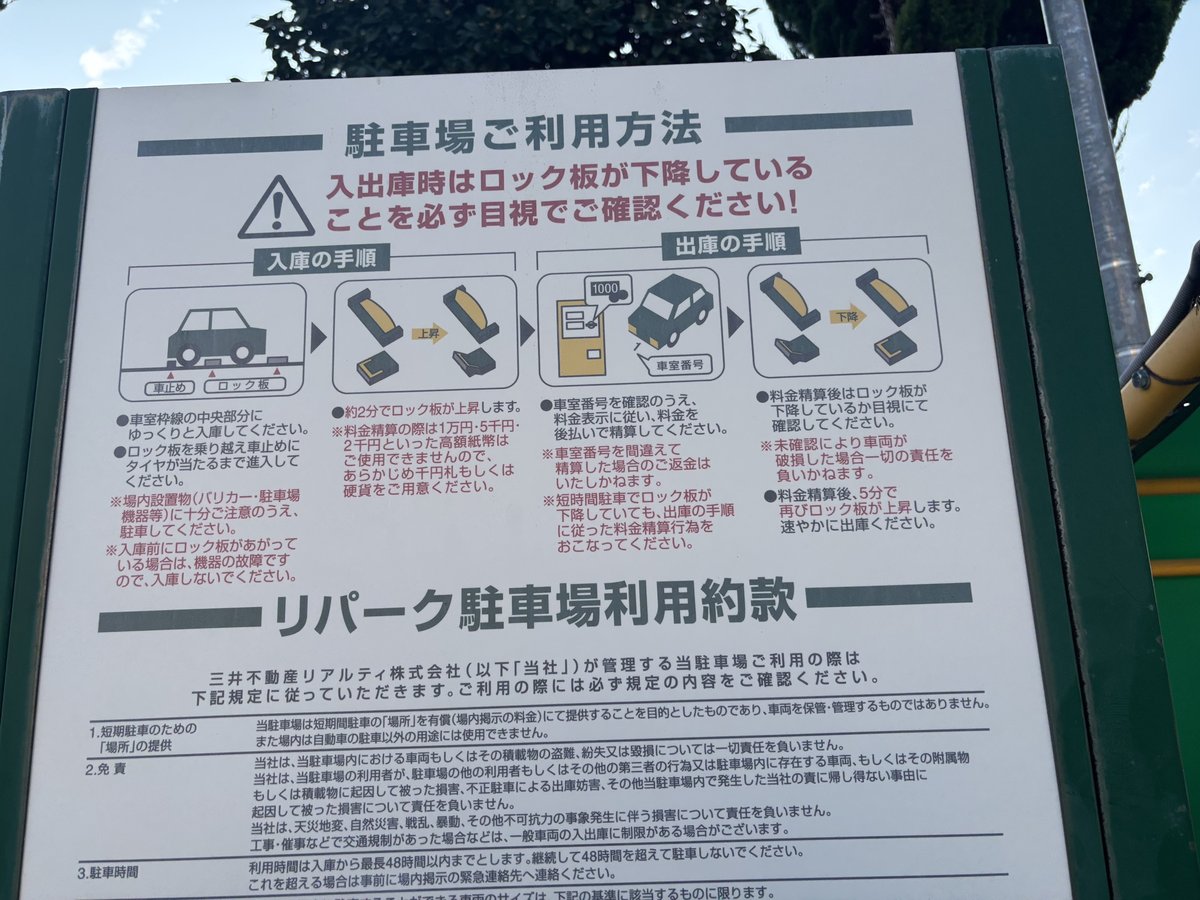
And when you can’t read it, another parking lot is a perfectly good answer.
※ Fees, the conditions under which a maximum fee applies, whether it repeats, and the days, hours and spaces it covers differ from one parking lot to another. For the actual fee, check the signs on site, the terms of use, and the information from the operating company.


