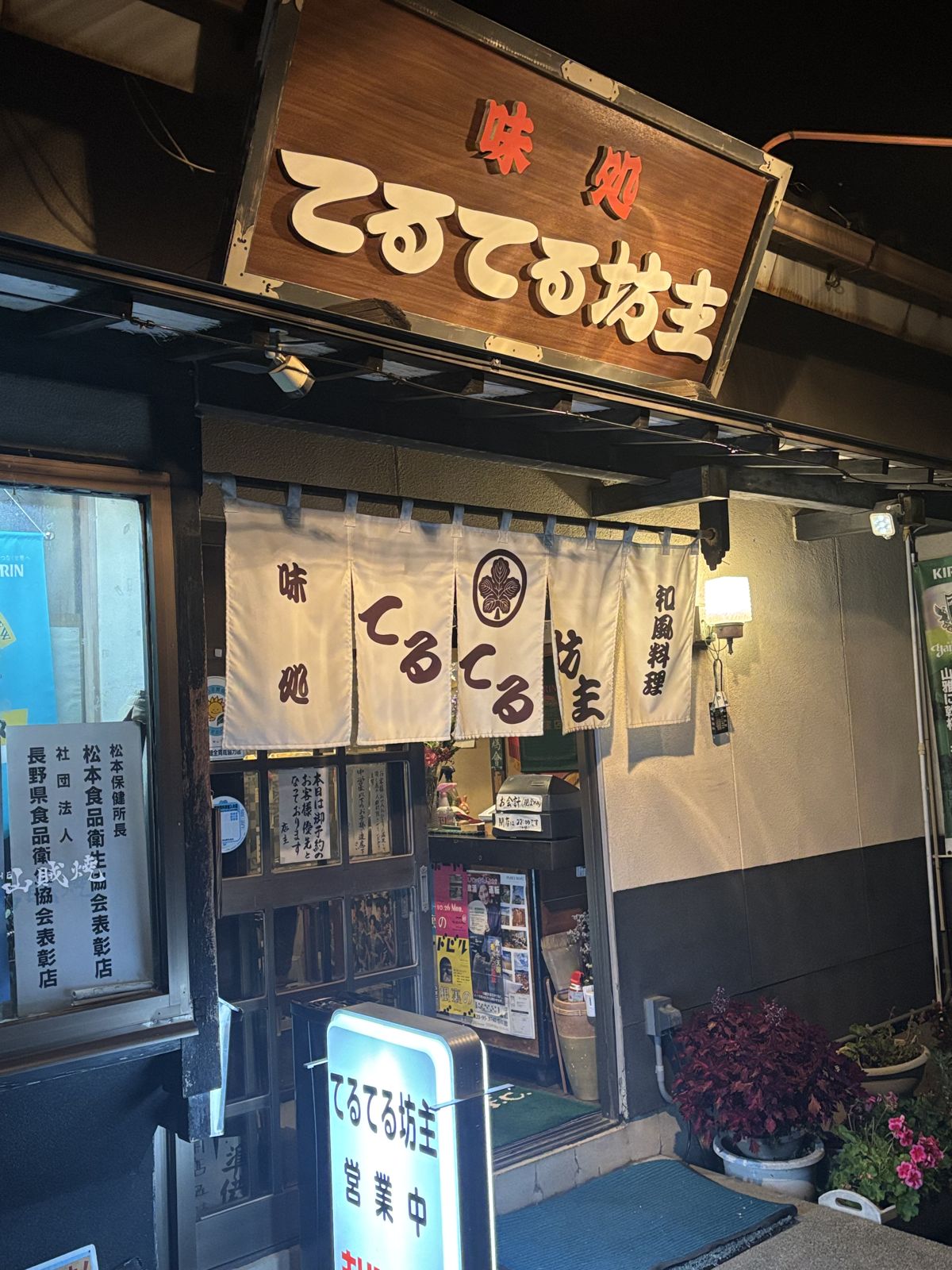
A lively place full of people stopping by after work. Lots of small dishes, plus beer and soft drinks. This is a 居酒屋 (izakaya), a casual Japanese pub-style restaurant.
At an izakaya, a small dish may be brought to your table before you’ve ordered anything. That’s お通し (otoshi), a small starter dish served at the table.
If you don’t know about it, it might catch you off guard. If you do, it’s just one more part of the fun. There are three things to know.
・お通し, the small dish that may come when you sit down, stands in for a table charge
・Share the food, and order a little more as you go
・For drinks, there’s also an option called 飲み放題 (all-you-can-drink for a set time)
1 お通し — A Small Dish That Can Work Like a Cover Charge
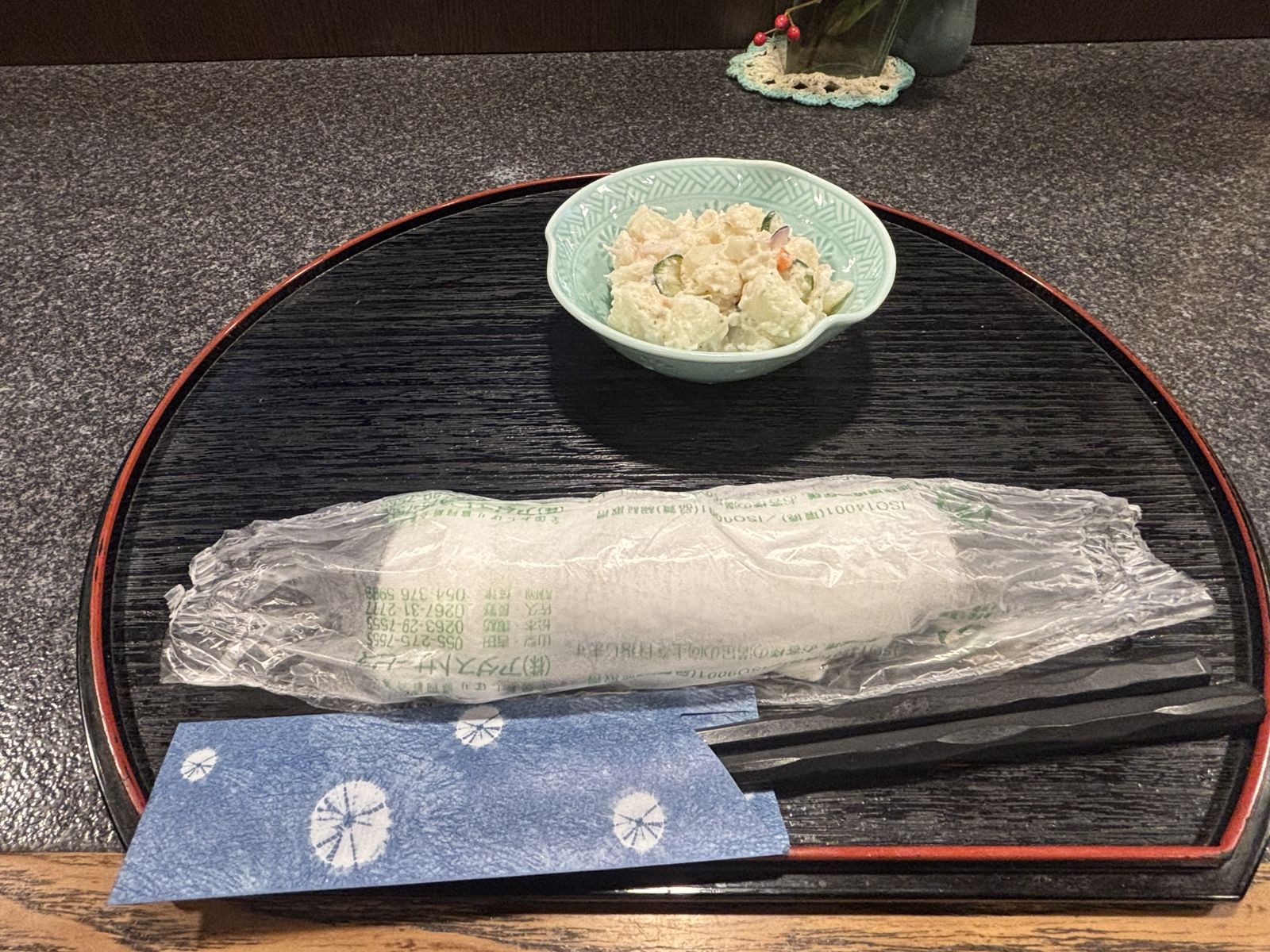
At an izakaya, a small dish may be served after you sit down and before you order. That’s the お通し.
The お通し may come with a charge when you pay. It’s something like a table charge (席料). When there is a table charge, it’s often written on the menu or posted in the restaurant.
A dish you didn’t order arrives, and you may pay for it later. It can feel a bit strange the first time, but it’s part of izakaya culture in Japan.
If a dish you don’t remember ordering shows up and you’re unsure about it, ask the staff when it’s brought to you.
Think of it as a dish that comes in place of a table charge, and it starts to make sense. You can snack on the お通し while you wait for your first order to arrive.
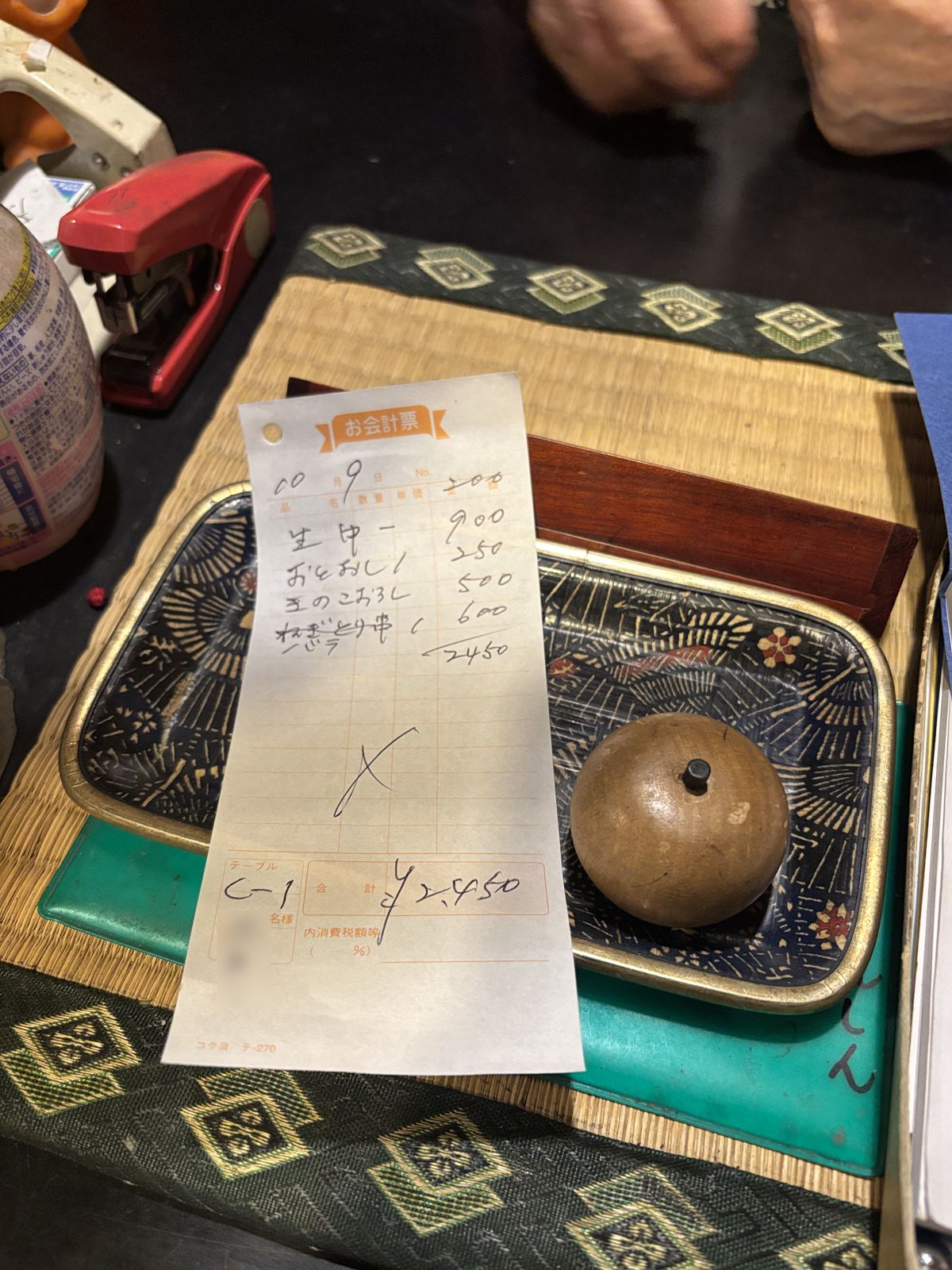
My sense is that at many places, the お通し charge covers a small dish and a table charge rolled into one. Either way, it’s really a kind of table charge. At a place I went to recently, the bill listed the お通し at ¥250, and I took that bill to the register and paid there
What you get is a surprise until you sit down
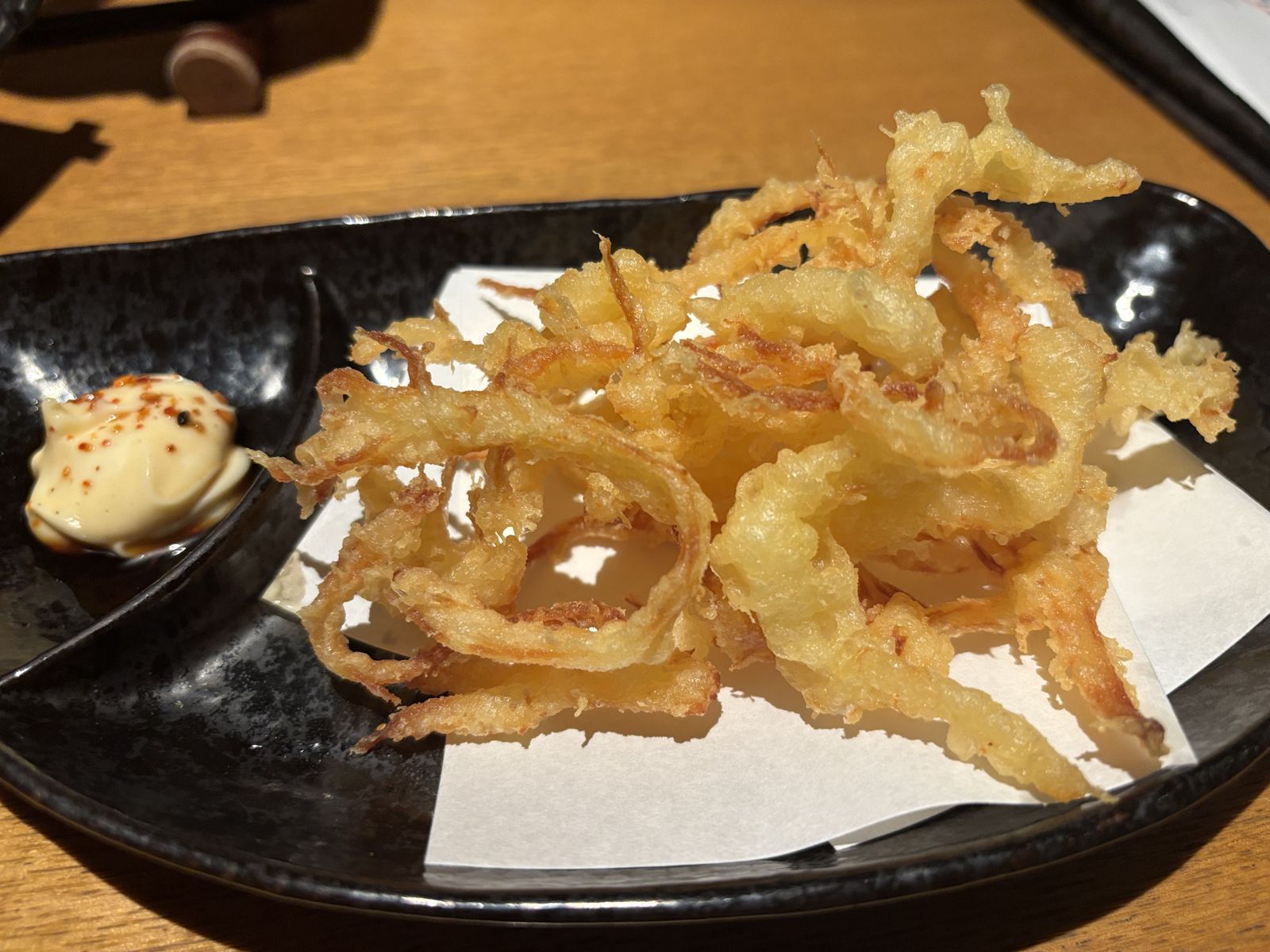
The restaurant decides what it is. Sometimes it’s something simple, like edamame (枝豆), pickles or potato salad. Sometimes it’s a more elaborate dish.
Because it’s a dish you don’t get to choose, part of the fun is waiting to see what comes. If you go to a few places in one night, comparing each restaurant’s お通し is another way to enjoy it.
If the お通し is good, everything else on the menu will be good too! At least, that’s the theory among my friends, and we all agree on it. That’s why I always look forward to that first little dish
If there’s something you can’t eat, say so as soon as you sit down
The お通し often comes out right after you take your seat. If you have an allergy or there’s anything you can’t eat, tell the staff as soon as you sit down.
2 The Food — Share It, and Order a Little More as You Go
Izakaya food is mostly meant to be shared. When the food arrives, everyone gets a 取り皿 (a small plate for taking your share). You take your portion from the dish in the middle onto your 取り皿 and eat from there.
In a group, it’s normal to order a few dishes and keep adding more as the night goes on. If you keep an eye on how much is left on the table as you add more, you won’t over-order.
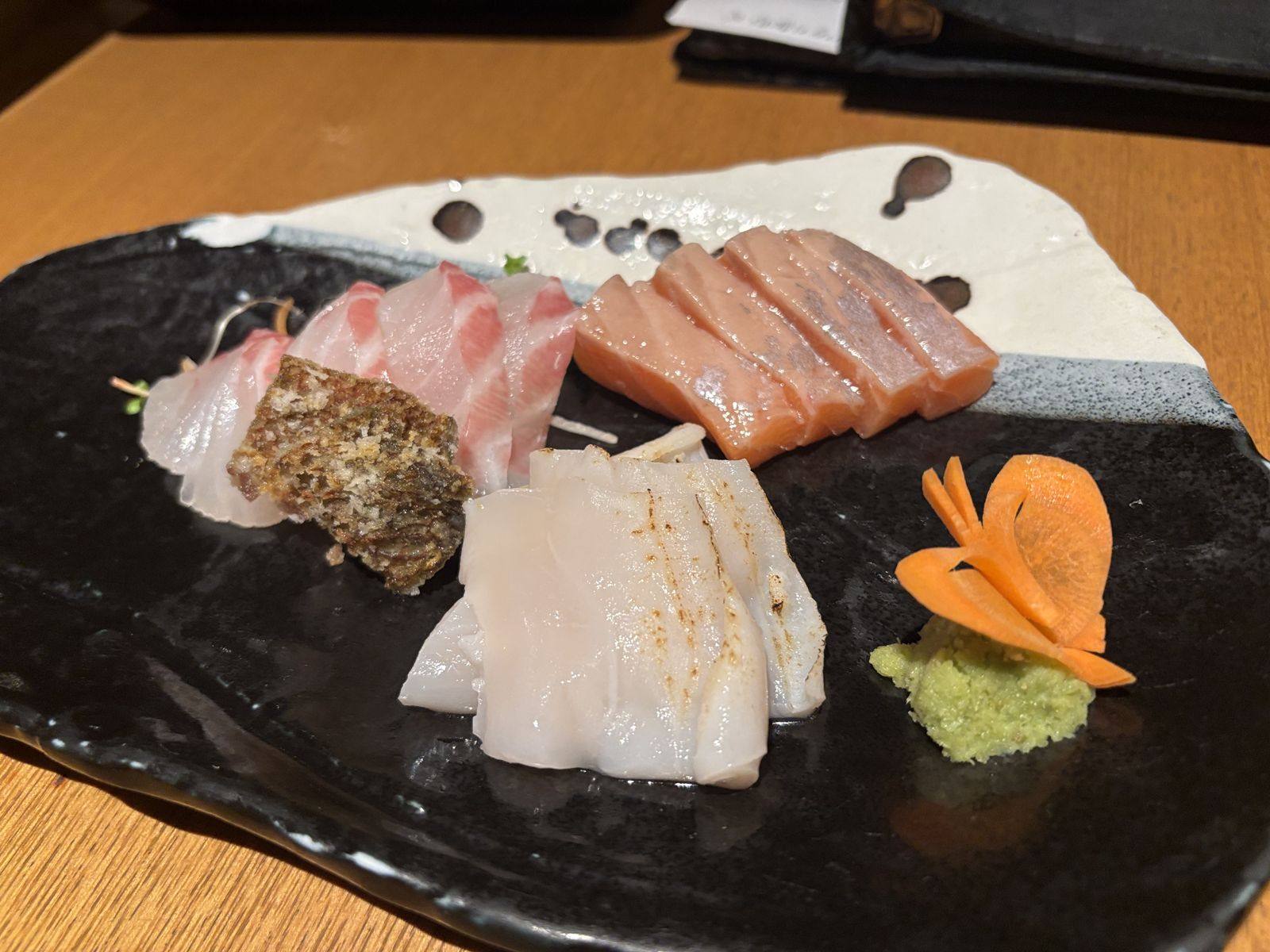
Common dishes include a sashimi platter, yakitori (焼き鳥, grilled chicken skewers), karaage (fried chicken), grilled fish, tofu, yakisoba and edamame. Some places specialize in fish or meat, and some serve local dishes. In the cold months, more places offer hot pots that simmer right at the table.
There are drinks for people who don’t drink alcohol, too. Oolong tea, for example, or melon soda, which is popular with kids in Japan.
To call the staff, press the call button (呼び出しボタン) on your table, or say すみません (sumimasen, “excuse me”).
Once everyone has a drink, it’s かんぱい (kanpai, “cheers”). People often start with a toast together before they drink.
3 飲み放題 — Drink as Much as You Like Within the Time Limit
At izakayas, you’ll often see an option called 飲み放題. For a set amount of time, you can drink as much as you like from a special menu. The limit is often 1 to 2 hours.
As long as it’s on the special menu, it’s the same price however many drinks you order. It’s also a good way to try out drinks you’re curious about.
Before you order, check the time limit and the special menu. At some places, the last order (ラストオーダー) is a little before time’s up. If you order a drink that’s not on the special menu, it costs extra.
You can order alcohol from age 20. In Japan, you become an adult at 18, but alcohol is for people 20 and over. Places that serve alcohol may ask to check your age.
Anyone under 20, and anyone who doesn’t drink, can join the toast with a soft drink.
On busy nights, some places have a time limit for your table even if you don’t order 飲み放題. Some places set it at 2 hours.
When time’s up, on to the next place. Your お通し comparison continues there.
4 Paying — No More Surprises When You See お通し on Your Receipt
In some nightlife districts, touts (客引き) on the street call out to people and try to take them to a bar or restaurant. Don’t follow touts; go into a place you choose yourself. The Tokyo Metropolitan Police Department warns that touts for izakayas and similar places may lead people to places with high prices, and asks people not to follow them.
At a place you chose yourself, you can relax and order while checking prices and the table charge on the menu.
When you’re done eating, head to the register. Some places ask groups to pay together on a single bill.
If there’s a charge you don’t recognize on the bill, it might be the お通し, a table charge or a service charge. At some places, there can also be an extra charge late at night.
If you don’t understand a charge, ask before you pay. Even if language is a problem, you can ask the staff by showing them your question in a translation app.
Once you know about the お通し, you won’t panic when you spot an “お通し” line on your receipt.
For now, just this
If an お通し comes out, it’s your first dish, in place of a table charge. What you get is a surprise.
If there’s something you can’t eat, say so as soon as you sit down.
Share the food, and order a little more as you go.
With 飲み放題, check the time limit and the special menu first.
Don’t follow touts. Choose the place yourself.
If you don’t understand a charge, ask the staff before you pay, showing them your question in a translation app.


