Have you booked a night at a ryokan?
Your first ryokan can make you a little nervous, because you don’t know what’s going to happen.
But once you step through a ryokan’s front entrance, you’re in something like your host’s “home.” The staff are waiting to welcome you the way they’d welcome a friend or family member.
Taking off your shoes, the bath, the yukata (浴衣, a light cotton robe) — the staff will explain all of it. If there’s something you don’t understand, you can just ask them right there. If you’re worried about the language, try asking while you show the staff a screen on your smartphone’s translation app.
First, here’s how the night goes.
- Check-in from around 3 p.m. If you arrive early, you can leave your bags and go out
- A breather in your room. You set your dinner and breakfast times at check-in
- Before dinner, a bath and the yukata
- At some ryokan, your room has turned into a bedroom by the time you’re back from dinner
- At night, many ryokan have a curfew (門限)
- Breakfast, then check-out at around 10 a.m. to 12 noon
1 Arriving — from around 3 p.m.
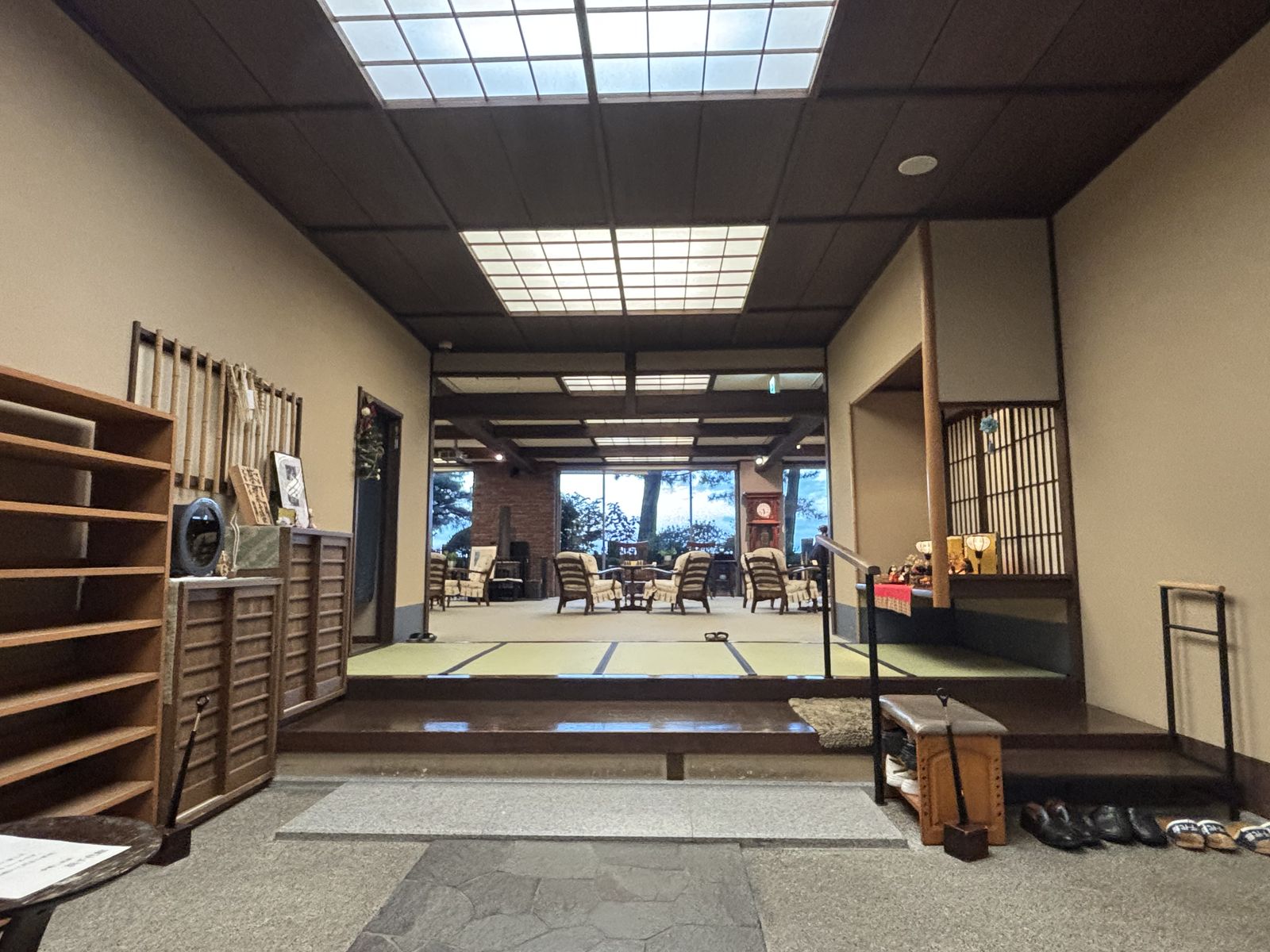
Ryokan check-in isn’t very different from a hotel’s. It usually starts at around 3 to 4 p.m.
If you arrive earlier than that, most ryokan will keep your bags for you at the front desk.
With your bags dropped off, you can walk around the area without them and come back later.
But at a small family-run place, there may be nowhere to wait, or everyone may be out. If you think you’ll arrive early, let them know in advance.
If you’re running late
Ryokan dinners often have set times, and if you arrive too late, you may not be able to eat.
How late you can arrive depends on the ryokan. Some want you there by around 6 p.m.; others will wait until around 7 p.m.
If you’re going to be much later than planned, contact the ryokan as soon as you know. Some places ask you to get in touch if you’ll arrive after 5 p.m.
Put the other way, the earlier you arrive, the more free time you have before dinner. A ryokan is a place to enjoy the hot springs and the ryokan itself at your own pace, even in the time before your meal.
2 In your room — first, a breather
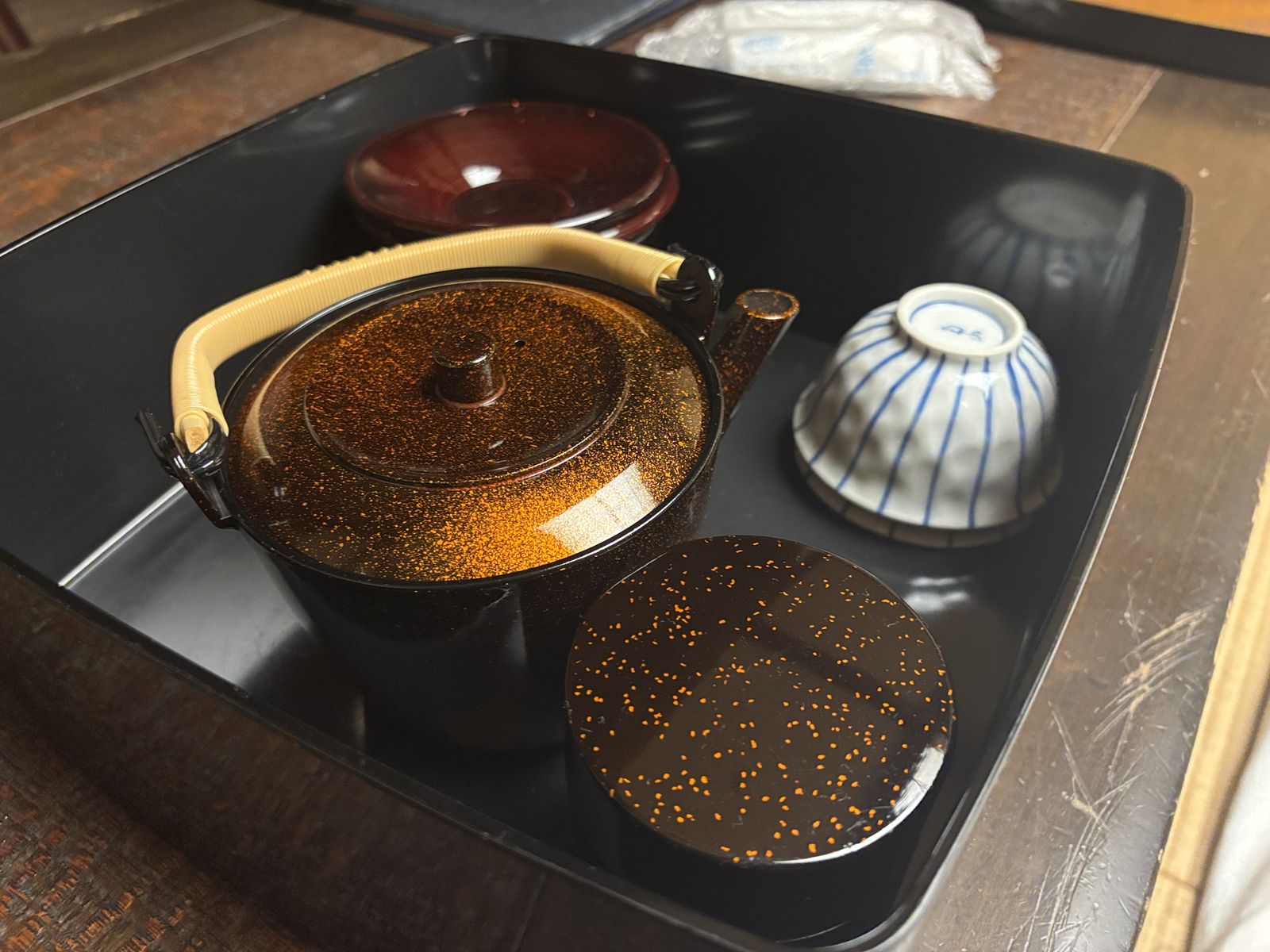
Tea and a small snack are sometimes served at check-in or left out in your room. After a long journey, take a moment to relax.
A ryokan’s Japanese-style room usually has a low table and legless chairs (座椅子).
More and more ryokan now also offer rooms with beds. If you’d like to sleep in a bed, ask the ryokan before you book.
At check-in, you’ll usually be asked what time you’d like dinner and breakfast. You pick a time from the set time slots.
They’ll also show you where the baths are and when they’re open, where you’ll eat, and where to find your yukata. If there’s an information sheet in your room, have a look at it when you want to double-check the times.
3 Before dinner — a bath, and what to wear (yukata or your own clothes)
A common pattern for ryokan guests is to bathe before dinner, after dinner and before breakfast, and it’s not unusual to go in several times in one night.
At a ryokan, you can usually use the large shared bath (大浴場) without booking.
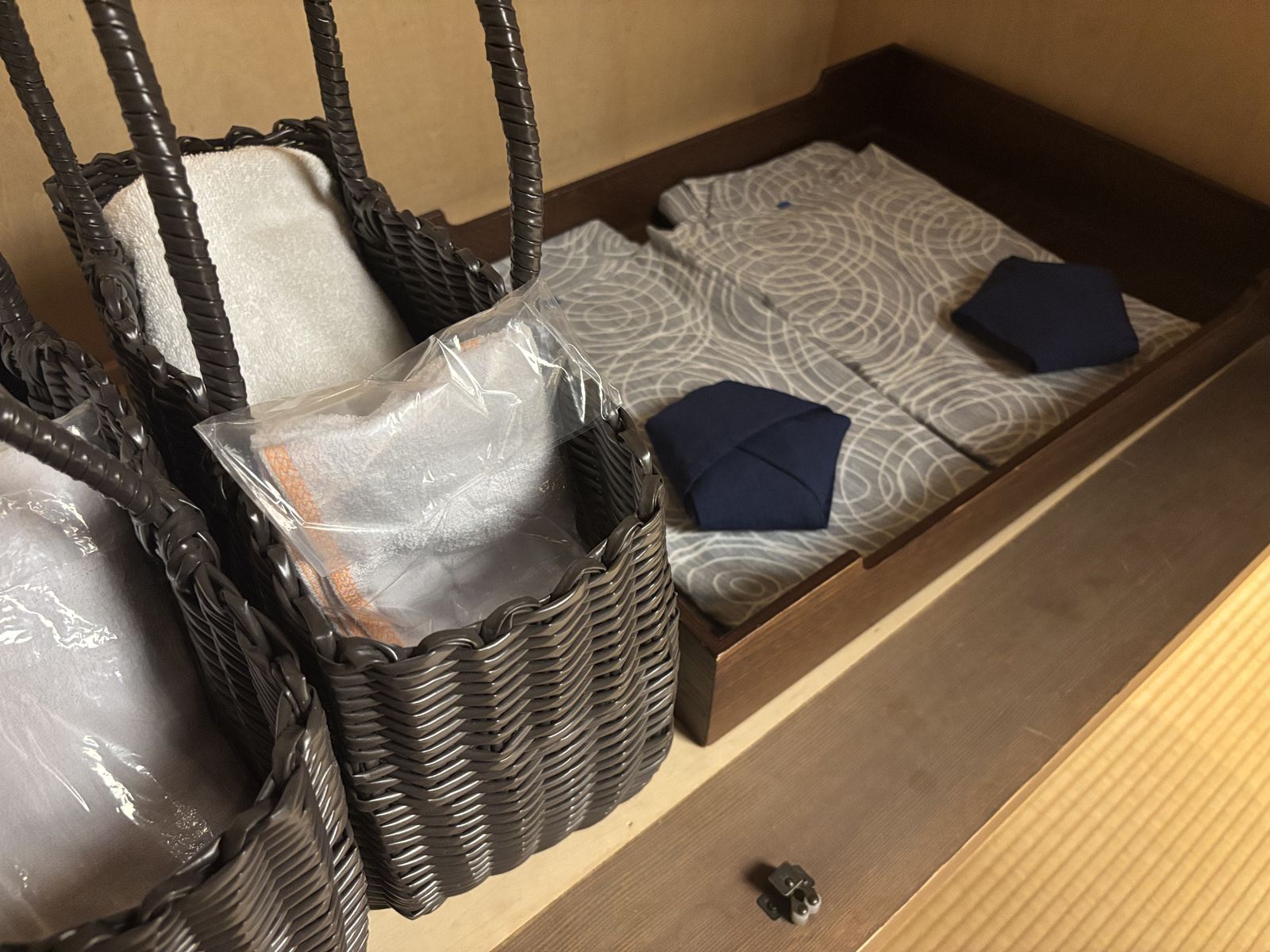
Inside the ryokan, you can wear your yukata for your whole stay — to meals, to the bath and to bed.
Many people wear their yukata to dinner, but your own clothes are fine too.
Whether you can go outside the ryokan in your yukata, or go out in the slippers, depends on the ryokan.
If you have tattoos, whether you can use the large bath varies a lot from ryokan to ryokan, so check with the ryokan before you book.
How to use the baths will be covered in “The Large Bath and Hot Springs,” and the yukata and slippers in “Shoes Off, Slippers and Yukata.”
4 Dinner — the high point of the evening
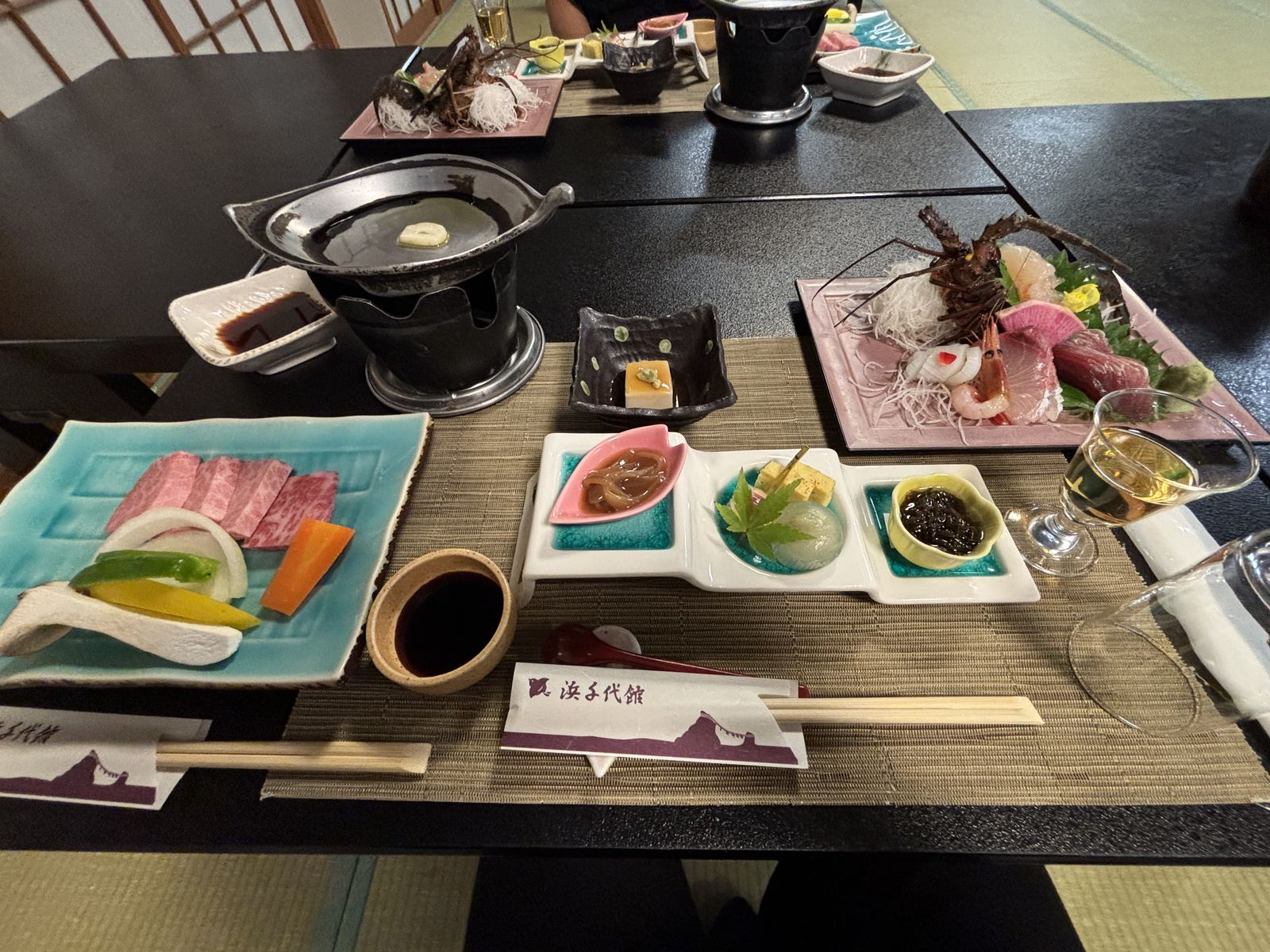
Ryokan dinners are often made with local specialties and ingredients that are in season, and they take time to prepare. That’s why the times are set.
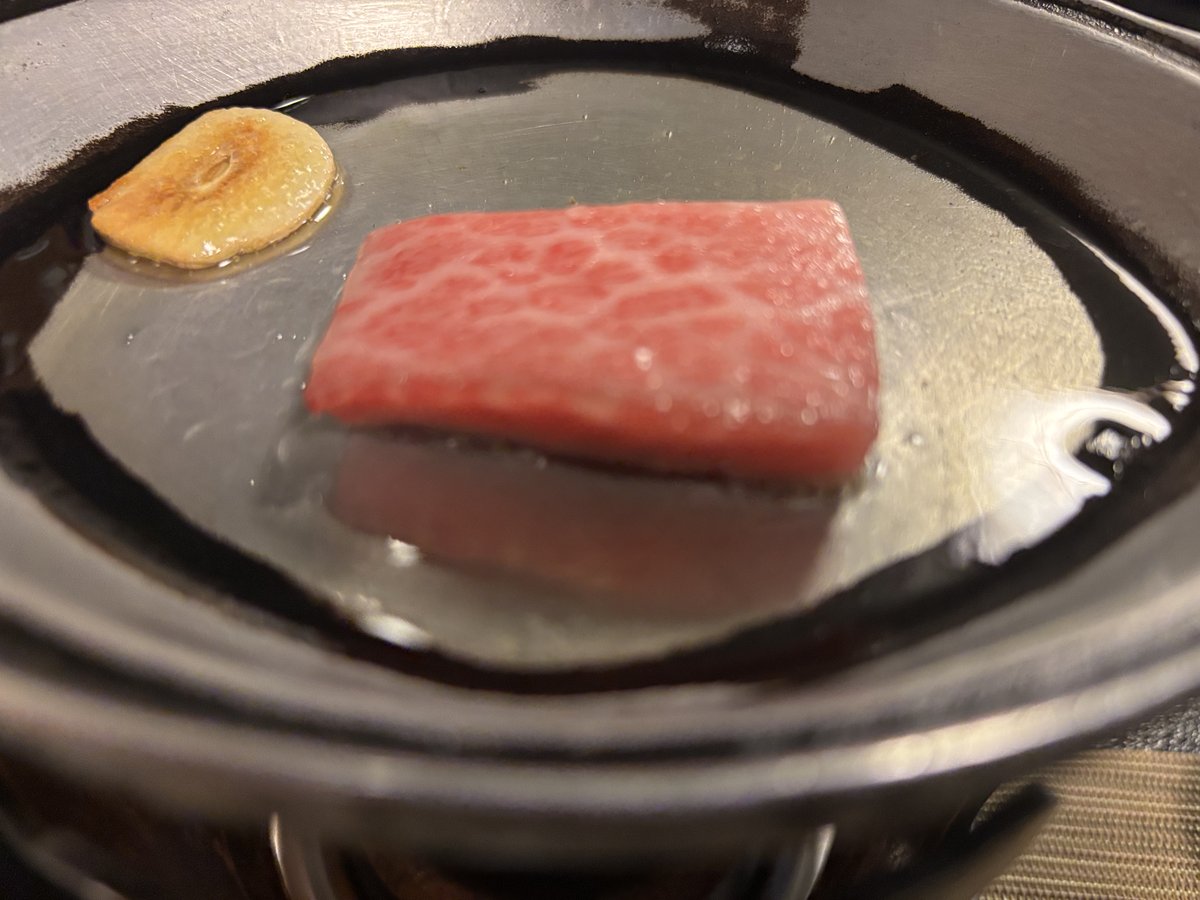
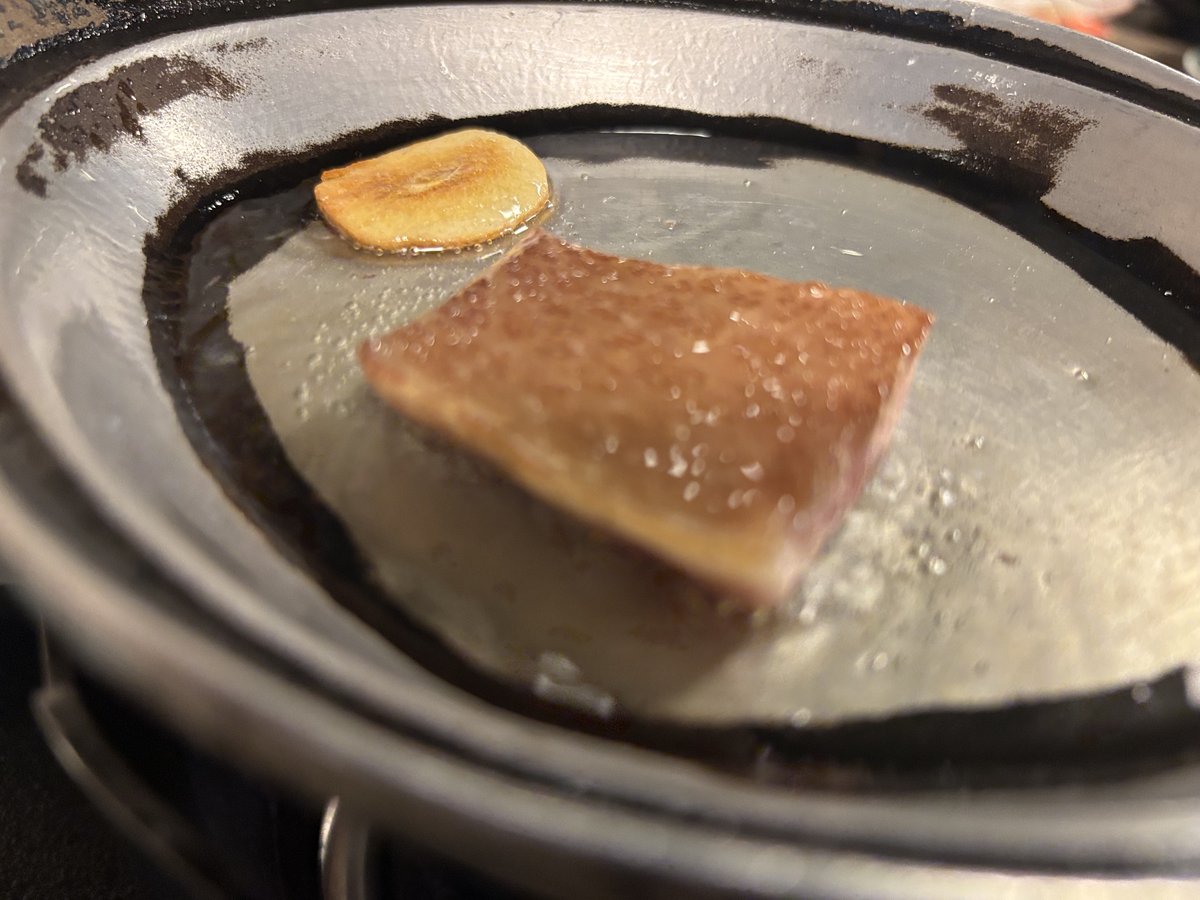
Depending on the ryokan, you’ll eat in your own room, in a separate private room, or in a shared dining room (食事処).
At ryokan where the dishes come out one at a time, dinner can take about two to two and a half hours. It’s a time to savor slowly, with no other plans for the evening.
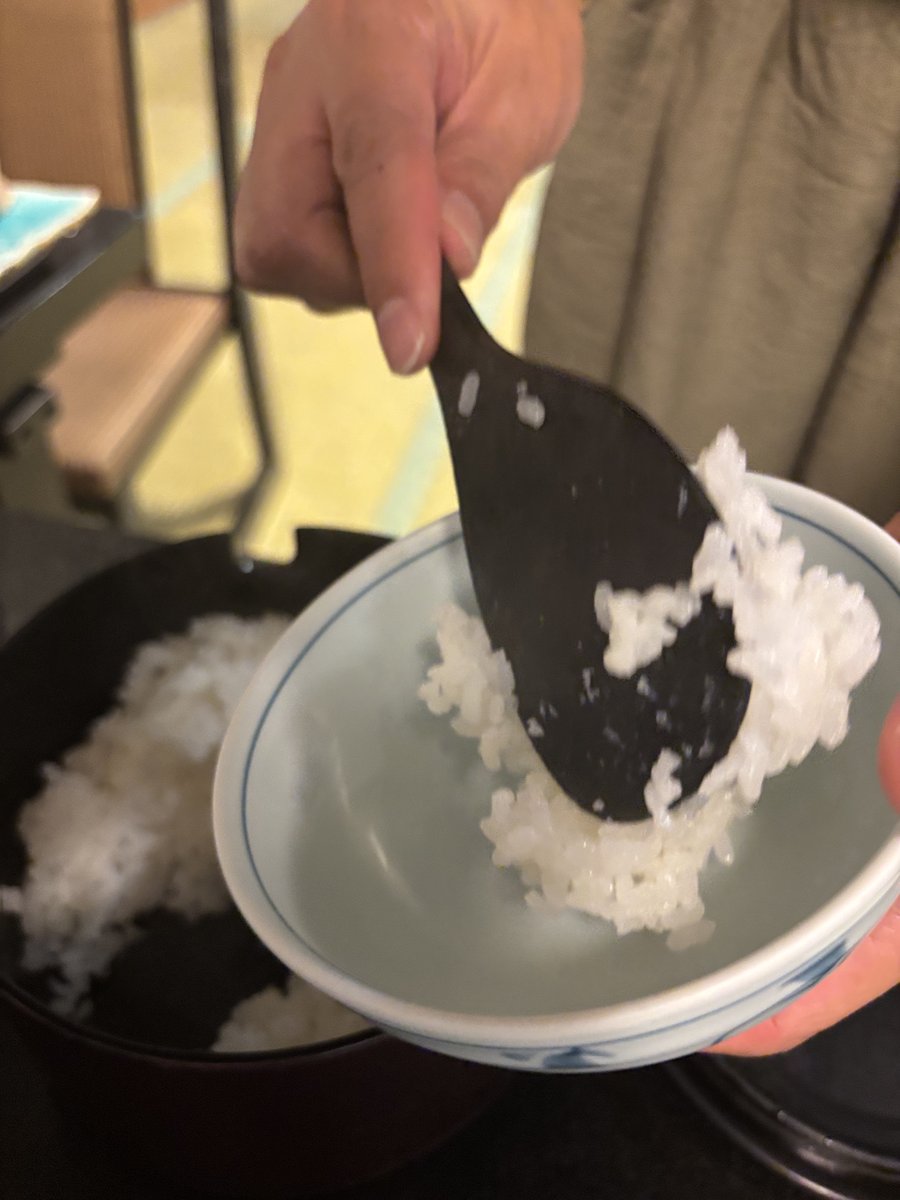
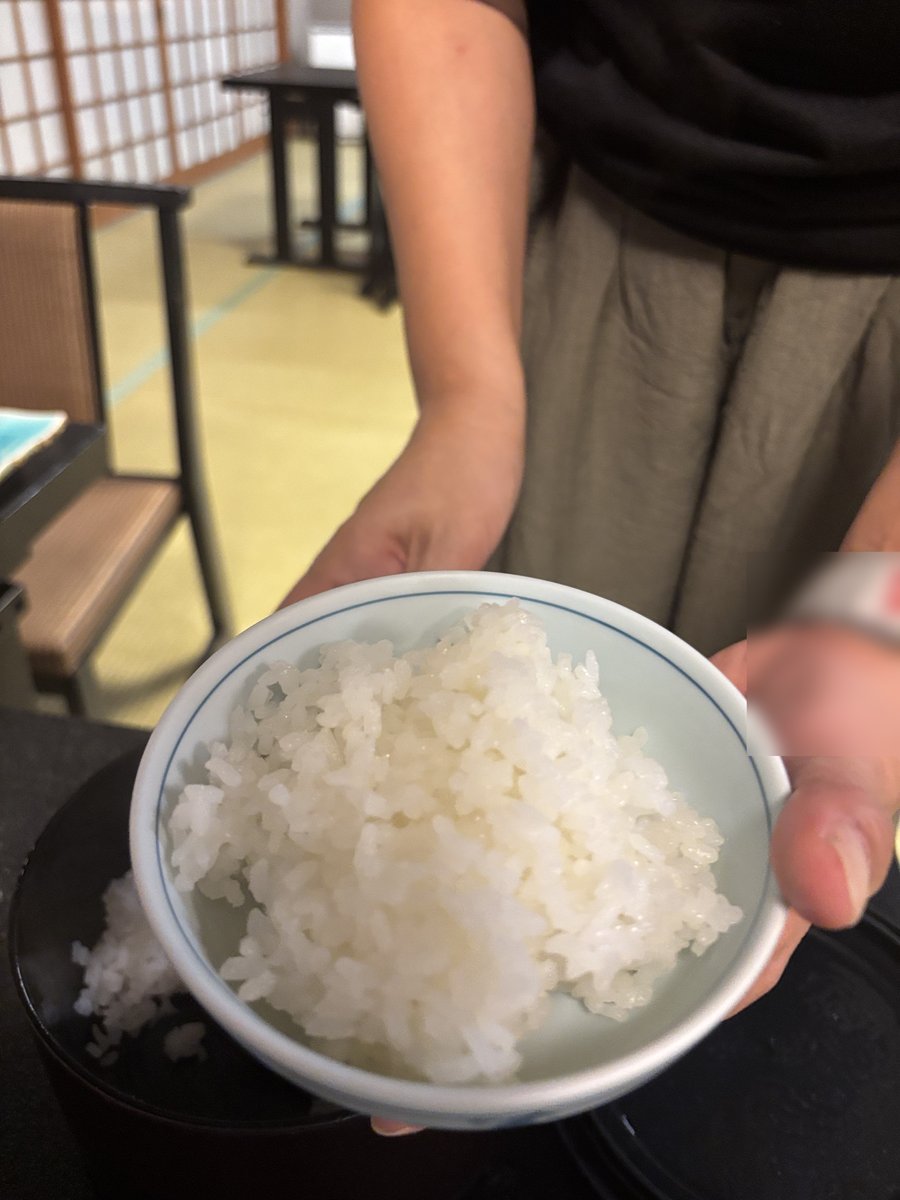
If there’s something you can’t eat, tell the ryokan when you book. How to tell them will be covered in the article on food.
What about alcohol?
Alcoholic drinks with dinner are usually ordered separately from the room rate and added to your bill at the end. Whether you can bring in alcohol you bought yourself depends on the ryokan, so if you’d like to, ask the ryokan first.
5 Back to find your room turned into a bedroom
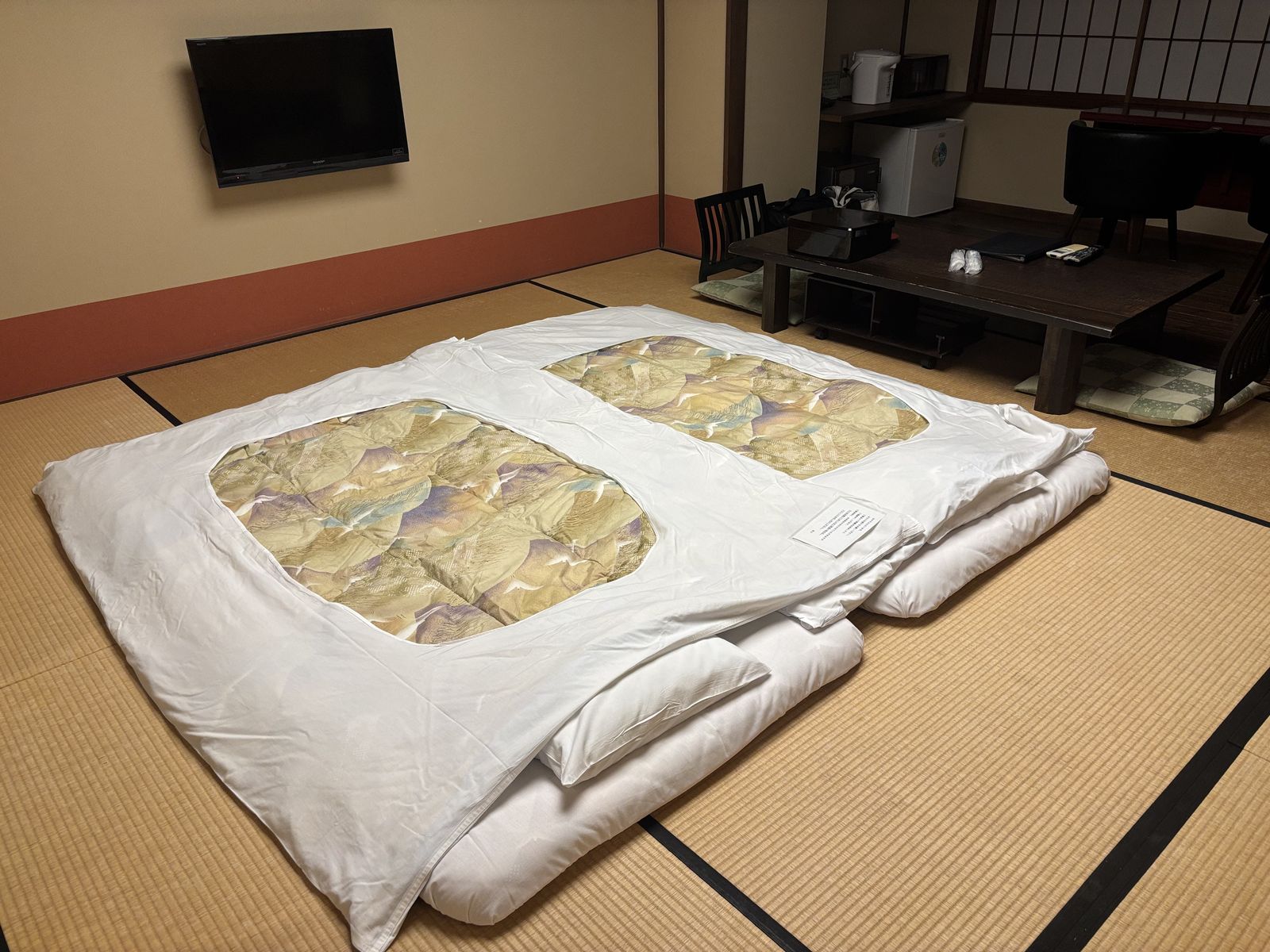
At some ryokan, a staff member lays out the futon (布団, bedding that’s spread on the floor) while you’re at dinner. You may be surprised to come back and find your room has become a bedroom.
At these ryokan, the same Japanese-style room is a living room or a bedroom depending on the time of day. And a dining room too, if you eat dinner in your room. The staff are the ones who rearrange it for you.
In places like the Japanese-style rooms of hotels, you may have to lay out the futon yourself. Some places also let you choose a room with beds.
6 Night — sleep well, then the first bath of the morning
Many ryokan have a 「門限」 (a nighttime curfew). At a ryokan with a curfew, you can’t go in or out after a late hour — midnight (0:00), for example.
If your ryokan has a curfew, be back by that time.
Some ryokan have no curfew, some have someone at the front desk even after the curfew, and some give a key to guests coming back late. If you’re concerned, ask the ryokan.
Avoid bathing late at night or after drinking, to prevent accidents.
At many ryokan, the large bath is open late at night and early in the morning too, except during cleaning. Sleeping well and starting the next day with the first bath of the morning is one of the pleasures only a ryokan can offer.
7 Morning — breakfast and check-out
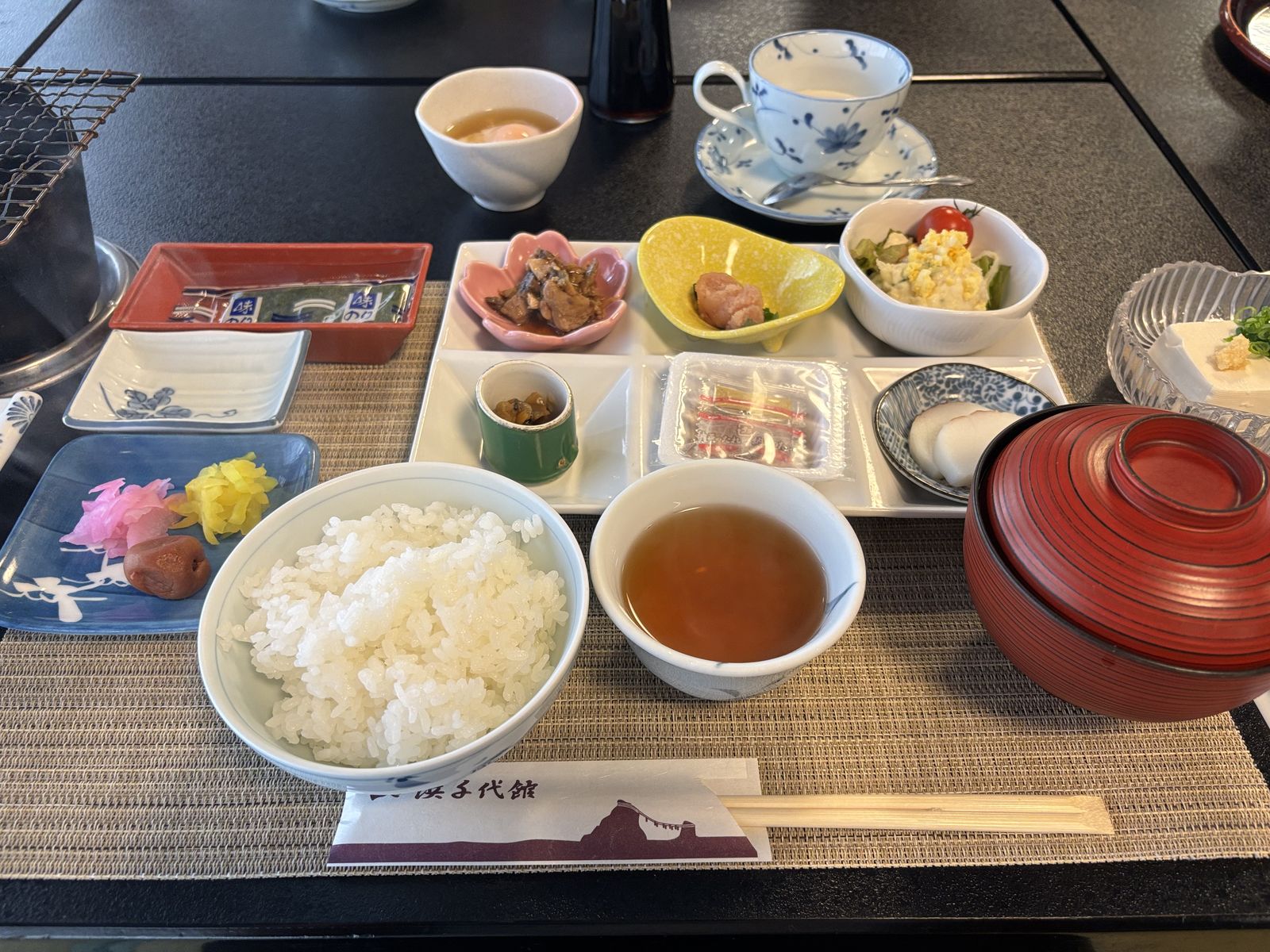
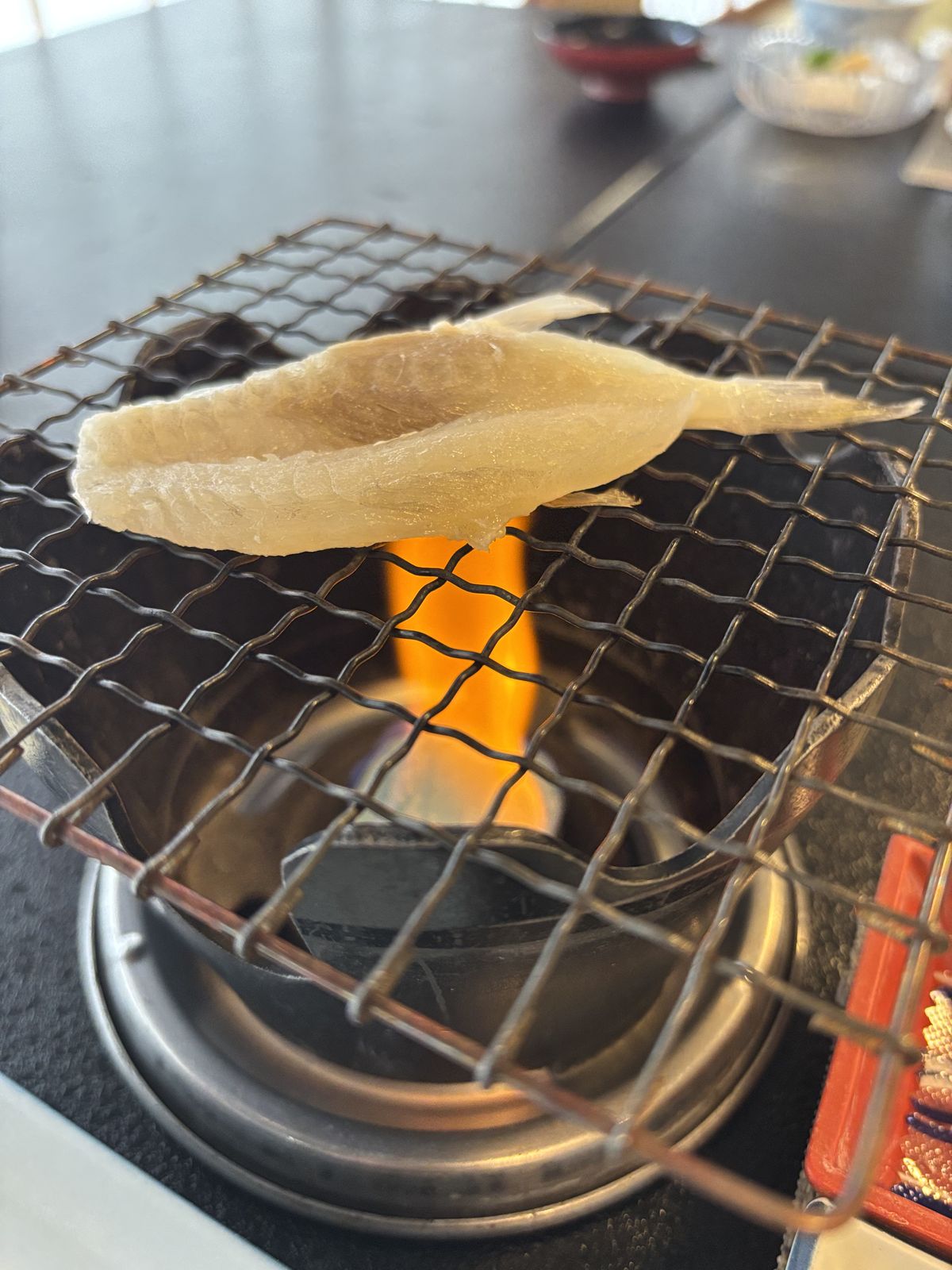
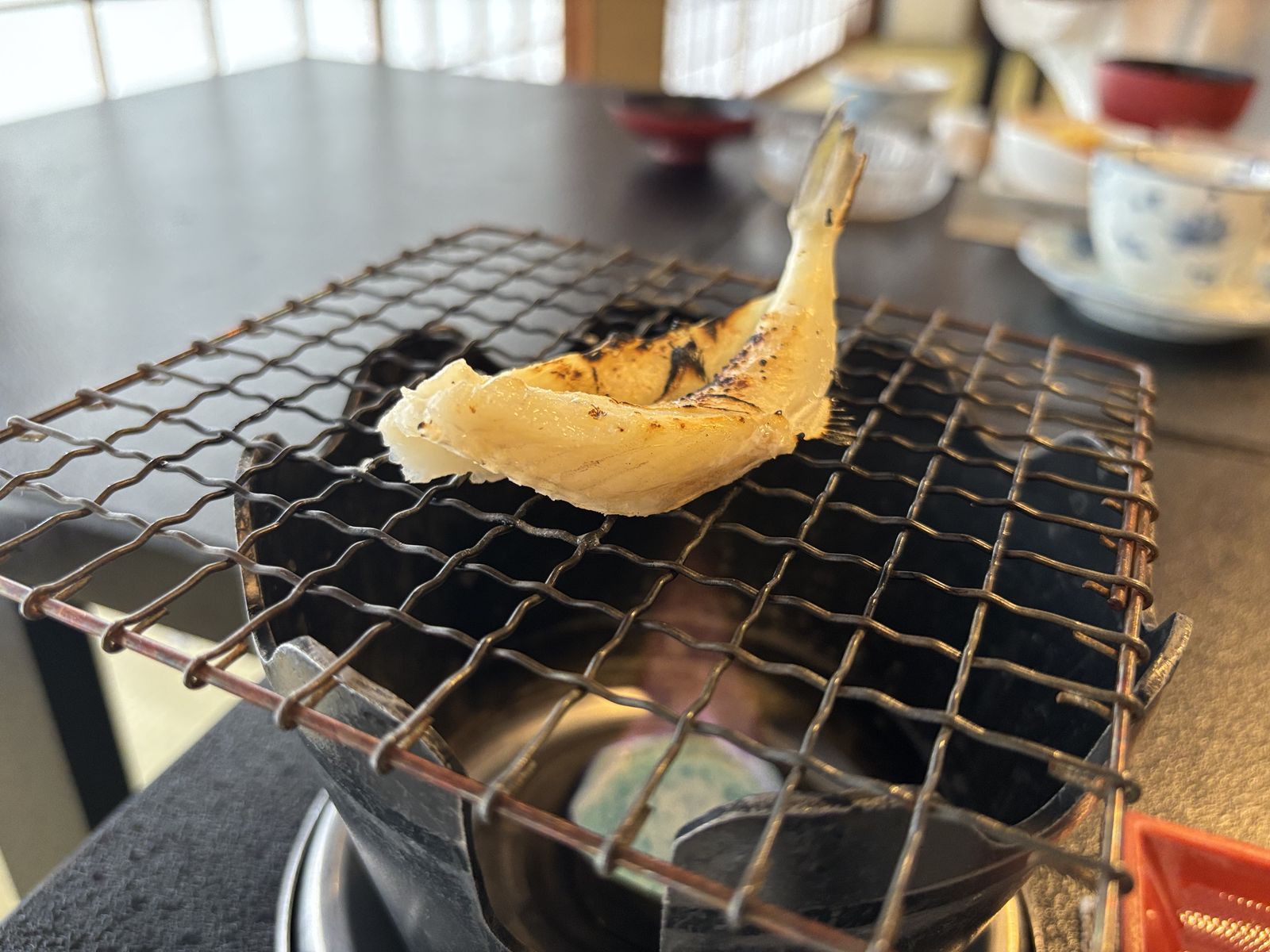
Your breakfast time was set at check-in the day before. It’s often served in the same place as dinner.
Before check-out, there’s enough time for a morning bath and an unhurried breakfast.
At some ryokan, a staff member comes into your room during breakfast to put the futon away. If no one comes to put it away, just leave it laid out. Do tidy up the rest of the room, though.
Many ryokan have check-out between 10 a.m. and 12 noon.
The yukata and bath towels are meant to stay at the ryokan when you leave. Some ryokan say you may take the thin cotton hand towel (手ぬぐい) home (one ryokan’s reason was that they always put out new ones).
What you may take home depends on the ryokan, so if you’re unsure, ask the staff.
Check-out is usually at the front desk or in the lobby. How to pay will be covered in the article “Paying for Your Stay.”
What about tipping?
You don’t need to tip at a ryokan. Some ryokan say the service charge is included in the room rate.
There are said to be exceptions at a very small number of high-end ryokan, but not tipping won’t cause you any trouble.
Some ryokan say you’re treated the same whether you tip or not.
If you want to show your thanks, say 「ありがとうございました」 (arigato gozaimashita, “thank you very much”) with a smile.
Things to ask the ryokan
- You’d like to sleep in a bed → before you book
- You have tattoos → before you book
- You might arrive early at a small place → before you arrive
- You’ll be late for dinner → as soon as you know
- You’d like to bring in your own alcohol → before you bring it
- You’re concerned about the curfew → before you go out
If there’s something you don’t understand, you can just ask the staff. That’s part of a night at a ryokan, too.


