Category: Food & Dining

  • Teishoku Restaurants and Donburi (Gyudon) Shops — Pick a Main Dish, and It Comes on One Tray

    Lunchtime at a teishoku restaurant. You wait a little at your seat, and a single tray arrives. Rice, miso soup, grilled fish, a small side dish, pickles. Everything you’re going to eat is already there.
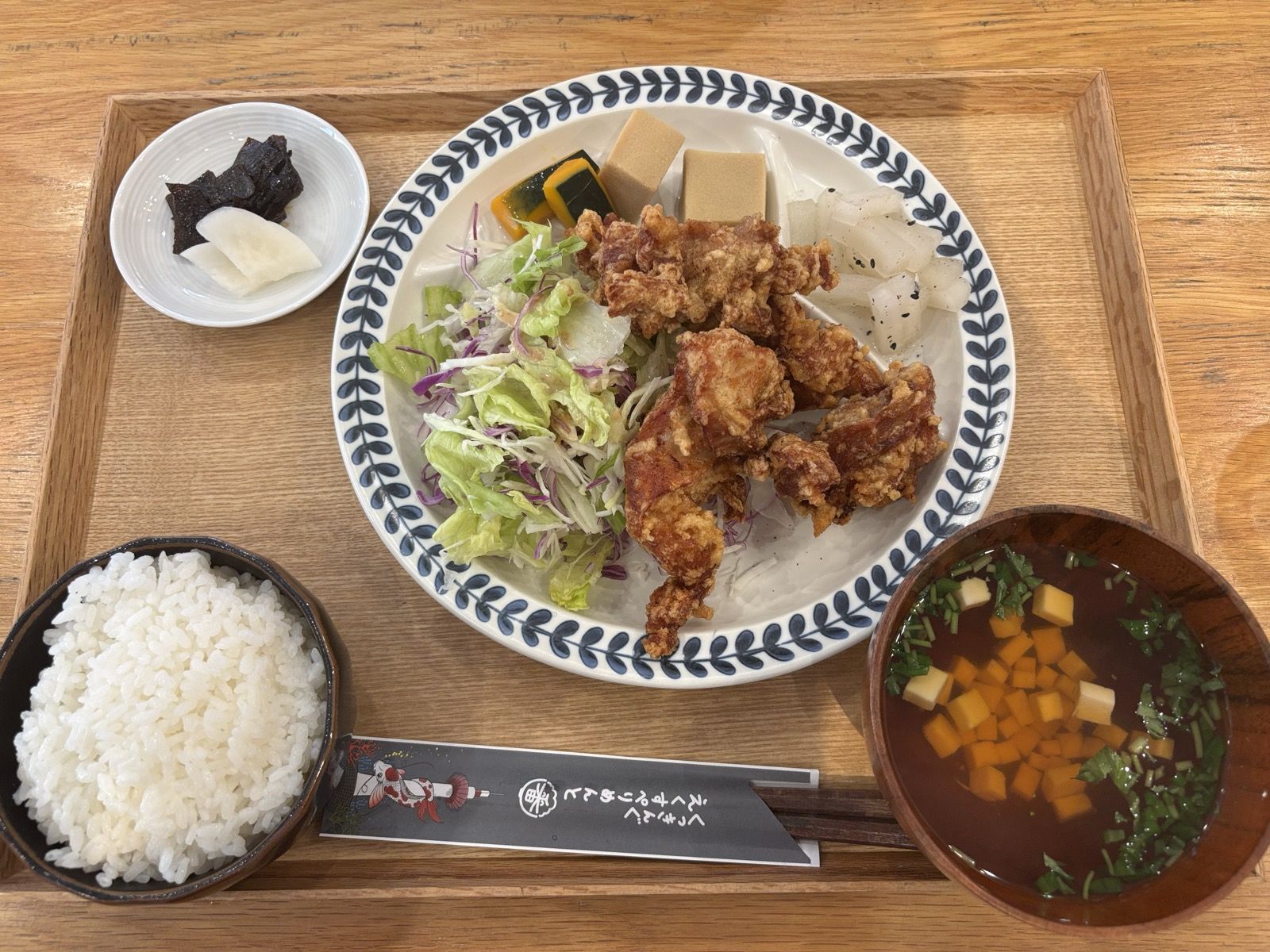
    Overhead view of a set meal tray with rice, miso soup, fried chicken with salad and a small dish of pickles
    A teishoku tray from directly above. Rice, miso soup, a main dish of karaage (Japanese fried chicken) with salad, and pickles in a small dish, all on one tray.

    A teishoku restaurant (定食屋) is a place that serves 定食 (teishoku): a set meal for one, with rice and miso soup, a main dish and pickles, all brought out at once. At a donburi shop (such as a gyudon, or beef bowl, shop), what you get is 丼 (donburi): a bowl of rice with a topping on it. One tray for teishoku, one bowl for donburi, and your whole meal for one is right there.

    There are four things to look at.

    ・If there’s a ticket machine (券売機) at the entrance, buy a ticket first

    ・With teishoku, choose one main dish, and the rice, miso soup and pickles all come on one tray

    ・With donburi, you use characters such as 並盛 (regular size) and 大盛 (large size) to choose how much rice you get

    ・Whether miso soup comes with your meal and whether you can get more rice differ from place to place. Comparing them is part of the fun

    1 Walking In — Some Places Have You Buy a Ticket First

    At some teishoku restaurants and gyudon shops, there’s a ticket machine at the entrance, and you buy a ticket first. How to use a ticket machine is covered in the “Ramen Shops and Other Restaurants with a Ticket Machine” article.

    If you don’t see a ticket machine, it may be a place where you order after you sit down. Take a look at the menu at your seat, or look to the staff for guidance. If you can’t read the menu, use a translation app, or point at the menu and ask the staff.
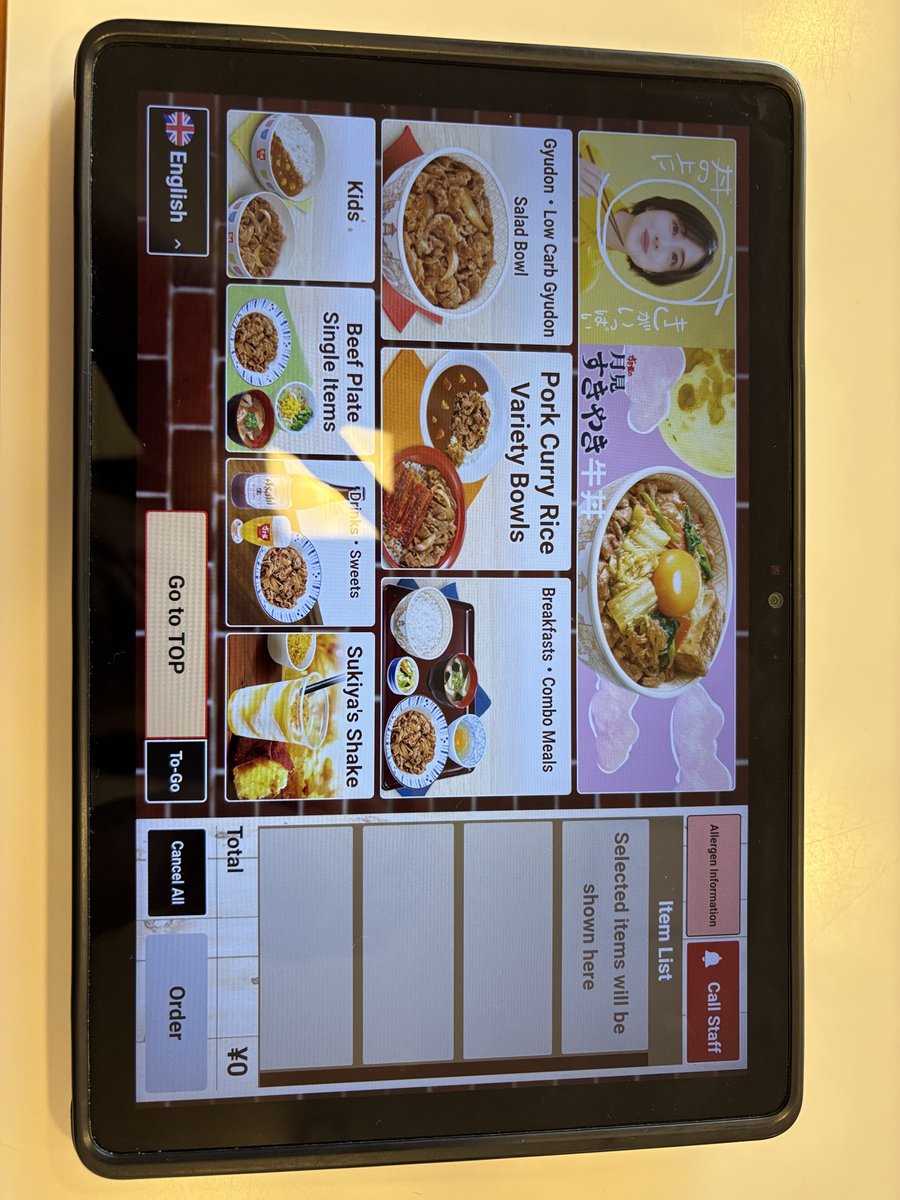
    A beef bowl shop ordering tablet showing the menu in English

    In Japan, too, teishoku restaurants and gyudon shops are places where you often see people come in on their own. With both teishoku and donburi, a full meal for one comes to you all together. If you’re eating alone, there’s no need to share dishes with anyone, either.
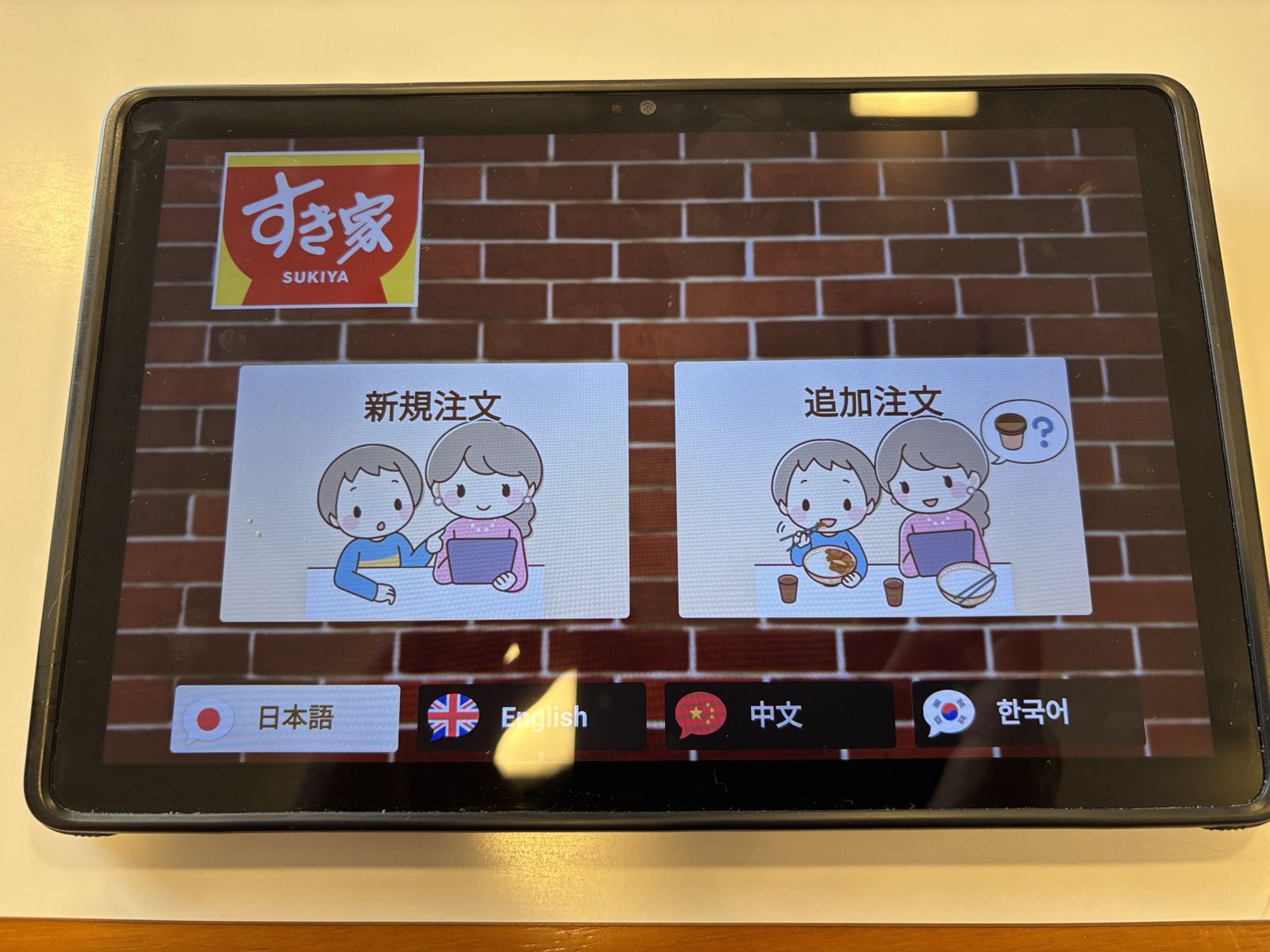
    Sukiya ordering tablet with two order buttons and four language buttons
    The ordering tablet at Sukiya. On the first screen, you can choose from 日本語, English, 中文 and 한국어.

    2 Ordering Teishoku — Choose One Main Dish, and You Get the Full Set

    You choose a teishoku by the name of its main dish, as in とんかつ定食 (pork cutlet set meal) or 生姜焼き定食 (ginger pork set meal).

    Just choose one main dish you’d like to eat, and the rice, soup and pickles all come with it.

    For the full Japanese meal experience, have teishoku for lunch.

    3 Ordering at a Donburi Shop — Choose Your Rice Size by the Characters
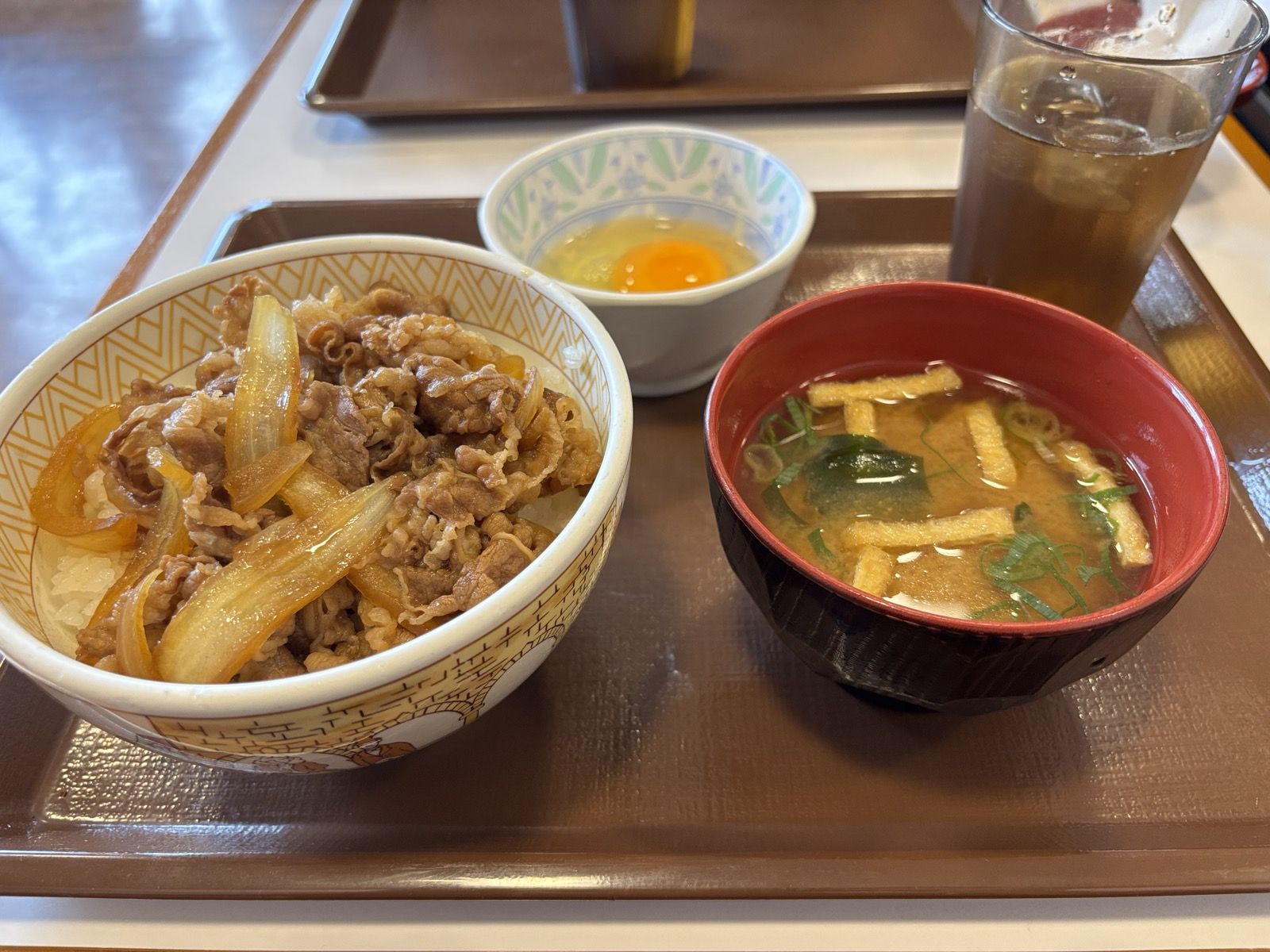
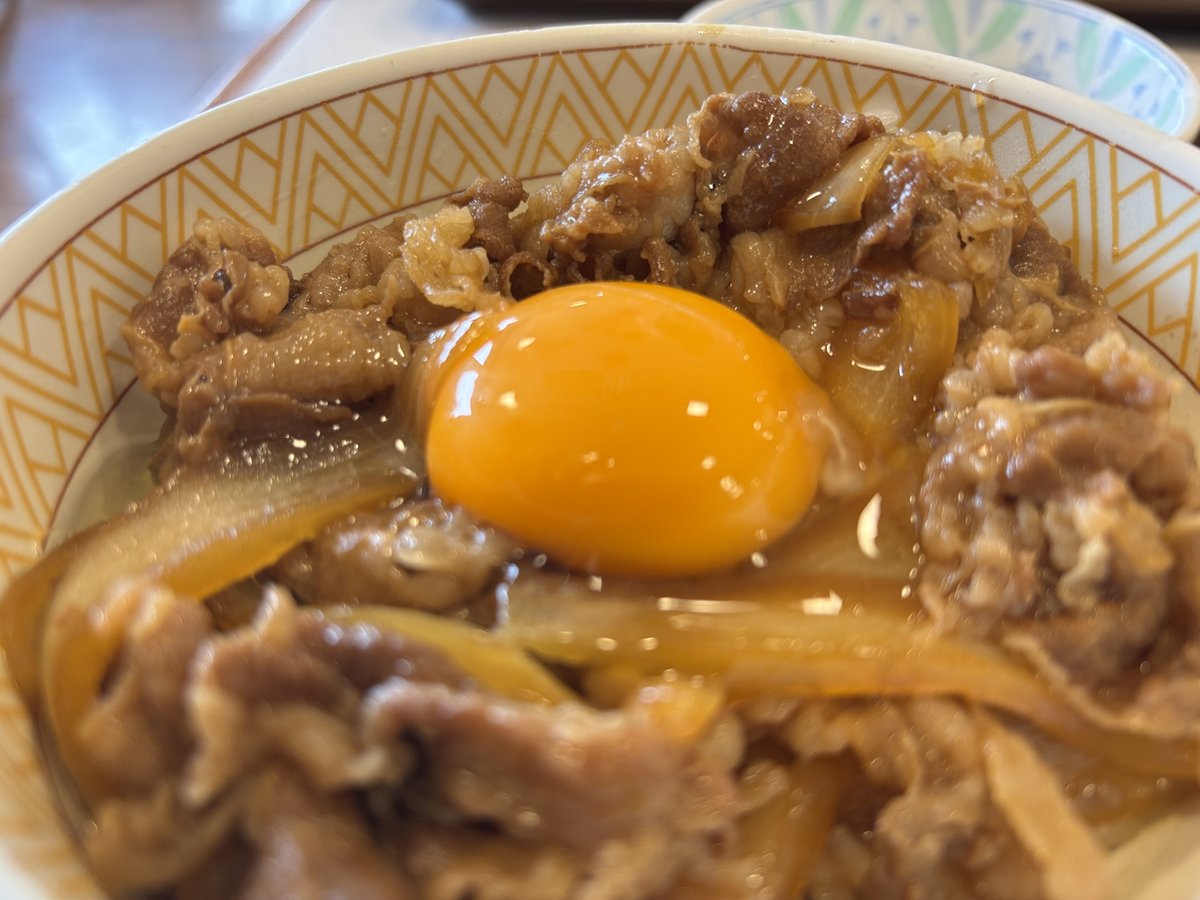
    Beef bowl on a tray with a small bowl of raw egg, miso soup and a glass of tea
    A gyudon (beef bowl) with a raw egg, miso soup and tea, just arrived on a tray (Sukiya).

    At gyudon shops, you choose how much rice you want when you order. The characters to compare on the menu and the ticket machine are 並盛, 大盛, 特盛 (extra-large size) and so on. How many sizes there are and what they’re called differ from shop to shop.

    At Matsuya, gyudon (牛丼, beef bowl) is called 牛めし (gyumeshi). Look for these characters on the menu and the ticket machine.

    Some places let you choose how much rice comes with your teishoku, too. At Matsuya, for example, you can choose the amount of rice for teishoku and rice sets — 小盛 (small size), 並盛, 大盛 or 特盛 — all at the same price.

    On days you’d like a little less, go for 小盛 or ミニ (mini size); on days you’d like plenty, go for 大盛 or 特盛. You can pick an amount you can finish, depending on how hungry you are.
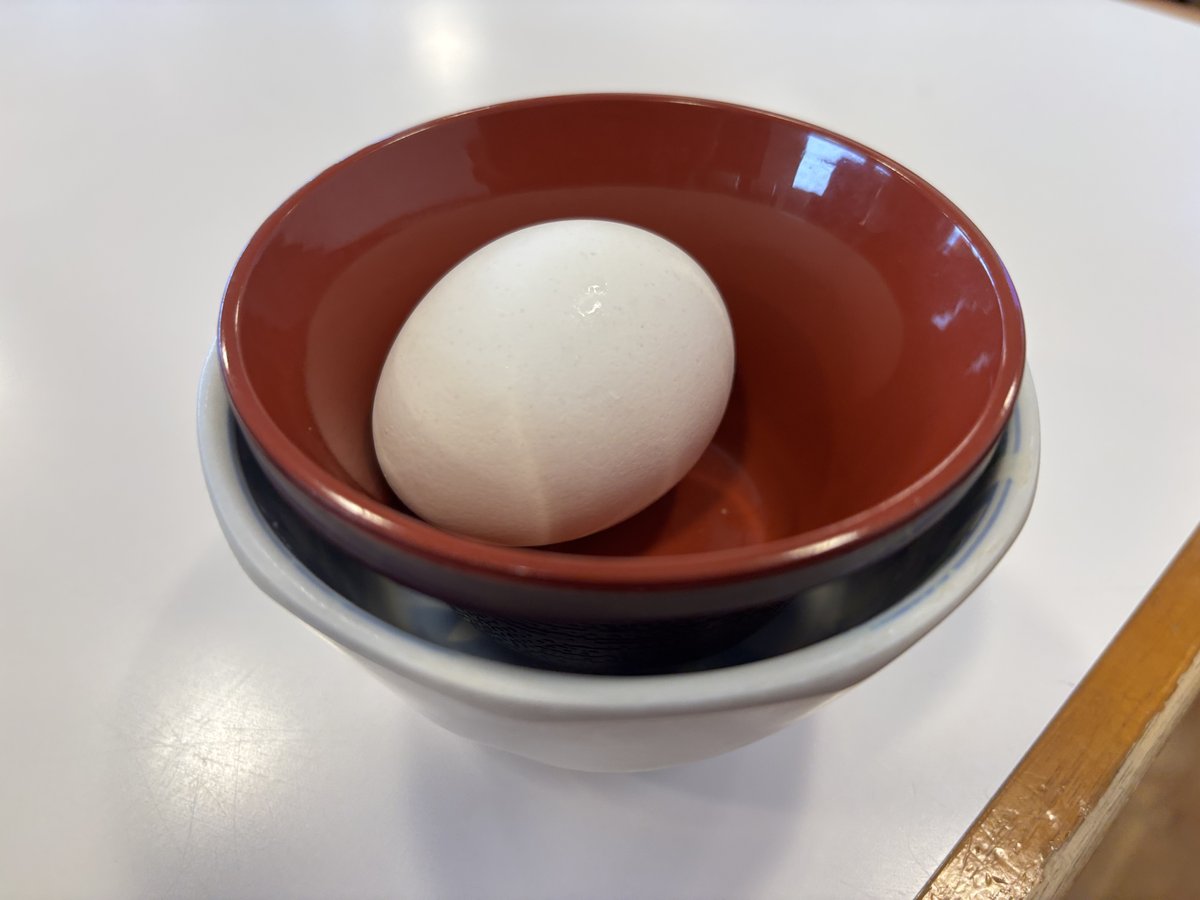
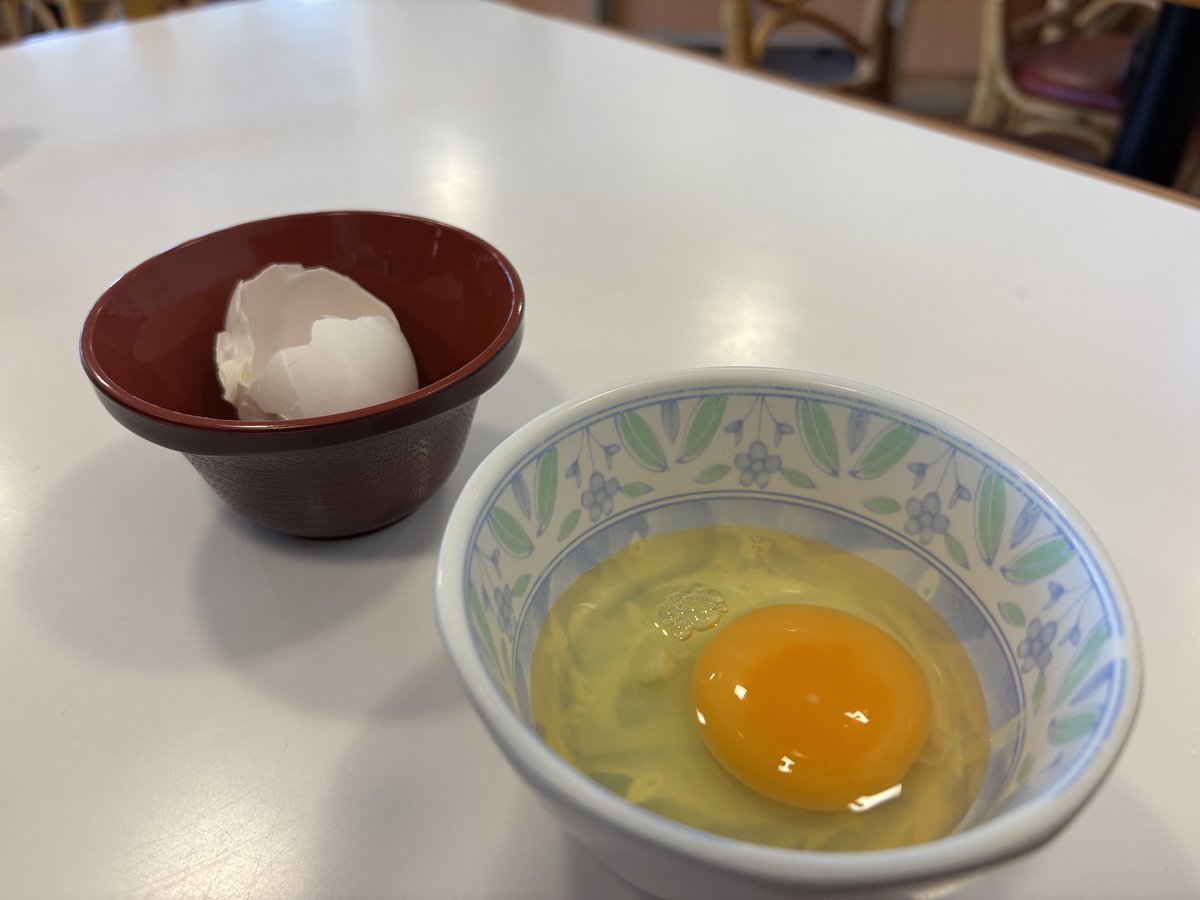
    The raw egg ordered with a beef bowl arrives in its shell in a small bowl
    Cracking the raw egg yourself into another small bowl
    A beef bowl topped with the raw egg

    Miso Soup: Some Places Include It, Some Let You Add It

    Teishoku comes with miso soup. At donburi shops, some include miso soup, some have you order it separately, and some let you add it as part of a set.

    If you’d like miso soup with your donburi, look for the characters みそ汁 (miso soup) on the menu, or for the set section.

    4 When Your Tray Arrives — Front Left Is Where the Rice Goes
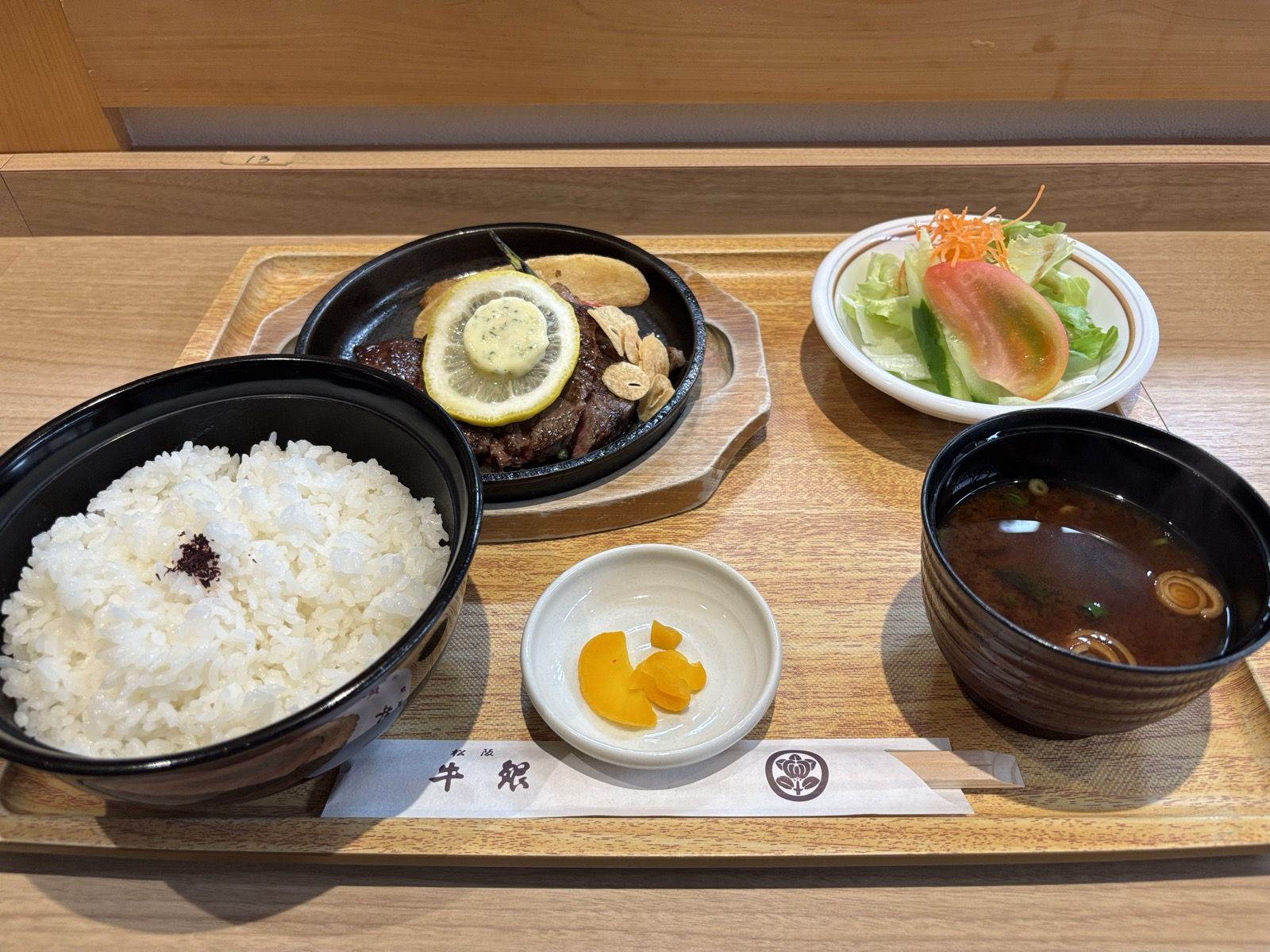
    Set meal tray with rice at front left, soup at front right, a steak on a hot plate and a salad behind, and a small dish in front
    A teishoku tray at a Western-style restaurant (洋食屋). Rice at the front left, soup at the front right, a steak on a hot plate and a salad at the back, and a small dish in front.

    When your tray arrives, take a look at how the dishes are arranged. Rice at the front left, soup at the front right, and the main dish behind them.

    5 Rice Refills — Try Dashi Chazuke for Your Last Bowl
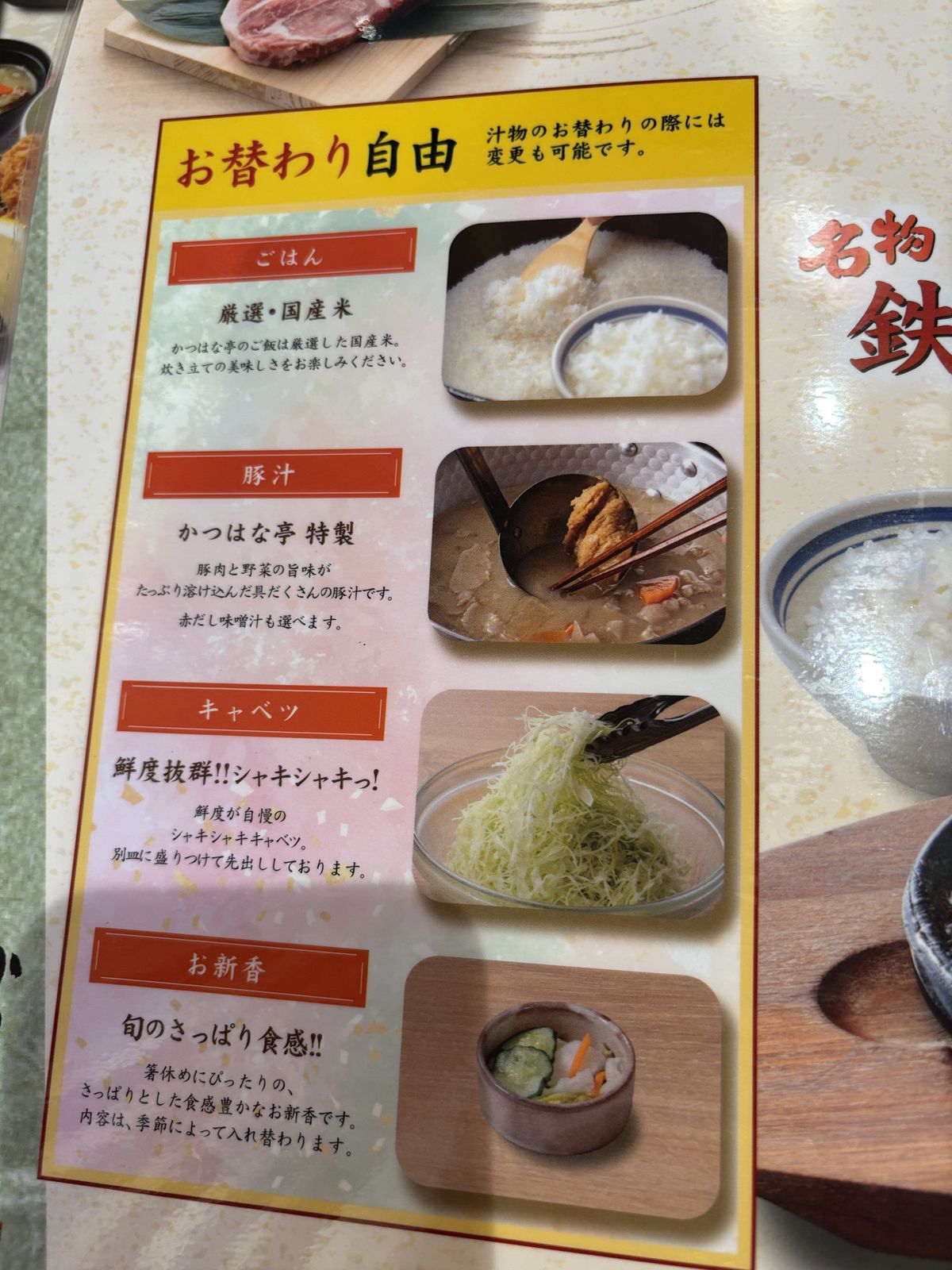
    Menu panel headed お替わり自由 with photos of rice, pork miso soup, shredded cabbage and pickles
    A "free refills" (お替わり自由) notice on the menu at a tonkatsu restaurant. You can get more rice, tonjiru (pork miso soup), shredded cabbage and oshinko (pickles).

    Some places let you get a rice refill. At Yayoiken, for example, you can have as many rice refills as you like with a teishoku (donburi not included).

    There, you go to the おかわり処 (the refill corner) inside the shop and get it yourself. Place your rice bowl in the おかわりロボ (a rice-serving machine), press the button, and it fills your bowl with rice. You can choose the amount you like for your refill.

    There’s also a way to finish your meal by pouring dashi (Japanese soup stock) over your rice. Your first bowl with plain white rice, your last bowl as dashi chazuke (だし茶漬け). From the same teishoku, you get to enjoy two flavors.

    6 Paying — If You Bought a Ticket, You’ve Already Paid
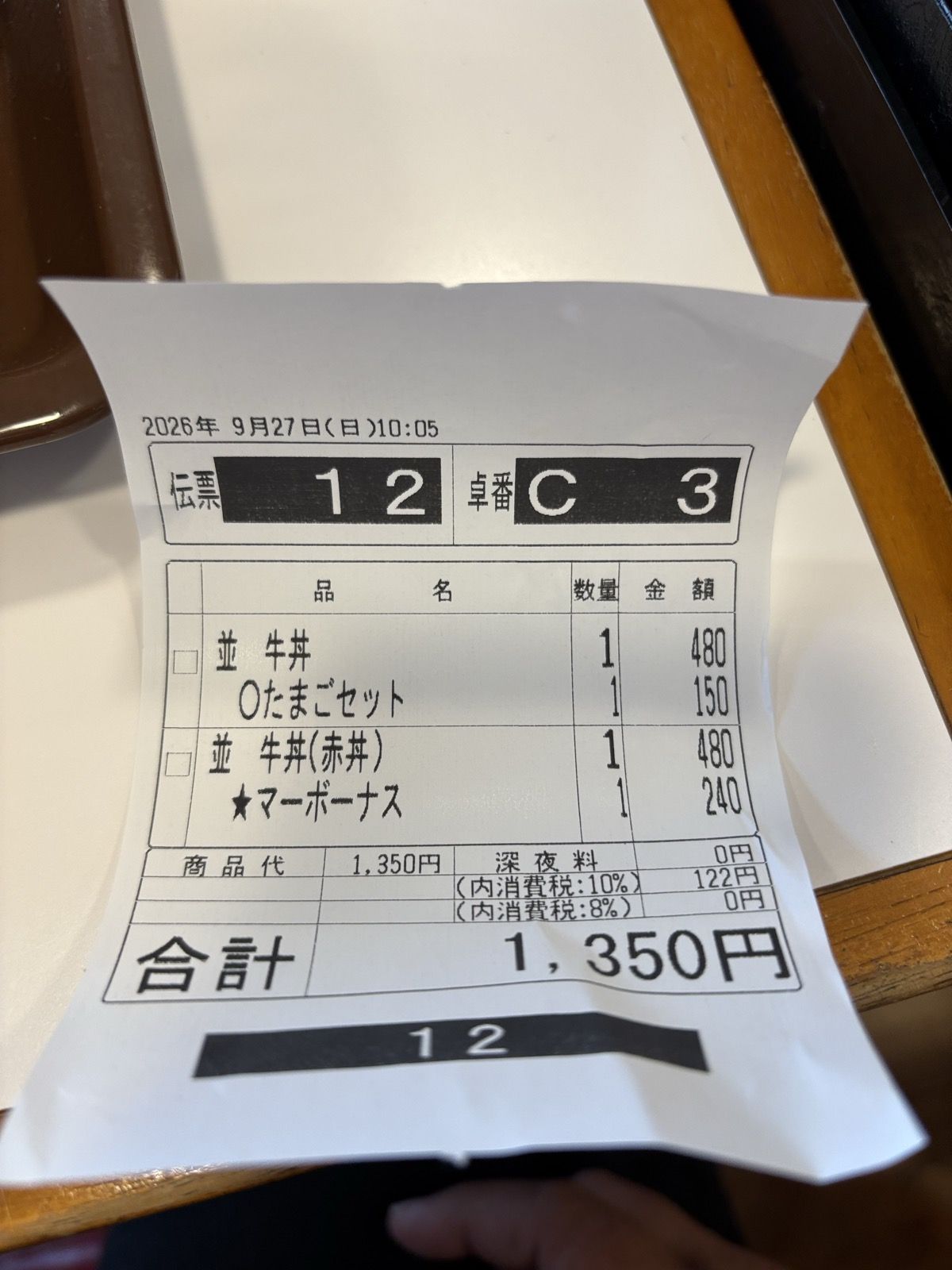
    Printed Sukiya order slip listing items, quantities, prices and the total
    A Sukiya order slip (伝票). Item names, quantities, prices and the total are printed on one sheet.

    If you bought a ticket from the machine at the entrance, you’ve already paid.

    At places without a ticket machine, how you pay differs from place to place. If you’re not sure, ask the staff. How to pay at places where you’re shown to a seat is also covered in the “How to Order at a Restaurant in Japan” article.

    Whether you can pay by card also differs from place to place. At Sukiya, for example, some stores don’t accept credit cards. On days you plan to pay by card, ask the staff before you order.
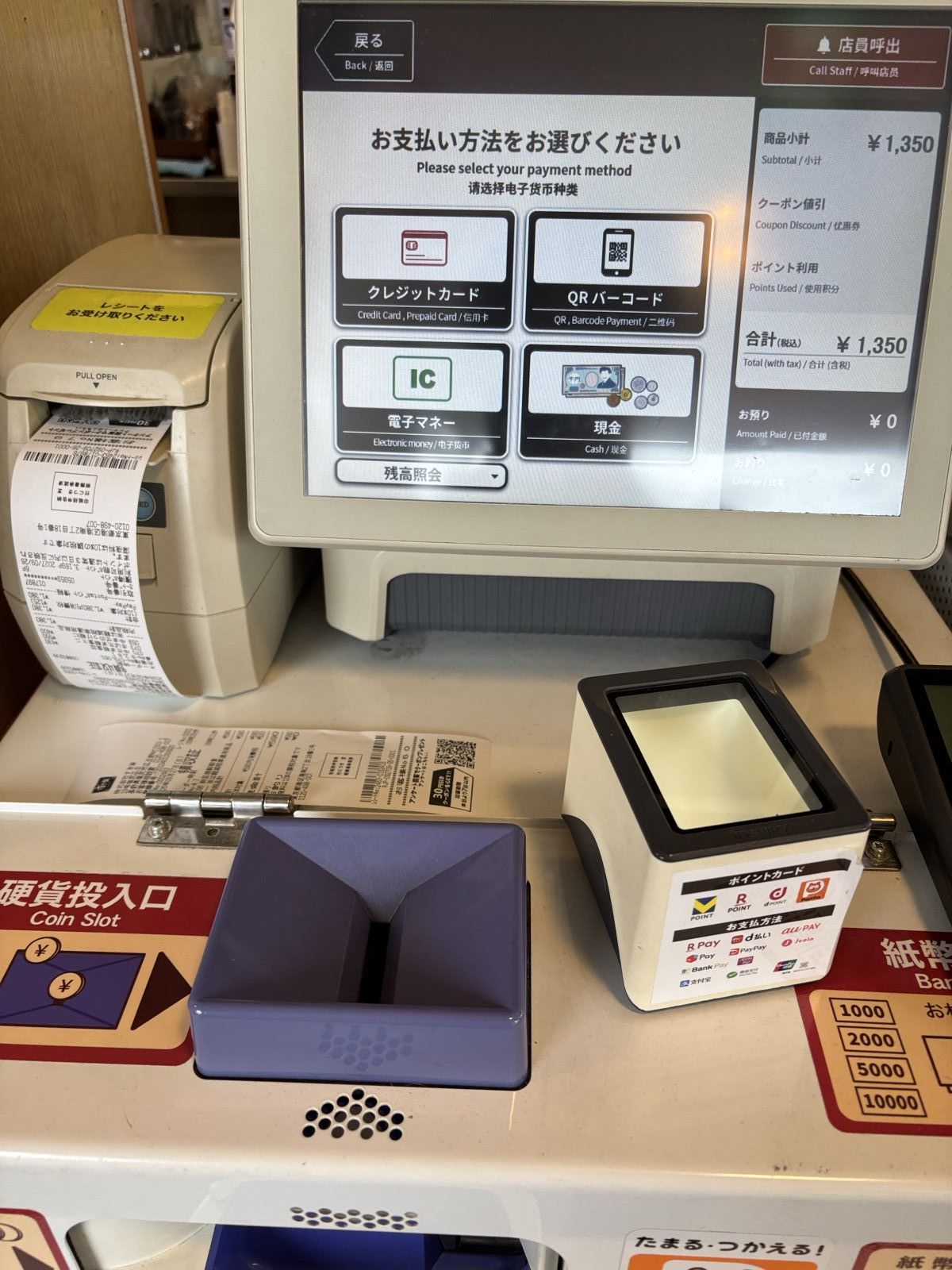
    Self-checkout machine screen with payment buttons for credit card, QR/barcode, e-money and cash
    Sukiya’s self-checkout machine. The screen for choosing how to pay shows credit card, QR/barcode, e-money and cash.

    For now, just this

    If there’s a ticket machine at the entrance, buy a ticket first.

    With teishoku, choose one main dish, and the rice, miso soup and pickles come all together.

    With donburi, use the characters, such as 並盛 and 大盛, to choose an amount you can finish.

    On the tray, the rice is at the front left and the soup at the front right.

    Compare how places differ on whether miso soup comes with your meal and whether you can get more rice.

    Official sources we checked (13)

    ・Japan National Tourism Organization (JNTO): Dining in Japan

    ・Japan National Tourism Organization (JNTO): Japanese Food Etiquette Guide

    ・Japan National Tourism Organization (JNTO): Slurp your noodles at ICHIRAN Ramen

    ・Ministry of Agriculture, Forestry and Fisheries: For Our Children! The “Form” of Washoku and Planning Meals (in Japanese)

    ・Yayoiken: Yayoiken Refill Corner (in Japanese)

    ・Ootoya: Daily Teishoku (Ikebukuro East Exit store menu) (in Japanese)

    ・Yoshinoya: Gyudon (in Japanese)

    ・Yoshinoya: Miso Soup (in Japanese)

    ・Matsuya Foods: Gyumeshi (in Japanese)
    ・Matsuya Foods: Ginger Pork Set Meal (in Japanese)

    ・Sukiya: Gyudon (in Japanese)

    ・Sukiya: SUKIYA

    ・Sukiya: FAQ / Contact Us (in Japanese)

  • Izakaya (居酒屋) and the Otoshi Cover Charge — A Little Dish May Arrive Before You Order

    A lively place full of people stopping by after work. Lots of small dishes, plus beer and soft drinks. This is a 居酒屋 (izakaya), a casual Japanese pub-style restaurant.

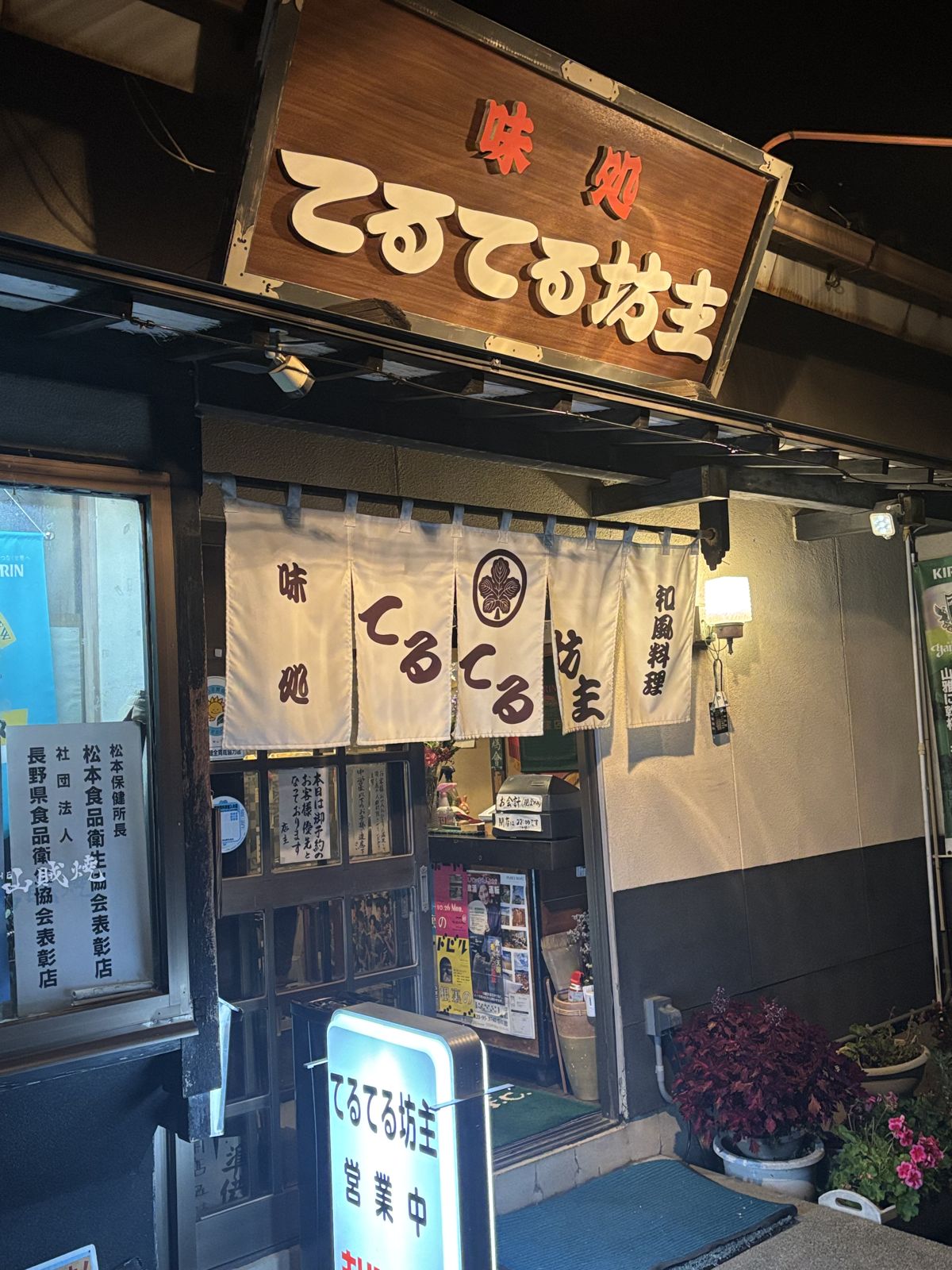
    Izakaya entrance at night with a wooden sign, noren curtains and an open sign
    The entrance of an izakaya at night, with a sign, noren curtains and a lit "open" light.

    At an izakaya, a small dish may be brought to your table before you’ve ordered anything. That’s お通し (otoshi), a small starter dish served at the table.

    If you don’t know about it, it might catch you off guard. If you do, it’s just one more part of the fun. There are three things to know.

    ・お通し, the small dish that may come when you sit down, stands in for a table charge

    ・Share the food, and order a little more as you go

    ・For drinks, there’s also an option called 飲み放題 (all-you-can-drink for a set time)

    1 お通し — A Small Dish That Can Work Like a Cover Charge

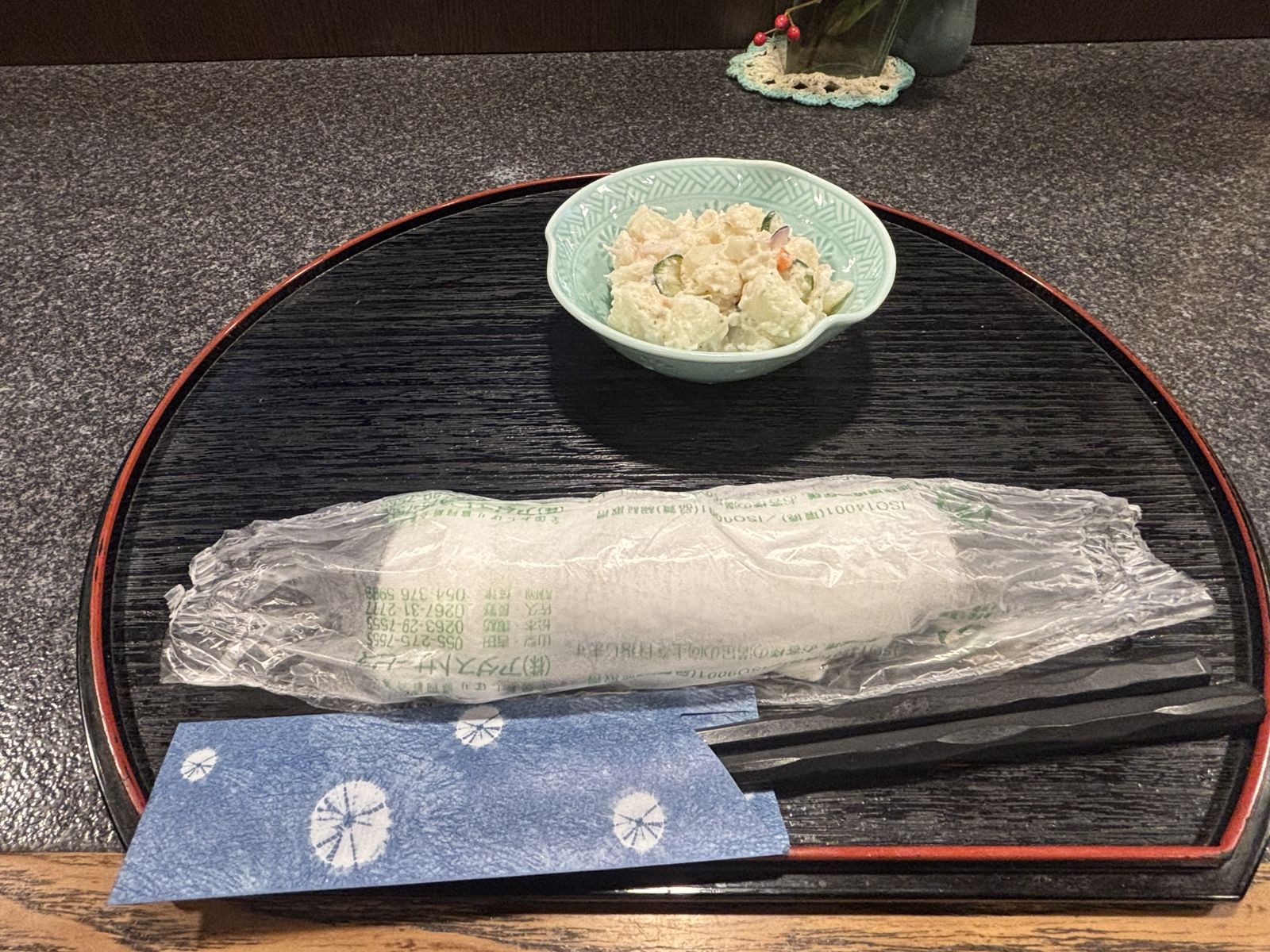
    Small bowl of potato salad on a tray with a wrapped wet towel and chopsticks
    The otoshi that was set on the table right after sitting down, before ordering: a small bowl of potato salad, with a wet towel and chopsticks.

    At an izakaya, a small dish may be served after you sit down and before you order. That’s the お通し.

    The お通し may come with a charge when you pay. It’s something like a table charge (席料). When there is a table charge, it’s often written on the menu or posted in the restaurant.

    A dish you didn’t order arrives, and you may pay for it later. It can feel a bit strange the first time, but it’s part of izakaya culture in Japan.

    If a dish you don’t remember ordering shows up and you’re unsure about it, ask the staff when it’s brought to you.

    Think of it as a dish that comes in place of a table charge, and it starts to make sense. You can snack on the お通し while you wait for your first order to arrive.

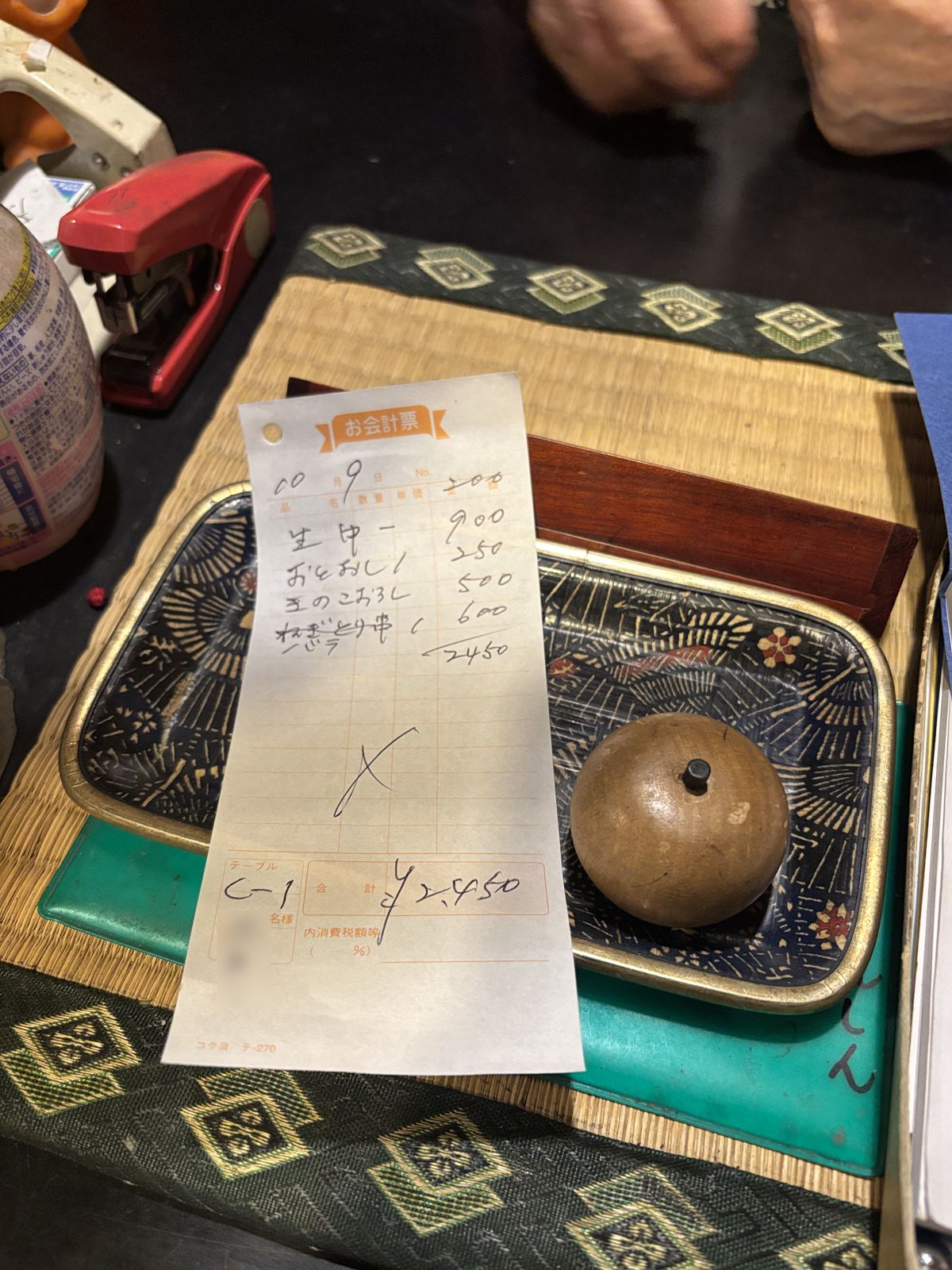
    My sense is that at many places, the お通し charge covers a small dish and a table charge rolled into one. Either way, it’s really a kind of table charge. At a place I went to recently, the bill listed the お通し at ¥250, and I took that bill to the register and paid there

    What you get is a surprise until you sit down

    The restaurant decides what it is. Sometimes it’s something simple, like edamame (枝豆), pickles or potato salad. Sometimes it’s a more elaborate dish.

    Because it’s a dish you don’t get to choose, part of the fun is waiting to see what comes. If you go to a few places in one night, comparing each restaurant’s お通し is another way to enjoy it.

    If the お通し is good, everything else on the menu will be good too! At least, that’s the theory among my friends, and we all agree on it. That’s why I always look forward to that first little dish

    If there’s something you can’t eat, say so as soon as you sit down

    The お通し often comes out right after you take your seat. If you have an allergy or there’s anything you can’t eat, tell the staff as soon as you sit down.

    2 The Food — Share It, and Order a Little More as You Go

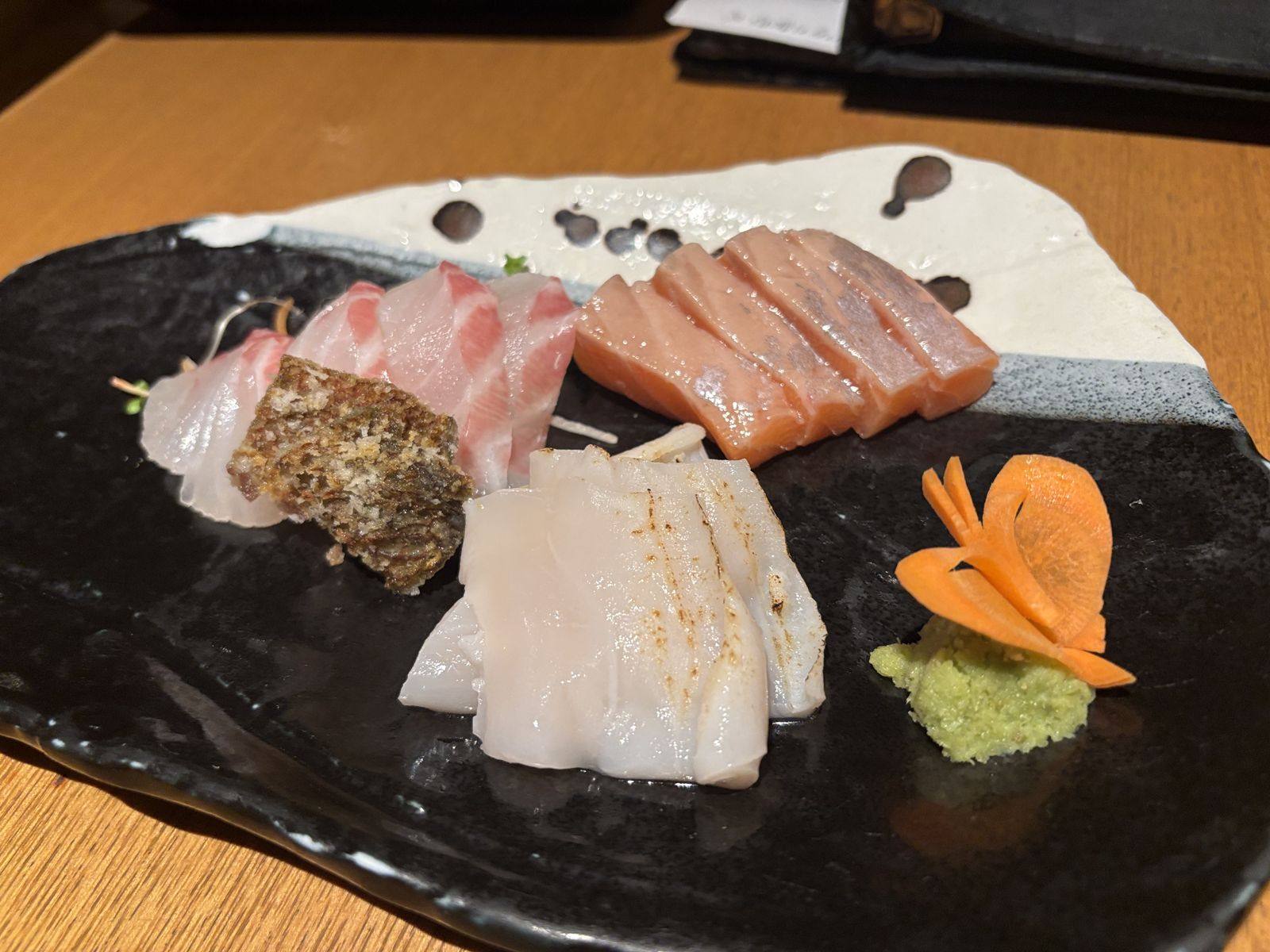
    Sashimi platter of several kinds of fish with wasabi and a carved carrot garnish
    A sashimi platter. Several kinds of fish on one plate, with wasabi and a carrot garnish.

    Izakaya food is mostly meant to be shared. When the food arrives, everyone gets a 取り皿 (a small plate for taking your share). You take your portion from the dish in the middle onto your 取り皿 and eat from there.

    In a group, it’s normal to order a few dishes and keep adding more as the night goes on. If you keep an eye on how much is left on the table as you add more, you won’t over-order.

    Common dishes include a sashimi platter, yakitori (焼き鳥, grilled chicken skewers), karaage (fried chicken), grilled fish, tofu, yakisoba and edamame. Some places specialize in fish or meat, and some serve local dishes. In the cold months, more places offer hot pots that simmer right at the table.

    There are drinks for people who don’t drink alcohol, too. Oolong tea, for example, or melon soda, which is popular with kids in Japan.

    To call the staff, press the call button (呼び出しボタン) on your table, or say すみません (sumimasen, “excuse me”).

    Once everyone has a drink, it’s かんぱい (kanpai, “cheers”). People often start with a toast together before they drink.

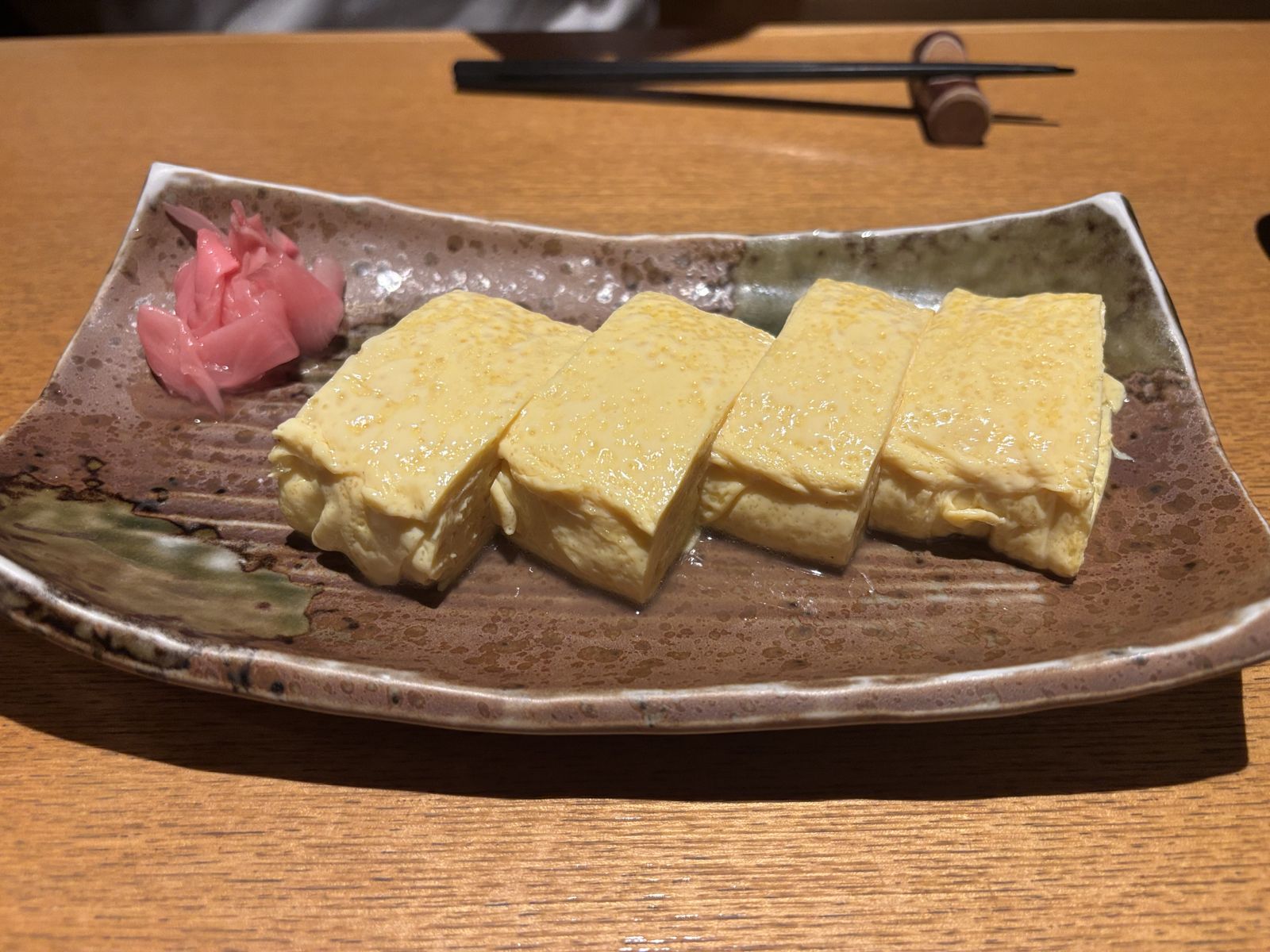
    Four pieces of rolled omelet on a plate with pickled ginger
    Dashimaki tamago (rolled omelet made with dashi broth), cut into four pieces and served with pickled ginger.
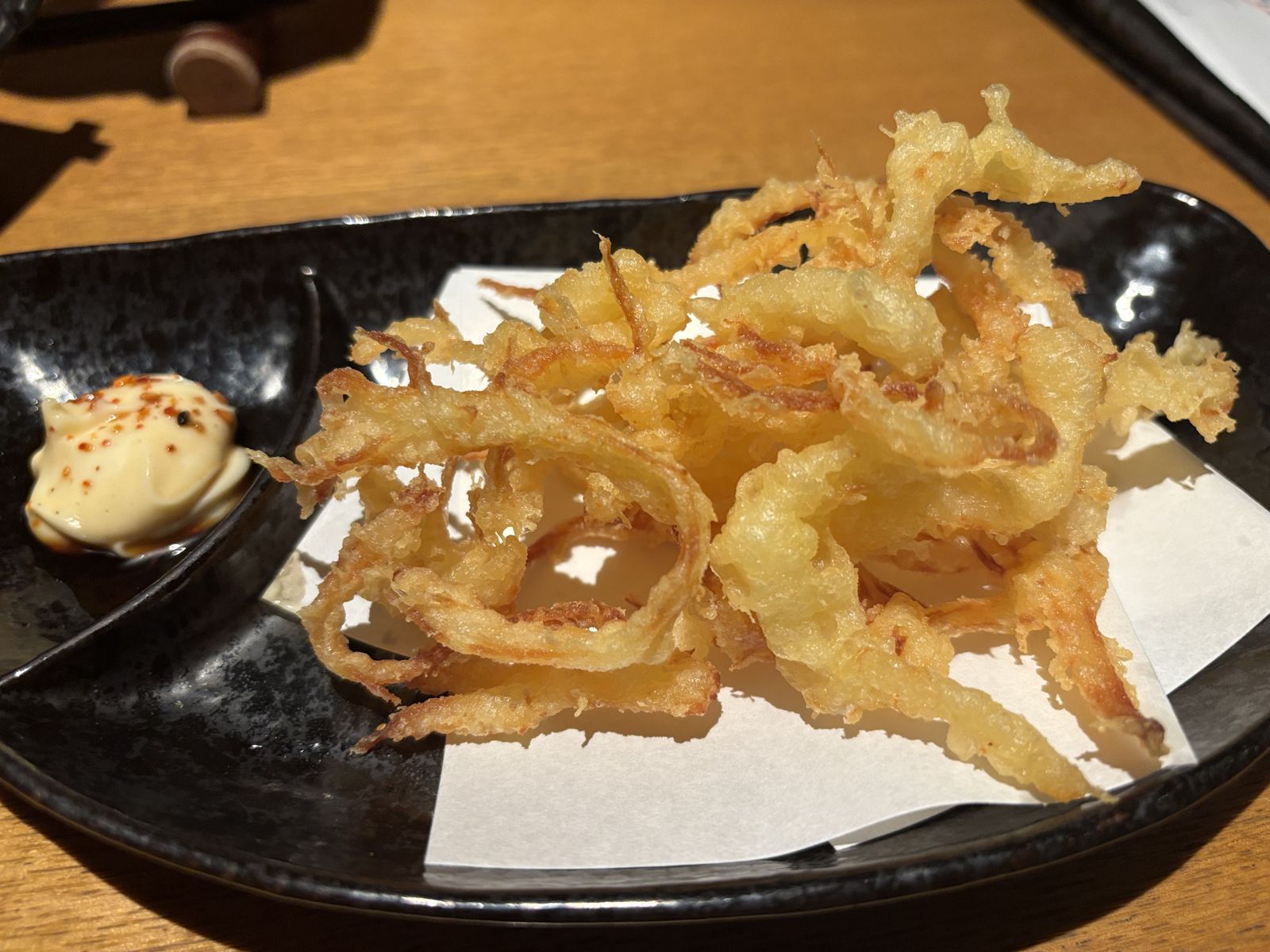
    Crispy fried vegetable strands on paper next to a small portion of mayonnaise sauce
    A deep-fried vegetable dish, like a kakiage, served with a mayonnaise-style sauce.

    3 飲み放題 — Drink as Much as You Like Within the Time Limit

    At izakayas, you’ll often see an option called 飲み放題. For a set amount of time, you can drink as much as you like from a special menu. The limit is often 1 to 2 hours.

    As long as it’s on the special menu, it’s the same price however many drinks you order. It’s also a good way to try out drinks you’re curious about.

    Before you order, check the time limit and the special menu. At some places, the last order (ラストオーダー) is a little before time’s up. If you order a drink that’s not on the special menu, it costs extra.

    You can order alcohol from age 20. In Japan, you become an adult at 18, but alcohol is for people 20 and over. Places that serve alcohol may ask to check your age.

    Anyone under 20, and anyone who doesn’t drink, can join the toast with a soft drink.

    On busy nights, some places have a time limit for your table even if you don’t order 飲み放題. Some places set it at 2 hours.

    When time’s up, on to the next place. Your お通し comparison continues there.

    4 Paying — No More Surprises When You See お通し on Your Receipt

    In some nightlife districts, touts (客引き) on the street call out to people and try to take them to a bar or restaurant. Don’t follow touts; go into a place you choose yourself. The Tokyo Metropolitan Police Department warns that touts for izakayas and similar places may lead people to places with high prices, and asks people not to follow them.

    At a place you chose yourself, you can relax and order while checking prices and the table charge on the menu.

    When you’re done eating, head to the register. Some places ask groups to pay together on a single bill.

    If there’s a charge you don’t recognize on the bill, it might be the お通し, a table charge or a service charge. At some places, there can also be an extra charge late at night.

    If you don’t understand a charge, ask before you pay. Even if language is a problem, you can ask the staff by showing them your question in a translation app.

    Once you know about the お通し, you won’t panic when you spot an “お通し” line on your receipt.

    Handwritten bill on a table with a line for otoshi at 250 yen and a total of 2,450 yen
    A handwritten bill. At this restaurant, the お通し line is written as 250 yen. With a draft beer at 900 yen and the other items, the total is 2,450 yen. When you leave, you take it to the register and pay.

    For now, just this

    If an お通し comes out, it’s your first dish, in place of a table charge. What you get is a surprise.

    If there’s something you can’t eat, say so as soon as you sit down.

    Share the food, and order a little more as you go.

    With 飲み放題, check the time limit and the special menu first.

    Don’t follow touts. Choose the place yourself.

    If you don’t understand a charge, ask the staff before you pay, showing them your question in a translation app.

    Official sources we checked (11)

    ・National Consumer Affairs Center of Japan, Consumer Hotline for Tourists: I was charged an unexpected “お通し” fee (in Japanese)

    ・National Consumer Affairs Center of Japan, Consumer Hotline for Tourists: I ordered “飲み放題” (all-you-can-drink) at an izakaya, but I was charged extra (in Japanese)

    ・National Consumer Affairs Center of Japan, Consumer Hotline for Tourists: I received an unexpectedly high bill at a restaurant (in Japanese)

    ・National Consumer Affairs Center of Japan, Consumer Hotline for Tourists: What should I know to avoid being ripped off? (in Japanese)

    ・Japan National Tourism Organization (JNTO): Izakaya Dining Guide

    ・Japan National Tourism Organization (JNTO): Japanese Customs and Etiquette

    ・Japan National Tourism Organization (JNTO): Entertainment and Nightlife

    ・Japan National Tourism Organization (JNTO): Drinking the Japanese Way

    ・Japan National Tourism Organization (JNTO): Etiquette (for Canada)

    ・National Tax Agency: Preventing drinking by people under 20 (in Japanese)

    ・Tokyo Metropolitan Police Department: Malicious and nuisance touting (in Japanese)

  • Conveyor-Belt Sushi (回転寿司) — Order on the Tablet, and Your Plate Races to Your Seat

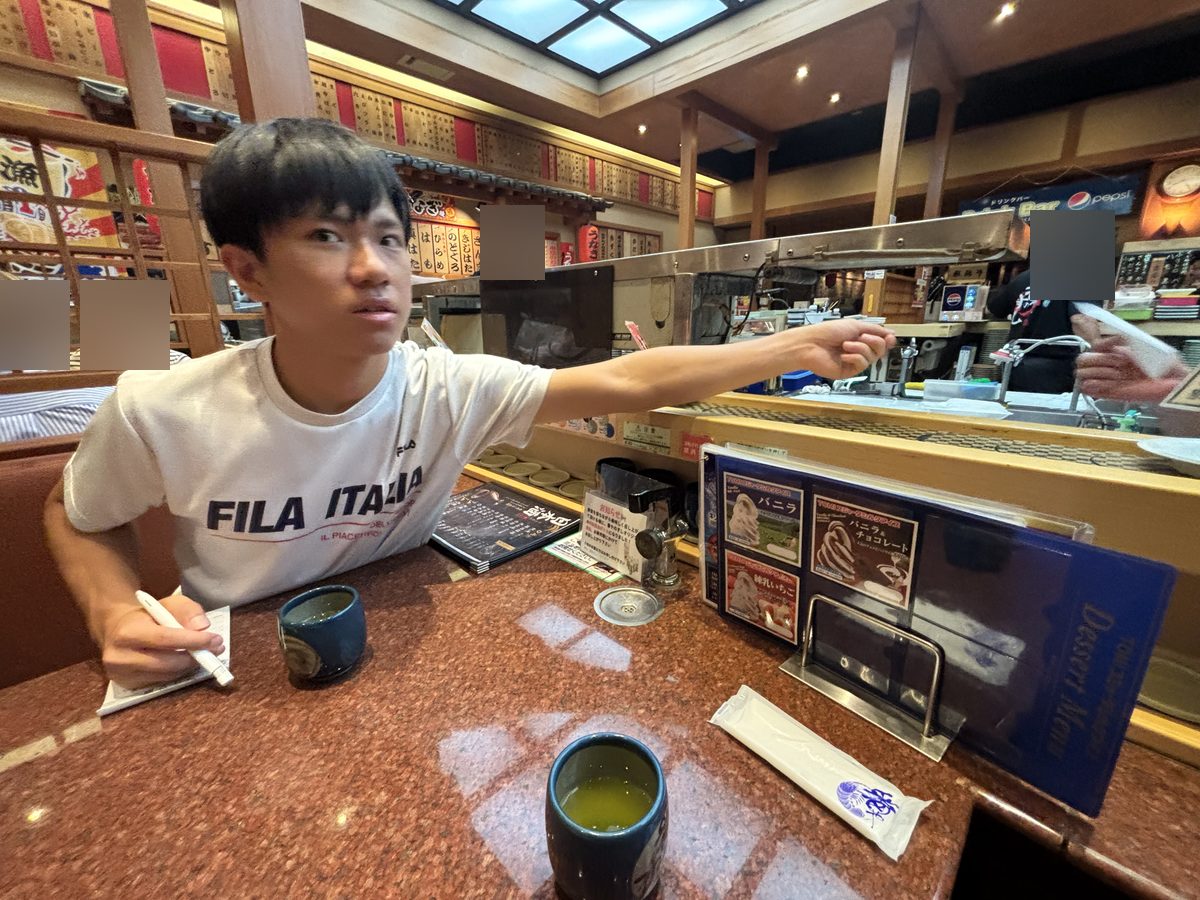
    Once you sit down, there’s a sushi (お寿司) lane (レーン) right in front of you. And there’s a tablet (タブレット) for ordering at your fingertips.

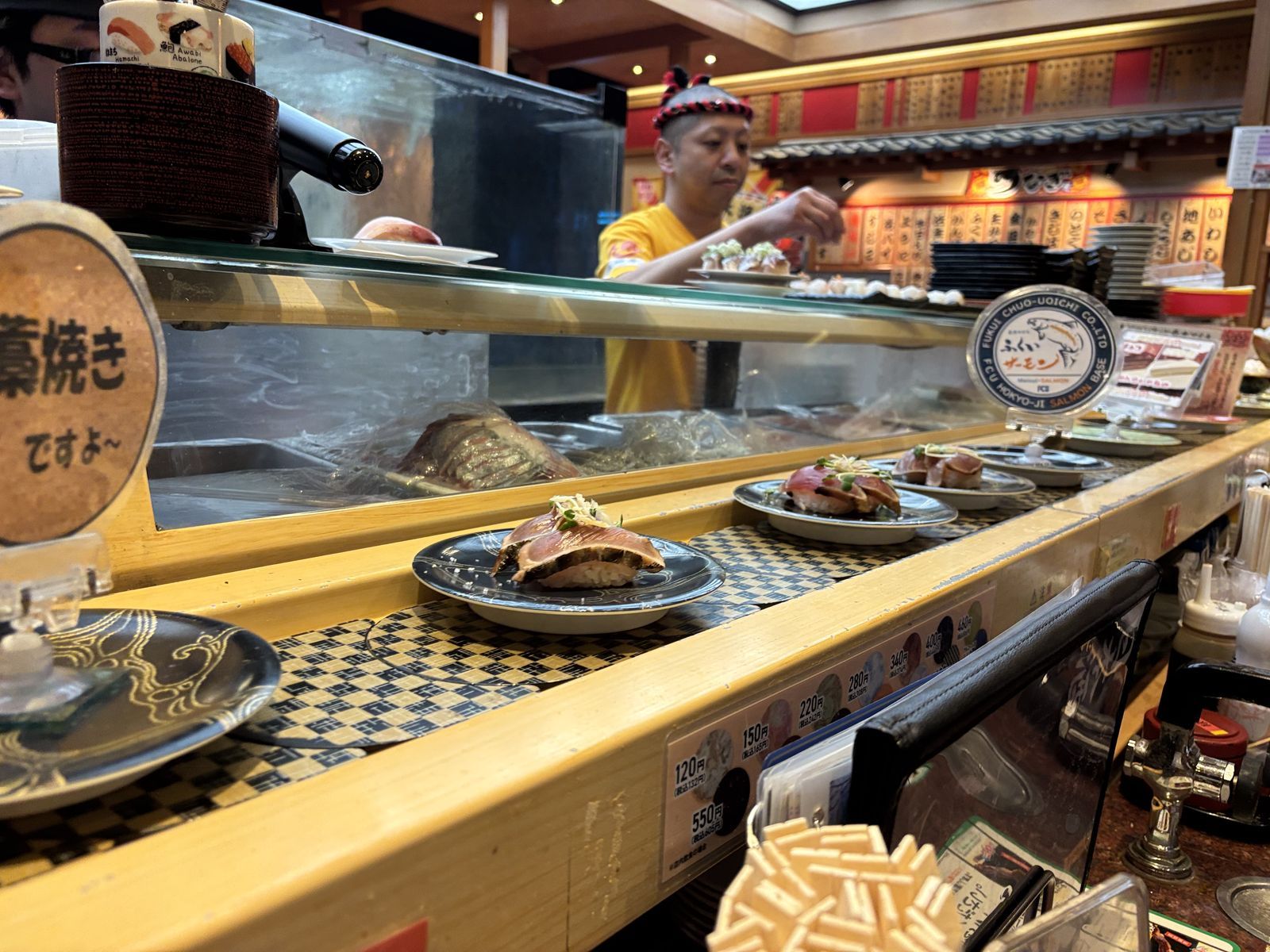
    Conveyor lane seen from a seat with sushi plates
    The lane seen from a seat. Plates of sushi come along it, and a chart of plate patterns and prices is visible.

    At Japan’s major conveyor-belt sushi chains, you order on the tablet (touch panel) at your seat.

    You can eat what you want without talking to the staff. There are just three steps.

    ・Check the price on the menu, then choose on the tablet

    ・The plate you ordered rides the lane all the way to your seat

    ・When you’re done eating, it’s time to pay. At some restaurants, you start the payment on a screen or by pressing a button

    1 At the entrance — check in (受付) at a machine or in an app

    Some restaurants have a check-in machine at the entrance.

    At Kura Sushi, when you check in at the machine by the entrance, out comes a slip of paper with your seat number on it. You don’t wait for a staff member to show you to your seat — you head to that seat yourself.

    At busy times, some restaurants let you get in line ahead of time with the chain’s official app. Some chains don’t take seat reservations by phone, so if you’d rather not wait in line, check the app.

    2 Order on the tablet — the prices are on the menu

    Once you’re seated, pick up the tablet.

    Some tablets can switch to English and other languages. First, look for a 言語 (language) button on the screen.

    If you can’t find one, you can also read the screen with a translation app on your smartphone.

    The menu shows the prices.

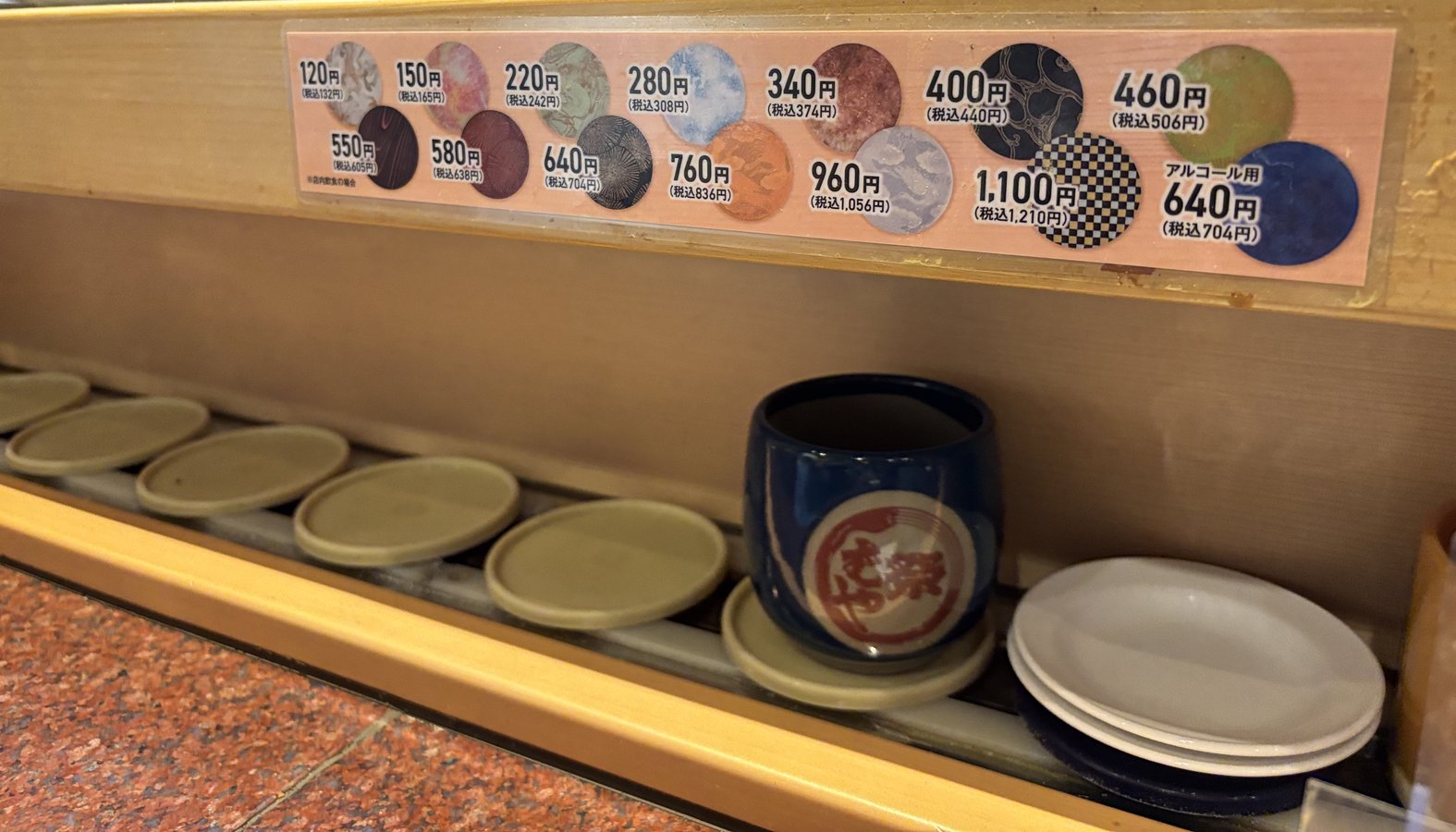
    At some restaurants, the color of the plate tells you the price.

    Chart of plate patterns and prices above the conveyor lane

    Prices can differ from one restaurant to another, even within the same chain.

    You know the price before you order, so there are no surprises when you pay.

    At Hama Sushi, you can also check allergy information on the ordering touch panel.

    Some restaurants don’t have tablets. There, you look at the menu and either write your order on a slip of paper and hand it to the sushi chef (板前さん), or just tell the chef what you’d like.

    Handing a written order slip to the chef

    If the menu is only in Japanese and you can’t make sense of it, it’s fine to just order a recommended set (おすすめのセット) that looks tasty. At a good restaurant, a set made up of their recommended pieces is sure to be delicious. Even Japanese people do that when they can’t decide (this was at Banya no Sushi, 番やのすし, in Toyama)

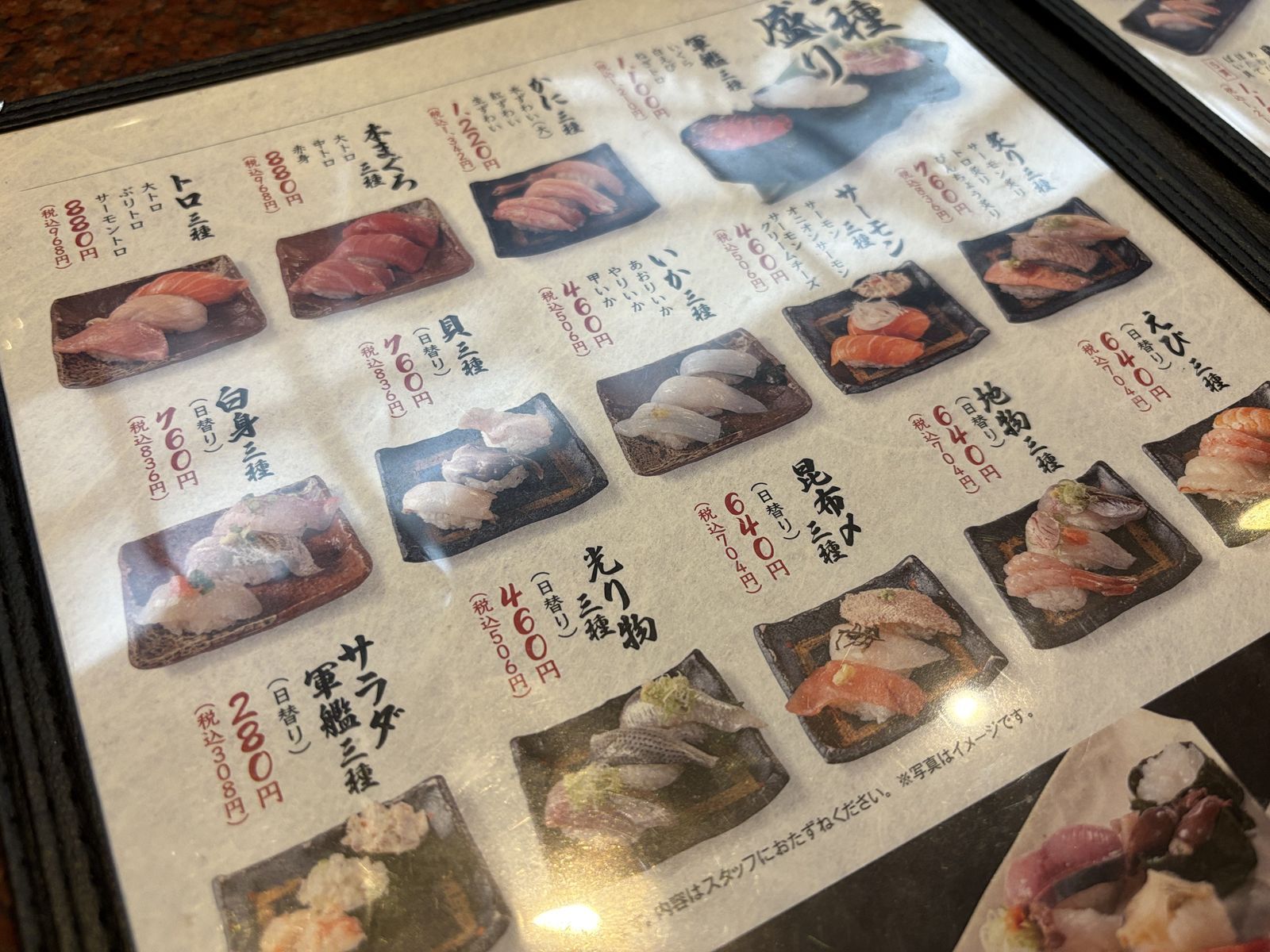
    Conveyor-belt sushi menu showing sets of three kinds of nigiri with photos and prices
    A conveyor-belt sushi menu. Sets of three kinds of nigiri are lined up with photos, each with a price (tax included).
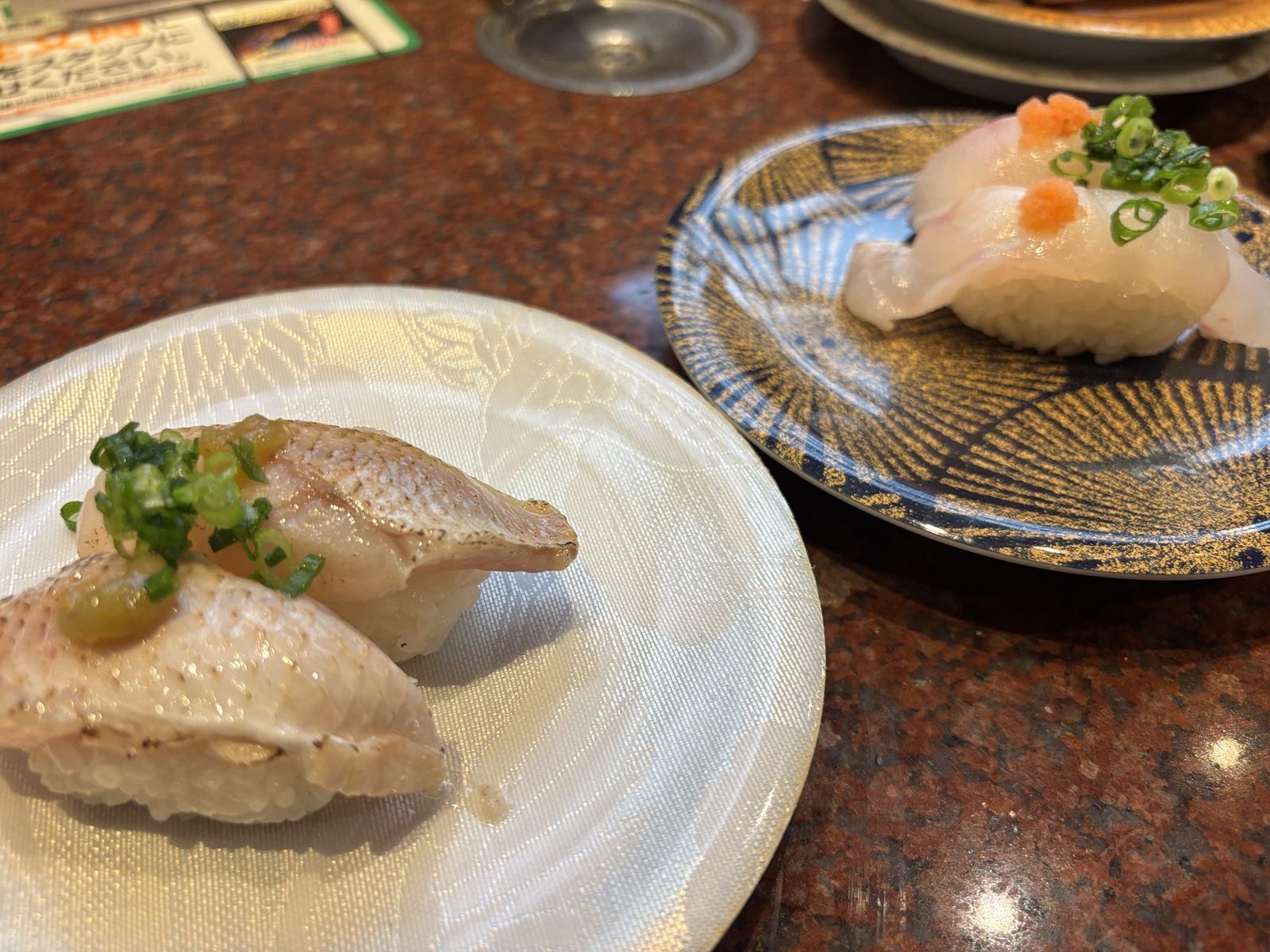
    Nigiri on plates of different colors and patterns
    Nigiri on plates of different colors and patterns. Plates come in many colors and patterns.

    3 Your plate races all the way to your seat

    After you order, your plate soon arrives at your seat on the lane.

    The sushi you ordered comes racing right up to you. It’s one of the small pleasures of conveyor-belt sushi.

    How it arrives depends on the restaurant. Sometimes it comes on a dedicated lane beside your seat, and sometimes in a container riding on the main lane, the one that goes around.

    Some Sushiro restaurants have a big screen called デジロー. Sushi scrolls across the screen, and you tap the one you want. What you order arrives on your table’s own dedicated lane.

    The plates going around, and the lane itself

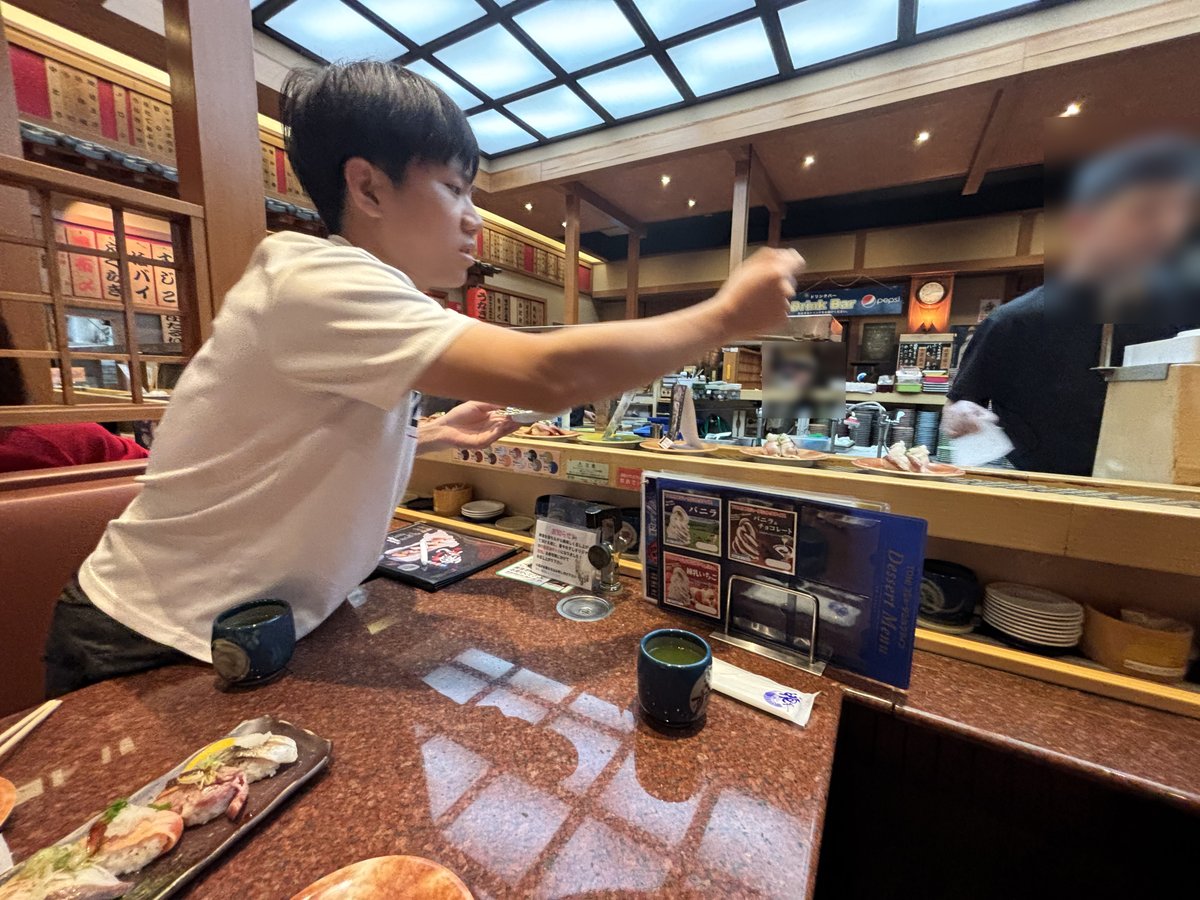
    At some restaurants, you can take a plate straight off the lane as it goes around and eat it.

    Reaching for a plate on the conveyor lane

    With plates that are going around, the trick is to look carefully and choose before you take one. Once you’ve taken a plate, don’t put it back on the lane. Also, don’t lean on the lane or put things like your smartphone on it.

    If you take photos, choose an angle that keeps other customers and the staff out of the shot.

    If you’re not sure, order from the tablet and it’ll come to your seat.

    4 Wasabi, soy sauce, and tea — the way you like them

    Wasabi

    Some restaurants serve their sushi without wasabi (わさび). If you don’t like spicy food, you can eat it just as it comes.

    When you want wasabi, you add it yourself. At Sushiro, you’re free to use the wasabi that comes around on the lane.

    Soy sauce

    If you dip your sushi in soy sauce (しょうゆ) from a small dish, dip just a little of the topping side (the fish or whatever sits on top, called ネタ). If you dip the rice side, it soaks up the soy sauce and gets too salty, and the rice falls apart more easily, too.

    Dipping the fish side of the sushi into soy sauce

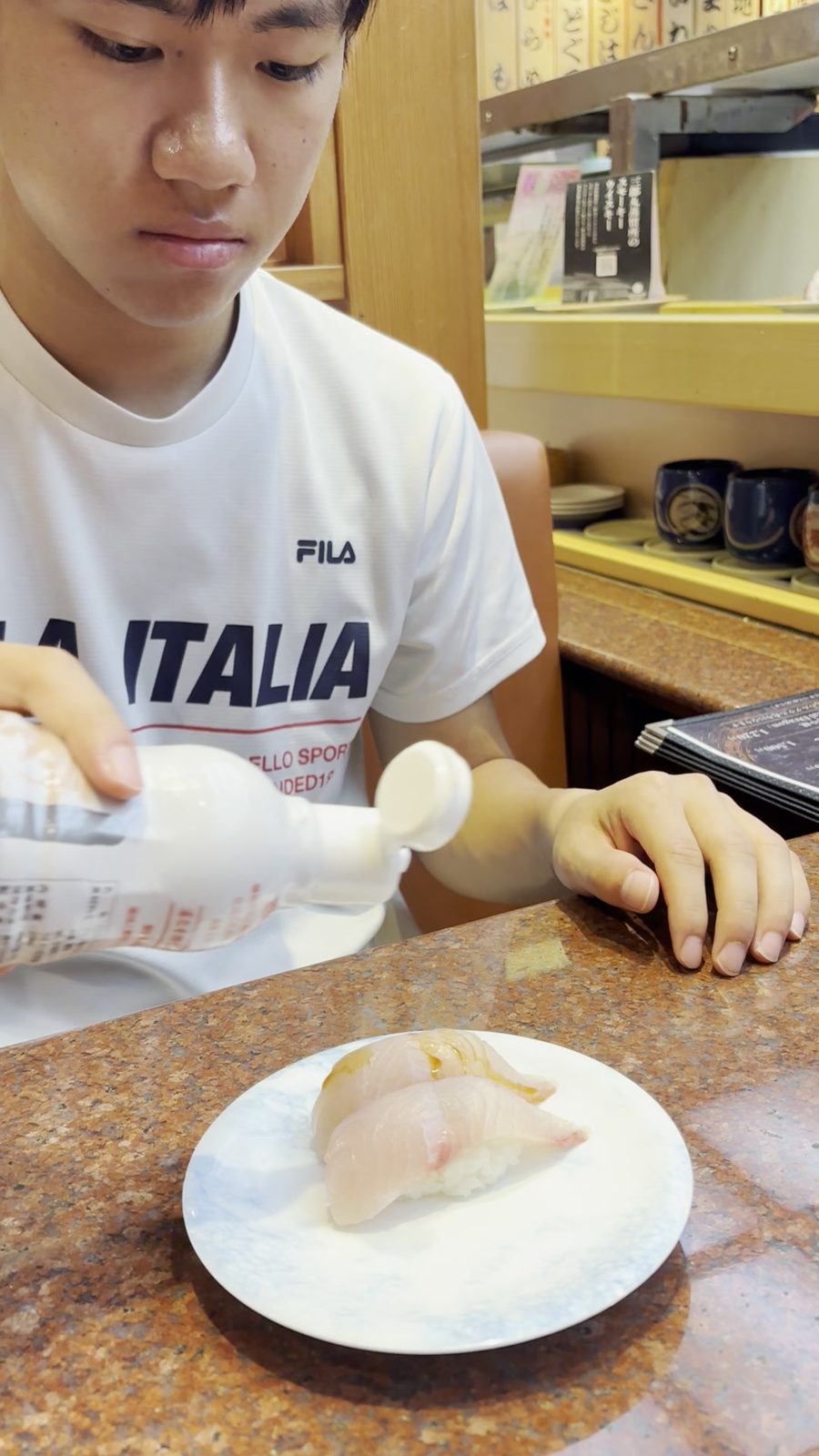
    If you’re pouring it straight onto your sushi, be careful not to use too much — a little at a time.

    Pouring soy sauce for sushi

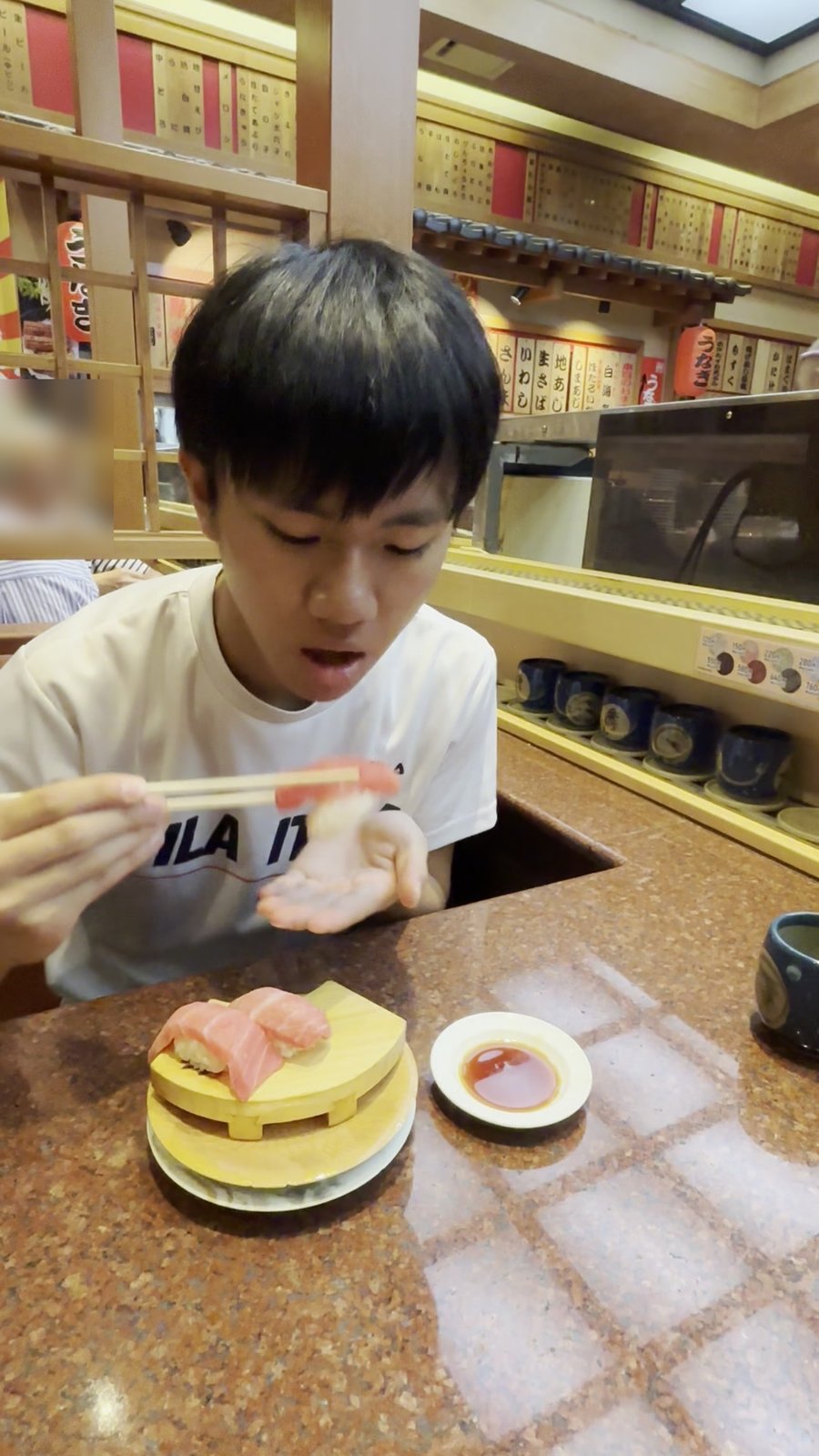
    Dipping the topping side is a bit tricky, but it tastes better than the rice side. At Banya no Sushi (番やのすし) in Toyama, the soy sauce bottle let out just one drop at a time, which was reassuring

    Tea

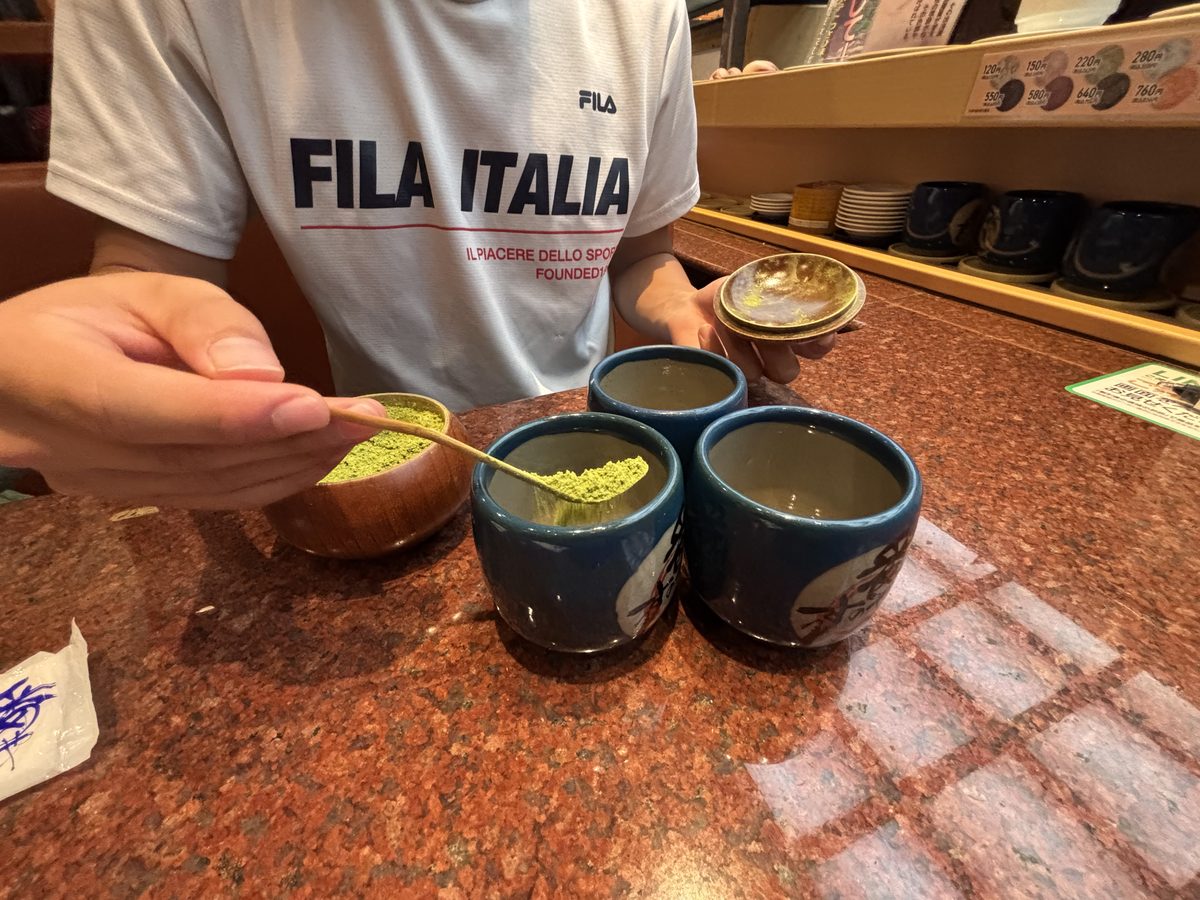
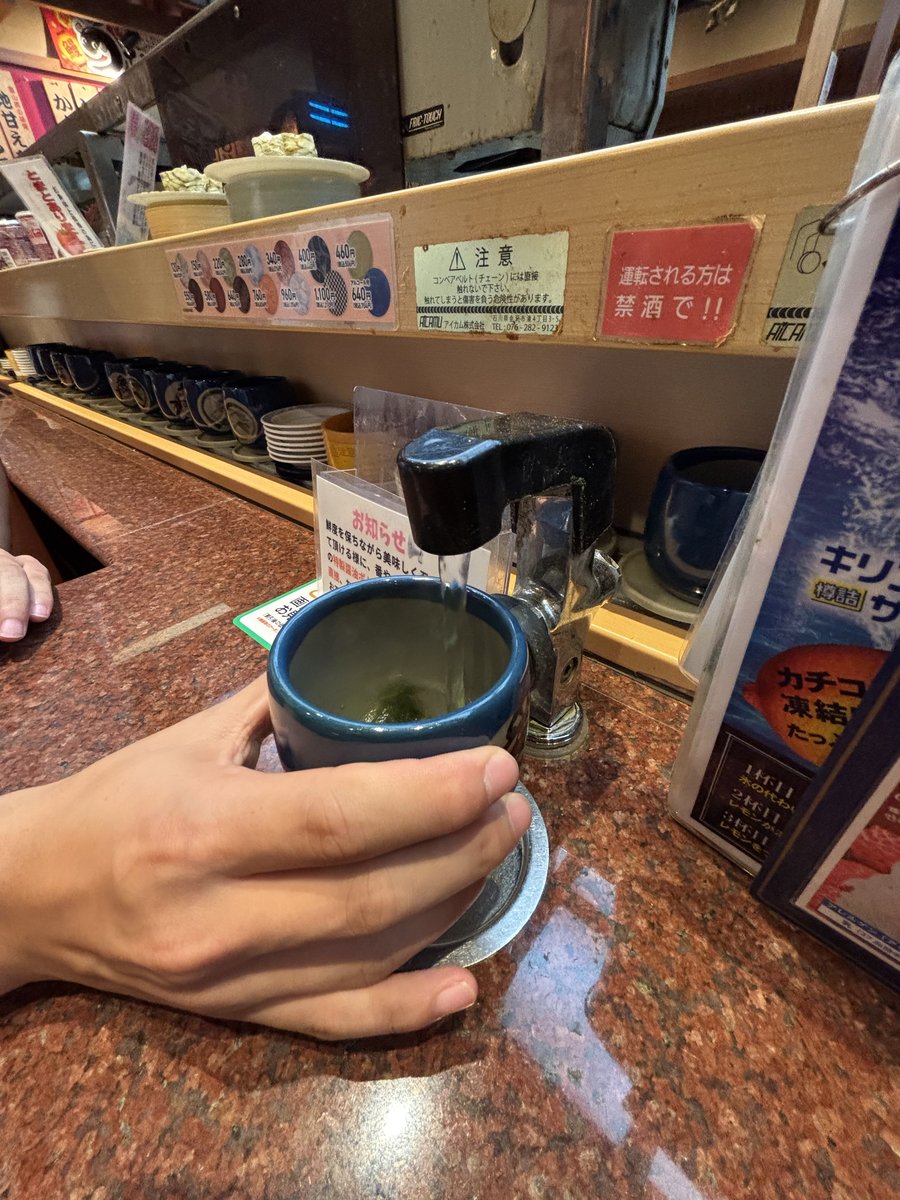
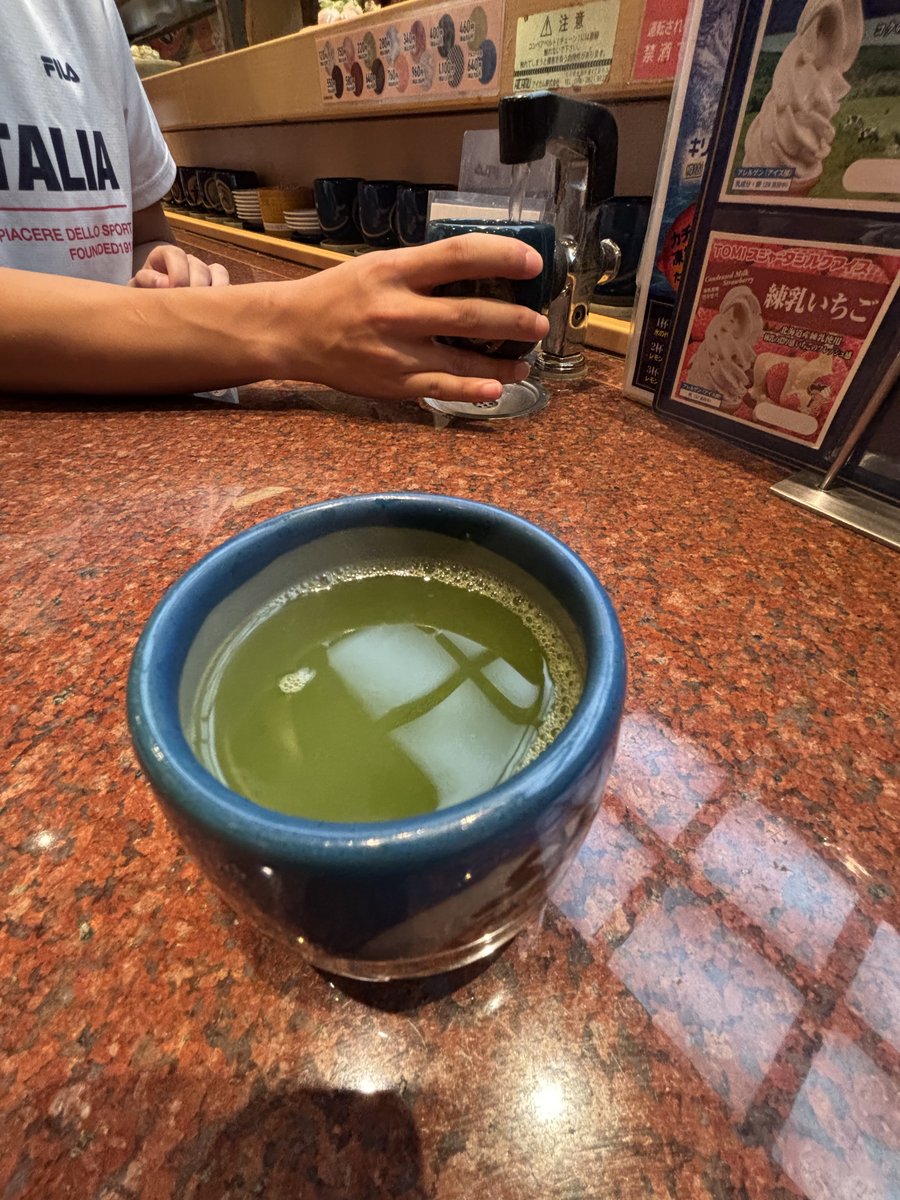
    Some restaurants have powdered tea (お茶) and a hot-water tap right at your seat.

    At those restaurants, you can make your own tea right at your seat.

    Putting powdered green tea into a cup
    Filling the cup from the hot-water tap at the seat
    The green tea, ready after adding hot water

    5 When you’ve finished — a game with your plates, then paying

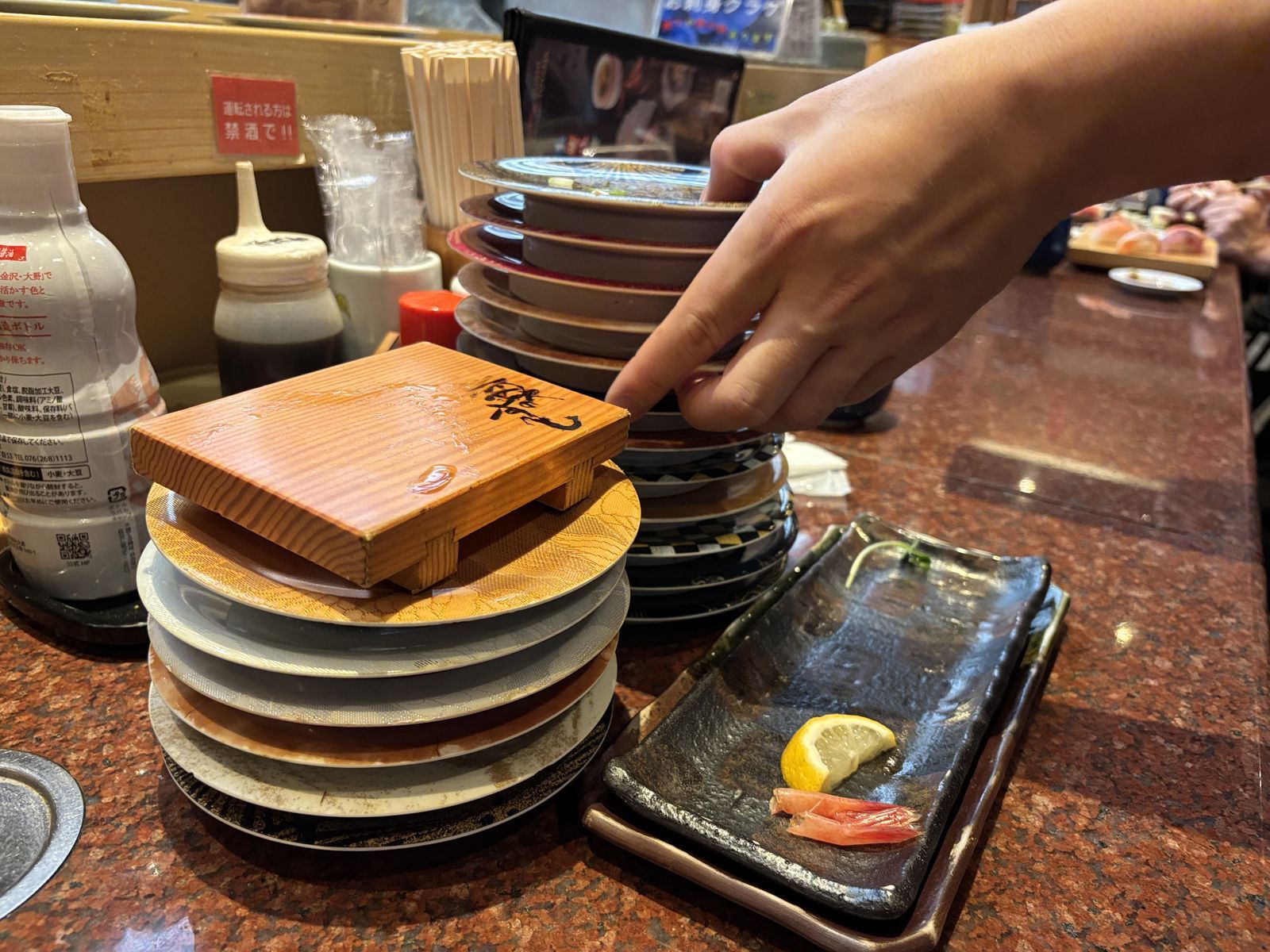
    Some restaurants have a slot in the table where you put your empty plates.

    At Kura Sushi, every 5 plates you put in gets you one try at a game called ビッくらポン, which you play with your plates. If you win, a capsule with a prize inside comes out. What’s inside is a surprise until you open it. Sometimes you don’t win.

    At Sushiro restaurants that have デジロー, the more you spend, the more a game gauge fills up, and when it’s full you can play a game.

    At some restaurants, you also start the payment on a screen or by pressing a button. At Sushiro, you pay through the tablet. At Kura Sushi, a machine automatically counts the plates you’ve eaten, and when you press the 会計 (pay) button, you can pay without needing a staff member.

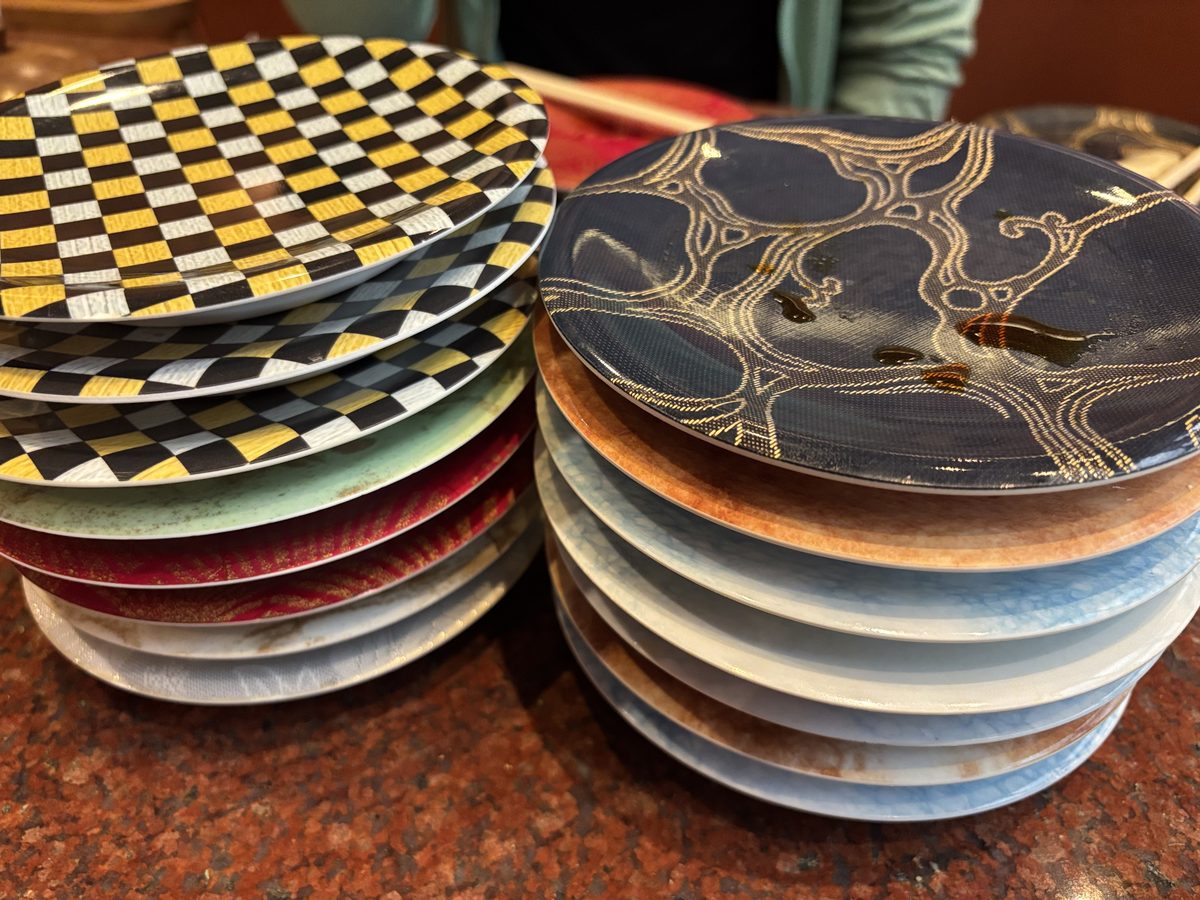
    Stack of empty sushi plates

    What you can pay with differs by chain and by restaurant. Some restaurants don’t take cards, so carrying a little cash as well saves you trouble.

    Stack of finished sushi plates
    A stack of finished plates.

    For now, just this

    Order on the tablet. First, look for the 言語 (language) button.

    Check the price on the menu before you order.

    The plate you order comes to your seat on the lane.

    Once you’ve taken a plate, don’t put it back on the lane.

    Soy sauce: just a little, on the topping side.

    Carry a little cash too.

    If you’re not sure, show the staff a screen on your translation app and ask them.

    Official sources we checked (12)

    ・Sushiro: English home page (multilingual touch panel, payment; in English)

    ・Sushiro: How to Enjoy SUSHIRO (PDF, in English)

    ・Sushiro: FAQ (in Japanese)

    ・Sushiro: デジロー, the big ordering screen (in Japanese)

    ・Kura Sushi: guide for first-time visitors (in Japanese)

    ・Kura Sushi: how to enjoy Kura Sushi (in Japanese)

    ・Kura Sushi: ビッくらポン!, the plate game (in Japanese)

    ・Kura Sushi: taking photos in the restaurant and posting on social media (in Japanese)

    ・Kura Sushi: menu (in Japanese)

    ・Hama Sushi: FAQ (in Japanese)

    ・Hama Sushi: menu (in Japanese)

    ・Kappa Sushi: menu (in Japanese)

  • Ramen Shops and Other Restaurants with a Ticket Machine — Buy Your Ticket First, Then Just Wait

    You walk into a ramen shop, and the first thing waiting for you isn’t a person — it’s a machine.

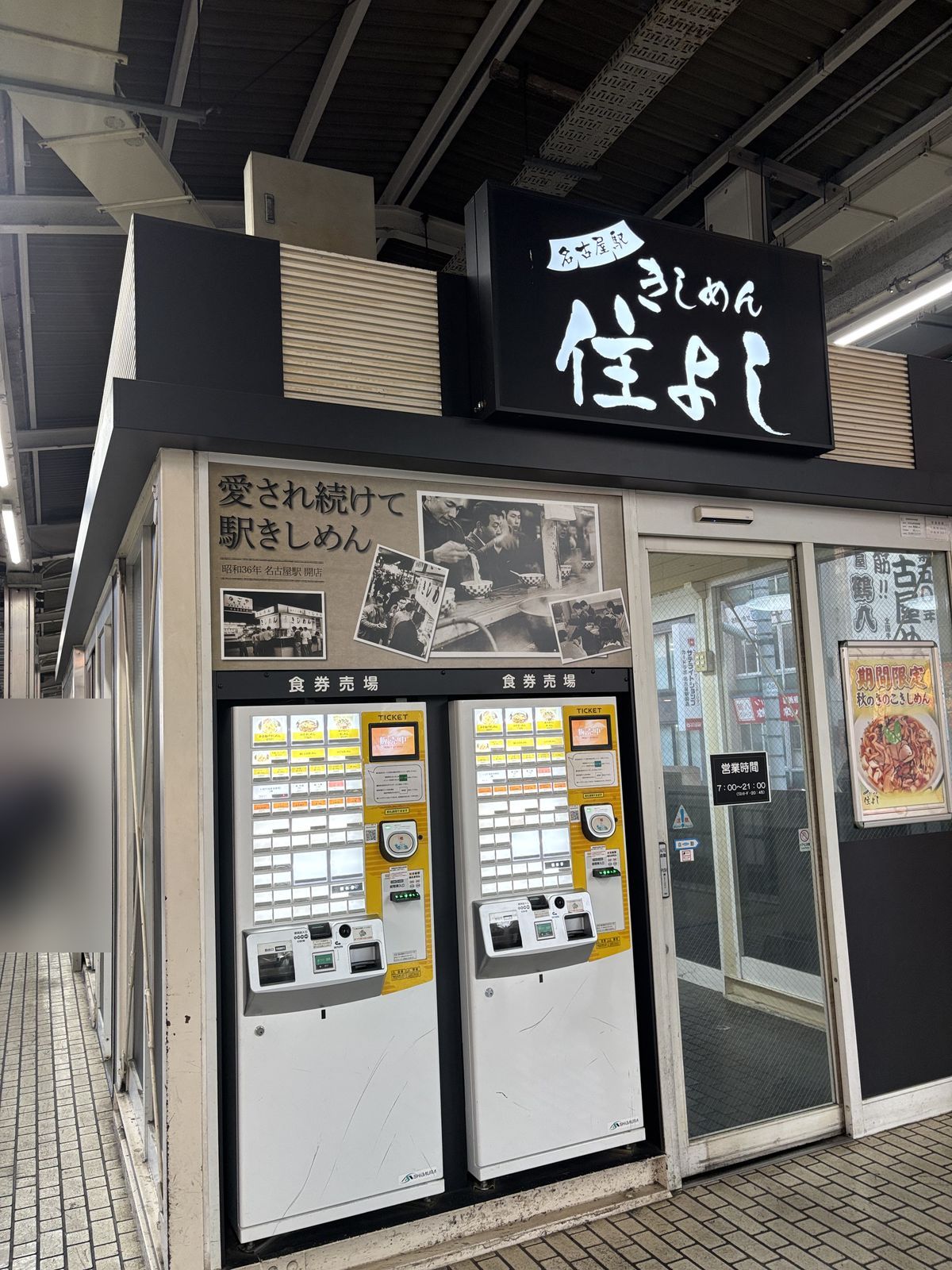
    Entrance of a station noodle shop with two ticket machines
    The entrance of a standing noodle shop inside a station, with two ticket machines next to the door.

    In Japan, you’ll often find a ticket machine (券売機, a vending machine for meal tickets) near the entrance at places like ramen (ラーメン), soba (そば) and gyudon (牛丼, beef bowl) chains.

    Some travelers come from countries that don’t have meal tickets, and it confuses them at first. But there are only three steps.

    ・Before you sit down, buy a ticket at the ticket machine

    ・Hand the ticket to the staff, or hold on to it and wait

    ・When you’ve finished eating, leave without stopping at the register (you’ve already paid)

    Even if you can’t read the buttons, there’s a way through.

    1 Once you’re inside, go to the ticket machine before you sit

    At a ticket-machine restaurant, you buy a ticket first. You sit down after that.

    The staff may tell you 「初めに食券をお買い求めください」 (hajime ni shokken o okaimotome kudasai, “please buy a meal ticket first”).

    At stand-up soba and udon (うどん) shops in stations, and at some set-meal (定食) restaurants, you may also have to buy a ticket first.

    2 Money and buttons — the order depends on the machine

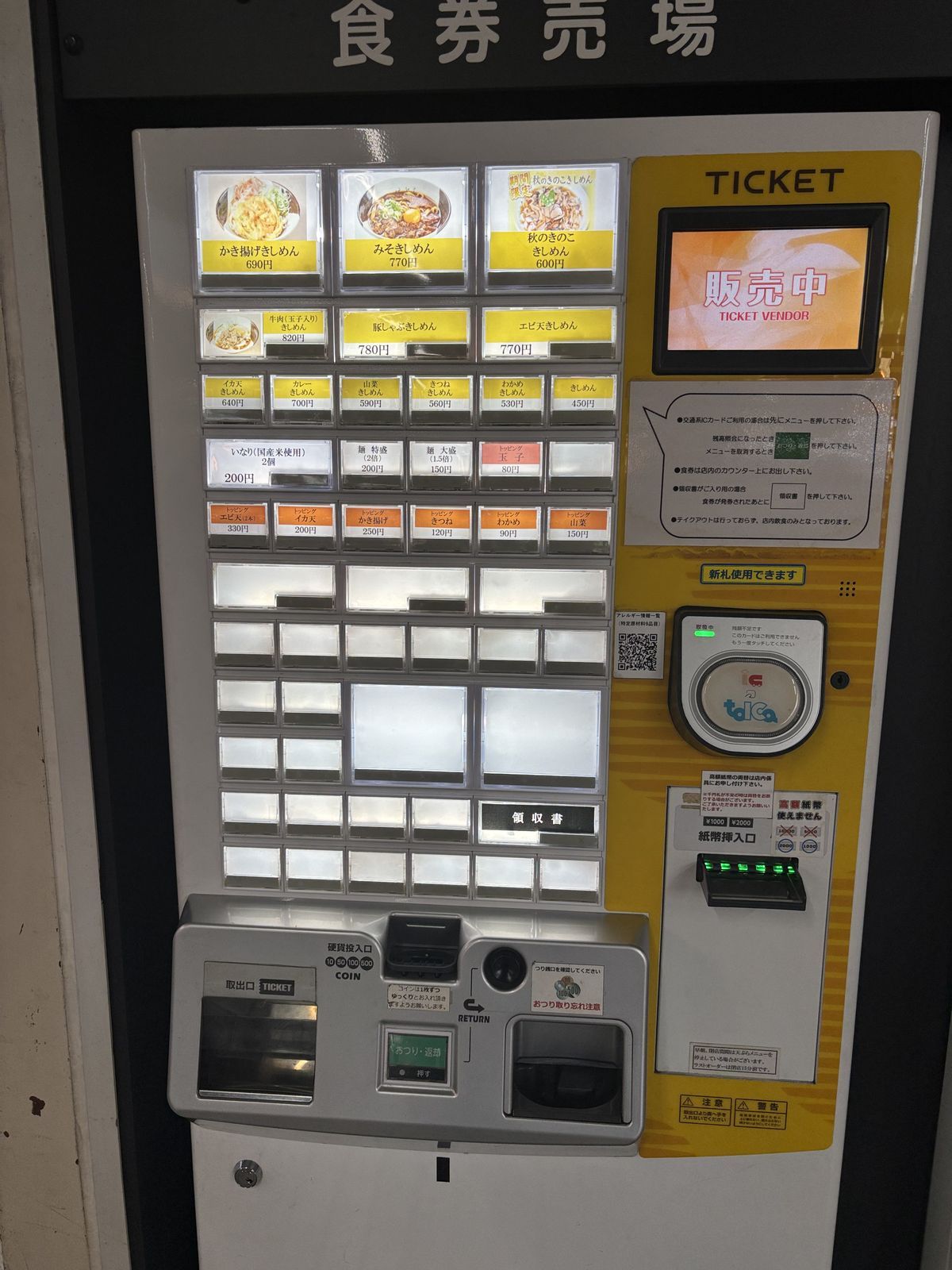
    Front of a ticket machine with an IC card mark and bill and coin slots
    The front of a ticket machine. The screen says 「販売中」 (on sale), and there are an IC card mark and slots for bills and coins.

    On a push-button machine, you put your money in first, then press the button for your dish.

    On a touch-screen machine, where you choose by tapping the screen, the order may be the other way around. You choose your food first and pay at the end.

    Bills and coins

    Some machines don’t take ¥10,000 or ¥5,000 bills.

    So carry a few ¥1,000 bills and coins worth ¥10 or more, and you’re less likely to get stuck in front of the ticket machine.

    If you don’t have a bill the machine takes, point at the ticket machine and ask the staff.

    Cash or card?

    Some ticket machines are cash only, and some take cards or smartphone payments. It depends on the restaurant.

    If you want to pay by card, check the machine’s screen or the signs posted on the machine. If you’re not sure, show your card to the staff and try checking with them.

    おつり (change) and 返却 (money back)

    Some machines that let you buy several tickets in a row won’t give you your change until you press the おつり/お釣り (change) button. Once you’ve taken your ticket, check that your change came out too.

    If you want to cancel after putting in your money, look for a button or lever marked 返却 (money back).

    3 If you can’t read the buttons, or you pressed the wrong one

    Some touch-screen machines can switch to English, Korean, Chinese and other languages. First, look for a language button on the screen.

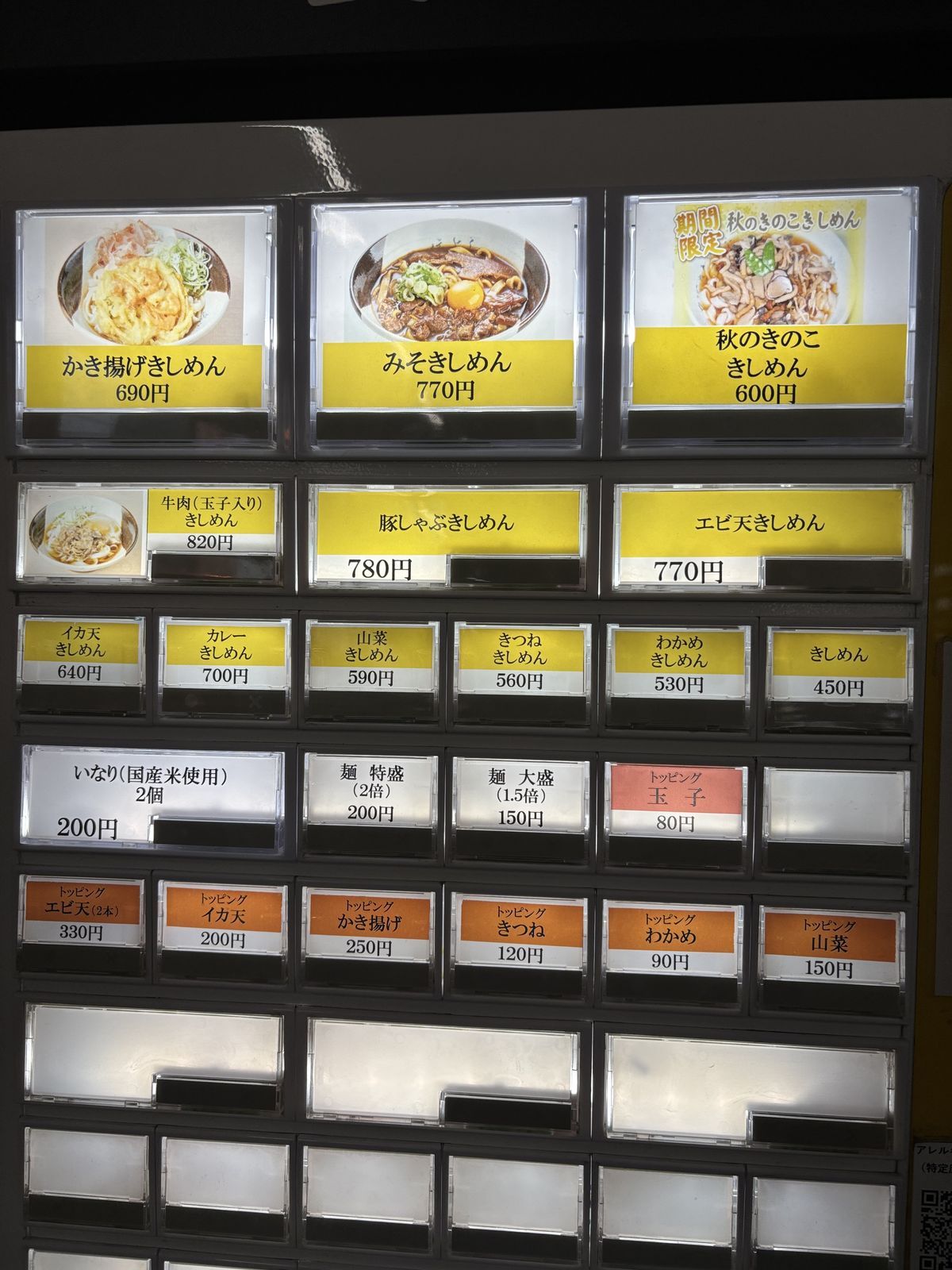
    Some machines show big photos of the dishes. Toppings and side dishes may be lined up on smaller buttons.

    If the buttons are only in Japanese and you can’t read them, use a translation app on your phone, or point at the ticket machine and ask the staff.

    If you realize you pressed the wrong button, show your ticket to the staff and ask them before you start eating.

    Ticket machine buttons with dish photos, names and yen prices
    The food buttons on a ticket machine, with photos, names and prices (in yen), plus buttons for toppings and a larger portion of noodles (as of October 2026).

    4 After you buy your ticket — hand it over, or keep it and wait

    What you do with the ticket differs from restaurant to restaurant.

    Hand it to the staff. Give your ticket to the staff and wait at your seat, and your food will be brought to you.

    Keep your ticket and wait for your number. At some restaurants, your order goes in the moment you buy the ticket, and the ticket has a number on it. Wait at your seat, and when your food is ready and your number comes up on the screen above the counter, take your ticket to the counter to pick up your food.

    If you can’t tell which kind of restaurant it is, copy what the people around you are doing, or follow the restaurant’s signs.

    5 Once you’re seated — some places let you choose how you like it

    What you buy at the ticket machine is just the dish. At some restaurants, you can choose the finer details at your seat.

    At the ramen restaurant Ichiran (一蘭), for example, you fill in an order sheet at your seat — noodle firmness, how much fat in the broth and more — to make the bowl just the way you like it. The sheet also comes in English, Korean and Chinese.

    At Ichiran, when you want 替玉 (a refill of noodles only), just put the 替玉 plate on top of the call button, and a staff member will come to collect it.

    You can even get a refill without saying a word. It’s one of the small pleasures of a ticket-machine restaurant.

    6 When you’ve finished eating

    Anything you bought with a ticket was already paid for at the machine. You can walk straight out without stopping at the register.

    Some restaurants have you take your dishes back to the 返却口 (the place to return your dishes) yourself. If the people around you are carrying their bowls back, do the same.

    For now, just this

    Buy your ticket before you sit down.

    Carry ¥1,000 bills and some coins.

    If you can’t read the buttons, use a translation app, or point and ask the staff.

    If you’re not sure what to do with your ticket, look at the signs or at the people around you.

    ※ Which money you can use and how you hand over your ticket differ from one restaurant to another. If you’re unsure, check the restaurant’s signs or ask the staff.

    Official sources we checked (13)

    ・Japan National Tourism Organization (JNTO): Ramen (in English)

    ・Japan National Tourism Organization (JNTO): Dining Out in Japan (in English)

    ・Japan National Tourism Organization (JNTO): Local Street Food Favorites (in English)

    ・Japan National Tourism Organization (JNTO): Slurp your noodles at ICHIRAN Ramen (in English)

    ・Tokyo Metropolitan Government, Bureau of Industrial and Labor Affairs: guidebook for restaurants, lodging and retail on serving international visitors (March 2024, PDF, in Japanese)

    ・Matsuya Foods: how to use the ticket machine (Japanese, English, Chinese and Korean, PDF)

    ・Matsuya Foods: how to order your meal (Japanese, English, Chinese and Korean, PDF)

    ・Ichiran: the order sheet (column, in Japanese)

    ・Ichiran: the 替玉 (noodle refill) ordering system (column, in Japanese)

    ・Ichiran: Shibuya shop (payment methods, in Japanese)

    ・Fujitaka Co., Ltd.: ticket machine FK-ADⅡS (a machine that takes ¥1,000 bills, in Japanese)

    ・Glory Ltd.: 券職人 ticket machines, product specifications (in Japanese)

    ・Glory Ltd.: touch-panel ticket machine VT-T20M (in Japanese)

  • How to Order at a Restaurant in Japan — It Starts at the Entrance: Look for Just 3 Things

    When you eat out in Japan, there’s something that helps even before you try to read the menu.

    Take one look at the restaurant’s entrance.

    The entrance gives you clues about how that restaurant works. There are three things to look for.

    • Is there a ticket machine (券売機) at the entrance?
    • Are replicas of the dishes (food samples, 食品サンプル) on display out front?
    • When you walk in, does someone call out 「いらっしゃいませ」 (irasshaimase, “welcome”) and show you to a table?

    Once you know these, you can tell how to order and when to pay before you even go in.

    1 A ticket machine at the entrance — you order and pay right there

    Ramen and gyudon (beef bowl) shops often have a ticket machine (a vending machine that sells meal tickets) near the entrance.

    All you do is put in money and press the button for the dish or drink you want. Take your change and the ticket that comes out. Hand the ticket to the staff, wait at your seat, and your food is brought to you.

    In other words, it’s a place where you can order and pay without saying a single word of Japanese.

    Some ramen shops don’t have a ticket machine, and you order by telling the staff instead.

    At ramen and gyudon shops in Japan, you’ll often see people eating alone. At a shop with a ticket machine, you just buy a ticket, hand it over and wait. You can walk in without feeling awkward, even when you’re traveling solo.

    If the buttons are only in Japanese and you can’t read them, use a translation app on your smartphone, or point at the ticket machine and ask the staff. How to put in your bills and find the right button is covered in the “Restaurants with a Ticket Machine” article.

    2 Samples out front — what kind of place it is, and roughly how much

    Some restaurants have a display case out front, filled with replicas that look just like the dishes. These are food samples.

    From the samples, you can often tell what dishes you’ll get and roughly what they cost, before you go in.

    Even if the menu is only in Japanese, there’s no need to panic. You can order by pointing at a sample. If you can’t make yourself understood inside, you can also step back outside and point to the sample you want.

    Food samples are said to have originated in Japan, between the end of the Taisho era and the start of the Showa era.

    What’s on display differs from shop to shop. Comparing them as you walk down the street is one of the pleasures of eating out in Japan.

    3 「いらっしゃいませ」 and a table — order at your table, pay at the end

    At some restaurants, when you walk in, someone calls out 「いらっしゃいませ」 (irasshaimase, “welcome”), asks how many are in your party, and shows you to a table. One way they may ask is 「何名様ですか」 (nanmei-sama desu ka, “How many people?”).

    At places like this, if you wait a moment at the entrance, a staff member will take you to your table.

    Once you sit down, water or tea is often brought to you first. Water that comes without you asking for it is usually free.

    You order at your table. To call a staff member, say 「すみません」 (sumimasen, “excuse me”), or press the call button if there’s one on the table.

    More and more restaurants now let you order on a tablet at the table, or by scanning a QR code with your own smartphone. These screens are often multilingual with photos, so here too you can order without speaking.

    You pay after you’ve finished eating. At some places you take the bill to the register near the exit, and at others you pay at the table.

    At an izakaya (居酒屋), a small dish comes first

    Among restaurants like this, izakaya (Japanese-style pubs) have a small quirk of their own.

    Before you order, a small dish may be brought to you. It’s called otoshi (お通し), and there may be a charge for it when you pay. It’s a kind of cover charge.

    You won’t know what you’ll get until you sit down, and that’s part of the fun.

    At izakaya and casual restaurants, when you go as a group, it’s normal for everyone to share the dishes. At some places, each person orders their own.

    How to enjoy an izakaya is covered in the “Izakaya (居酒屋)” article.

    For now, just these three

    If there’s a ticket machine, buy first.

    If there are samples, you can point to show what you want.

    If you’re shown to a table, order at the table and pay at the end.

    Know these three, and it’s easier to decide calmly, standing out front, whether to go in.

    More clues at the entrance

    Besides these three signs, there are other things the entrance can tell you.

    The cards and e-money a restaurant accepts are sometimes shown as logos at the entrance or the register. Some places spell it out in words, such as 「現金のみ」 (cash only) or 「各種カード使えます」 (various cards accepted). Some places don’t put up logos, so if you want to pay by card, first check the signs at the entrance or the register. If you can’t find any, show your card to the staff as you go in and check with them, and you won’t be stuck after you’ve eaten.

    In the countryside, there are many places that take cash only. Carry some cash with you too. The safest thing is to check before you go in, but if you find out after eating that you can’t use your card, you can show the staff a screen on your translation app and talk it over with them.

    As a rule, smoking is banned indoors at restaurants in Japan. Places where you can smoke are required to put up an official sign, at the entrance or elsewhere. 喫煙可能店 (smoking allowed) means a place where you can smoke anywhere inside. People under 20 can’t enter these places, even if they don’t smoke. Whether you dislike smoke, want to smoke or are traveling with family, you can tell before you go in.

    At some restaurants you take off your shoes before stepping up onto the raised floor. There’s often a shelf for shoes, so just follow what the people around you do and you’ll be fine.

    The same at every restaurant

    There’s no custom of tipping at restaurants in Japan.

    If you want to show your thanks, instead of a tip, say 「ありがとうございました」 (arigatou gozaimashita, “thank you very much”) with a smile.

    The next articles go through how each type of restaurant works, one by one.

    ※ How restaurants work, how you pay and how charges are set differ from one restaurant to another. When you actually eat out, check the restaurant’s signs and follow the staff’s guidance.

    Official sources we checked (7)